Dol Starter Diagram: A Comprehensive Guide to Setup
If you’re exploring how to start an induction motor, understanding a DOL starter diagram is vital. It reveals the core components and connections, including the start and stop buttons, magnetic contactor, and overload relay. These elements work together to energize the motor with full line voltage safely. But what exactly happens when you press that green button? There’s more to discover about how these starters guarantee both efficiency and safety in motor operations.
Key Takeaways
- A DOL starter diagram shows the connection of the induction motor to the full line voltage.
- It includes components like the green start button, red stop button, and magnetic contactor coil.
- Circuit protection is provided by a circuit breaker or fuse depicted in the diagram.
- Overload relays in the diagram prevent motor overheating by monitoring current.
- The diagram illustrates how manual control is achieved with start and stop buttons.
Understanding the Basics of DOL Starters
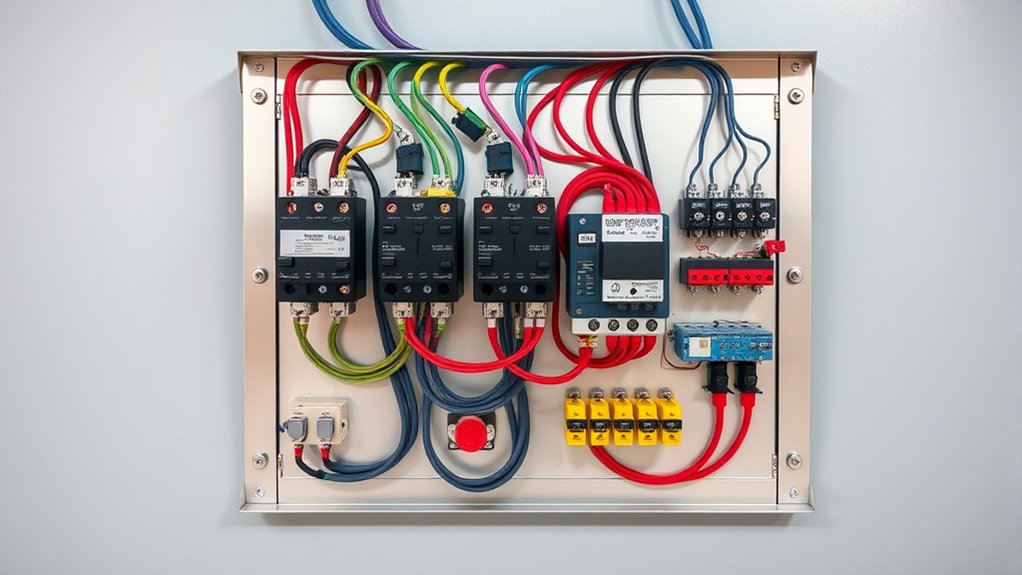
When you’re getting to grips with DOL starters, it’s vital to know they connect an induction motor directly to the full line voltage. This setup offers maximum torque, essential for efficient motor starting operations.
The DOL starter wiring diagram is a valuable tool, illustrating how all components work together. Press the green start button, and the magnetic contactor coil energizes, closing the contacts to power the motor. Conversely, the red stop button halts the process, ensuring control.
Overload protection is a key aspect, preventing motor damage from excessive current. An overload relay within the circuit detects any irregularities, safeguarding your motor.
For motors under 5 HP, this system’s simplicity and effectiveness are unmatched, though larger motors may require alternative solutions.
Key Components of a DOL Starter
Although understanding the key components of a DOL starter might seem complex at first, it’s essential for guaranteeing efficient motor operations.
A DOL starter includes a circuit breaker or fuse to protect against short circuits and overcurrent conditions. Magnetic contactors, acting as electromagnetic switches, control the electrical supply to the motor. The contactor coil plays an important role by maintaining power in the circuit once energized.
The overload relay (OLR) is critical for monitoring motor current and preventing damage from excessive loads. Auxiliary contacts guarantee the control circuit functions smoothly, allowing the motor to continue running after the start button is released.
Finally, the start (green) and stop (red) buttons provide simple manual control over motor operations.
Protection Mechanisms in DOL Starters
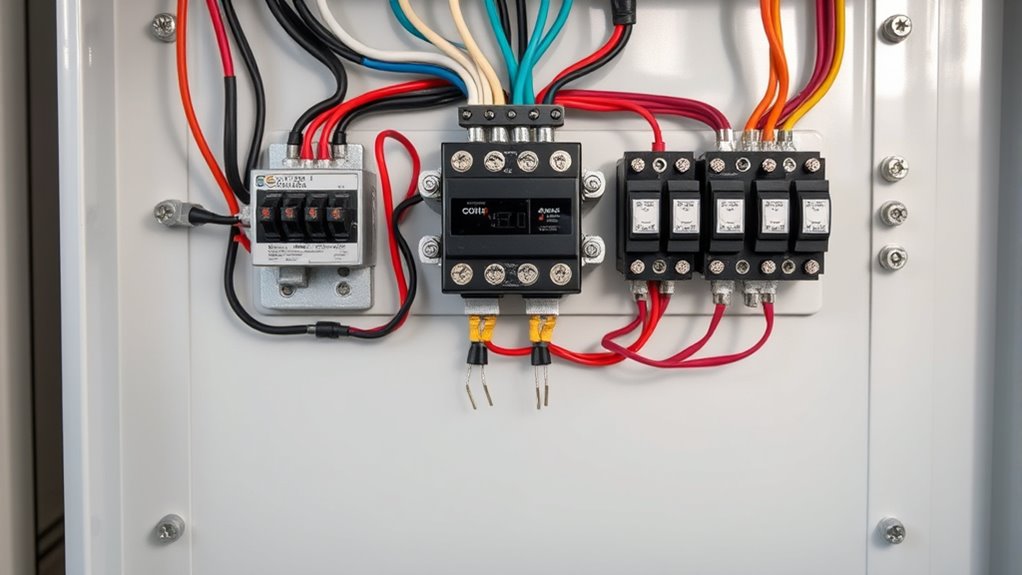
In a DOL starter, you’ll find critical protection mechanisms like circuit breakers or fuses that guarantee safety by interrupting power during short circuits.
Overload relays play a key role by monitoring the motor’s current and tripping the circuit to prevent overheating if the current exceeds safe levels.
With these precautions, you can protect your motor from damage and extend its lifespan.
Overcurrent Safety Measures
Protection is key when it comes to safeguarding motors in direct-on-line (DOL) starters, where overcurrent safety measures play a crucial role. Overload relays serve as critical protective devices in these systems. They monitor the motor’s current and disconnect the power if it exceeds 125% of the motor’s full load rating. This prevents overheating and potential motor failure. DOL starters often use thermal, magnetic, or electronic overload relays, guaranteeing the motor only trips when necessary, minimizing downtime. Circuit breakers or fuses also provide immediate interruption during short circuits, protecting essential components. By integrating these overcurrent safety measures, you guarantee the motor’s operational safety and longevity.
Here’s a quick overview:
| Component | Function | Benefit |
|---|---|---|
| Overload Relay | Monitors current | Prevents overheating |
| Circuit Breaker | Interrupts during short circuits | Protects components |
| Thermal Relay | Trips at specific temperatures | Guarantees timely action |
| Magnetic Relay | Responds to rapid current changes | Reacts swiftly |
| Electronic Relay | Offers precise control | Enhances reliability |
Overload Relay Functions
One essential component in direct-on-line (DOL) starters is the overload relay, which plays an important role in preventing motor damage. By monitoring current flow, the overload relay protects the motor from overheating and potential failure.
Here’s how it works:
- Monitor and Disconnect: The overload relay continuously monitors current levels. If it exceeds 125% of the motor’s full load current, the relay trips, disconnecting power and protecting the motor.
- Types of Relays: Overload relays can be thermal, magnetic, or electronic. Thermal relays use bimetallic strips that bend and trip the circuit under excessive heat.
- Regular Maintenance: Regular testing and calibration are vital to guarantee the overload relay functions correctly, providing reliable protection and preventing costly motor damage.
DOL Starter Wiring Diagram Explained
While understanding the intricacies of a DOL starter wiring diagram might seem intimidating, breaking it down step-by-step makes it manageable.
The diagram includes a green start button and a red stop button, critical for motor operation. Pressing the start button engages a magnetic contactor, connecting the motor to the power supply. The overload relay, integrated into the system, is fundamental for protecting against excessive currents, ensuring safe motor operation.
Three-phase motors connect to the main contactor’s terminals labeled L1, L2, and L3, corresponding to the R, Y, and B phases. An auxiliary contact keeps the contactor coil energized even after releasing the start button, facilitating continuous operation.
Proper wiring, especially the overload relay connection, is essential to prevent motor damage and maintain efficient DOL starter function.
Working Mechanism of DOL Starters
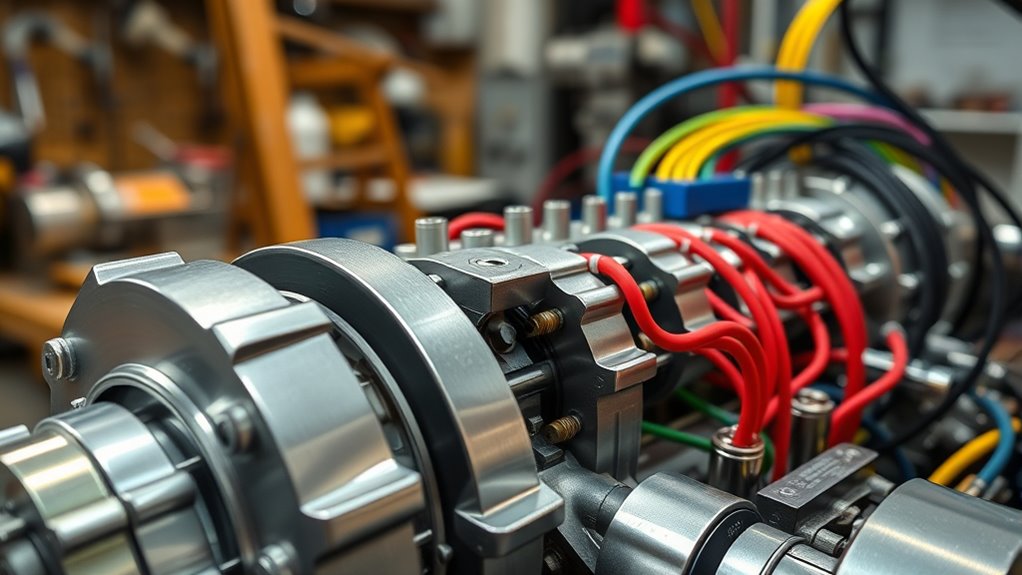
Although understanding the working mechanism of DOL starters might seem intimidating, breaking it down simplifies the process.
Here’s how a DOL motor starter works:
- Control Circuit Activation: Press the start button, and you’ll energize the contactor coil in the control circuit. This action closes the main contacts, connecting the motor directly to the supply voltage and allowing it to start with a high inrush current.
- Continuous Operation: Once the motor is running, auxiliary contacts keep the circuit energized, so the motor continues to operate even after releasing the start button.
- Overload Protection: The overload relay plays a vital role by monitoring the motor’s current. If it exceeds a preset limit, the relay interrupts the circuit, preventing motor overheating.
Advantages of Using a DOL Starter
Understanding the working mechanism of DOL starters provides a solid foundation for appreciating their benefits.
DOL starters deliver high starting torque, making them perfect for applications like small water pumps and conveyor belts that need a powerful initial push. Their simple design and low installation costs make DOL starters economically advantageous for motors under five horsepower.
You’ll find troubleshooting straightforward, as the design allows you to quickly identify and fix any faults in the motor control system. Additionally, their compact size saves space in electrical control panels, streamlining your system design.
Built-in overload protection is another key advantage. It safeguards your motor from excessive current and overloads, prolonging the motor’s lifespan and ensuring reliable operation over time.
Disadvantages Associated With DOL Starters
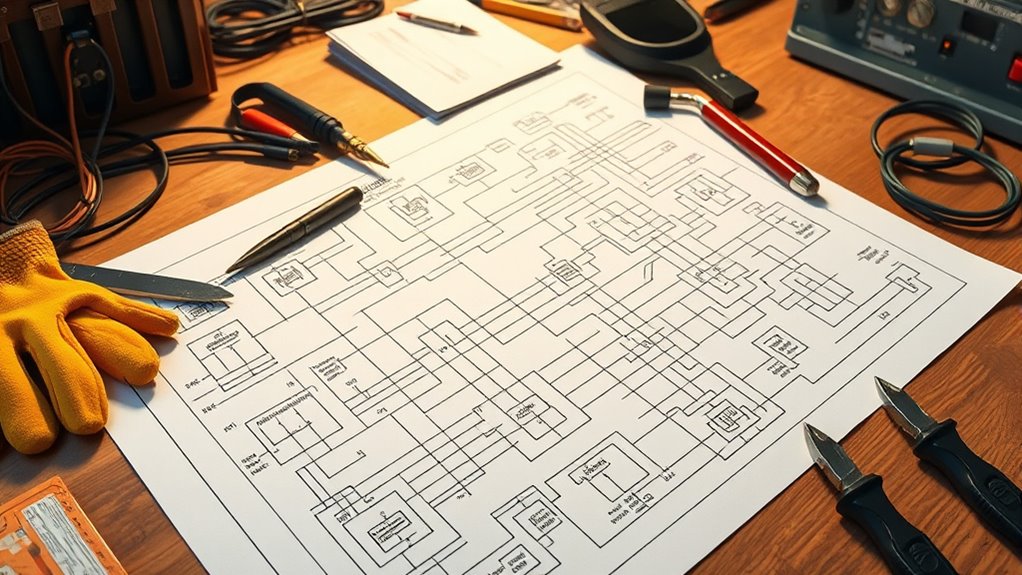
Despite their advantages, DOL starters come with a set of drawbacks that can impact their suitability for certain applications. You may encounter issues with high starting current, which can be 5 to 8 times the motor’s full-load current. This surge can cause voltage dips that affect other equipment.
Here are some potential problems:
- Motor Damage: The lack of a soft-start feature results in high starting torque, causing mechanical stress and reducing motor lifespan.
- Operational Disruption: High starting currents can lead to nuisance tripping of circuit breakers and fuses, causing downtime and maintenance headaches.
- Unsuitability for Larger Motors: For motors above 5 HP, DOL starters can cause significant voltage drops, disrupting other devices in the electrical system.
These factors make DOL starters less ideal for larger or sensitive operations.
Applications of DOL Starters in Various Industries
When you’re exploring the applications of DOL starters, you’ll find their use in industrial machinery like small water pumps and conveyor belts, thanks to their ability to handle motors up to 5 HP.
They’re also essential in HVAC systems, where they control fan motors for efficient ventilation and air conditioning.
You’ll notice their importance in material handling equipment, providing the robust starting torque needed for compressors and various systems.
Industrial Machinery Utilization
DOL starters play an essential role in various industries by providing direct control for small to medium-sized motors.
You’ll find them particularly useful in industrial machinery, thanks to their ability to deliver immediate starting torque without the need for complex setups.
Here’s how they shine:
- Conveyor Systems: DOL starters guarantee efficient operation, directly controlling motors that move materials steadily along production lines.
- Material Handling Equipment: With the straightforward design of a DOL starter, you can rapidly start machinery, enhancing productivity in handling large volumes of goods.
- Compressors in Manufacturing: By providing instant power, DOL starters meet operational demands swiftly, eliminating delays often caused by more intricate starting systems.
Their simplicity and reliability make DOL starters indispensable across various industrial applications.
HVAC Systems Applications
In many HVAC systems, DOL starters are invaluable for their role in controlling fan motors with a straightforward approach. By starting and stopping motors at full voltage, they provide a simple, effective solution in air conditioning units and small compressors.
You’ll find that DOL starters guarantee reliable operation and minimize complexity during installation. Their high starting torque is perfect for applications needing immediate motor starts, like chillers and ventilation systems.
In commercial HVAC installations, the economical design of DOL starters makes them a go-to choice for cost-effectiveness and easy maintenance. Additionally, they boost efficiency by allowing motors to operate at full capacity right from the start, optimizing airflow and temperature control to meet your system’s demands.
Material Handling Equipment
You’ll often find that material handling equipment benefits markedly from the use of DOL starters. They provide full starting torque, essential for moving heavy loads efficiently. In industries like manufacturing and logistics, DOL starters guarantee that hoists and lifts operate swiftly and reliably.
Here’s how DOL starters excel in material handling:
- Conveyor Systems: Deliver the necessary torque to start and move conveyors handling large volumes.
- Automated Systems: Seamlessly integrate with control circuits, boosting operational efficiency and safety in tasks like sorting and packaging.
- Pallet Jacks and Forklifts: Their simplicity and cost-effectiveness make them ideal for small to medium-sized motors, assuring consistent performance.
Important Considerations for DOL Starter Installation
When installing a Direct-On-Line (DOL) starter, several critical considerations ensure the system operates efficiently and safely.
First, verify the DOL starter is rated for the motor’s horsepower, typically up to 5 HP, to prevent overheating.
Wiring must follow the correct schematic, with particular attention to power supply phase connections and the start and stop buttons in the control circuit.
Incorporate overload relays rated at no more than 125% of the motor’s full-load current for effective protection against overload conditions.
You should also use appropriate circuit protection devices like fuses or MCCBs to guard against short circuits and overcurrent, confirming they match the motor’s voltage and current ratings.
Finally, maintain clear labeling of all connections for easy troubleshooting and safe maintenance.
Comparison of DOL Starters With Other Starter Types
Although Direct-On-Line (DOL) starters provide a straightforward and cost-effective solution for starting small motors, it’s crucial to compare them with other starter types to understand their limitations and benefits.
By directly connecting the motor to the supply, a DOL starter offers high starting torque. Still, it can also cause high starting current, potentially impacting other equipment due to voltage drops.
In contrast, other starter types offer specific advantages:
- Star-Delta Starters: They reduce starting current by initially using a star configuration, then switching to delta, making them suitable for larger motors above 5 HP.
- Soft Starters: They limit initial current and torque, reducing mechanical stress on motor windings.
- Variable Frequency Drives (VFDs): They provide precise control over motor speed and torque for complex operations.
Conclusion
In summary, understanding DOL starters is vital for effectively starting and protecting induction motors in various applications. You’ve seen how the components like the magnetic contactor and overload relay work together to guarantee safe operation. While DOL starters are simple and cost-effective, they have limitations, such as high inrush currents. Always consider installation factors and compare DOL starters with other types to make sure you select the best option for your specific needs.
FAQs
1. How Does a DOL Starter Work?
When you press the start button, the contactor coil energizes, closing the main contacts and powering the motor. The auxiliary contacts keep it running. If there’s an overload, the relay trips, protecting the motor from damage.
2. What Is the Difference Between DOL and Delta Starter?
You’ll notice DOL starters directly connect motors to full voltage, whereas Delta starters use a star-delta setup to reduce starting current. DOL is simpler for small motors; Delta is better for larger ones needing reduced inrush current.
3. What Is the Fault in the DOL Starter if the Volt Coil Is Operating but the Motor Fails to Start?
If the no-volt coil’s working but the motor won’t start, check for a stuck contactor, faulty auxiliary contacts, tripped overload relay, loose connections, or damaged cables. Also, test start/stop buttons and inspect fuses or breakers.
4. How to Make a Dol Starter?
To make a DOL starter, wire the contactor, overload relay, start/stop buttons, and circuit breaker. Connect the contactor to the motor. Verify all connections are secure and insulated. Test the system to confirm it operates safely.