What Is a Surge Protector? How They Protect Your Devices
You’ve probably heard about surge protectors, but do you know what they do? They’re essential for keeping your electronics safe from voltage spikes, but there’s more to them than just plugging in your devices. From understanding how they work to knowing which specifications matter, there’s a lot to contemplate. Are you sure your electronics are truly protected, or are you just hoping for the best? Let’s explore this further.
Key Takeaways
- Surge protectors shield electronic devices from electrical surges and voltage spikes.
- They use components like Metal Oxide Varistors (MOVs) to divert excess voltage.
- Effectiveness is measured in joules, with higher ratings indicating better protection.
- Clamping voltage determines the peak voltage allowed before activation.
- Surge protectors differ from power strips, which lack surge protection capabilities.
Understanding Surge Protectors
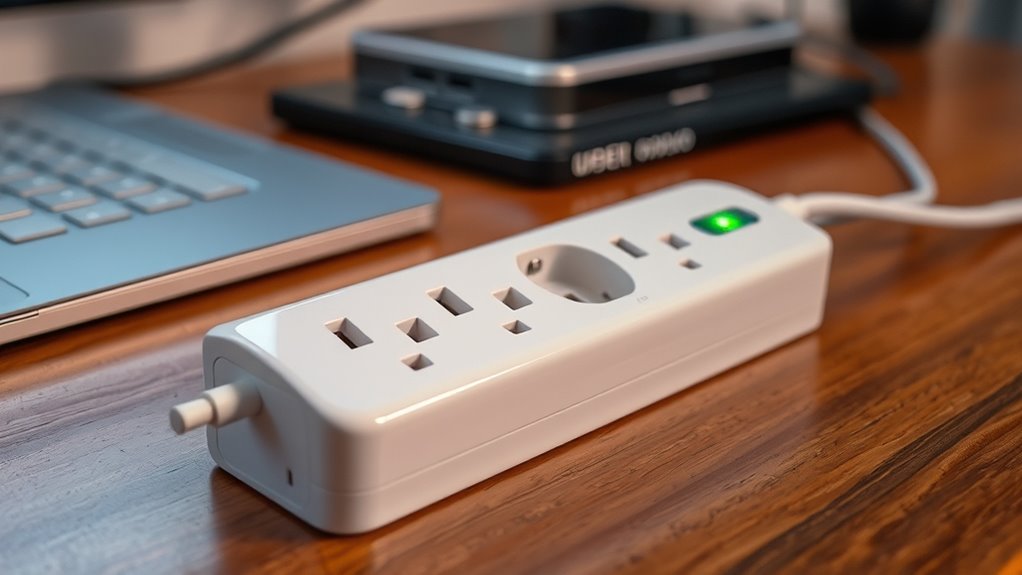
When you’re looking to shield your electronics from unexpected voltage spikes, understanding surge protectors is vital.
A surge protector, or surge protection device, is engineered to protect electronic devices from electrical surges and voltage spikes. These devices often rely on components like Metal Oxide Varistors (MOVs) to divert excess voltage away from your sensitive electronics.
To effectively protect against surges, verify your surge protector has a joule rating of at least 600 and a clamping voltage below 400 volts. This guarantees robust protection for your devices.
Regular maintenance is important, as over time, surge protectors can degrade after repeated voltage spikes.
How Surge Protectors Work
Although surge protectors are often seen as simple devices, they play an integral role in safeguarding your electronics by redirecting excess voltage away from your devices. Surge protectors work by using components like Metal Oxide Varistors (MOVs) to absorb and divert power surges to the ground, protecting your electronic equipment from transient voltage spikes. The effectiveness of a surge protection device (SPD) is measured in joules, with a higher joule rating indicating better protection. Additionally, clamping voltage is vital, as it dictates the peak voltage allowed before activation.
Here’s a table highlighting key components:
| Component | Function | Importance |
|---|---|---|
| MOV | Absorbs excess voltage | Central to SPD |
| Joule Rating | Measures energy absorption | Higher is better |
| Clamping Voltage | Triggers protection | Lower offers more safety |
| GDTs | Complement MOVs | Enhance SPD capabilities |
| TVS Diodes | Suppress transient voltage | Additional protection |
The Lifespan of Surge Protectors

A surge protector’s lifespan can range from 3 to 10 years, heavily influenced by factors like voltage spike frequency, your location, and home wiring conditions.
Frequent voltage spikes can degrade internal components like metal oxide varistors (MOVs), decreasing their effectiveness. Even if a surge protector looks fine on the outside, its ability to provide protection might be compromised.
Regularly check the indicator lights and inspect for physical wear to assess its condition.
Surge protectors with higher joule ratings have better energy absorption capacities, contributing to longer lifespans and enhanced protection.
Manufacturers often recommend replacing your surge protector periodically to maintain maximum protection.
Selecting the Right Surge Protector
Understanding the lifespan of surge protectors highlights the importance of choosing the right one for your needs.
Start by checking the joule rating; aim for at least 600 joules to protect your electrical appliances from power surges. Confirm the surge protector has a UL 1449 certification for reliable safety standards.
Look for a clamping voltage under 400 volts for optimum performance in diverting excess voltage. Consider how many outlets you need, including specialized ports for coaxial or Ethernet connections.
LED indicators can show operational status, while fireproof technology adds an extra layer of safety.
Key Specifications of Surge Protectors
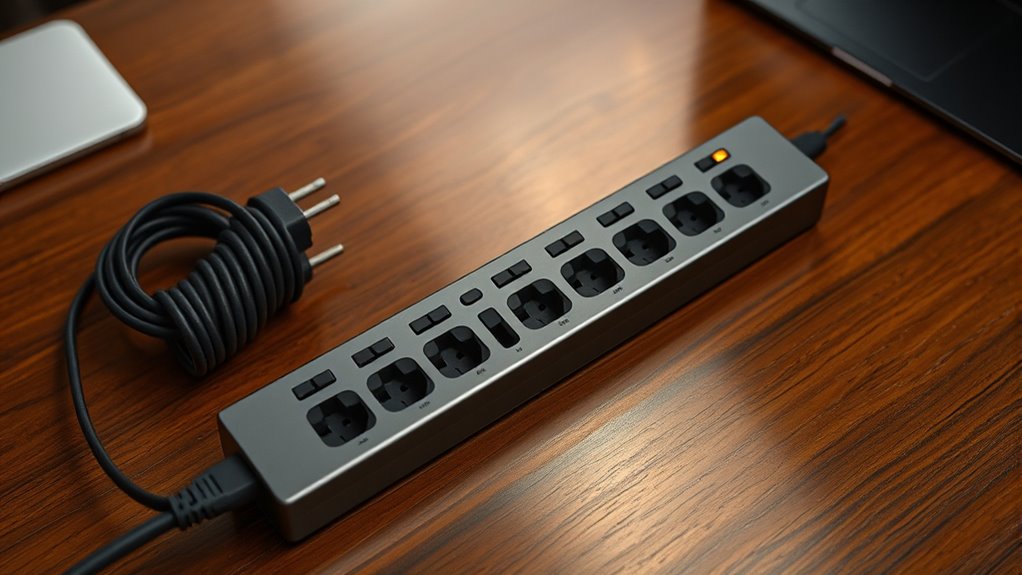
When diving into the key specifications of surge protectors, it’s essential to focus on a few critical factors that guarantee effective protection for your devices.
First, consider the joules rating—aim for at least 600 joules for basic energy absorption during power surges. The clamping voltage should be under 400 volts to guarantee prompt activation for protection against voltage spikes.
Response time is crucial; quicker reaction offers better surge suppression. Confirm your surge protector has UL 1449 certification, confirming it meets safety and reliability standards.
Finally, check the voltage protection rating (VPR); lower values indicate superior handling of high current surges.
These specifications collectively guarantee robust protection, safeguarding your devices from electrical threats effectively.
Comparing Surge Protectors to Power Strips
Although they might look similar at first glance, surge protectors and power strips serve distinct purposes that are important to understand.
A power strip provides additional outlets but lacks protective features against voltage spikes. In contrast, a surge protector, or surge protection device (SPD), is designed specifically to protect your electronics from power surges. It contains a metal oxide varistor (MOV) that redirects excess voltage to the ground, safeguarding sensitive electronics like computers and televisions.
Surge protectors come with a joule rating, which indicates their energy absorption capacity. A higher rating (at least 600 joules) offers better protection.
Some surge protectors also include features like indicator lights and USB ports. For less critical devices like lamps, a simple power strip suffices.
Conclusion
In choosing a surge protector, you’re making a smart move to safeguard your electronics from unexpected voltage spikes. Remember, it’s not just about plugging in—look for a high joule rating and suitable clamping voltage for ideal protection. Don’t confuse surge protectors with regular power strips, as only the former offers that essential defense. By understanding their workings and lifespan, you’re better prepared to select the right one for your needs.
FAQs
1. Why Would You Need a Surge Protector?
You need a surge protector because it shields your electronics from voltage spikes that can cause damage. It’s essential for safeguarding computers, TVs, and other devices, especially if you live in areas prone to power outages or surges.
2. What Is a Surge Protector Vs a Power Strip?
You might think a surge protector and power strip are the same, but they’re not. Surge protectors shield your electronics from harmful voltage spikes, while power strips only offer extra outlets without protection. Always choose wisely for sensitive devices.
3. What Should You Never Plug Into a Surge Protector?
You shouldn’t plug high-wattage appliances, medical equipment, or devices with motors into a surge protector. Always avoid daisy-chaining surge protectors and using them with water-related devices to prevent fire hazards and electrical risks.
4. Should I Plug My TV Into the Wall or Surge Protector?
You should plug your TV into a surge protector, not directly into the wall. This will protect it from voltage spikes and potential damage. Make certain it’s a UL 1449-certified protector with at least 600 joules for maximum safety.