Armature Reaction: A Key Concept in Motor Engineering
You’ve likely encountered the term “armature reaction” when exploring electrical machines, particularly DC machines. This phenomenon plays a crucial role in influencing the machine’s performance by distorting the main field flux. It’s not just a technical detail; it impacts efficiency and stability. How does this happen, and what can you do to manage its effects? Let’s explore the implications and solutions to ensure optimal machine operation.
Understanding Armature Reaction in DC Machines
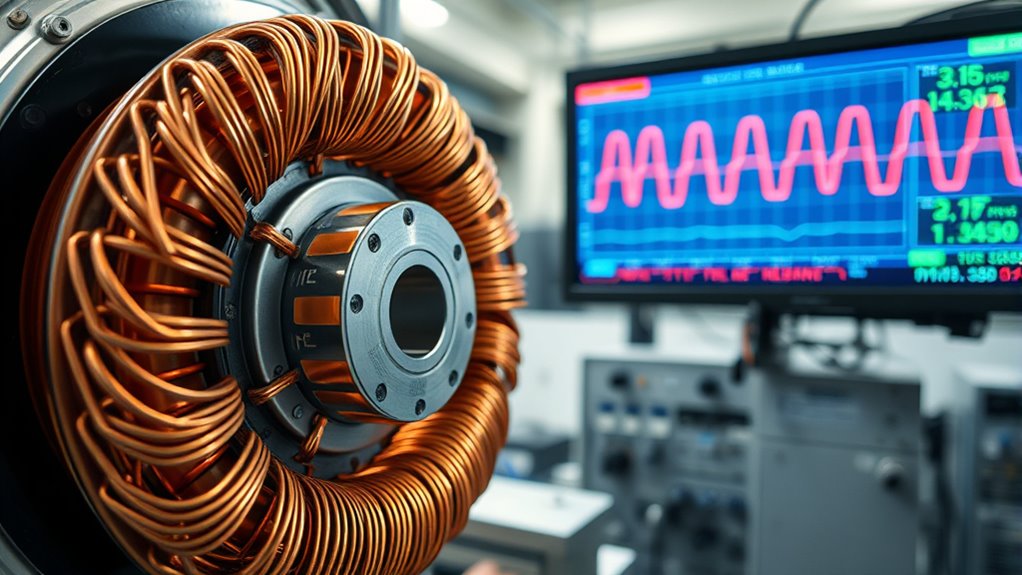
When you dive into the concept of armature reaction in DC machines, you’re looking at how the armature’s magnetic field affects the main field flux. This interaction often leads to flux distortion, shifting the magnetic neutral axis (MNA) from its no-load position.
As armature current flows, this shift impacts commutation, as the MNA no longer aligns with the geometrical neutral axis. The combined armature and main field flux decreases total flux per pole, reducing the generated EMF.
Brush shifting is one method to counter these effects, ensuring smoother commutation. Understanding armature reaction is crucial, especially in larger machines where performance issues can be pronounced.
Effects of Armature Reaction on Magnetic Flux
Exploring the effects of armature reaction on magnetic flux reveals significant impacts on DC machine performance.
Armature reaction distorts the main field flux, leading to a reduction in total flux and affecting the flux density. As the load increases, the neutral plane shifts, moving parallel to armature rotation, which impacts brush positioning.
This shift results in a decrease in generated EMF due to the weakening of the magnetic flux under one pole while strengthening it under another. Increased armature current exacerbates demagnetization effects, diminishing field current and causing voltage drops.
Additionally, magnetic saturation under the leading pole tip can further reduce terminal voltage. These changes highlight the crucial role of managing armature reaction to maintain optimal machine performance.
Impact on Commutation and Voltage Regulation
Although often overlooked, armature reaction plays a critical role in the commutation process and voltage regulation of DC machines.
When the magnetic neutral axis shifts due to armature reaction, brush positioning becomes misaligned, leading to commutation problems like sparking. This distortion of the main field flux weakens the magnetic field, reducing the generated EMF, which negatively impacts voltage regulation.
As the armature current increases, you’ll notice a drop in terminal voltage, especially under high load conditions. To counteract these issues, precise brush positioning along the shifted MNA is essential.
Additionally, incorporating compensating windings can mitigate the adverse effects by producing opposing magnetic flux, thereby improving commutation and stabilizing voltage regulation.
Without these adjustments, operational efficiency suffers significantly.
Differences Between Lap-Wound and Wave-Wound Machines
While both lap-wound and wave-wound machines serve crucial roles in electrical engineering, they differ significantly in their design and performance characteristics.
Lap-wound machines, with their multiple parallel paths, excel in current distribution and reduce armature reaction, resulting in stable performance under varying loads. The shorter conductor length also minimizes copper losses.
In contrast, wave-wound machines have just two paths, which can increase armature resistance and voltage drop. Their design offers a more uniform magnetic field, contributing to smoother operation but potentially affecting voltage regulation during high-load conditions.
The armature flux’s distribution impacts both, but lap-wound configurations generally handle it better.
Ultimately, each winding type provides distinct advantages, influencing efficiency and performance based on application needs.
Geometrical Neutral Plane vs. Magnetic Neutral Plane
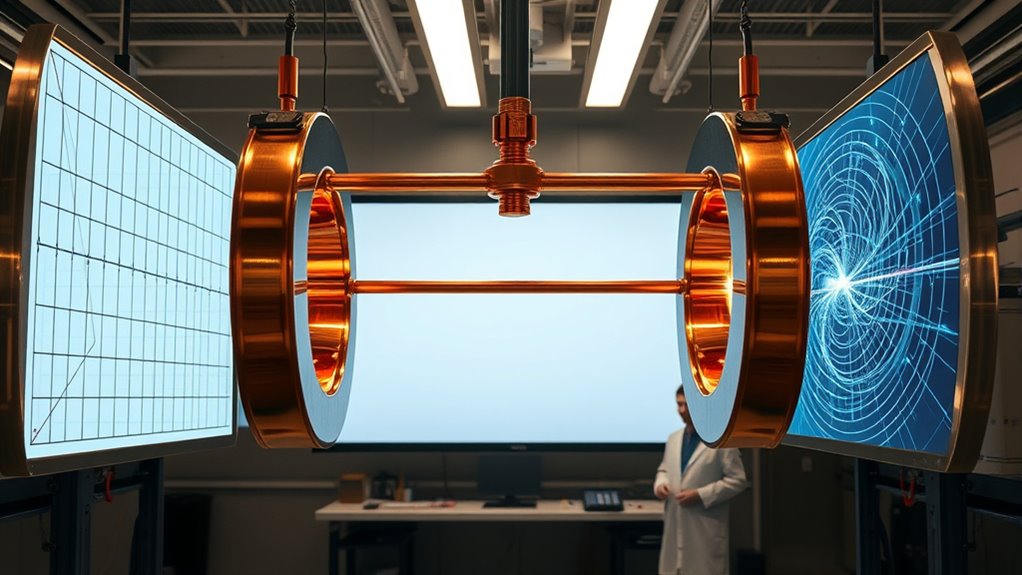
Understanding the relationship between the Geometrical Neutral Plane (GNP) and the Magnetic Neutral Plane (MNP) is crucial for optimizing the performance of electrical machines.
The GNP, or geometrical neutral axis, aligns with the magnetic neutral axis when no armature currents flow, ensuring balanced magnetic flux distribution between main field poles.
However, once the armature carries current, armature reaction shifts the MNP in the rotation direction, disrupting the effective magnetic field. This shift results in uneven flux distribution, affecting the current-carrying conductors and potentially causing sparking at the brushes.
For proper commutation, you must align the brushes accurately along the MNP. Misalignment leads to voltage spikes and increased wear.
Thus, monitoring these planes is vital for machine efficiency.
Methods for Mitigating Armature Reaction
To effectively counteract armature reaction’s disruptive effects in electrical machines, you must employ specific techniques.
For larger machines, consider using compensating windings in the pole shoe openings. These windings create an opposing magnetic field, stabilizing commutation and enhancing performance.
Interpoles are essential between main field poles to neutralize armature flux, ensuring the magnetic field remains steady.
Brush shifting, by adjusting brush positions to the magnetic neutral axis, minimizes sparking and improves commutation efficiency.
Additionally, altering the pole tips’ shape or size prevents excessive flux distortion, maintaining the machine’s efficiency.
While small machines mightn’t need these measures, larger machines benefit significantly from these interventions, sustaining their performance and operational reliability against the challenges posed by armature reaction.
Role of Armature Reaction in Machine Performance
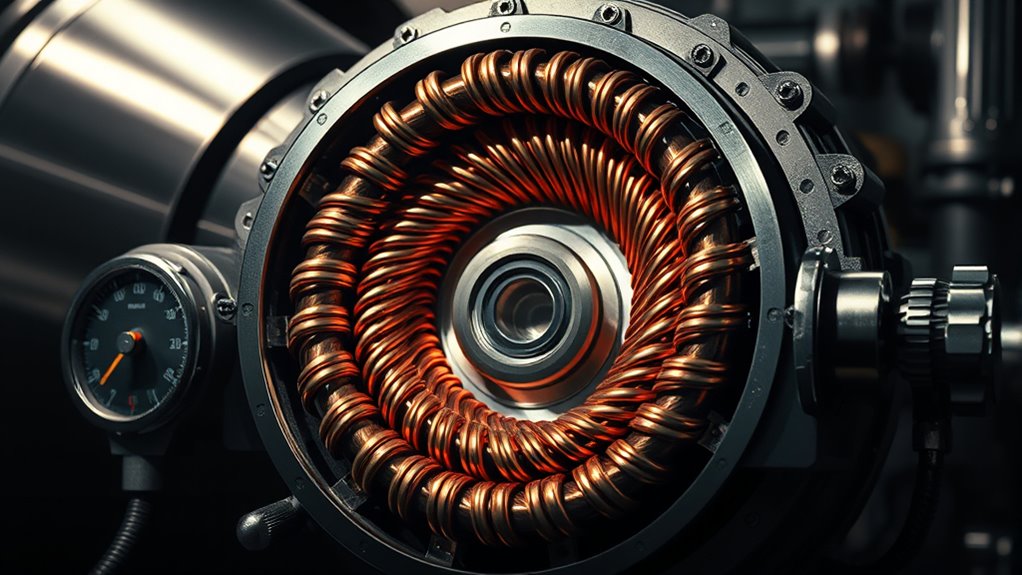
Although often overlooked, armature reaction plays a crucial role in the performance of DC machines by distorting the magnetic field, which reduces the main field flux. This distortion affects the magnetic neutral axis, shifting it and disrupting commutation.
You need to ensure precise brush positioning to minimize sparking. Armature reaction also impacts voltage regulation by causing a decrease in terminal voltage under load conditions, reducing overall machine performance.
Particularly in shunt-wound motors, this can lead to speed instability. Armature flux interacts with the main field flux, so managing this is essential for maintaining optimal machine performance.
Compensating windings are commonly used in larger machines to counteract these effects, ensuring efficiency and stability even under varying loads.
Designing Machines to Counteract Armature Reaction
When designing machines to counteract armature reaction, integrating compensating windings into the main pole slots is essential. These windings produce an opposing magnetic flux to neutralize armature flux distortion.
By using interpoles between field poles, you maintain effective commutation. They generate a magnetic field that matches adjacent main poles, stabilizing performance.
Adjusting the brush position is crucial; aligning brushes with the magnetic neutral axis minimizes sparking, enhancing commutation under varying loads.
In larger machines, auxiliary poles in series with the armature adjust their strength with load current, effectively counterbalancing armature reaction.
Modifying field pole ends prevents excessive flux at tips, reducing high reluctance areas. This approach boosts design efficiency, ensuring smoother operation and improved machine performance.
Practical Applications and Implications
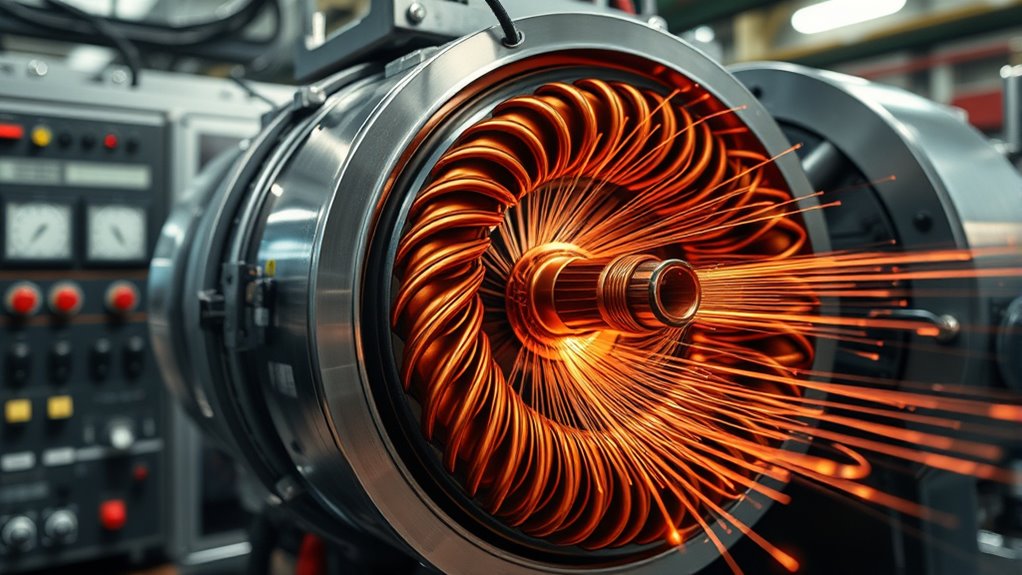
Designing machines to counteract armature reaction isn’t just about theory; it has real-world implications that can enhance performance across various applications.
In DC motors, armature reaction affects the main field flux, which can lead to fluctuating speeds under different load conditions. To maintain stable operation and consistently generated EMF, engineers use compensating windings and interpoles.
These additions help improve commutation, resulting in better performance and reduced sparking issues. For large machines, typically above 100 kW, these solutions are essential to ensure effective voltage regulation and reliable performance.
Conclusion
In understanding armature reaction, you’ve seen how the armature’s magnetic field distorts the main flux, causing commutation issues and impacting voltage regulation. By recognizing the differences between lap-wound and wave-wound machines, you can appreciate the significance of the magnetic neutral plane. Employ techniques like brush shifting and compensating windings to mitigate these effects. Designing machines with these factors in mind enhances performance, ensuring they operate efficiently in practical applications. Stay proactive to maintain stable machine performance.
FAQs
1. What Is an Armature Reaction and How Can It Be Prevented?
You experience a weakening of the main magnetic field when the armature winding carries current. Prevent this by adjusting brush positions, using interpoles, or adding compensating windings to counteract the distortion and maintain stable motor operation.
2. What Is Armature Reaction and Commutation?
You need to understand that armature reaction distorts the main magnetic field, affecting commutation by causing sparking at the brushes. Prevent these issues by using techniques like brush shifting, interpoles, and compensating windings for smoother operation.
3. What Is the Armature Reaction in an Alternator?
You’re dealing with the impact of the armature’s magnetic field on the main field flux in an alternator. This interaction shifts the magnetic neutral axis, affects brush positioning, and can lead to voltage and efficiency issues.
4. What Are the Two Adverse Effects of Armature Reaction?
You should know that the two adverse effects are reduced electromagnetic force and incorrect brush positioning. These issues can cause decreased efficiency, sparking, and voltage drops, ultimately destabilizing the machine’s performance and leading to potential overheating.