Key Factors in Electrical Machine Efficiency: Complete Guide
You’re about to explore the intricacies of what makes an electrical machine truly efficient. By understanding how to minimize mechanical and electrical losses, you’ll discover the impact of superior materials and effective cooling. Additionally, you’ll learn about the significance of a stable voltage supply and the role load management plays in overall performance. Curious about how high-quality bearings and lubrication fit into the equation? Let’s uncover these secrets together.
Mechanical Losses and Their Minimization
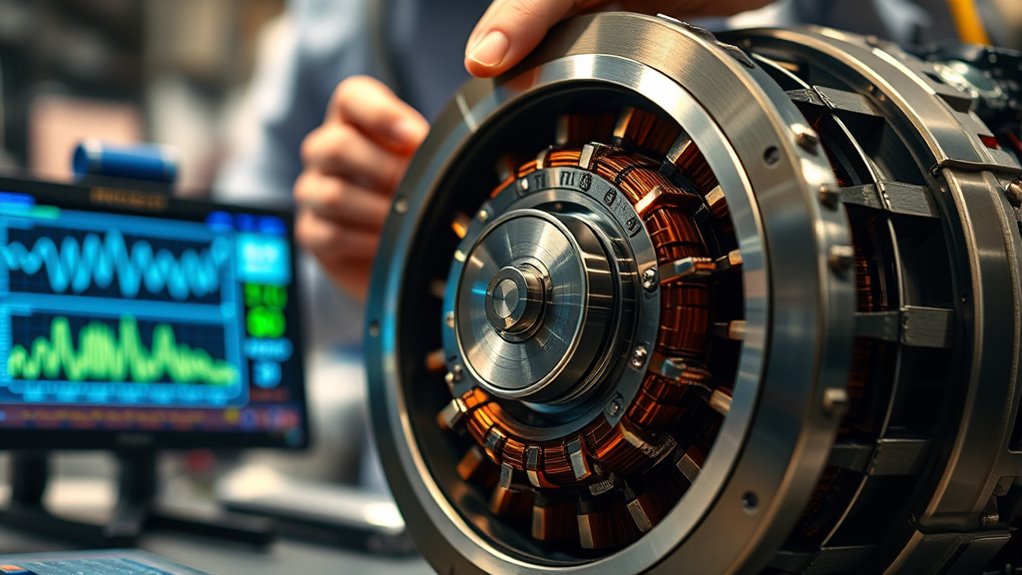
When you’re looking to boost the efficiency of an electric motor, understanding and minimizing mechanical losses is key.
Mechanical losses, primarily from friction in bearings and moving parts, contribute significantly to energy loss. To combat this, invest in high-quality bearings and proper lubrication to reduce friction, enhancing overall efficiency.
Rotor movement against air resistance also leads to energy loss; smooth rotor surfaces and efficient housing design help minimize drag. Regular maintenance of these components ensures performance doesn’t decline over time due to wear.
Additionally, thermal losses from mechanical friction can be managed with effective cooling systems, like air or liquid cooling, which dissipate excess heat.
Reducing Electrical Losses in Motors
To optimize your electric motor’s efficiency, focus on reducing electrical losses, often termed copper losses. These losses occur in motor windings due to resistance, causing energy dissipation as heat, especially with higher current levels.
By using high-conductivity materials like copper or aluminum in the motor windings, you can significantly reduce electrical losses and improve overall motor efficiency.
Make sure your motor is properly sized; oversized motors operating below optimal load conditions increase electrical losses. Regular maintenance and monitoring ensure your motors run close to their rated capacity, minimizing wasteful energy loss.
Implement advanced motor control strategies, such as variable frequency drives, to adjust input power based on actual load requirements, thus optimizing output power and enhancing efficiency without impacting core losses.
Mitigating Core Losses With Superior Materials
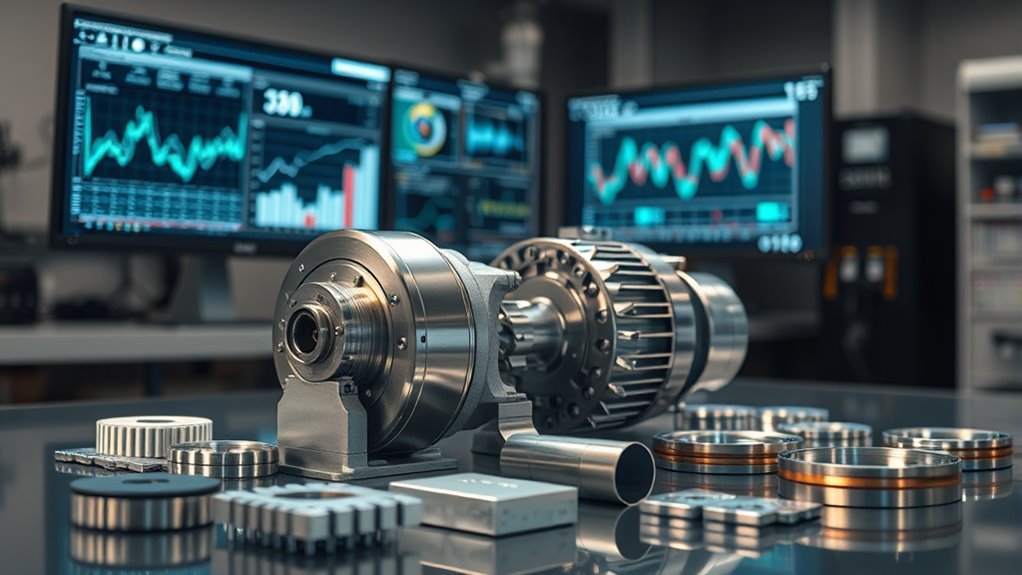
Although core losses in electrical machines, primarily stemming from hysteresis and eddy currents, pose a significant challenge, choosing superior materials can drastically mitigate these issues.
By selecting high-quality magnetic materials, like silicon steel, you can significantly reduce core loss, enhancing the efficiency of electric motors. Laminated cores are essential as they minimize eddy currents by reducing the cross-sectional area, thus curbing energy losses.
Opting for materials with high magnetic performance, such as amorphous steel, can further improve efficiency by up to 10-15%. These superior materials reduce hysteresis losses since they require less energy for magnetization cycles.
Prioritizing materials with optimal magnetic permeability and lower coercivity values is crucial for minimizing energy losses and boosting overall performance.
Efficient Cooling Systems and Ventilation
While selecting superior materials significantly reduces core losses in electrical machines, maintaining their efficiency also depends on effective cooling systems and ventilation.
You need efficient cooling systems, like air or liquid cooling, to keep optimal operating temperatures and prevent overheating. Without proper ventilation, heat from mechanical, electrical, and core losses builds up, reducing electrical machine efficiency.
High-quality fans or heat exchangers help manage heat dissipation, ensuring performance doesn’t falter. Regular maintenance is crucial—inspect and clean airflow paths to avoid obstructions that lead to inefficient heat dissipation.
Ensuring Stable Voltage Supply
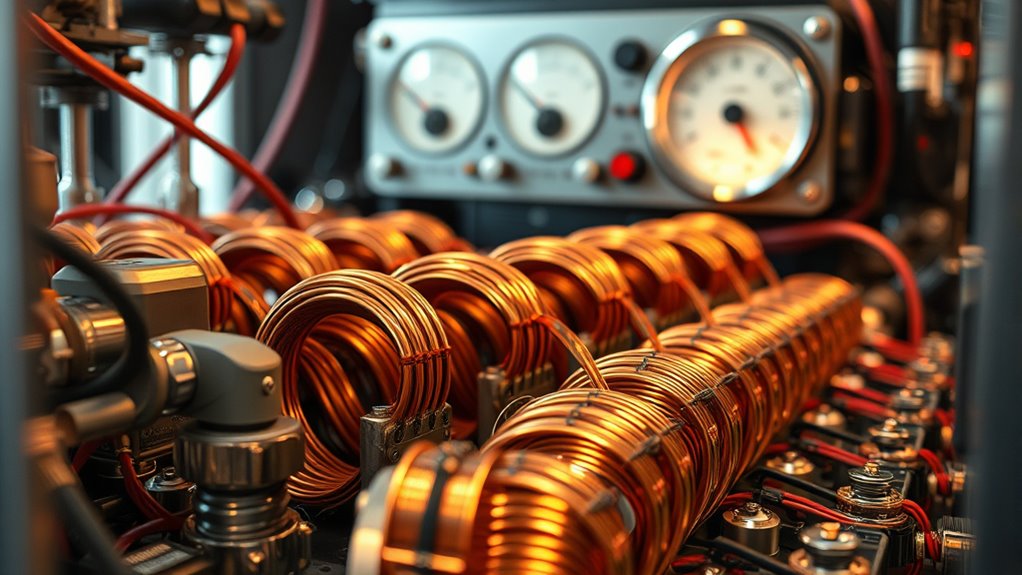
When ensuring your electrical machines operate efficiently, maintaining a stable voltage supply is vital. Voltage fluctuations can lead to increased electrical losses and reduced performance.
It’s crucial to keep voltage levels within ±10% of the rated voltage to prevent overheating and inefficiencies. Unstable voltage can result in motor damage, increased energy consumption, and lower overall efficiency due to excessive heat from electrical losses.
You should prioritize regular monitoring and regulation of the supply voltage to minimize operational losses and enhance machine longevity. Implementing devices like automatic voltage regulators (AVR) helps maintain voltage stability, ensuring your machines run at peak efficiency.
The Role of Load Management in Performance
Load management plays a pivotal role in optimizing the performance of electrical machines. Operating motors at around 75% of their rated load maximizes motor efficiency and leads to significant energy savings.
When motors run below 30% of their rated load, efficiency drops, wasting energy and hiking operational costs. Effective load management strategies, like variable-speed drives, let you adjust motor speeds based on actual needs, enhancing energy efficiency.
Oversized motors operating at low loads suffer from poor power factors, causing increased line losses and potential utility cost spikes. Regularly monitoring and analyzing load conditions allows you to spot inefficiencies and take corrective actions, such as realigning motor sizes or load adjustments, ensuring optimal performance and reducing costs.
Selecting High-Quality Bearings and Lubrication
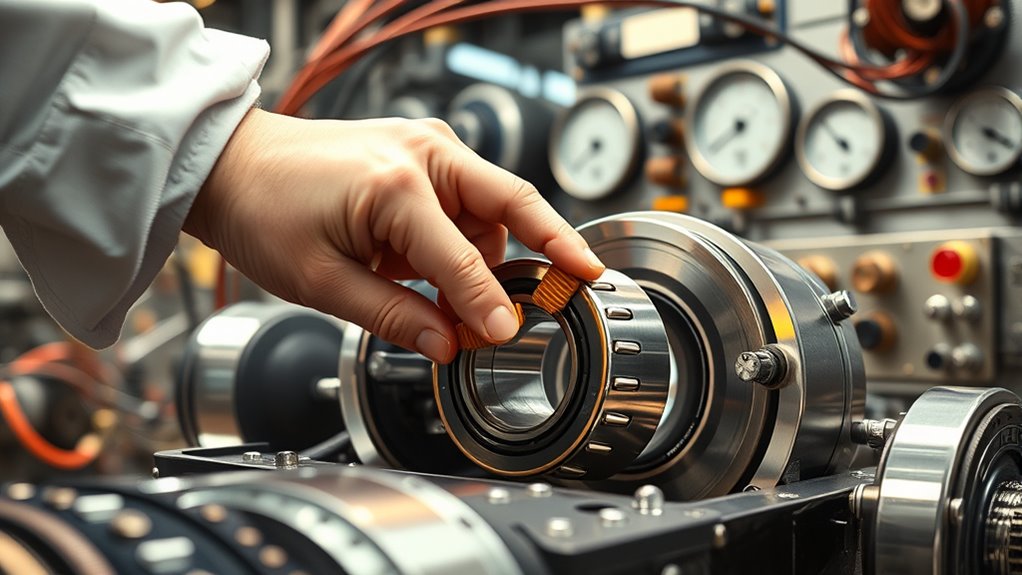
To enhance the efficiency of electrical machines, selecting high-quality bearings and proper lubrication is crucial. High-quality bearings minimize mechanical losses by reducing friction, which boosts overall machine efficiency.
Proper lubrication is key to maintaining optimal bearing performance, decreasing wear, and preventing overheating. Opt for synthetic lubricants for better thermal stability and lower friction, extending bearing lifespan and efficiency.
Regular maintenance and timely replacement of bearings and lubrication are essential to avoid equipment failure, ensuring your machines run smoothly.
Choose bearings with appropriate load ratings and designs, such as sealed or shielded types, to reduce contamination and maintenance needs.
Conclusion
To enhance electrical machine efficiency, focus on minimizing losses and optimizing performance. You can reduce mechanical losses by selecting high-quality bearings and ensuring proper lubrication. Use superior materials like silicon steel to mitigate core losses, and implement efficient cooling systems to prevent overheating. Always maintain a stable voltage supply and employ advanced control strategies to keep motors operating near their rated capacity. With these steps, you’ll significantly improve energy efficiency and extend the lifespan of your machines.
FAQs
1. What Are the Factors Affecting the Efficiency of a Machine?
You should consider mechanical, electrical, and core losses as primary efficiency factors. Address friction in bearings, resistance in windings, and alternating magnetic fields. Additionally, ensure effective cooling, proper ventilation, and optimal load conditions for maximum efficiency.
2. What Is the Machine Efficiency Factor?
You’d calculate the Machine Efficiency Factor (MEF) as the output power divided by input power, then multiply by 100. This percentage shows how effectively your machine converts electrical energy into mechanical energy, minimizing energy waste.
3. What Is the Efficiency of an Electrical Machine?
You’re trying to determine the efficiency of an electrical machine. Calculate it by dividing the mechanical power output by the electrical power input. Remember, high efficiency reduces energy loss and results in better performance.
4. How to Determine Electrical Efficiency?
To determine electrical efficiency, you’ll divide the mechanical power output (Pm) by the electrical power input (Pe). Ensure you’re measuring both under consistent load conditions. Remember, regular maintenance keeps efficiency high by minimizing losses.