Unraveling the Dynamics of Cumulative Compound Motor
This motor type is a mix of both series and shunt configurations, making it unique among DC motor types commonly used in industry. Here, the shunt field emerges as the dominant force, wielding unparalleled strength compared to its series counterpart. The principle of cumulative compound motors is widely studied in engineering, PDF guides, and technical articles, especially in applications across India, the U.S., and Europe. Unlike their less-favored counterparts, the differential compound motors, where discord reigns between series and shunt fields, resulting in lackluster torque performance, cumulative compound motors embody synergy and efficiency.
Let’s explore the properties, field flux, and performance characteristics that set this DC motor apart in real-world loads and control systems.
What is a Cumulative Compound Motor?
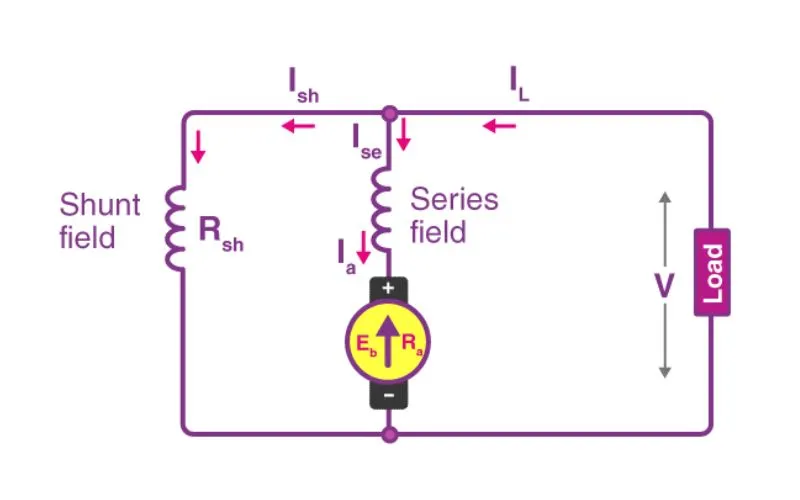
They offer a middle ground between the series and shunt field coils, utilizing shunt field flux and shunt field coils for steady operation. As a subtype of DC motors, they feature shunt and series field windings. These motors derive their name from the cooperative interaction between these windings, where the magnetic fields complement each other, resulting in a cumulative effect. The difference between cumulative and differential compound motors lies in the direction and magnitude of combined field flux and how it impacts motor behavior. This unique amalgamation bestows upon the cumulative compound motor defining characteristics, making it a favored choice for specific applications.
Integration of Shunt and Series Characteristics
This combination enhances rotation stability and allows for a smooth startup using a starter, which is crucial for DC machines under varying voltage conditions. This integration offers the benefits of steady-speed operation akin to a shunt motor alongside the high starting torque characteristic of a series motor.
Moreover, their versatility across a variety of applications and ability to handle dynamic loads under fluctuating voltage make them indispensable in control systems.
Compound Motors: Versatile Applications
Compound motors stand at the forefront of innovation, integrating both series and shunt field windings to amplify performance across various applications. Beyond traditional electrical engineering, these motors are used in multiple transportation modes, including cars, trucks, buses, trains, and locomotives.
These motors are used extensively in freight elevators, compressors, and heavy-duty presses, where robust torque and dependable rotation are essential under varying loads. Whether powered by gas, hybrid technology, or human pedal power alone, compound motors enable efficient and reliable mechanical operations, driving innovation across industries.
Performance Characteristics of the Cumulative Compound Motor
Exploring cumulative compound motors unveils a world where torque, speed, and magnetic flux harmonize to define operational prowess. This section examines the key performance traits, illuminating the intricate interplay between armature torque, speed regulation, and torque-speed characteristics.
Armature Torque Vs Armature Current
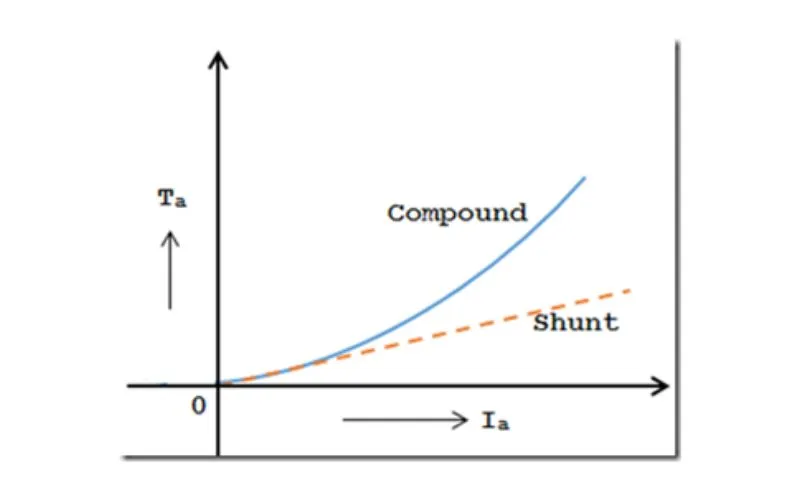
When the load increases in the compound motor, the strength of the series field increases, whereas the shunt field residues remain constant.
Accordingly, the motor’s flux is increased, resulting in increased armature torque.
∴ Ta∝ΦIa.
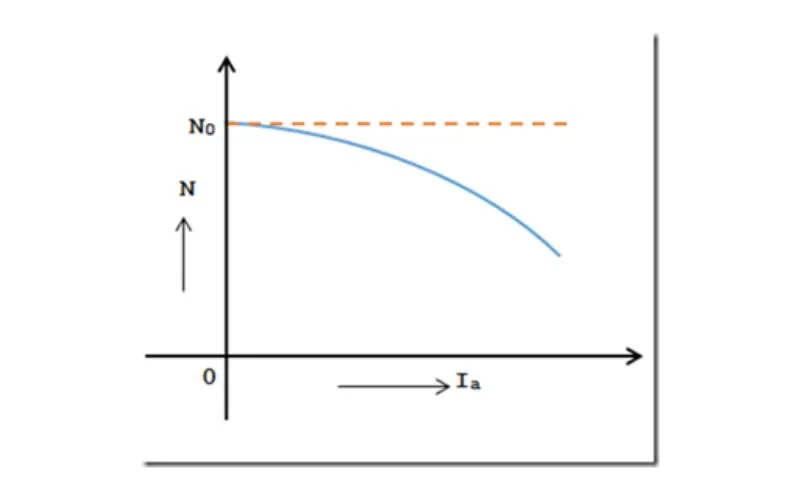
Speed Vs. Armature Current Characteristic
Speed Vs. Armature Torque Characteristic
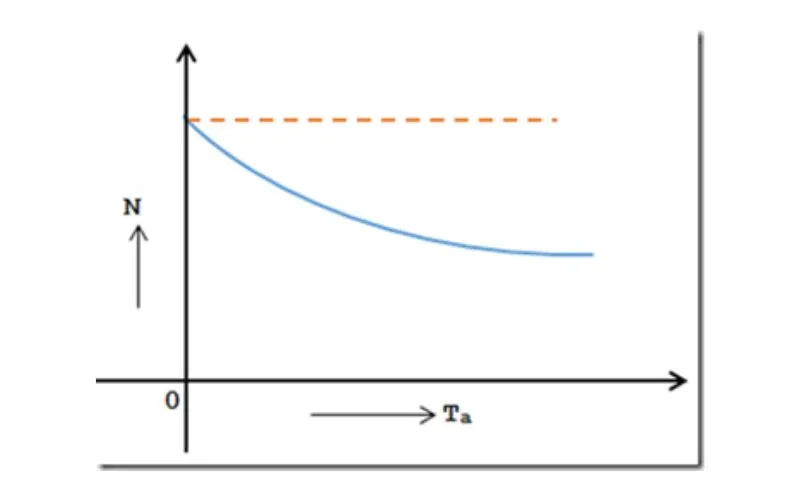
In a cumulative compound motor, the torque for a given armature current is less than that of a series motor but more than that of a shunt motor. For example, the current characteristic curve of the speed vs. armature is shown in Fig.
Key Characteristics of Cumulative Compound Motors
Cumulative compound or CC motors are versatile direct current (DC) motors that combine series and shunt field windings. However, before diving into the characteristics, let’s briefly review cumulative compound motors.
Cumulative compound motors, also known as compound wound motors, are a type of electric motor that combines the characteristics of both series wound and shunt-wound motors. They are widely used in industrial applications that require high starting torque and precise speed control.
Here are some key characteristics of cumulative compound motors:
Construction
Cumulative compound motors are placed on the stator (stationary part) of the engine. The armature, which is connected to the load, is located on the rotor (rotating part) of the motor.
Field Winding Arrangement
This arrangement allows the motor to benefit from the characteristics of both series and shunt motors in a cumulative compound.
Starting Torque
One notable feature of cumulative compound motors is their high starting torque. The series field winding provides high torque at startup due to its high current flow. These motors are suitable for applications that require a heavy initial load, such as driving large machinery or starting a conveyor belt.
Speed Regulation
Cumulative compound motors offer good speed regulation due to the presence of the shunt field winding. The shunt field controls the motor’s speed by regulating the current flow through the armature. Adjusting the shunt field current allows the motor’s speed to be maintained at the desired level, even under varying load conditions.
Operating Characteristics
These motors exhibit a relatively constant speed-torque relationship, which means that the motor’s speed remains fairly stable even when the load changes. This makes cumulative compound motors suitable for applications where a consistent rate is required, such as in machine tools or lathes.
Efficiency
Cumulative compound motors generally have higher efficiency compared to series motors. The shunt field winding helps improve efficiency by reducing the armature current, minimizing power losses, and improving overall motor performance.
Field Control
Another advantage of cumulative compound motors is their field control capability. The motor’s performance can be adjusted to meet specific application requirements by independently varying the shunt and series field currents. This flexibility allows for precise speed control and torque regulation.
Industrial Applications
Cumulative compound motors are commonly used in various industrial applications, including heavy machinery, elevators, cranes, hoists, conveyors, and large industrial fans. Their ability to provide high starting torque and good speed control makes them suitable for demanding operations requiring power and precision.
Primary Characteristics of Cumulative Compound Motors

Now, let’s examine the primary characteristics of these motors in more detail.
High Starting Torque
One of the most significant characteristics of cumulative compound motors is their high starting torque. Due to the additional series winding, the engine can produce higher torque upon startup, making it ideal for applications that initially require a substantial amount of torque.
Excellent Speed Regulation
Unlike series motors, cumulative compound motors offer exceptional speed regulation, much like shunt motors. Despite load variations, the engine’s speed remains relatively stable, making it an excellent choice for precision applications.
Flexibility in Performance Characteristics
The performance characteristics of cumulative compound motors are adaptable. By altering the turn ratio between the series and shunt windings, the motor’s features can be customized to match specific requirements.
This adaptability enables engineers to fine-tune shunt field coils and winding configurations, making these motors ideal for applications such as reciprocating pumps, compressors, and freight elevators.
High Efficiency
Cumulative compound motors are highly efficient. Their unique configuration enables them to maintain high efficiency across a wide range of operating conditions. This trait, combined with their flexibility and high starting torque, makes them attractive for multiple heavy-duty industrial applications.