Types of Diodes: Key Varieties and Their Applications Explained
When you think about diodes, you might envision basic components that direct current flow, but there’s more beneath the surface. Each type, from Schottky to Zener, brings something unique, like low voltage drops or reliable voltage regulation. Imagine how light-emitting diodes transform energy efficiency in lighting or how photodiodes enhance light-sensing capabilities. Have you considered the role of avalanche diodes in protecting circuits from voltage spikes? A rich array of diode types, each with specific applications and benefits, is waiting to be explored. Which one intrigues you the most?
Key Takeaways
- Schottky diodes are known for their low forward voltage drop and rapid switching capabilities.
- Zener diodes provide voltage regulation and can conduct current in both directions.
- LEDs emit light efficiently, offering vibrant colors for displays and indicators.
- Photodiodes convert light into electrical signals and are crucial in optical communication systems.
- Varactor diodes have variable capacitance, which is essential for tuning circuits and frequency modulation.
Common Diode Types
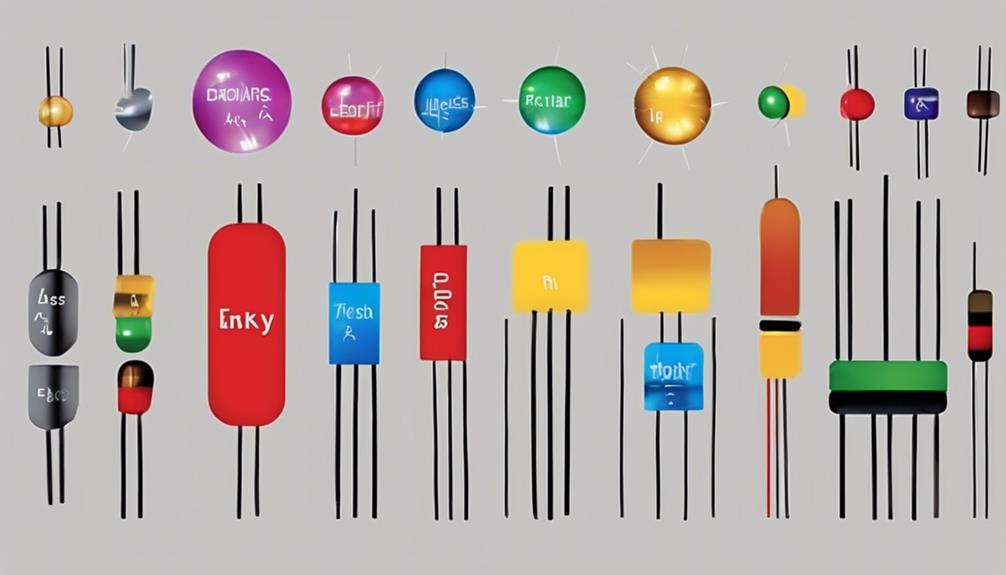
Diodes are captivating components that play essential roles in countless electronic devices, and understanding their types can be quite illuminating. As you explore common types, you’ll encounter the versatile semiconductor known as the diode, each with unique characteristics tailored for specific applications.
Take Schottky diodes, for instance. They boast a low forward voltage drop and fast switching capabilities, making them ideal for high-speed circuits. Their efficiency is unmatched when minimizing power loss is significant.
Next, there’s the Zener diode, which offers excellent voltage regulation. It allows current to flow in both directions, stabilizing voltage levels in power supplies.
Another wonder is the Light-Emitting Diode (LED), which emits light when current flows through it. It’s widely used in displays and indicators and offers energy-efficient lighting solutions.
You might also find Avalanche diodes intriguing. They operate in the breakdown region, generating a surge of electrons that can be useful in protecting circuits from voltage spikes.
Lastly, the Laser diode can produce a coherent and narrow beam of light, making it crucial in applications requiring precision, such as optical storage and communication devices. Each type offers distinct advantages that cater to different technological needs.
Specialized Diodes
Photodiodes are essential for light-sensing applications like solar panels when exploring specialized diodes, as they generate current when exposed to light.
Varactor diodes stand out because their capacitance changes with applied voltage, making them perfect for tuning circuits and frequency modulation.
Understanding these characteristics helps you select the right diode for your specific needs.
Photodiode Applications
In the field of light detection, photodiodes serve as key players across a variety of applications. They’re found in optical communication systems, where they enable the transfer of data through optical fibers, making them indispensable for high-speed internet. They’re also pivotal in solar panels, efficiently converting light energy into electrical power.
Regarding cameras, photodiodes help capture images by detecting light and transforming it into electrical signals, ensuring that your photos come out perfectly.
In medical devices, photodiodes are essential for accurate light detection, which aids in creating precise imaging and diagnostics. Smoke detectors rely on photodiodes to sense changes in light intensity, helping keep you safe by promptly alerting you to fire hazards.
In addition, automatic lighting systems use photodiodes to efficiently manage lighting based on ambient light conditions, conserving energy and resources.
Photodiodes also play a significant role in optical sensors, which are widely used in various industrial applications for precise monitoring and control. Overall, their versatility in light detection makes them indispensable components across a wide range of technologies, enhancing efficiency and safety in everyday life.
Varactor Diode Characteristics
Imagine needing a component that can vary its capacitance based on its voltage—this is precisely what a varactor diode does. Also known as a varicap diode, it offers a unique feature: variable capacitance. As you increase the reverse bias voltage, the capacitance decreases, making it invaluable for frequency tuning in electronic circuits.
This behavior is particularly useful in voltage-controlled oscillators and phase-locked loops, where precision is key.
In radio frequency communication systems, varactor diodes play an essential role. They allow you to adjust frequencies seamlessly, ensuring efficient signal transmission and reception—their ability to act as frequency multipliers further highlights their versatility.
These diodes are at the heart of the operation, whether tuning a radio or ensuring a stable frequency in a high-tech device.
What sets varactor diodes apart is their fast response time and high Q factor, making them ideal for applications that demand quick adjustments and minimal signal loss.
If you’re working on electronic devices requiring voltage-controlled capacitance, incorporating a varactor diode can enhance performance and reliability, making them indispensable in modern electronic design.
Protection Diodes
Protection diodes safeguard electronic circuits from unexpected surges and interference. Transient voltage suppression diodes effectively divert excess current to protect devices from voltage spikes.
Gold-doped diodes are your go-to choice if you’re dealing with electromagnetic interference (EMI) or radio frequency interference (RFI). These diodes protect against these disturbances, ensuring your electronics function smoothly.
Super barrier diodes are ideal for applications requiring low forward voltage drop and high efficiency. They excel in rectification tasks, minimizing energy loss.
Although point contact diodes are mostly historical, their unique structure—a metal point touching a semiconductor material to allow current flow in one direction—offers insight into early diode design.
Regarding thermal management, consider Peltier diodes, which utilize the Peltier effect. These thermal diodes create a temperature difference when an electric current passes through them, offering innovative solutions for heat control.
Each diode serves a specific purpose, ensuring your electronic circuits are well-protected and efficient, regardless of the challenges they face.
Advanced Diode Varieties
Diving into advanced diode varieties, you’ll discover devices pushing traditional diode applications’ boundaries. Among these, Gunn diodes stand out for their role in high-frequency microwave applications. They can generate and amplify microwave signals, making them important in radar and communication systems. Unlike typical silicon diodes, Gunn diodes don’t function as rectifiers but as oscillators.
Crystal diodes, known as crystal rectifiers, were pioneers in semiconductor technology. They found their place in early radio receivers and radar systems, marking significant milestones in electronics history.
In contrast, silicon-controlled rectifiers (SCRs) offer more control with their three-terminal design. They’re used in power control applications, such as motor speed control and lighting systems, where precise power modulation is essential.
Avalanche diodes are unique in their operation in the reverse breakdown region. They provide precise voltage references and protection against transient voltage spikes.
Vacuum diodes, or thermionic diodes, are relics from the past but were instrumental in developing modern electronics by demonstrating the diode’s basic principles. Each of these different types of diodes plays a critical role in advancing electronic applications, showcasing the versatility and innovation that continues to drive the industry forward.
Light Emitting Diodes

Light-emitting diodes (LEDs) revolutionize how we illuminate our world by offering energy-efficient and durable lighting solutions. These remarkable semiconductor devices emit light when a current passes through them, making them a preferred choice in various applications. Unlike traditional lighting sources, LEDs are incredibly energy-efficient, saving you on electricity bills while benefiting from their long lifespan. Their durability means fewer replacements, reducing waste and maintenance costs.
You often see LEDs in displays and indicators, where their vibrant colors and brightness enhance visual appeal and functionality. From your smartphone screen to digital billboards, LEDs provide clarity and vividness.
LEDs are a game-changer in automotive lighting. They offer superior illumination with less power consumption, guaranteeing better visibility and safety on the road and making nighttime driving more secure.
LEDs come in various colors, such as red, green, blue, and white, offering versatility in design and functionality. As LED technology advances, improvements in efficiency, brightness, and color options continue to expand their use across different industries.
For home, business, or automotive applications, embracing LED technology means investing in a brighter, more sustainable future.
Photodiodes and Applications
While LEDs light up our world, photodiodes work behind the scenes to convert light into electrical signals. As semiconductor devices, photodiodes excel in transforming light into electrical current, a function essential in many modern applications. You’ll find these versatile components in light sensors, where their ability to detect changes in brightness is vital.
Photodiodes are indispensable in optical communication systems, converting light signals into data. This guarantees the rapid and accurate transmission of information. Photodiodes are also key players in barcode scanners. Thanks to their fast response times and high sensitivity, they quickly decode the information encoded in barcodes, streamlining processes in retail and logistics.
Their high sensitivity isn’t just limited to artificial light; solar panels capitalize on this feature, too. By converting sunlight into electricity, photodiodes contribute to sustainable energy solutions. These devices operate on the principle of the photoelectric effect. When exposed to light, they generate electron-hole pairs, producing electrical current.
This fundamental process allows photodiodes to perform efficiently in diverse applications, making them indispensable in technology-driven environments. Whether enhancing connectivity or supporting renewable energy, photodiodes quietly power many facets of our daily lives.
Voltage-Controlled Diodes

Have you ever wondered how radios and televisions can seamlessly tune into different frequencies? The magic lies in voltage-controlled diodes, particularly varactor diodes. These diodes adjust their capacitance based on the voltage applied across them, playing an essential role in various electronic devices.
You’ll often find varactor diodes in:
- Tuning Circuits: They enable radios and televisions to lock onto specific frequencies precisely.
- Frequency Modulators: These diodes help alter signal frequencies necessary for communication systems.
- Voltage-Controlled Oscillators: They adjust the oscillation frequency, which is vital for synthesizers and signal generators.
Varactor diodes are specially designed to operate under reverse bias conditions. This reverse bias alters the width of their depletion region, affecting the diode’s capacitance.
The most interesting aspect of varactor diodes is their nonlinear capacitance-voltage relationship, making them perfect for voltage-controlled applications.
When you change the voltage across a varactor diode, its capacitance changes, allowing it to tune circuits effectively. This capability is harnessed in numerous electronic devices, from radios to communication systems.
Fast Recovery Diodes
When considering fast recovery diodes, focus on their reduced reverse recovery time, which makes them perfect for high-speed switching applications. These diodes are essential in modern electronics because they minimize power losses and boost circuit efficiency.
They’re often found in power supplies, inverters, and motor control systems, especially in high-frequency applications.
Characteristics of Fast Recovery
Fast recovery diodes play a crucial role in modern electronic circuits because they swiftly switch between conducting and non-conducting states. They are indispensable for high-frequency applications like power supplies, inverters, or motor drives. They boast a short reverse recovery time, typically ranging from nanoseconds to microseconds. This means they can minimize stored charge and reduce reverse switching time, making them perfect for quick switching circuits.
Fast recovery diodes offer several key advantages:
- Lower forward voltage drop: This characteristic contributes to their efficiency in high-frequency settings, ensuring less energy is wasted as heat.
- Reduced reverse switching losses: By minimizing these losses, the diodes support efficient energy conversion, which is critical in power-sensitive applications.
- Rapid switching speeds: Their design focuses on quick changes, which is crucial for circuits with fast switching demands.
When you use fast recovery diodes, you ensure your circuit operates with peak efficiency and speed. These diodes enhance performance in high-frequency applications and contribute to the overall reliability and effectiveness of your electronic systems.
Applications in Modern Electronics
Building on the characteristics of fast recuperation diodes, let’s explore their practical applications in modern electronics.
Due to their quick switching capabilities, these diodes are especially useful in high-frequency applications. Their short reverse recovery time makes them perfect for fast rectification of AC signals, a critical task in many electronic systems.
Fast recuperation diodes excel in power supplies and inverters by minimizing power losses and improving efficiency. They guarantee smooth and effective energy conversion processes, which is essential for maintaining these systems’ performance.
These diodes play a pivotal role in high-speed circuits. Their ability to switch rapidly without significant energy loss makes them ideal for these circuits. This characteristic is particularly beneficial in applications where maintaining speed without sacrificing efficiency is key.
Furthermore, fast recuperation diodes are integral to modern signal processing techniques. They enable rapid and efficient signal handling, ensuring that the electronic devices you rely on work without a hitch.
In all these applications, fast recuperation diodes enhance performance and contribute to the overall reliability of electronic systems, making them indispensable in today’s tech-driven world.
Historical Diode Types
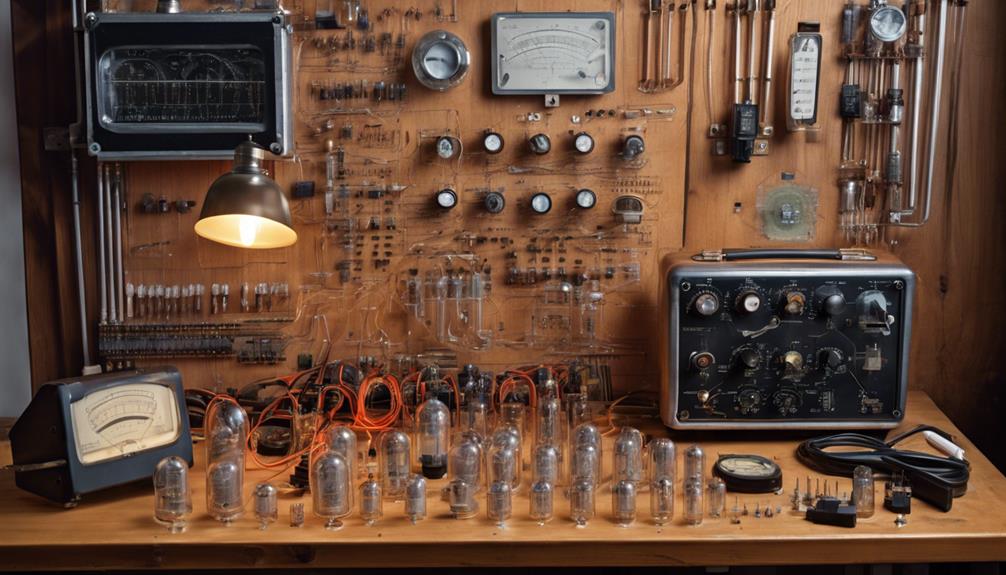
The evolution of electronics owes much to the innovation of historical diode types. These pioneers paved the way for modern technology, offering insights into functionality and application. Let’s immerse ourselves in some key historical diodes:
- Point Contact Diode & Crystal Diode: The Point Contact Diode was one of the earliest diodes where metal point contacts formed a rectifying junction on a semiconductor crystal. On the other hand, Crystal Diodes used a crystal of copper oxide with a metal point, finding their place in early radio receivers. Both were essential in the progression from vacuum electronics to semiconductor devices.
- Avalanche Diode: This high-power diode operates in the avalanche breakdown region. It’s unique for generating noise, which can be useful in certain applications. Avalanche Diodes highlight the ability to control high voltages and currents, marking a significant step in developing robust electronic components.
- Silicon Controlled Rectifier & Vacuum Diodes: Known as SCRs, these three-terminal devices are crucial in power control applications. Before semiconductors took over, Vacuum Diodes allowed electrons to flow in a vacuum, playing a vital role in early electronics.
Each of these diodes contributed uniquely to the rich tapestry of electronic evolution.
Conclusion
You’ve explored the fascinating world of diodes and their diverse applications. Each type plays a pivotal role in modern electronics, from common types providing essential functions to specialized diodes meeting unique needs. Protection diodes guard against spikes, while advanced varieties like Gunn handle high-frequency demands. LEDs revolutionize lighting, and photodiodes enhance light detection. Voltage-controlled options offer fine-tuning capabilities. Understanding these technologies empowers you to make informed electronic design and implementation decisions.
FAQs
What are the different types of diodes?
There are several diodes, each serving a specific purpose in electronics. The most common types include the PN Junction Diode (used for rectification), Zener Diode (used for voltage regulation), Schottky Diode (known for fast switching), Light Emitting Diode (LED) (used for light emission), and Photodiode (used to detect light).
Key Points:
- PN Junction Diode: Standard diode for rectification
- Zener Diode: Used for voltage regulation
- Schottky Diode: Fast switching with low voltage drop
- LED: Light emission in various applications
- Photodiode: Converts light into electrical current
How does a Zener diode work?
A Zener diode is designed to allow current to flow forward, like a standard diode, and in the reverse direction when the voltage exceeds a specific breakdown level. This makes it ideal for voltage regulation, as it maintains a constant output voltage even if the input voltage fluctuates.
Key Points:
- Allows reverse current flow at a specific voltage
- Used for voltage regulation in circuits
- Maintains stable output voltage
What are the applications of Schottky diodes?
Schottky diodes are known for their low forward voltage drop and fast switching speed, making them ideal for high-speed and low-power applications. They are commonly used in power supply circuits, radio frequency (RF) applications, and as rectifiers in low-voltage circuits.
Key Points:
- Low forward voltage drop
- Used in high-speed, low-power circuits
- Common in power supplies and RF applications