Comparison of Different Types of Insulation: Best Options
When considering different types of insulation, it’s essential to weigh their benefits and drawbacks carefully. Spray foam insulation provides a strong air seal, enhancing energy savings, while fiberglass is affordable and easy to install. On the eco-friendly side, cellulose is made from recycled materials but may settle over time, reducing efficiency. Stay insulator offers reliable performance and durability, making it a solid choice for long-term insulation needs. Each type has a Class One Fire Rating, ensuring safety, but your decision should factor in more than just these aspects to make an informed choice.
Key Takeaways
- Spray foam insulation offers superior air-sealing properties and high R-values, enhancing energy efficiency.
- Fiberglass insulation is cost-effective and easy to install but lacks an air seal.
- Cellulose insulation is eco-friendly and provides good thermal performance but may settle over time.
- Foam boards offer high R-values and excellent moisture resistance, which is ideal for various applications.
- Mineral wool boasts impressive fire resistance and soundproofing qualities, enhancing safety and comfort.
Types of Insulation Materials
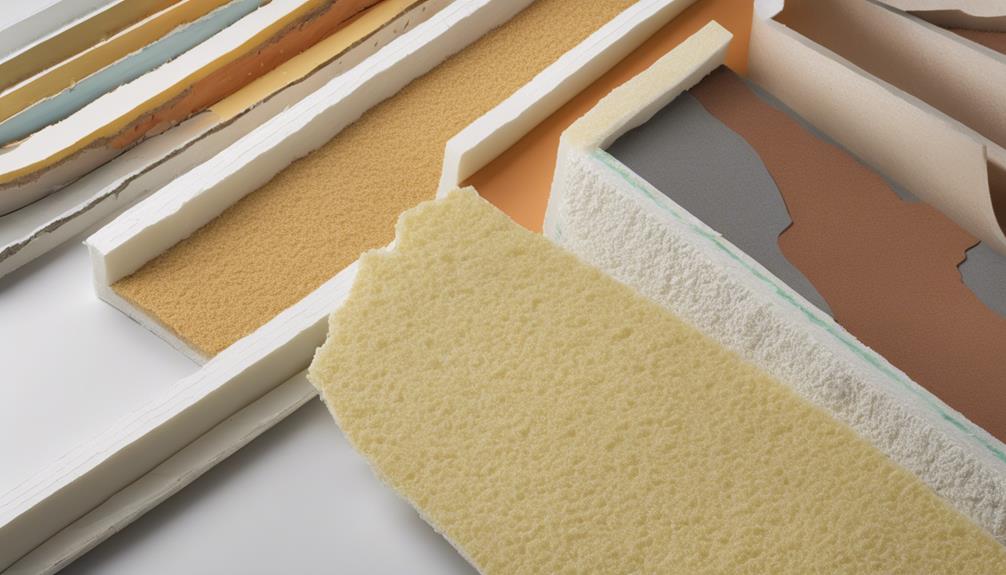
Understanding the various insulation materials is essential for improving efficiency. Spray foam insulation, fiberglass, cellulose, foam boards, mineral wool, natural fibers, and denim all have unique advantages and characteristics.
Fiberglass is one of the most common materials, available in batts, rolls, and loose-fill. It offers decent R-values and is relatively cost-effective. Cellulose, often made from recycled paper, is another popular choice due to its eco-friendliness and good thermal performance. Foam boards, typically polystyrene, provide high R-values and excellent moisture resistance.
Spray foam insulation is known for its superior air-sealing properties and high R-values, making it ideal for hard-to-reach areas. Mineral wool, derived from volcanic rock or slag, boasts impressive fire resistance and soundproofing qualities. Natural fibers like wool or cotton (including recycled denim) offer sustainable options and are less irritating.
Each of these materials varies in R-values, which measure their effectiveness in reducing heat transfer. They also differ in fire resistance capabilities and installation methods, which can impact your choice depending on your specific needs and preferences. Understanding these factors will help you make an informed decision.
Installation Methods
Installing insulation correctly is crucial for maximizing its effectiveness and guaranteeing long-term energy savings. If you’re interested in DIY options, blanket batts and rolls are easy to install; you must fit and staple them between studs. For something more advanced, foam board insulation requires precise cutting and securing to prevent air leaks.
Loose-fill insulation is blown into wall cavities or attics using specialized equipment, making it a task best suited for professionals. Spray foam insulation also requires professional installation due to its application process, which involves spraying a liquid that expands and hardens into a solid, airtight layer.
Structural Insulated Panels (SIPs) are prefabricated and must be installed by experts during construction to ensure proper sealing.
Radiant barriers and reflective insulation systems are simpler DIY projects. Attach reflective surfaces like aluminum foil to reduce heat gain in your home.
For high-performance insulation during new builds, Insulating Concrete Forms (ICFs) are set up with foam boards or blocks to create a solid structure. Proper installation is essential to achieving the best insulation performance, regardless of your chosen type.
Benefits and Considerations
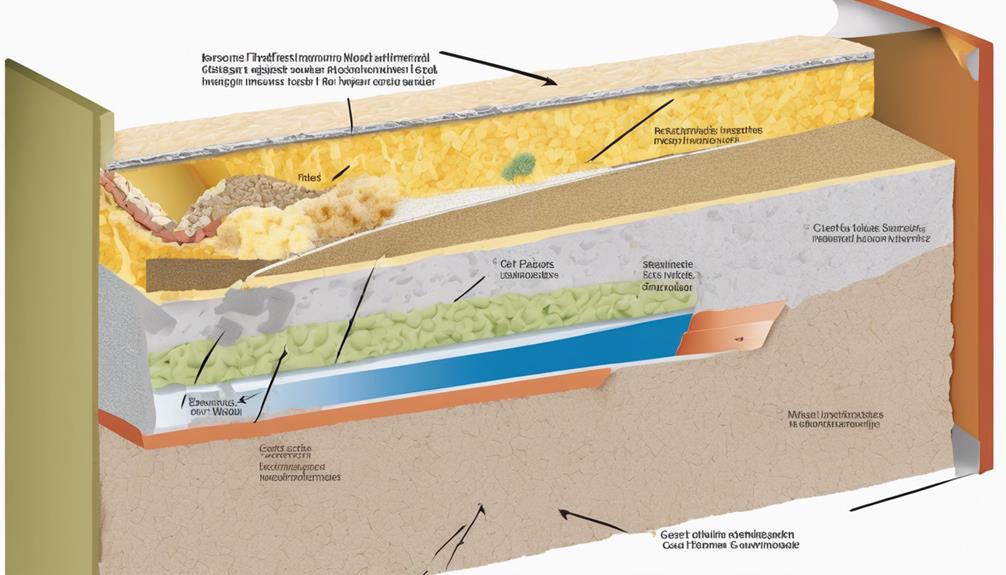
Choosing the right insulation for your home comes with multiple benefits and considerations. First, let’s talk about R-values. Foam insulation, like rigid foam board and liquid foam insulation, offers higher R-values and forms an effective air barrier to improve energy efficiency. This means your home stays warmer in winter and cooler in summer, reducing energy bills.
Structural Insulated Panels (SIPs) also provide superior and uniform insulation, reducing heat transfer more effectively than traditional methods. This contributes to better thermal performance and a more comfortable living environment.
Radiant Barriers and Reflective Insulation are particularly useful in hot climates, reducing summer heat gain and enhancing overall comfort.
However, proper installation is essential. Properly installed insulation materials can reduce other weatherizing costs and improve long-term energy efficiency. For example, Liquid Foam Insulation can maximize thermal performance if applied correctly.
Here are three key considerations:
- Energy Efficiency: Higher R-values and effective air barriers enhance energy efficiency.
- Thermal Performance: SIPs and Liquid Foam offer superior thermal performance.
- Weatherizing Costs: Proper installation reduces additional weatherizing expenses.
Cost and Long-Term Savings
Investing in foam insulation products might seem expensive at first, but notable long-term savings can offset these upfront costs. Foam insulation boosts energy efficiency, lowering heating and cooling bills over time. While the initial investment is higher, you’ll soon realize the long-term savings through reduced energy consumption.
Installing Structural Insulated Panels (SIPs) can significantly reduce construction costs and time. These panels offer superior insulation, resulting in fewer needs for additional weatherizing tasks and contributing to long-term energy efficiency.
Radiant barriers are another excellent option, especially for reducing summer heat gain. By lowering cooling costs, these barriers provide substantial cost savings in hotter climates.
Liquid foam insulation is another standout because it can achieve higher R-values than traditional batt insulation. This increased energy efficiency translates to more cost savings over the years. The upfront investment in liquid foam insulation can pay off through lower utility bills and a more comfortable living environment.
Determining Insulation Needs
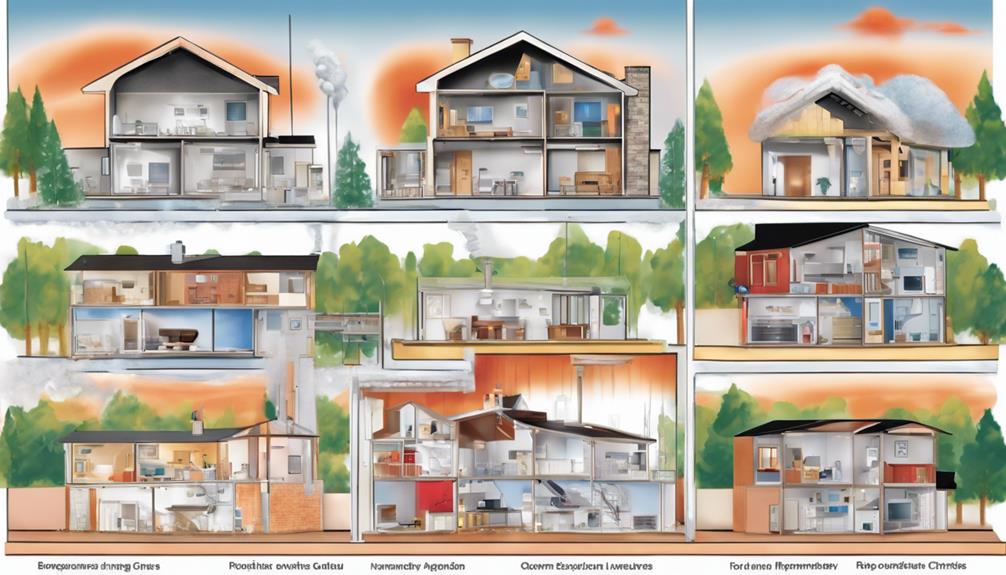
To achieve the long-term savings and energy efficiency discussed earlier, it’s important to determine your insulation needs accurately. Start by checking your existing insulation levels. This will help you understand how much more insulation is required. Use an insulation calculator to get precise estimates.
Steps to Determine Insulation Needs:
- Measure Current Insulation Depth: Check the depth of your current insulation to identify how much additional insulation is required for the best thermal performance.
- Calculate the Area Needing Insulation: Measure the square footage of the space you need to insulate. This will help you figure out how much insulation material you’ll need. Select the Appropriate Insulation Type: Choose the right type based on the required R-value and the area you’re courting. The R-value indicates the insulation’s resistance to heat flow, which is essential for energy efficiency goals.
Also, the insulation material properties and the installation method should be considered. Some materials are better suited for particular spaces and installation techniques. By carefully evaluating these factors, you’ll see that your insulation is effective and efficient, helping you meet your energy efficiency goals.
Specialized Insulation Types
Specialized insulation types offer unique benefits tailored to specific needs and environments. If you’re dealing with extreme heat, radiant barriers are your go-to. They are especially useful in attics to reflect heat away.
Vapor barriers are essential for moisture control. They prevent water vapor from seeping into walls and ceilings in cold or humid climates.
Consider concrete block insulation and insulating concrete forms (ICFs) when constructing new buildings. These materials are engineered for specific applications and provide strong and efficient insulation.
Structural Insulated Panels (SIPs) are an excellent choice for enhancing energy efficiency. They offer superior insulation and minimize heat transfer across walls, ceilings, floors, and roofs.
Materials like denim insulation, sheep’s wool insulation, cork insulation, and cellulose insulation are available for the eco-conscious. These options insulate effectively and reduce one’s environmental footprint, making them ideal for green building projects.
Each specialized insulation type has distinct advantages, so consider your climate, building type, and sustainability goals when choosing the right insulation. By selecting the appropriate insulation, you’ll find comfort, energy efficiency, and longevity for your building.
Recycled and Eco-Friendly Options

Regarding insulation, eco-friendly options are gaining traction for their sustainability benefits and reduced environmental impact. Recycled insulation materials like recycled denim, cellulose insulation, sheep’s wool insulation, and cork insulation are popular choices because they prioritize ecological responsibility. These options not only help minimize waste but also promote green building practices.
Advantages of Eco-Friendly Insulation
- Sustainability Benefits: Recycled insulation is made from materials that would otherwise end up in landfills, such as recycled denim and cellulose. This helps reduce waste and conserve resources.
- Minimizing Waste: By using materials like sheep’s wool insulation and cork insulation, you can help lessen the construction industry’s environmental footprint.
- Environmental Responsibility: Choosing eco-friendly insulation means investing in materials with a lower impact on the planet, even if they come at a higher upfront cost.
Eco-friendly insulation options are available in various forms, including batts, rolls, and loose-fill, making them versatile for different applications. While these may be more expensive than traditional options, their long-term sustainability benefits make them a wise choice for anyone committed to environmental responsibility.
Insulation Material Comparison
Choosing the right insulation material can greatly impact your home’s energy efficiency and safety. When comparing different insulation materials, spray foam, fiberglass, and cellulose, each has unique benefits and drawbacks.
Spray foam insulation is known for creating an air seal, enhancing your home’s home’s savings and comfort. It expands to fill all gaps, providing superior thermal performance. While it’s the most expensive option, its benefits can outweigh the cost. Additionally, spray foam has a Class One Fire Rating, ensuring safety.
Fiberglass insulation is the most cost-effective choice. It’s installed and comes with a Class One Fire Rating. However, it doesn’t have the same air seal as spray foam. Despite this, fiberglass is popular due to its affordability and effectiveness.
Cellulose insulation, made from recycled materials, is a middle-ground option. It also has a Class One Fire Rating but tends to settle over time, which can compromise its efficiency. Unlike spray foam, cellulose has no complete air seal, potentially affecting thermal performance.
Conclusion
To wrap it up, when choosing insulation, weigh your priorities. Spray foam gives you exceptional thermal performance and energy savings. Fiberglass is budget-friendly and easy to install. If you’re conscious, cellulose is a great recycled option, though it might settle over time. Each type has pros and cons, so consider what matters most for your home and budget. With the right choice, you’ll have comfort and efficiency in no time.
FAQs
What are the different types of insulation available?
Several types of insulation are commonly used in homes, and their benefits are great. The most popular options include fiberglass, spray foam, cellulose, and rigid foam. Fiberglass is affordable and easy to install, while spray foam provides superior air sealing. Cellulose is eco-friendly and made from recycled materials, and rigid foam is great for high insulation values in small spaces.
Key Points:
- Fiberglass: Affordable, easy to install
- Spray foam: Superior air sealing, high insulation value
- Cellulose: Eco-friendly, made from recycled materials
- Rigid foam: High insulation in compact spaces
How does fiberglass insulation compare to spray foam insulation?
Fiberglass is a traditional and cost-effective option, available in batts or loose-fill. It’s easy to install but may not seal air leaks as effectively. Spray foam, while more expensive, offers better insulation and seals gaps, reducing air leaks and increasing energy efficiency. Spray foam is ideal for hard-to-reach areas and provides a higher R-value (insulating power).
Key Points:
- Fiberglass: Cost-effective, easy to install, lower R-value
- Spray foam: Higher cost, better air sealing, higher R-value
What are the pros and cons of cellulose insulation?
Cellulose insulation is made from recycled paper and treated with fire-retardant chemicals. It’s a friendly option with good thermal performance and soundproofing qualities. However, it can settle over time, which may reduce its effectiveness, and it’s not as resistant to moisture as foam-based insulation.
Key Points:
- Pros: Eco-friendly, good thermal performance, soundproofing
- Cons: Can settle over time, less moisture-resistant