Voltage Controlled Oscillators (VCOs): Unveiling the Wonders
Voltage-controlled oscillators (VCOs) play a pivotal role in electronics and telecommunications, offering an array of applications and functionalities. Whether you are a seasoned engineer or a curious enthusiast, this comprehensive guide will take you on a journey through the intricacies of VCOs. From understanding their fundamental principles to exploring their various types and real-world applications, this article will provide a holistic view of VCOs and empower you to harness their potential effectively. Learn more about Voltage Controlled Oscillators (VCOs).
A voltage-controlled oscillator (VCO) is crucial in many high-frequency designs, especially in analog devices and semiconductor applications. It functions by varying its oscillation frequency in response to an input voltage, making it ideal for use in modules, kits, and products requiring precise bandwidth control. VCOs are found in sensors, cable assemblies, and ribbon cables, where feedback mechanisms stabilize the frequency. Key specifications include amplitude, harmonics, and resistor values, all of which affect signal grounding and construction quality. Common accessories like tweezers, soldering pads, and boards are essential for assembling and testing VCO equipment. Engineers often consult articles, review example circuit diagrams, and rely on a supportive community for VCO method development.
Introduction to Voltage-Controlled Oscillators
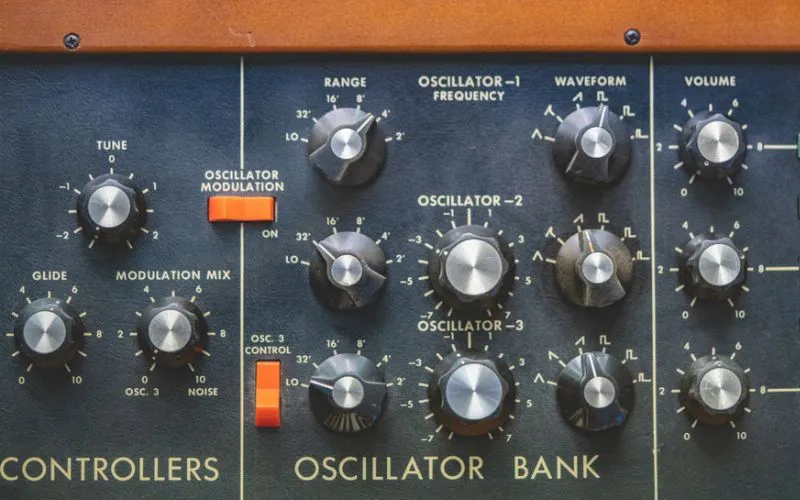
Voltage-controlled oscillators (VCOs) are the unsung heroes of electronics. They provide the heartbeat of countless devices and systems. These remarkable components allow us to control and manipulate frequencies precisely, enabling everything from seamless communication to creating captivating musical melodies.
What is a Voltage Controlled Oscillator?
A voltage-controlled oscillator, commonly known as a VCO, is an electronic oscillator whose output frequency can be controlled by an applied voltage. This unique feature allows VCOs to find applications in various electronic devices and systems where precise frequency control is essential.
VCOs can generate continuous waveforms across a specific frequency range, making them indispensable in numerous applications, from wireless communication systems to audio synthesizers.
The Role of VCOs
VCOs are the heartbeat of various electronic systems, providing them with a stable and tunable frequency source. Their primary functions include:
- Frequency Generation: VCOs produce continuous waveforms at a specific frequency determined by the input voltage, making them invaluable in signal generation and modulation.
- Frequency Synthesis: In frequency synthesizers, VCOs are a key component used to generate a range of frequencies with high precision, allowing for diverse communication channels.
- Phase-Locked Loops (PLLs): VCOs are crucial in PLLs. They help lock the phase and frequency of an input signal to a reference signal, ensuring synchronization in various applications.
Frequency Control in VCOs
One of the distinguishing features of VCOs is their ability to provide precise frequency control. This control is achieved by applying a voltage, typically the control voltage (Vc), to the VCO input. The output frequency of the VCO then responds to changes in this control voltage, allowing for dynamic frequency adjustments.
VCOs’ inherent capability to vary their output frequency in response to control voltage changes sets them apart from traditional oscillators. This makes them ideal for applications requiring frequency modulation and agile frequency tuning.
Exploring Types of Voltage-Controlled Oscillators
VCOs come in various types, each with its characteristics and applications. Let’s take a closer look at some of the most common types:
Linear VCOs
Linear VCOs, also known as varactor diode-controlled oscillators, rely on the varactor diode’s capacitance change to control the oscillation frequency. These VCOs offer a linear relationship between the control voltage and output frequency, making them suitable for precise frequency modulation applications.
Exponential VCOs
Exponential VCOs, on the other hand, employ exponential voltage-to-frequency conversion techniques. This results in a nonlinear relationship between the control voltage and output frequency, and they are often preferred in applications requiring frequency modulation with wide tuning ranges.
Digital VCOs
Digital VCOs generate an output frequency using digital control techniques. They are highly versatile and offer excellent frequency stability and precision. They are used in various digital communication systems and frequency synthesizers.
Diving Deeper: Working Principle of VCOs

Understanding the inner workings of VCOs is essential to harness their potential effectively. Here are some key aspects of VCO operation:
Voltage-to-Frequency Conversion
The core principle behind VCO operation is converting a control voltage (Vc) into an output frequency (fOUT). This conversion is typically achieved using varactor diodes, transistors, or digital control circuitry. The relationship between Vc and fOUT depends on the type of VCO used.
Tuning Range and Linearity
A VCO’s tuning range refers to the range of frequencies over which it can operate by varying the control voltage. Conversely, linearity measures how closely the relationship between Vc and fOUT follows a straight line. These characteristics are critical when selecting a VCO for a specific application.
Control Voltage and Output Frequency
Adjusting the control voltage controls a VCO’s output frequency. By modulating this voltage, you can achieve frequency modulation, frequency synthesis, and precise frequency adjustments in various electronic systems.
Applications of Voltage-Controlled Oscillators
VCOs are widely used in numerous applications across various industries. Some of the notable applications include:
Phase-Locked Loops (PLLs)
Phase-locked loops utilize VCOs to lock the phase and frequency of an output signal to a reference signal. This is crucial in frequency synthesis, clock recovery, and FM demodulation applications.
Frequency Synthesizers
Frequency synthesizers rely on VCOs to generate a wide range of frequencies with high accuracy. These synthesizers are used in telecommunications, radar systems, and wireless communication devices.
Modulation and Demodulation
VCOs are indispensable in modulation and demodulation processes. They enable converting analog signals to higher frequencies for transmission and the subsequent demodulation of received signals.
Selecting and Using Voltage-Controlled Oscillators

When choosing and utilizing VCOs, several considerations come into play. Here are some essential tips and insights:
Factors to Consider When Choosing a VCO
- Frequency Range: Determine your application’s required frequency range and choose a VCO that adequately covers it.
- Frequency Stability: Consider the level of frequency stability required for your system. Some applications demand extremely stable oscillators.
- Phase Noise: Phase noise can be critical in applications such as communication systems. Evaluate the VCO’s phase noise characteristics to ensure they meet your needs.
Tips for Optimal VCO Performance
- Power Supply Voltage: Ensure the VCO operates within the specified voltage range to avoid performance issues.
- Temperature Stability: The operating temperature range and stability requirements must be considered, especially in applications subjected to temperature variations.
- Output Power: Verify that the VCO provides the necessary output power levels for your application.
Common VCO Circuits and Configurations
Explore different VCO circuit configurations, such as Colpitts, Hartley, and Clapp oscillators, to determine your needs best. Each configuration has advantages and disadvantages, so understanding them is crucial for optimal performance.
Conclusion
Voltage-controlled oscillators (VCOs) are remarkable electronic components that enable precise frequency control and modulation in various applications. Understanding VCOs is essential for success in designing wireless communication systems, experimenting with audio synthesis, or working on radar technology. This comprehensive guide has given you the knowledge to navigate the world of VCOs effectively. This information allows you to select, use, and optimize VCOs for your projects and applications.
FAQs
1. What is a Voltage Controlled Oscillator (VCO)?
A voltage-controlled oscillator (VCO) is an electronic oscillator whose output frequency is directly controlled by the input voltage. The oscillation frequency varies depending on the voltage applied to the control input, making VCO essential in applications such as radio transmitters, phase-locked loops (PLLs), and frequency modulation (FM) systems.
Key Points:
- The input voltage controls the frequency of oscillation.
- They are used in PLLs, FM systems, and signal-generation applications.
- Converts voltage changes into frequency variations.
2. How does a Voltage Controlled Oscillator work?
A VCO works by varying its oscillation frequency based on the input control voltage. The relationship between the input voltage and output frequency is usually linear, meaning as the input voltage increases or decreases, the frequency of the output signal changes proportionally. Inside the VCO, electronic components like capacitors and inductors create oscillations that are adjusted according to the control voltage.
3. Working Principle:
- The output frequency is dependent on the control voltage.
- The frequency increases (or decreases, depending on the VCO type) as the voltage increases.
- Electronic components create oscillations that are fine-tuned by the input voltage.
4. What are the types of Voltage Controlled Oscillators?
There are two main types of Voltage Controlled Oscillators:
- Linear VCO: In this type, the output frequency is linearly related to the control voltage. It is often used in applications requiring precise frequency control, such as communication systems.
- Relaxation VCO: This type generates square or triangular waveforms and is commonly used in applications where simpler waveform generation is needed. It operates by charging and discharging capacitors to produce the oscillating signal.
Types of VCOs:
- Linear VCO: Precise control with linear voltage-frequency relationship.
- Relaxation VCO: Generates square or triangular waves through capacitor charging and discharging.
5. What are the common applications of voltage-controlled oscillators?
VCOs are used in a wide range of electronic devices and systems, including:
- Phase-Locked Loops (PLLs): VCOs are integral to PLLs, which are used for frequency synthesis, clock generation, and modulation in communication systems.
- FM Modulation: VCOs are used in frequency modulation, where the control voltage varies the output frequency to encode information.
- Signal Generators: VCOs produce variable frequencies for testing and measurement purposes.
- Synthesizers: In audio and music synthesizers, VCO generates oscillating tones that voltage can control to produce different pitches.
Applications:
- PLLs for frequency synthesis and clock generation.
- FM modulation in communication systems.
- Signal generators for testing.
- Audio synthesizers for pitch control.
6. How is the frequency range of a VCO determined?
The frequency range of a VCO is determined by the design of its internal components, particularly the inductors and capacitors used in the oscillation circuit. The tuning range of the input voltage also plays a key role. Depending on the application, VCOs can be designed for various frequency ranges, from kilohertz (kHz) to gigahertz (GHz).
Key Factors:
- Internal components like capacitors and inductors.
- The tuning range of the control voltage.
- Depending on the application, they are designed for frequencies from kHz to GHz.
Supporting Article
Difference Between VCO and PLL