

Slew Rate of Op-Amp: A Comprehensive Guide
The slew rate of an operational amplifier (op-amp) is a crucial parameter in determining the speed at which the output voltage of the op-amp can change in response to a rapidly varying input signal. It is typically measured in volts per microsecond (V/µs) and reflects the rate of change of the op-amp’s output voltage over time. A higher slew rate indicates that the op-amp can handle higher-frequency signals with greater precision, ensuring more accurate signal processing, especially in high-speed applications. Understanding the slew rate is crucial for selecting the appropriate op-amp for various applications, including audio amplifiers, instrumentation, and signal conditioning.
What is the Slew Rate of an Op-Amp?
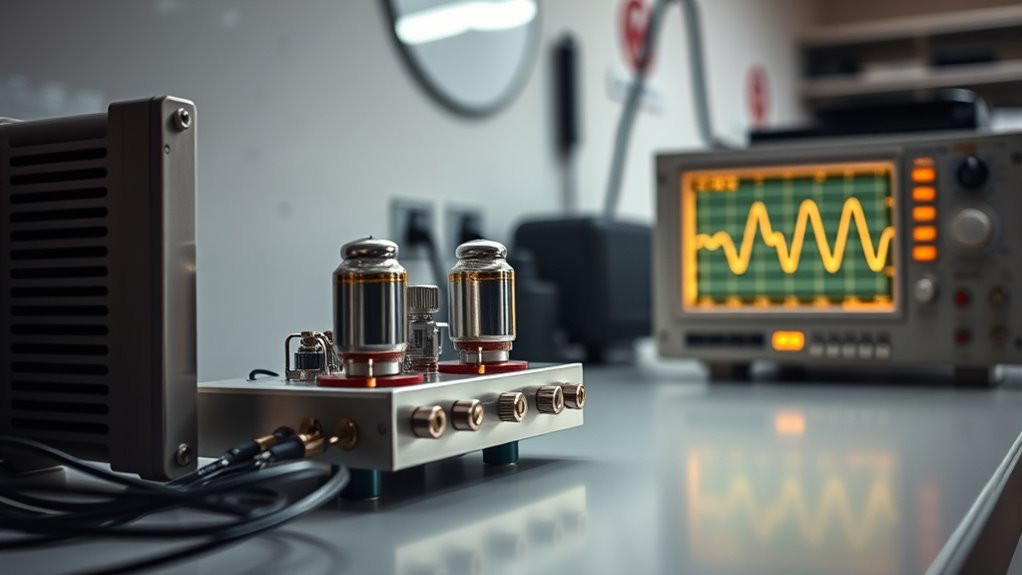
The maximum rate of change of the output voltage of an operational amplifier in response to a step input. It is expressed in units of volts per microsecond (V/µs). The slew rate is a key factor in determining the performance of an op-amp in high-speed circuits, where a rapid change in output is required.
How does Slew Rate affect performance?
- It can result in distorted signals when handling fast-changing input voltages.
- The rate enables faster signal transitions, making the op-amp suitable for high-frequency applications, such as audio systems or digital communication systems.
Measurement
The slew rate is measured by applying a step input and observing the change in the output voltage over time. It is often tested by providing a step input voltage and recording the rise or fall in the output voltage.
Slew Rate in Practical Terms
For instance, if an op-amp has a slew rate of 1 V/µs, the output voltage will change by 1 volt for every microsecond.
Factors Affecting Slew Rate of Op-Amp
It can be influenced by several factors within the circuit. These factors determine how efficiently an op-amp can change its output in response to a fast-changing input signal. Understanding these influences is crucial when designing circuits that require precise and high-speed performance.
Internal Capacitive Effects
- Capacitive loading: When the input to the op-amp has significant capacitance, it affects the speed at which the output can change. Higher capacitance at the output can lower the slew rate because the op-amp needs to charge or discharge the capacitance, which takes time.
Power Supply Voltage
- The power supply voltage influences the slew rate by affecting the internal design of the op-amp. Higher power supply voltages often enable faster output changes, resulting in a higher slew rate.
Feedback Resistance and Capacitance
- The feedback network, including resistors and capacitors, can influence its slew rate. High resistance and large capacitance in the feedback loop reduce the speed at which the output can change.
Load Impedance
- The load impedance connected to the op-amp also impacts the slew rate. A higher load impedance can reduce the current available for charging the output capacitance, thereby decreasing the slew rate.
Importance in Audio Systems
In audio applications, it is critical to ensure the accurate reproduction of audio signals. If an op-amp has a low slew rate, it may struggle to keep up with high-frequency audio signals, resulting in distorted or clipped sound.
Impact on Audio Clipping
Audio clipping occurs when the op-amp cannot change its output quickly enough to track the input, resulting in the waveform being cut off. A higher slew rate reduces the risk of clipping, ensuring smoother audio output, particularly during transient sounds like snare hits or cymbal crashes.
Slew Rate vs. Frequency Response
The slew rate also affects the frequency response of an audio system. A higher slew rate typically correlates with a better frequency response, enabling the system to reproduce high-frequency signals accurately.
Slew Rate Limitation in Precision Circuits
In precision analog circuits, such as signal conditioning or measurement systems, the slew rate is crucial for ensuring fast and accurate signal processing. If the slew rate is insufficient, the output may lag behind the input signal, leading to data inaccuracies.
Example in Instrumentation
For example, when using op-amps in oscilloscopes or data acquisition systems, a low slew rate can cause a lag in waveform representation, making it difficult to measure fast changes in the signal accurately.
Trade-offs in Slew Rate
While op-amps with high slew rates are desirable for these applications, they often come with trade-offs, such as higher power consumption and noise. Engineers must balance these factors when designing high-speed precision circuits.
How to Choose the Right Op-Amp Based on Slew Rate?
When selecting an op-amp, it’s important to match its slew rate with the specific needs of your application. For high-speed circuits such as video signal processing, high-speed data acquisition, or RF amplifiers, an op-amp with a high slew rate (typically 10 V/µs or higher) is required to handle rapid changes in the input signal without distortion. On the other hand, low-speed applications, such as audio amplifiers or low-frequency filters, can often operate with a moderate slew rate of 1-5 V/µs.
Additionally, for systems dealing with high-frequency square waves or pulse signals, a high slew rate ensures clean signal transitions. It’s also crucial to refer to the manufacturer’s datasheets and specifications, as these provide essential information on the maximum slew rate and the conditions under which it can be achieved.
Impact of Slew Rate on Signal Integrity
Slow slew rates can cause signal distortion, particularly in high-frequency signals. This distortion results in sharp edges or clipping in the output waveform, which is undesirable in most applications, especially in data transmission systems.
Fast Slew Rates and Reduced Distortion
It can help minimize distortion by ensuring that the output accurately tracks the input signal, thereby maintaining the integrity of the waveform. For op-amp applications that rely on precise signal reproduction, such as audio and video equipment, having an op-amp with a sufficiently high slew rate is critical to maintaining signal clarity.
Effect on Frequency Response
The ability of an op-amp to maintain signal integrity at higher frequencies is often tied. A high slew rate allows the op-amp to follow higher-frequency components of a signal without generating unwanted artifacts.
Common Applications of High Slew Rate Op-Amps
Op-amps with high slew rates are particularly important in applications where rapid signal transitions and minimal distortion are required. Below are some key areas where high slew rate op-amps are commonly used:
- High-Speed Signal Processing: Op-amps with high slew rates are essential in RF communication, signal processing, and analog-to-digital conversion systems. These applications require the op-amp to handle fast-changing signals, ensuring minimal distortion and accurate signal reproduction.
- Audio Amplification Systems: In professional audio systems, op-amps with higher slew rates are essential for amplifying audio signals without distortion, particularly during high-frequency transients such as snare hits or cymbal crashes. A higher slew rate ensures that the audio output remains clear, precise, and free from clipping, making it ideal for high-fidelity audio reproduction in both live sound and recording environments.
- Video Systems: For video signal processing, op-amps with high slew rates are crucial for maintaining signal integrity. They help process high-speed video signals without degradation or loss of detail, ensuring that the final output maintains the quality of the original video signal. This is especially important in systems that handle high-definition or ultra-high-definition video, where even the slightest distortion can result in a poor visual experience.
These applications all depend on the op-amp’s ability to change its output voltage quickly enough to match the rapidly changing input, making high-slew-rate op-amps crucial in any scenario that demands high-fidelity signal processing.
Conclusion
The slew rate of an op-amp is a key performance factor that affects its ability to handle high-frequency signals and produce accurate outputs. By understanding the factors that influence slew rate and its impact on various applications, engineers can select the right op-amp for their specific needs. Whether in audio systems, high-speed instrumentation, or signal processing, choosing the appropriate slew rate ensures optimal performance and signal integrity.
FAQs
1. What is the typical slew rate of an op-amp?
The typical slew rate for op-amps varies depending on the model and application. For general-purpose op-amps, a typical slew rate is around 0.5 V/µs, while high-speed op-amps can have slew rates exceeding 10 V/µs.
2. How does a low slew rate affect an op-amp’s performance?
It can cause distortion or clipping in high-speed circuits, as the op-amp will be unable to follow rapid changes in the input signal. This can be problematic in applications such as audio amplification or high-speed data acquisition.
3. Can the slew rate of an op-amp be increased?
The slew rate is primarily determined by the op-amp’s design, particularly the current available to charge the internal capacitance. While it’s not typically possible to increase the slew rate of an existing op-amp, selecting a different op-amp with a higher slew rate is a viable option.
4. Does the slew rate affect the power consumption of an op-amp?
Yes, op-amps with higher slew rates generally consume more power because they require larger current flows to achieve faster voltage changes. This trade-off must be considered in low-power applications.