Unlocking the Power of Differential Amplifiers
The differential amplifier is a fundamental component in electronics and electrical engineering. It plays a pivotal role in various applications, including signal processing, amplification, and noise rejection. In this article, we will dive deep into the world of differential amplifiers, exploring their principles, applications, advantages, and more.
What is a Differential Amplifier?
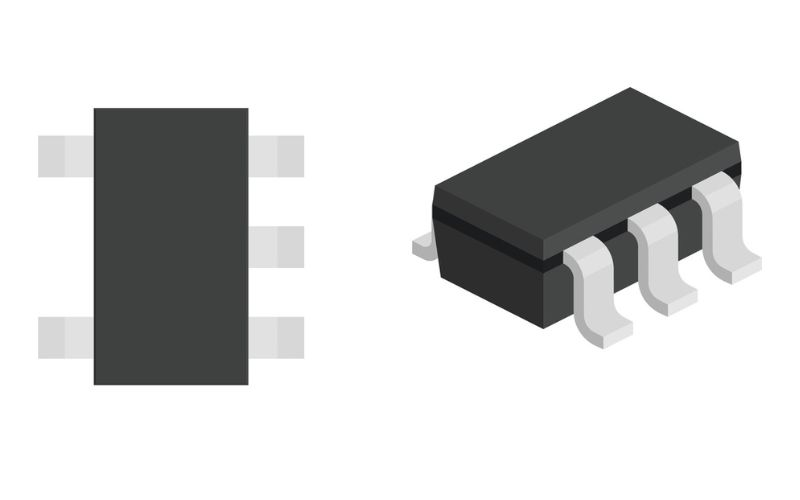
A differential amplifier, often called a “diff amp,” is an essential electronic circuit that amplifies the difference between two input signals while rejecting common-mode signals. Common-mode signals appear equally on both inputs and are typically considered as noise. By amplifying only the difference between the two input signals, differential amplifiers are crucial in applications where signal fidelity and noise rejection are critical.
Principles of Differential Amplification
Differential amplifiers subtract one input voltage from the other, producing an output voltage proportional to the difference between the two. Here’s how it works:
- Two Inputs, One Output: A differential amplifier has two inputs, often labelled as
V₁andV₂, and a single output,Vout. It computes the voltage difference betweenV₁andV₂and amplifies it. - Common-Mode Rejection: One of the primary features of a differential amplifier is its ability to reject common-mode signals. Any signal present equally on both inputs is cancelled out in the subtraction process, leaving only the differential signal.
- Amplification Gain: Differential amplifiers typically have a gain associated with them, denoted as
Aₙ. This gain determines how much the differential signal is amplified to produce the output voltage.
Applications of Differential Amplifiers

Differential amplifiers find applications in various electronic systems due to their unique characteristics. Some common applications include:
Instrumentation Amplifiers
Instrumentation amplifiers, used in various measurement devices, rely heavily on differential amplifiers. They provide high-precision amplification of small differential signals while rejecting common-mode noise, ensuring accurate measurements in applications like medical instruments and sensor interfaces.
Operational Amplifiers
Differential amplifiers are a fundamental building block in operational amplifier (op-amp) circuits. Op-amps often employ differential amplification to achieve voltage amplification, signal conditioning, and filtering tasks.
Audio Amplification
In audio equipment, differential amplifiers amplify audio signals while minimizing background noise. This is crucial in achieving high-quality audio output in devices like amplifiers and preamplifiers.
Advantages of Differential Amplifiers
Differential amplifiers offer several advantages that make them indispensable in many electronic systems:
- High Common-Mode Rejection: The ability to reject common-mode signals effectively ensures that only the desired differential signals are amplified, reducing noise and interference.
- Improved Signal Fidelity: Differential amplifiers preserve the original signal’s integrity and enhance signal fidelity by amplifying only the difference between two input signals.
- Balanced Inputs: They provide a balanced input configuration, particularly useful in applications where signal quality is paramount.
- Versatility: Differential amplifiers can be configured for various gain values, making them adaptable to different signal levels and applications.
Differential Amplifier Configurations
They can be realized using different electronic components and configurations. Here are two common types:
Bipolar Junction Transistor (BJT) Differential Amplifier
A BJT-based differential amplifier uses bipolar junction transistors for amplification. This configuration is commonly found in analogue electronic circuits due to its simplicity and versatility.
Operational Amplifier (Op-Amp) Differential Amplifier
Op-amp-based differential amplifiers are widely used due to the inherent characteristics of operational amplifiers. They offer high input impedance, low output impedance, and excellent common-mode rejection.
Differential Amplifier Circuit
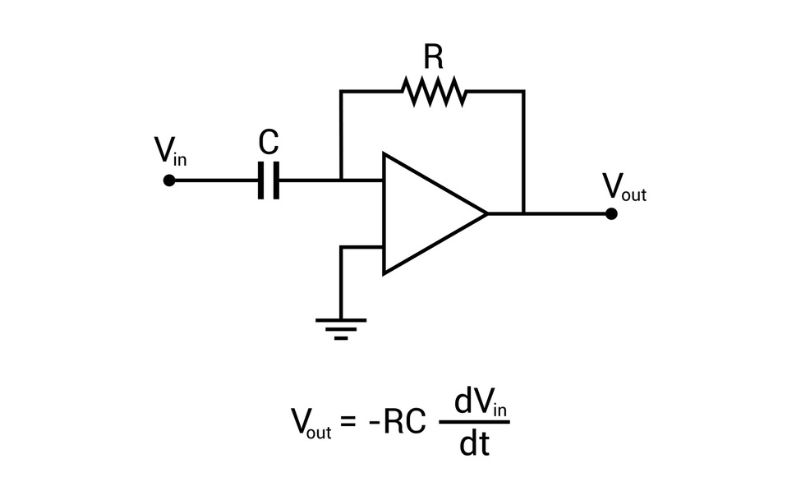
The differential amplifier circuit typically consists of transistors or operational amplifiers connected in a specific configuration to amplify the difference between two input signals while rejecting common-mode noise.
Basic Differential Amplifier Configuration
Differential amplifiers can be implemented using various electronic components, but the fundamental concept remains consistent. Here, we will explore a basic differential amplifier circuit using bipolar junction transistors (BJTs):
Components Needed:
- Two NPN BJTs: These transistors serve as the amplification elements in the circuit.
- Resistors: Required for biasing and setting the gain of the differential amplifier.
- Input Sources:
V₁andV₂represent the differential input signals. - Power Supply: Provides the necessary voltage levels for the transistors.
Circuit Operation:
- Transistor Pair: The two NPN BJTs are connected in a differential configuration, with their collectors tied together and connected to the positive power supply voltage (
Vcc). - Biasing: Proper biasing is crucial to ensure the BJTs operate in their active region. Biasing resistors establish the necessary voltage levels at the transistor bases.
- Differential Input:
V₁andV₂are applied to the bases of the transistors. The transistor pair amplifies the voltage difference between these inputs. - Output Voltage: The amplified differential signal appears at the collector node and can be taken as the output voltage
Vout. The common-mode component is effectively cancelled out, resulting in only the desired differential signal being amplified.
Operational Amplifier-Based Differential Amplifier
Another common approach is to use operational amplifiers (op-amps) to build a differential amplifier. Op-amp-based differential amplifiers are known for their high input impedance, low output impedance, and ease of configuration. They offer excellent common-mode rejection and are widely used in various applications.
An op-amp amplifies the voltage difference between the two input signals in this configuration, while feedback resistors set the amplification gain.
Understanding differential amplifiers’ inner workings and circuit configurations is essential for engineers and electronics enthusiasts alike. These versatile circuits find applications in diverse fields, ensuring signal accuracy and noise rejection in countless electronic systems.
Conclusion
In electronics, the differential amplifier is crucial in applications where accurate signal amplification and noise rejection are essential. Understanding its principles, advantages, and applications is vital for anyone in electronics and electrical engineering. Whether you are designing precision measurement devices, audio equipment, or signal processing circuits, the differential amplifier is a valuable tool in your arsenal, ensuring the fidelity and accuracy of your electronic systems.
FAQs
What is the key advantage of a differential amplifier over a single-ended amplifier?
The key advantage of a differential amplifier is its ability to reject common-mode signals effectively. This ensures that any noise or interference that affects both input lines equally is cancelled out, resulting in cleaner and more accurate amplification of the differential signal.
How can I calculate the gain of a differential amplifier?
The gain of a differential amplifier can be calculated using the formula: Gain (Aₙ) = (Rf / Re) * (1 + 2 * (Re / Re2)), where Rf is the feedback resistor, Re is the emitter resistor, and Re2 is the second emitter resistor in a BJT-based configuration.
Can I use a differential amplifier in audio equipment to improve sound quality?
Yes, audio equipment commonly uses differential amplifiers to improve sound quality. They help reduce background noise and interference, leading to cleaner audio output and making them a valuable component in amplifiers and preamplifiers.