Electric Insulators Vs Thermal Insulators: Key Differences
Consider their specific functions and applications when deciding between electric and thermal insulators. Electric insulators, like rubber and glass, are essential for preventing electrical accidents. Meanwhile, thermal insulators like wool are important for keeping spaces energy efficient. Each type brings unique material properties and performance benefits. Curious about how these insulators impact safety and efficiency in various settings? Let’s explore their roles and why choosing the right one matters.
Key Takeaways
- Electric insulators prevent electricity flow, while thermal insulators minimize heat transfer.
- Electric insulators are made from rubber and glass, whereas thermal insulators use wool and fiberglass.
- Dielectric strength measures electric insulators’ efficiency; thermal conductivity measures thermal insulators’ performance.
- Electric insulators are essential for device safety; thermal insulators improve building energy efficiency.
- Innovations in aerogel and nanotechnology enhance thermal insulation; electric insulators focus on high-voltage safety.
Understanding Electric Insulators
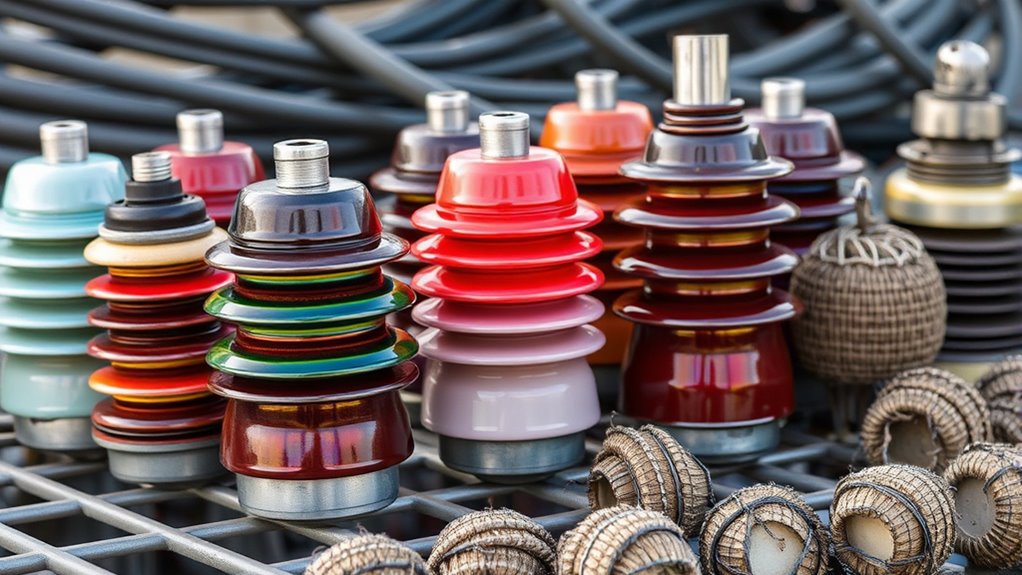
Electric insulators play an essential role in ensuring electrical safety by preventing the flow of electric current. Materials such as plastics, rubber, glass, and wood don’t conduct electricity because their electrons are tightly bound and resist movement. This high resistivity is key in safeguarding electrical devices and wiring from accidental shocks and short circuits.
Electrical insulators protect you from exposure to dangerous voltages by encapsulating conductive components.
It’s vital to understand that the breakdown voltage marks the point where an insulator might start conducting electricity, posing a risk. Additionally, high temperatures can compromise their effectiveness, leading to potential failures.
Insulators are strategically used alongside conductors in electrical equipment, like insulated wires, to maintain ideal performance and safety.
Key Characteristics of Thermal Insulators
While thermal insulators mightn’t be as immediately noticeable as their electrical counterparts, they are essential in controlling heat transfer.
Thermal insulators like wood, plastic, and wool don’t conduct heat well, so they’re perfect for keeping temperatures stable in various settings. Their low thermal conductivity also minimizes heat loss or gain.
Thermal insulators are used in everyday clothing, carpets, and curtains to boost energy efficiency and cut heating and cooling costs.
Due to their superb insulating qualities, you’ll often find materials like cork and fiberglass in construction and industry.
The R-value, a key measure, shows how well a material resists heat flow—higher values mean better insulation. This is vital for maintaining ideal temperatures.
Material Properties and Performance
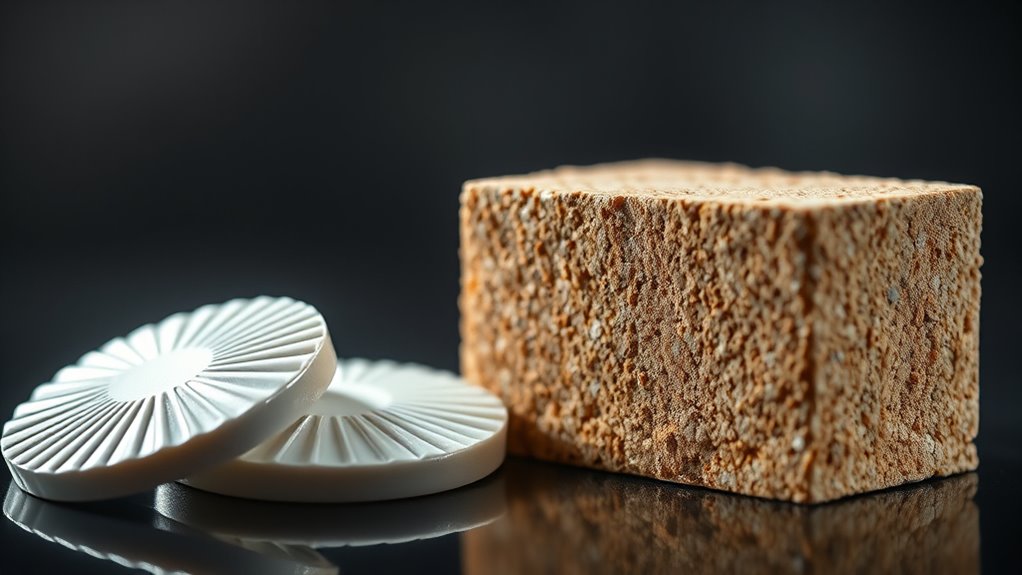
When evaluating insulation materials, it’s essential to understand their electrical and thermal properties.
Electrical insulators like rubber prevent electric flow due to their high resistivity, while thermal insulators such as aerogel excel in minimizing heat transfer.
Some materials even offer dual functionality, serving both purposes depending on specific application needs.
Electrical Insulator Characteristics
Although often taken for granted, electrical insulators play a vital role in guaranteeing the’ safe and efficient operation of electrical systems.
These materials, like plastics, rubber, glass, and ceramics, prevent the flow of electric current by featuring tightly bound electrons and high resistivity.
When choosing insulators, consider their breakdown voltage, which indicates the maximum voltage they can withstand before becoming conductive.
It’s important to understand that high temperatures or electric fields can change an insulator’s conductivity, possibly leading to breakdowns and failures in electrical systems.
Regular inspection and maintenance are imperative to maintain reliability.
Thermal Insulator Efficiency
How do thermal insulators keep environments comfortable and energy-efficient? They achieve this by reducing heat transfer and utilizing materials with low thermal conductivity.
For instance, fiberglass with a thermal conductivity of about 0.04 W/m·K effectively minimizes heat flow. Unlike thermal conductors, these insulators don’t easily allow heat to pass through.
The R-value is your key gauge, indicating thermal resistance—higher numbers mean better insulation. Top choices include expanded polystyrene (EPS) with R-values between 3.6 and 4.2 per inch.
Be cautious of moisture, though; wet insulation can lose up to 50% of its efficiency. While these materials aren’t electrical conductors, options like wool and cork offer the dual benefits of sustainability and biodegradability.
Material Dual Behavior
As we’ve explored the efficiency of thermal insulators, it’s fascinating to see how some materials pull double duty, serving as both electrical and thermal insulators.
Many materials exhibit dual behavior, acting effectively depending on their structural properties and conditions. Thanks to their low thermal conductivity, glass and rubber are excellent choices when used as insulators for electricity and heat.
Materials include:
- Glass and Rubber: Effective in blocking electricity and heat.
- Plastics: Versatile for electronics and construction, insulating against electricity and heat.
- Carbon Forms: Graphite conducts electricity well, but diamond, another carbon form, acts as an insulator.
Understanding this dual behavior is essential for selecting the right insulators in applications demanding electrical safety and thermal management.
Applications of Electric Insulators
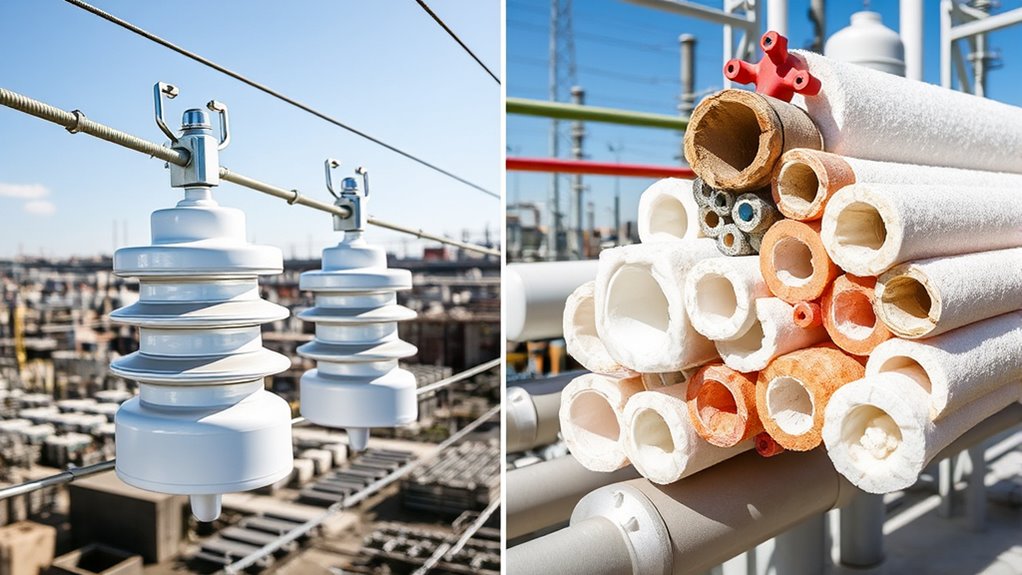
Electric insulators play a pivotal role in ensuring the safety and efficiency of electrical systems by preventing unintended electricity flow. They protect electrical conductors by encasing them, ensuring electricity travels only where intended.
Insulators are found in everyday devices like plugs, sockets, and circuit boards, where they prevent electrical shorts and enhance safety.
Rubber, plastic, and glass are common insulating materials, each chosen for its ability to withstand high voltages.
In high-voltage applications, porcelain or composite insulators manage electric field distribution and prevent flashover, which is essential for reliable power transmission systems.
Regular maintenance and inspection are essential to keep these insulators in top condition, preventing failures and ensuring the continuous operation of your electrical infrastructure.
Uses of Thermal Insulators in Daily Life
Thermal insulators are your best friends for maintaining comfort and efficiency in daily life. They help keep your home cozy and your energy bills low. Wool and fiberglass in clothing and home insulation are perfect examples.
Everyday items also rely on thermal insulators:
- Cookware safety: Oven mitts and pot holders use thermal materials to prevent burns.
- Temperature control: Thermal flasks and insulated water bottles keep drinks hot or cold.
- Packaging protection: Styrofoam and polyurethane foam shield fragile items from temperature extremes.
Double-glazed windows with air or gas-filled spaces act as thermal barriers in buildings, enhancing energy efficiency.
While electrical insulators handle electricity, thermal insulators excel at regulating temperatures, ensuring comfort and safety in your daily life.
Selecting the Right Insulator for Your Needs
How do you choose the perfect insulator for your specific needs? First, determine whether you need to block electricity or heat.
For electric insulation, focus on materials like plastic, rubber, or glass, which don’t conduct electricity and are ideal for protecting metal parts in electrical setups. If you’re dealing with thermal insulation, opt for foam, wool, or fiberglass to prevent heat transfer and keep machinery at safe temperatures.
Consider the environment: outdoor electric insulators must resist moisture and pollution, while thermal insulators should handle temperature swings.
Check voltage and temperature ratings, especially in high-voltage situations, where porcelain or composite polymers might be necessary. Always consult the manufacturer’s guidelines to verify that the insulator meets safety and efficiency requirements.
Innovations in Insulating Materials
Choosing the right insulator can be challenging, but recent innovations in insulating materials offer exciting possibilities. Advanced polymers and composites now enhance performance in both electrical and thermal applications.
While copper wire efficiently conducts electricity, innovative materials like aerogels provide outstanding thermal insulation with low conductivity, which is perfect for aerospace and construction. Researchers are also using nanotechnology to develop lightweight, highly efficient thermal insulators, reducing energy loss in buildings and equipment.
- Aerogel technology: Extremely low thermal conductivity.
- Nanotechnology creates lightweight, efficient thermal insulators.
- Biodegradable options: Natural fibers like hemp and flax.
These advancements include smart insulating materials that adapt to environmental changes, improving energy efficiency.
Sustainable solutions are also emerging, with biodegradable materials offering an eco-friendly alternative for thermal insulation.
Comparing Efficiency: Electric Vs Thermal Insulation

While choosing the right type of insulation might seem straightforward, understanding the efficiency of electric versus thermal insulators requires a closer look at their distinct purposes and measurement criteria.
Electric insulators, like plastic and rubber, block the flow of electricity. Their efficiency is measured by dielectric strength, showing how much voltage they handle before conducting.
Even though they’ve high resistivity, thermal insulators, such as fiberglass and foam, resist heat transfer with low thermal conductivity, measured in watts per meter Kelvin (W/m·K).
High-voltage electric insulators, made from materials like porcelain, must endure environmental stress. In contrast, thermal insulators are evaluated on their temperature stability under varying conditions.
Electric insulators guarantee safety in wiring and devices, while thermal ones enhance energy efficiency in construction and manufacturing.
Conclusion
When deciding between electric and thermal insulators, focus on your specific needs. Electric insulators, like rubber and glass, guarantee electrical safety by blocking current flow. Thermal insulators, such as wool and fiberglass, keep heat where you want, boosting energy efficiency. Each type excels in its field, so choose based on your priorities—safety or energy conservation. New materials continue to enhance both, offering better performance and efficiency. Always opt for the insulator that best meets your requirements.
FAQs
1. What Is the Difference Between Thermal Insulation and Electrical Insulation?
You’re looking at two different types of insulators. Electrical insulation prevents the flow of electricity using high-resistivity materials. Thermal insulation stops heat transfer with low-thermal-conductivity materials. Each serves specific functions essential in various applications.
2. What Are Thermal and Electrical Insulators?
Thermal insulators resist heat flow, keeping things warm or cool. Electrical insulators stop electricity from passing through, ensuring safety. Materials like rubber and glass are common examples you’ll encounter daily.
3. What Is the Difference Between Thermal and Electrical Conductors?
You distinguish thermal from electrical conductors by their function. Thermal conductors transfer heat efficiently, while electrical conductors allow electricity to flow. Both usually contain free electrons, but their applications and design purposes differ.
4. What Are 5 Examples of Thermal Insulators?
You’re asking about thermal insulators. Consider fiberglass, wool, and foam like polyurethane. Polystyrene and cork also excel in reducing heat transfer in buildings. These materials help maintain temperatures, boosting energy efficiency and comfort in various applications.