Type of Insulator: A Complete Guide to Electrical Insulation
You can’t overlook the importance of choosing the right insulator when dealing with electrical systems. Each type uniquely ensures system efficiency and safety, from pin insulators to polymer ones. Imagine the challenges of handling high voltages without the reliable support of suspension or post-insulators. Or consider the benefits of lightweight, weather-resistant composite options. Are you curious about how strain insulators maintain system integrity under stress? There’s more to discover. Learn more about Type of Insulator.
Key Takeaways
- High-voltage insulators include pin, suspension, post, and bushing types for reliable electrical insulation in power systems.
- Composite and polymer insulators offer lightweight, corrosion-resistant alternatives with excellent weather resistance for high-voltage applications.
- Mechanical support insulators, such as strain and long rod insulators, ensure stability at tension and dead-end locations.
- Shackle insulators provide essential electrical insulation for low-voltage distribution networks with durable designs.
- Insulators vary in materials and designs to suit different voltage levels and environmental conditions.
Pin Insulators
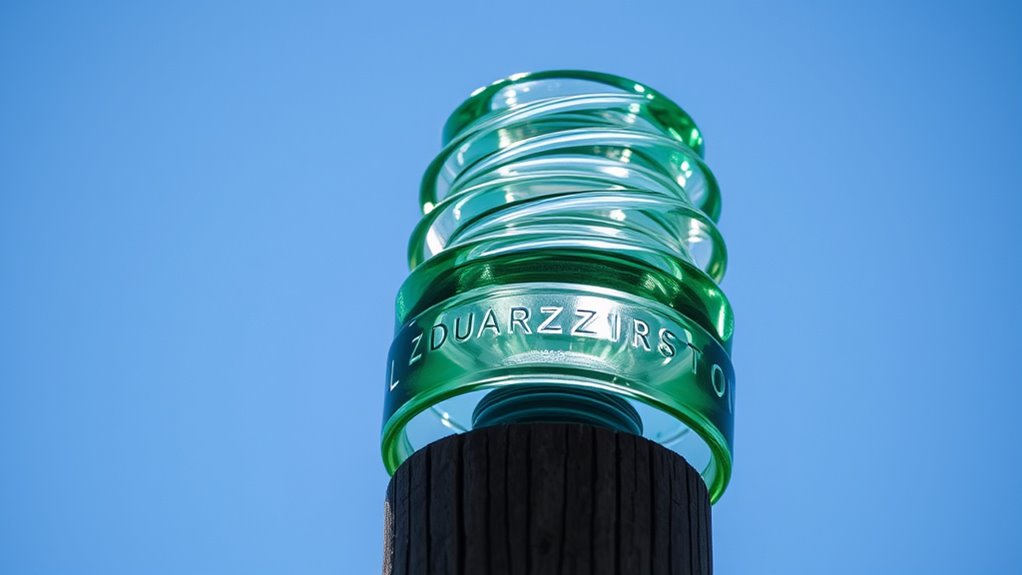
Pin insulators are crucial components in power distribution systems, handling voltages up to 33 kV. They’re crafted from materials like porcelain or glass, known for their high mechanical strength.
These insulators are highly efficient due to their simple design and minimal maintenance needs. They can be mounted easily with a threaded metal pin, allowing straightforward installation and replacement.
To prevent electrical discharge, pin insulators feature rain sheds or petticoats to enhance the leakage path, especially during wet conditions.
Options are available in one, two, or three parts and cater to various voltage requirements. Due to manufacturing challenges, higher voltage needs demand multi-part insulators.
Fundamentally, pin insulators are crucial for maintaining the reliability of power distribution systems.
Suspension Insulators

Suspension insulators offer impressive voltage capacity and flexibility, handling from 11kV to 765kV for various applications.
These insulators are designed to tackle environmental challenges. Their series of discs enhance reliability against electrical arcing and harsh conditions.
You can also easily replace damaged discs, ensuring efficient maintenance without compromising overall performance.
Environmental Challenges and Solutions
Although suspension insulators are essential in high-voltage applications, they’re particularly vulnerable to pollution in coastal and industrial environments. Contaminants create conductive paths, leading to electrical leakage and performance issues. Regular maintenance is critical to combat this.
Environmental factors like temperature and humidity accelerate contamination and degradation, making inspections necessary.
Design improvements, such as using more discs in a string configuration, boost flashover voltage, and lessen electrical failures. Additionally, employing hydrophobic silicone rubber in composite suspension insulators greatly enhances resistance to pollutants.
This material promotes self-cleaning properties, maintaining superior performance even in harsh conditions. Addressing these challenges can extend the lifespan and reliability of suspension insulators, ensuring they function effectively in demanding environments.
Voltage Capacity and Flexibility
With their adaptable design, suspension insulators are essential for supporting overhead transmission lines and handling voltage capacities from 11kV to 765kV. These insulators use porcelain discs connected in series to increase flashover voltage and mechanical strength, making them perfect for high-voltage applications. You’ll appreciate how their flexibility allows for greater conductor spacing on steel towers, reducing weight and facilitating easier maintenance.
Damaged discs? No problem! You can replace them individually without disrupting the system. In areas facing high wind or environmental stresses, suspension insulators excel by ensuring load distribution and resilience against mechanical forces.
Here’s a quick overview:
| Feature | Benefit |
|---|---|
| Voltage Capacities | 11kV to 765kV |
| Porcelain Discs | Enhanced flashover voltage |
| Maintenance | Easy and cost-effective |
| Environmental Stresses | Superior load distribution |
Post Insulators
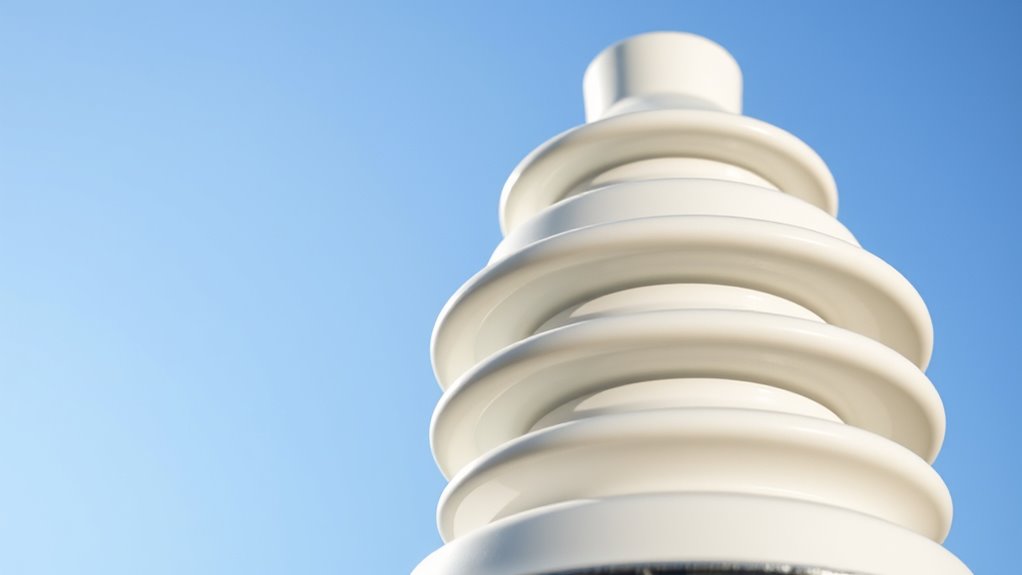
Post-insulators play a crucial role in electrical substations and switchyards by providing vertical support for conductors operating at higher voltages, typically up to 115kV.
They’re primarily crafted from porcelain materials, ensuring they withstand environmental stresses while maintaining excellent insulating properties.
A critical concern with post insulators is flashover, which happens when wet or dirty surfaces create paths for electrical discharge, risking equipment failure. Post-insulators feature multiple petticoats to combat this, increasing creepage distance and reducing discharge risks.
Their design allows installation flexibility, as they can be mounted horizontally and vertically, catering to specific system requirements.
Ultimately, post-insulators are indispensable in ensuring the reliability and safety of high-voltage electrical systems.
Bushing Insulators
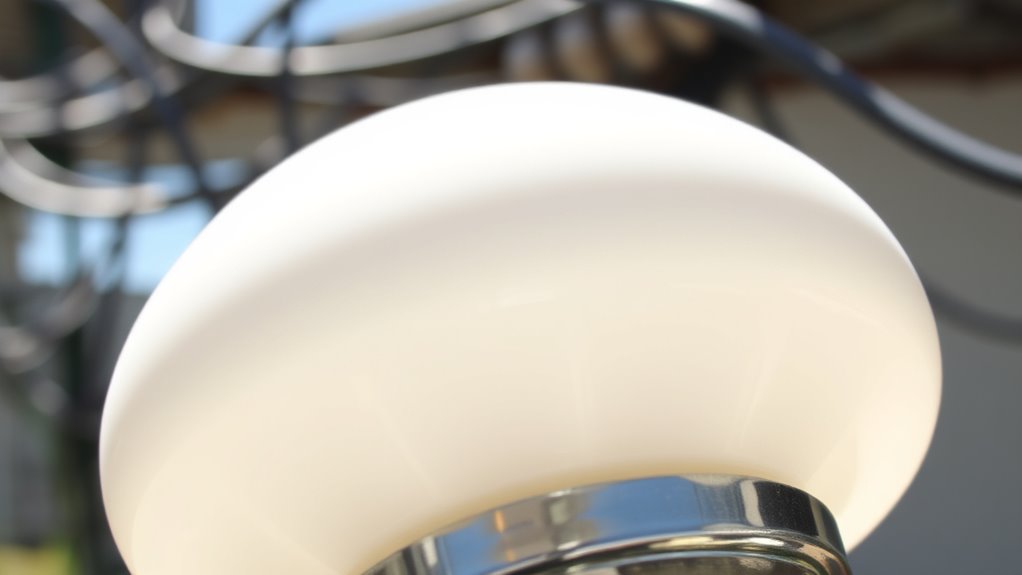
As post-insulators provide essential vertical support in high-voltage systems, bushing insulators guarantee electrical insulation between conductors and grounded structures in transformers and circuit breakers. Designed to withstand high voltages, they typically range from 10kV to over 500kV. You’ll find bushing insulators made from porcelain, glass, or composite materials, each with unique durability and performance characteristics. However, internal insulation breakdown can occur over time, risking electrical failure. Regular inspection is critical to prevent arcing and overheating in your electrical systems.
| Material Type | Key Features |
|---|---|
| Porcelain | High durability, traditional choice |
| Glass | Less prone to moisture absorption |
| Composite Materials | Lightweight, resistant to pollution |
| Internal Breakdown | This leads to electrical failure |
| Regular Inspection | It is essential to prevent arcing |
Maintaining them guarantees reliable operation.
Composite Insulators
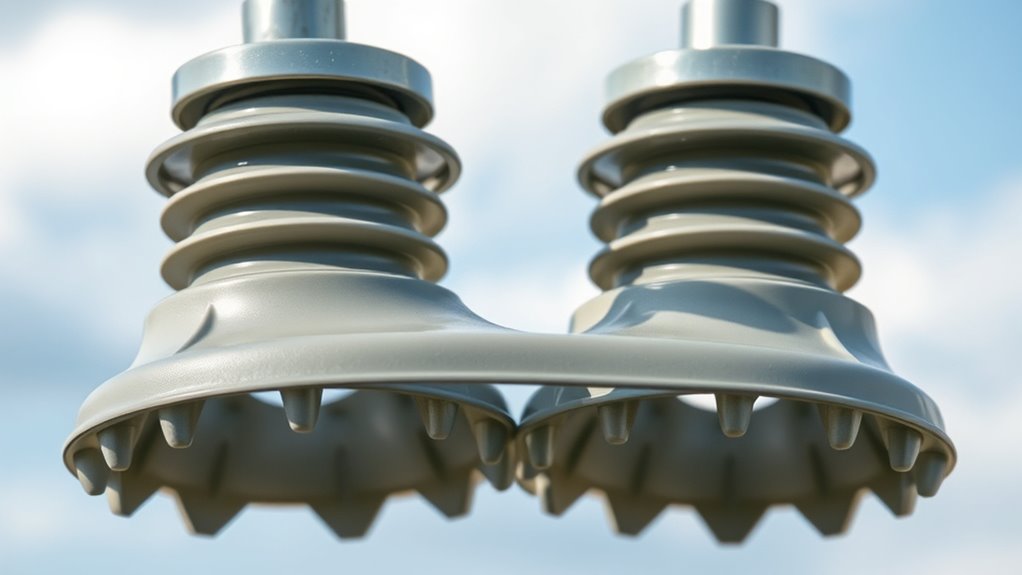
Composite insulators, essential for high-voltage applications, integrate a fiberglass core with silicone rubber housing to provide superior weather resistance.
They’re lightweight compared to traditional porcelain insulators, making installation a breeze. Their design offers excellent corrosion resistance, especially in industrial or coastal environments.
Over time, you’ll notice a reduction in maintenance costs while sustaining exceptional electrical performance.
However, be mindful of their susceptibility to corona discharge, which can cause local ionization and degrade the surface.
Consider the benefits:
- Weather Resistance: Silicone rubber enhances durability.
- Corrosion Resistance: Perfect for harsh settings.
- Lightweight Design: Easier handling and installation.
- Cost Efficiency: Lower maintenance expenses.
Incorporating composite insulators can considerably optimize high-voltage system operations.
Strain Insulators
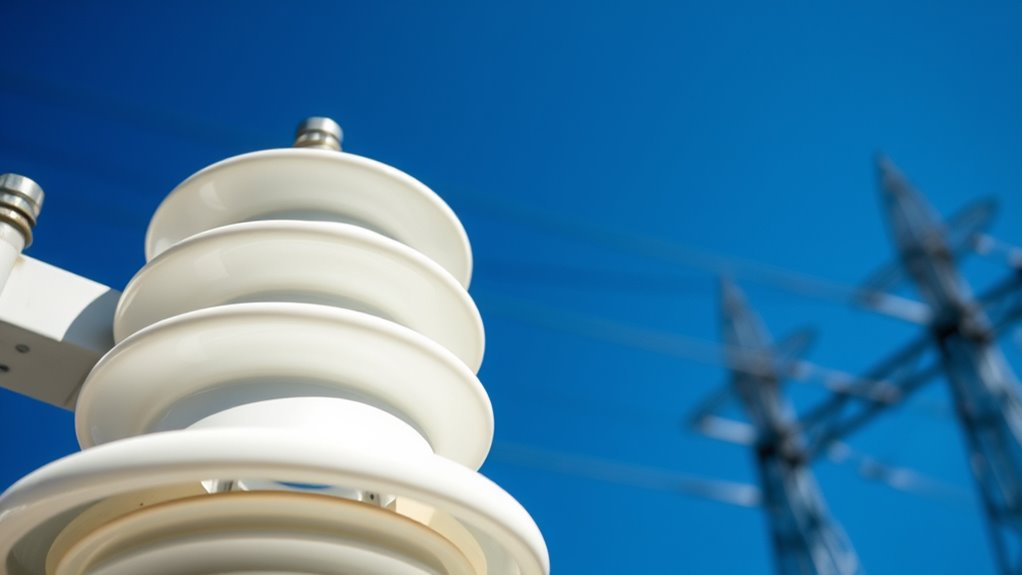
When dealing with high-voltage lines, strain insulators are essential in absorbing mechanical tension, especially at dead ends or sharp corners.
These insulators, made up of porcelain or glass discs linked by metal, guarantee the lines remain properly aligned and safely distanced from structures.
In high-voltage applications, they prevent electrical arcing while maintaining the integrity of the transmission lines.
Tension Absorption Mechanism
Although often overlooked, strain insulators are vital for managing tensile loads in overhead power lines, especially at dead ends and sharp corners.
They’re typically made of metal-linked porcelain discs designed to withstand mechanical stress while maintaining adequate insulation. The system’s voltage rating dictates the number of discs required, with higher voltages needing more to guarantee safety and strength.
Proper installation of strain insulators is essential to prevent conductor sagging and breakage from excessive tension. Environmental factors like wind and ice also affect their performance.
Consider these key points:
- Strain insulators absorb tensile loads effectively.
- Porcelain discs provide needed electrical insulation.
- Proper installation prevents conductor sagging.
- Environmental factors impact their functionality.
Application in High-Voltage Lines
Strain insulators are essential in maintaining system integrity in high-voltage transmission lines, especially at dead ends and sharp turns.
They’re designed to withstand significant tensile loads, ensuring electrical insulation and mechanical strength. Typically made from porcelain, these insulators prevent electrical arcing and maintain safe distances between conductors and supporting structures.
Strain insulators are often used alongside suspension insulators, providing extra stability under heavy loads and environmental stresses. Their effective design minimizes mechanical failure risks, making them vital for reliable electrical performance.
Shackle Insulators

Shackle insulators, often called spool insulators, are essential components in low-voltage distribution networks. They provide critical electrical insulation between conductors and their supporting structures.
Made from durable materials like porcelain, they can endure environmental stresses while maintaining their essential insulating properties. These insulators feature a groove designed to hold the conductor securely, ensuring stability with the help of soft binding wire.
You might consider these key points about shackle insulators:
- Installation Flexibility: Can be mounted horizontally or vertically.
- Load Distribution: A tapered hole design distributes the load evenly and reduces breakage risk.
- Material Strength: Porcelain construction for durability against environmental factors.
- Trend Shift: Decreased usage due to the rising adoption of underground cable distribution, which offers better protection.
Long Rod Insulators

While shackle insulators play a significant role in low-voltage systems, long rod insulators in high-voltage applications offer exceptional performance under demanding conditions. These insulators feature a porcelain core, providing robust electrical insulation and resistance to mechanical load. They’re perfect for tension locations, effectively reducing leakage currents and ensuring safety.
The increased creepage distance of long rod insulators is critical in preventing flashovers, especially in polluted or moist environments. Their design streamlines installation and maintenance by minimizing the number of insulators needed.
Here’s a quick comparison:
| Feature | Benefit | Application |
|---|---|---|
| Porcelain Core | Robust electrical insulation | High-voltage systems |
| Creepage Distance | Minimizes leakage currents | Polluted areas |
| Mechanical Load | Handles tension and suspension | Tension locations |
These insulators are essential for efficient power systems.
Polymer Insulators
Polymer insulators offer a modern solution for high-voltage systems, combining lightweight design with robust weather resistance.
Due to their durable and weather-resistant properties, they’re perfect for high-voltage applications. Made from fiberglass rods encased in silicone rubber, these insulators boast superior hydrophobic characteristics, preventing water adherence and reducing electrical leakage risks.
They’re particularly advantageous over traditional insulators because:
- Durability: Lower risk of mechanical failure in extreme weather.
- Long Lifespan: Requires reduced maintenance compared to porcelain insulators.
- Easy Installation: Lighter and smaller, facilitating installation on overhead transmission lines.
- Cost-Effective: Their reduced maintenance needs make them a smart long-term choice.
Adopting polymer insulators means embracing a future of efficient, reliable, and low-maintenance energy distribution.
Conclusion
When choosing the right insulator for your electrical system, it’s important to consider both functionality and environmental factors. Pin and suspension insulators are great for high-voltage needs, while post-insulators provide solid mechanical support. Don’t overlook the benefits of composite and polymer insulators, especially if weight and weather resistance are priorities. For more specialized applications, strain and long rod insulators guarantee structural integrity, and shackle insulators meet low-voltage demands. Each type plays a crucial role in ensuring safety and efficiency.
FAQs
1. What are the four types of insulation?
You’re asking about insulators. You’ve got the pin, suspension, post, and strain insulators. Each serves different purposes, voltage capacities, and mechanical needs. Knowing their applications helps you choose the right one for your electrical systems.
2. What Are 5 Insulators?
You’re asked about five insulators: pin, suspension, strain, post, and bushing insulators. They each have unique roles in electrical systems, offering varying voltage capacities and mechanical strengths. They’re essential for maintaining electrical line integrity.
3. What Is the 20 Example of Insulator?
You might be curious about 20 examples of insulators. Consider materials like porcelain, glass, rubber, plastic, PTFE, mica, ceramic, fiberglass, silicone rubber, wood, air, oil, cork, paper, clay, wool, leather, silk, cotton, and asphalt.
4. What Are 4 Insulators?
You’re looking for four insulators, so consider using rubber, glass, porcelain, and plastic. Each prevents electrical conduction effectively, ensuring safety and efficiency in various applications. Choose based on your specific needs and voltage requirements.