Dol Starter Connection: Step-by-Step Guide & Diagram
Connecting a motor using a Direct-On-Line (DOL) starter makes it straightforward yet essential for smaller motors. This setup directly links the motor to the power supply, ensuring simplicity and high starting torque. But have you considered the protection features and potential drawbacks? Delve into how each component plays a vital role in efficiency and safety, and discover why DOL starters are a go-to choice in various applications.
Understanding the Direct Online Starter
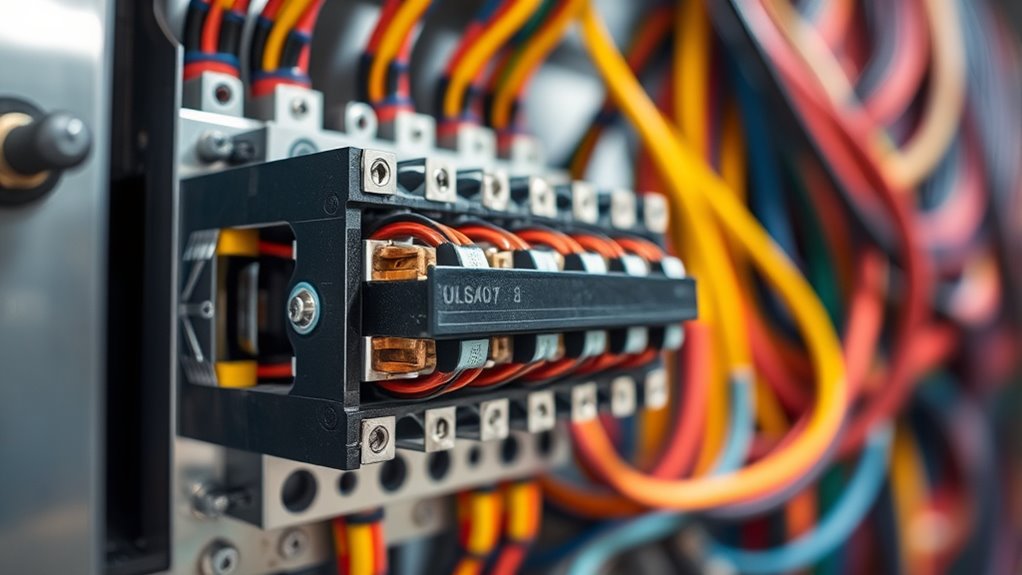
A Direct Online (DOL) starter is a straightforward yet powerful device that connects an induction motor directly to a three-phase power supply, allowing it to start at full voltage. When you use a DOL starter, you provide immediate operation for motors, particularly those rated below five hp. This setup generates high starting torque, but be mindful of the high inrush currents that reach 5-6 times the motor’s rated current. Pressing the start button energizes the contactor to connect the induction motor to the power supply. The motor remains powered through an auxiliary contact until you press the stop button or an overload condition arises. Understanding this process is crucial for effectively utilizing DOL starters in small pumps and conveyors.
Components of a DOL Starter
With a grasp on how a Direct Online starter operates, let’s explore the key components that make it function effectively. First up is the circuit breaker or fuse, which is crucial for shielding your motor and circuit from short circuits and overloads. Next, magnetic contactors serve as the electromagnetic switches, directly controlling your motor’s power supply. The overload relay (OLR) plays a vital role by monitoring the motor’s current and tripping the circuit if excessive current is detected to prevent potential damage. Auxiliary contacts are also included, facilitating control circuit operations for safe motor operation. Lastly, DOL starters have specific coil variations to accommodate single-phase or three-phase supply, providing flexibility for various motor applications.
Wiring Diagram for DOL Starter
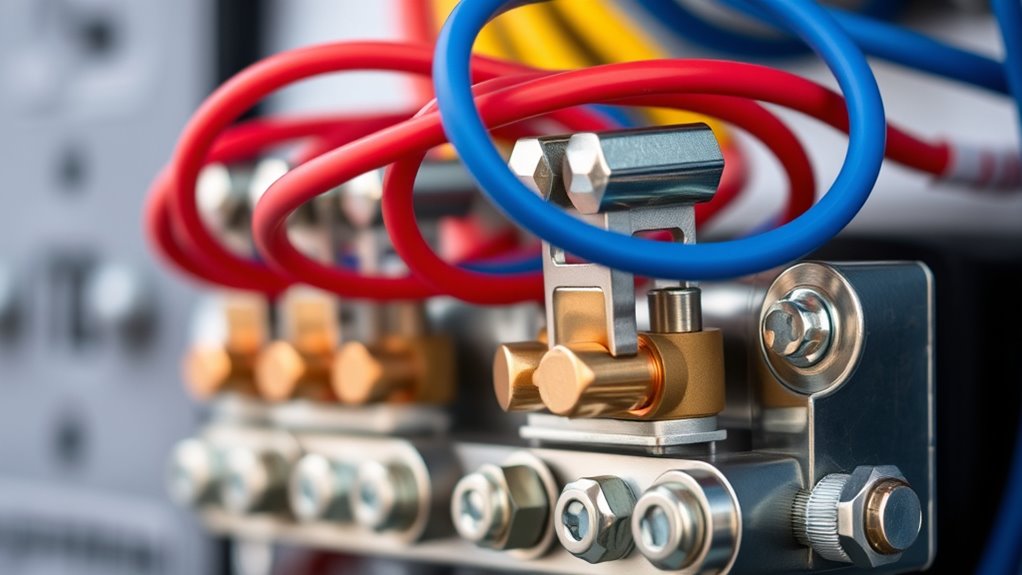
When looking at a DOL starter wiring diagram, focus on the key components that connect the circuit breaker, contactor, and motor terminals. Notice how the control circuit operates: The start button activates the contactor coil to power the motor. Ensure the three-phase connection is set up correctly, aligning the R, Y, and B phases to avoid motor damage.
Key Wiring Components
Understanding the key wiring components in a Direct-On-Line (DOL) starter is essential for anyone working with motor control systems. The typical wiring diagram includes connections that ensure seamless integration for motor operation. Here’s what you need to know:
- Magnetic Contactor: It features three main contacts (L1, L2, L3) connected to the motor terminals. When the start button is pressed, it supplies full voltage directly to the motor, allowing it to operate efficiently.
- Overload Relay: This component is wired in series with the motor circuit. It uses auxiliary contacts to maintain power to the magnetic contactor until a fault occurs; at this point, it trips to protect the motor.
- Circuit Breaker: This device protects the circuit from overloads and short circuits by being connected in series with the power supply.
Control Circuit Operations
Having explored the key wiring components, it’s time to focus on the control circuit operations of a Direct-On-Line (DOL) starter. You’ll find a start button (green) and a stop button (red) connected in series with the contactor coil to control motor operation. Once pressed, the start button energizes the coil, and auxiliary contacts in parallel maintain the circuit, keeping the motor running even after release. The overload relay is crucial in this setup; it monitors motor current and trips the circuit if it exceeds safe levels, effectively stopping the motor. Powered by one of the phases, this control circuit ensures precise motor control. Ensure your wiring diagram clearly illustrates these connections for safe and effective operation.
Three-Phase Connection Setup
To set up a three-phase connection for a Direct-On-Line (DOL) starter, you must wire the R, Y, and B phases directly to the magnetic contactor, aligning each phase with the main contacts L1, L2, and L3. This setup is essential for powering induction motors efficiently. Ensure the following steps for a smooth installation:
- Circuit Breaker Setup: Connect a circuit breaker or MCCB at the circuit’s start for overcurrent protection. This ensures safe operation when connected to the contractor.
- Overload Relay Connection: Wire the overload relay in series with the contractor to monitor motor currents. If limits are exceeded, it disconnects power.
- Control Buttons Wiring: To manage the circuit’s energy flow, connect the start button in parallel with an auxiliary contact and the stop button in series.
Working Mechanism of a DOL Starter
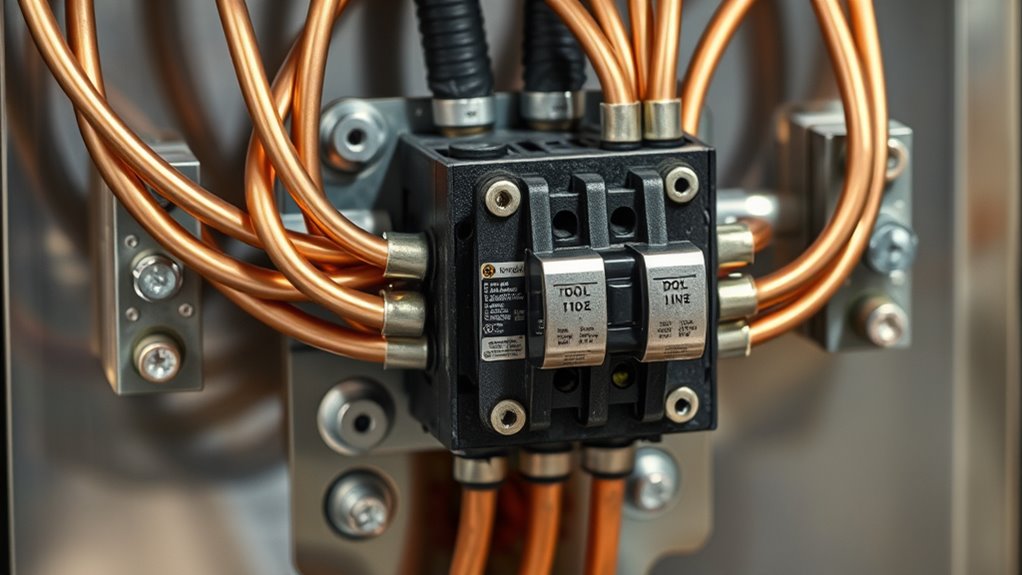
When you press the start button on a Direct-On-Line (DOL) starter, its working mechanism springs into action by energizing the magnetic contactor coil. This action instantly applies full voltage to your three-phase motor, delivering high starting torque. The overload relay continuously monitors the motor’s current. If it exceeds the preset limit, the relay trips, disconnecting the motor to prevent damage.
Once the motor starts, auxiliary contacts keep it energized even after releasing the start button. This setup ensures the motor runs until you press the stop button or an overload condition occurs. Meanwhile, the circuit breaker safeguards against short circuits by interrupting the current flow during faults, ensuring your motor’s smooth and safe operation.
Protection Mechanisms in DOL Starters
When dealing with DOL starters, it’s crucial to understand the role of overcurrent safeguards like circuit breakers or fuses, interrupting current flow during short circuits. An overload relay is also essential, as it monitors the motor’s current and trips the power if it exceeds safe limits, preventing damage. These protection mechanisms are vital for minimizing risks due to high starting currents, ensuring your motor operates reliably and lasts longer.
Overcurrent Safeguards in DOL
While Direct-On-Line (DOL) starters offer a straightforward method for motor activation, they require robust overcurrent safeguards to ensure safety and efficiency. Circuit breakers or fuses primarily provide overcurrent protection. These devices interrupt the electrical flow during short circuits, preventing motor and circuitry damage. Here’s how you can ensure effective protection:
- Install Circuit Breakers or Fuses: These are vital for interrupting electrical flow when overcurrent conditions are detected, safeguarding your motor and circuits.
- Use Overload Relays: Though not detailed here, these continuously monitor motor current and trip the circuit if unsafe levels are reached.
- Consider the Starting Current: With DOL starters applying full voltage, the starting current can soar 5-6 times above normal, necessitating effective overcurrent protection mechanisms.
Overload Relay Functions
Although direct on-line (DOL) starters offer simplicity, ensuring motor protection is crucial, and that’s where overload relays (OLRs) come into play. An overload relay continuously monitors motor current, tripping the circuit when excessive current threatens to overheat and damage the motor. You can choose from thermal, magnetic, or electronic OLRs, each offering unique benefits. Thermal relays, for example, use bimetallic strips that bend and open the circuit when they detect too much heat from overcurrent. Adjust the trip setting on your OLR to match the motor’s rated current and specific application needs. This customization protects against prolonged excessive current, preventing insulation breakdown and motor failure. Properly selecting and maintaining OLRs avoids nuisance tripping and ensures reliable motor operation.
Advantages of Using a DOL Starter
Thanks to their economical and compact design, DOL starters are a cost-effective choice for controlling small motors, especially those rated below five hp. You’ll appreciate how DOL starters deliver high starting torque, providing 100% starting torque. This means your motor can start under full load without extra starting techniques. Here are some benefits you can enjoy:
- Ease of Use: DOL starters feature a user-friendly control circuit with clear start and stop buttons, simplifying operations.
- Simplicity in Installation: Their straightforward operation reduces installation complexity, making them perfect for small water pumps, fans, and conveyors.
- Easy Maintenance: The simple design allows easy troubleshooting and understanding, which is ideal for maintenance personnel.
These advantages make DOL starters a reliable choice for your motor control needs.
Disadvantages of DOL Starter Connection
When considering the use of DOL starters, it’s essential to be aware of their drawbacks. One major issue is the high inrush current, which can be 5-6 times the motor’s rated current. This surge can damage motor windings if not managed properly. Additionally, the high current causes voltage dips, affecting other connected electrical appliances and possibly leading to malfunctions or damage. DOL starters lack control over starting current and torque, resulting in unnecessary mechanical stress on motors. The excessive starting torque may be too much for some loads, leading to abrupt stress and reduced motor lifespan. Furthermore, they’re unsuitable for larger motors as the inrush currents can overwhelm the power supply, requiring alternative starting methods.
Applications of DOL Starters in Industry

When you look at common industrial uses, DOL starters shine in applications like water pumps, conveyors, and fans, especially for motors under 5fivehp. These starters offer benefits for small motors by providing 100% starting torque with a simple and cost-effective design. You’ll also appreciate how they enhance efficiency in power systems, making them ideal for light machinery in manufacturing and HVAC setups.
Common Industrial Uses
Although you might not always notice them, direct online (DOL) starters play a crucial role in various industrial applications due to their simplicity and efficiency in motor control. They’re commonly used to power electric motors in different settings. Here’s how you might encounter DOL starters in the industry:
- Water Pumps: DOL starters are favored for small water pumps in agriculture and industry because they offer straightforward and effective electric motor control.
- Conveyor Belts: Manufacturing processes rely on DOL starters to provide the high starting torque needed to move heavy loads, ensuring conveyor belts run smoothly.
- HVAC Systems: DOL starters ensure rapid startup and dependable operation for fans and blowers in HVAC applications, making them indispensable in maintaining airflow.
Benefits for Small Motors
Direct-On-Line (DOL) starters, while integral to diverse industrial applications, offer distinct advantages to small motors. If you’re dealing with motors typically rated below five hp, like those in small water pumps or fans, DOL starters are ideal. They provide full power instantly, offering 100% starting torque, crucial for applications needing quick movement, such as conveyor systems. You’ll appreciate their simplicity and compact design, making installation and operation a breeze without much space. DOL starters also ensure efficient motor current management, reducing the risk of overload. Their cost-effectiveness means lower initial investment and maintenance costs, making them a smart choice for industries where low-power motors are prevalent. Plus, they’re versatile enough for both manual and automatic control systems.
Efficiency in Power Systems
In industrial power systems, efficiency is paramount, and DOL starters excel in this aspect for small motor applications. When dealing with three-phase motors, these starters ensure cost-effective and efficient operation. Here’s why they’re your go-to choice:
- High Starting Torque: DOL starters provide full voltage at startup, which is crucial for applications like fans and compressors that demand immediate load engagement.
- Economical Installation: Their compact design and simple wiring reduce installation costs, making them ideal for environments with a three-phase power supply.
- Effective Control: They offer a straightforward solution for small motors, such as water pumps and conveyors, ensuring reliable and efficient operation.
Comparison With Other Motor Starters

When comparing motor starters, DOL starters stand out for their simplicity and efficiency in low-power applications. DOL starters provide a full voltage connection at startup, resulting in high starting current and torque. This setup suits small pumps and fans but might not be ideal for applications needing controlled acceleration. Unlike star-delta starters that reduce voltage to minimize starting torque, DOL starters don’t offer such control, which can cause mechanical stress in certain situations.
In larger motor applications, autotransformer starters can be more effective by reducing inrush current. While DOL starters can cause voltage dips, affecting nearby equipment, Variable Frequency Drives (VFDs) offer smoother power fluctuations and speed control. Soft starters also provide gradual starts, making them better for minimizing mechanical stress.
Key Considerations for Implementing DOL Starters
Before implementing DOL starters, several key factors must be considered to ensure safe and efficient operation. First, ensure your motor rating doesn’t exceed five hp. Otherwise, the motor will not accelerate properly due to excessive starting current, which can harm the motor or other appliances.
- Circuit Protection: To provide protection against overcurrent, select the appropriate circuit breaker or fuse rated for the motor’s full-load current.
- Overload Relay Setting: Adjust the overload relay to match the motor’s full-load current. This setup ensures the motor disconnects during overloads, preventing overheating.
- Wiring and Maintenance: Verify proper wiring for single-phase or three-phase motors to avoid malfunctions. Regularly maintain and test components like the contractor for reliable operation.
Conclusion
When you connect a motor using a DOL starter, you opt for a simple yet effective method that ensures high starting torque and straightforward operation. While it’s great for motors under five hp, remember the potential for high inrush currents and lack of speed control. Always prioritize safety with proper wiring and protective components. Compare it with other starters to find the best fit for your needs and ensure it aligns with your application requirements.
FAQs
1. What Is a DOL Starter Connection?
When you connect an induction motor directly to a power supply, you’re dealing with a DOL starter connection. Press the start button, and it kicks in full voltage, instantly giving you high starting torque.
2. How Should a Starter Be Connected?
You should connect the starter by wiring the power supply to the circuit breaker and linking it to the magnetic contactor and motor. Integrate an overload relay and use auxiliary contacts for the start-stop control circuit.
3. How to Connect Star-Delta Motor to Dol Starter?
You should wire the motor for star-delta operation, ensuring correct terminal designations. Start in star mode with a DOL starter, then switch to delta mode using a timer. Include overload protection and follow the wiring diagram.
4. How to Connect Chint Dol Starter?
To connect a Chint DOL starter, start by turning off the power supply. Connect the three-phase lines, wire the circuit breaker to the contactor, add the overload relay, and wire the start and stop buttons.