Servo Motor: Working Principle, Types, and Applications
You may think you know motors, but servo motors bring something unique. They offer precise control over position, velocity, and acceleration, making them indispensable in robotics and automation. You’ll find that they operate within a closed-loop system, constantly adjusting to meet performance demands. But what’s the real difference between servo and stepper motors? And how do encoders play a role in this? There’s more to uncover.
Overview of Servo Motors
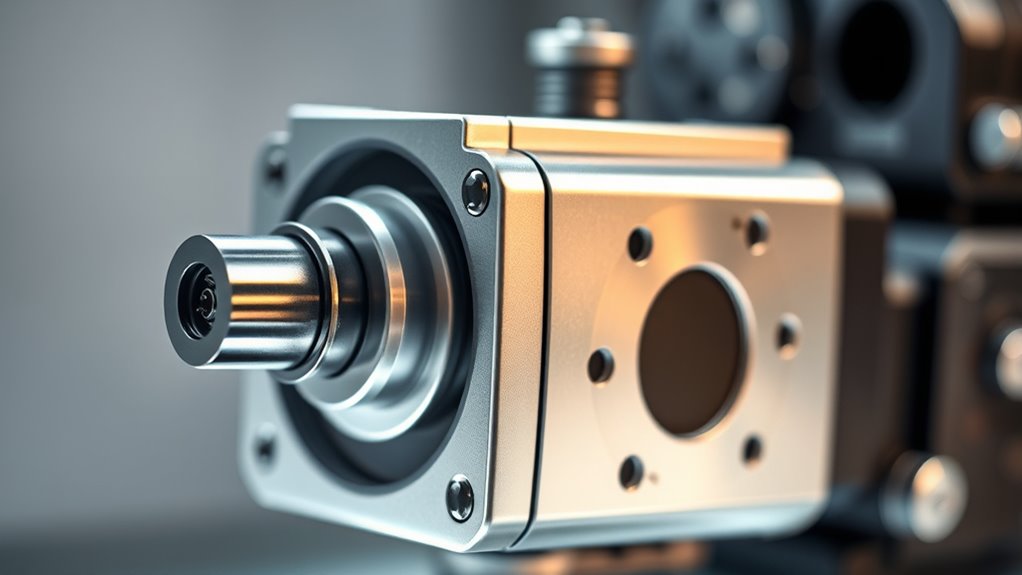
Although servo motors might seem complex initially, they’re straightforward once you understand their components and function. Servo motors are precision actuators operating within a closed-loop control system. Thanks to their integrated feedback devices, like encoders or potentiometers, they excel in providing accurate control of position, velocity, and acceleration. This feedback is crucial for adjusting motor output, ensuring precise control in various applications.
In practice, pulse width modulation (PWM) is the control method commonly used to dictate the position of the motor shaft. By modulating the pulse signal, you can achieve the desired position with remarkable accuracy. Integrated servo motors streamline installation by combining the motor, driver, encoder, and control electronics into one package, enhancing robotics and CNC machinery performance.
Mechanism of Operation
Understanding how a servomotor operates involves encountering a closed-loop control system that ensures precision in movement. The position encoder plays a crucial role by providing real-time feedback on the motor’s actual position, allowing the controller to make necessary adjustments. It generates an error signal, which guides the motor to correct its position until the error is minimized, ensuring accuracy and responsiveness.
Closed-loop control System
When it comes to precision and control, a closed-loop control system in a servomotor has you covered. It continuously compares the desired and actual positions using a feedback mechanism. This comparison generates an error signal, which is crucial for position control. The system uses the error signal to adjust motor operation, ensuring the servomotor achieves the desired position with impressive accuracy.
Here’s how it works:
- Error Signal Generation: The difference between desired and actual positions creates an error signal.
- Motor Adjustment: The error signal adjusts the motor to minimize positional error.
- Deceleration: As the motor nears the target, the error signal decreases, allowing precise stopping.
- Consistency and Compensation: It compensates for disturbances, maintaining consistent performance under varying loads.
Position Encoder Functionality
Position encoders are vital components in servomotors, giving precise feedback on the motor shaft’s actual position. They ensure you achieve precise control over the angular position of your motor. A position encoder provides this feedback by comparing the exact position with the desired one within the control system. Absolute encoders are particularly useful as they give a unique position value even when powered up, ensuring accuracy from the start. Modern servomotors typically utilize rotary encoders, outperforming older technologies like resistive potentiometers in precision and durability. Additionally, external linear encoders can enhance precision by compensating for drivetrain inaccuracies. This feedback loop is essential for maintaining precise control of your servomotor, ensuring it performs optimally without manual intervention.
Error Signal Adjustment
Although the error signal adjustment in a servomotor system might sound complex, it’s a straightforward process crucial for precise motor control. The error signal is generated by comparing the desired position input with the actual position feedback from the encoder. Here’s how it works:
- Error Calculation: The controller calculates the error signal by determining the difference between the motor’s desired and actual position.
- Adjustments: Based on the error signal, the controller continuously adjusts the servo motor to minimize discrepancies, ideally reaching zero.
- Feedback Mechanisms: Devices like rotary encoders provide critical position feedback, influencing the error signal and subsequent adjustments.
- Motor Control: When the error approaches zero, the controller stops the motor, maintaining its position against external forces.
This system ensures precise and efficient motor operation.
Comparison With Stepper Motors
In the world of motor control, understanding the differences between servomotors and stepper motors is essential for choosing the right solution for your needs. Servos operate in closed-loop systems with feedback mechanisms, offering precision control with position feedback. They deliver high torque and accurate performance, especially under varying loads. In contrast, stepper motors typically function in open-loop systems without feedback, which can lead to positioning errors when under load.
Servos often use advanced feedback devices like rotary encoders for real-time monitoring, while stepper motors rely on predetermined steps, risking inaccuracies if steps are missed. Servos also achieve higher torque and efficiency at higher speeds. Integrated servos simplify installation by combining components, whereas stepper motors require separate installations, adding complexity.
Types of Servo Motors
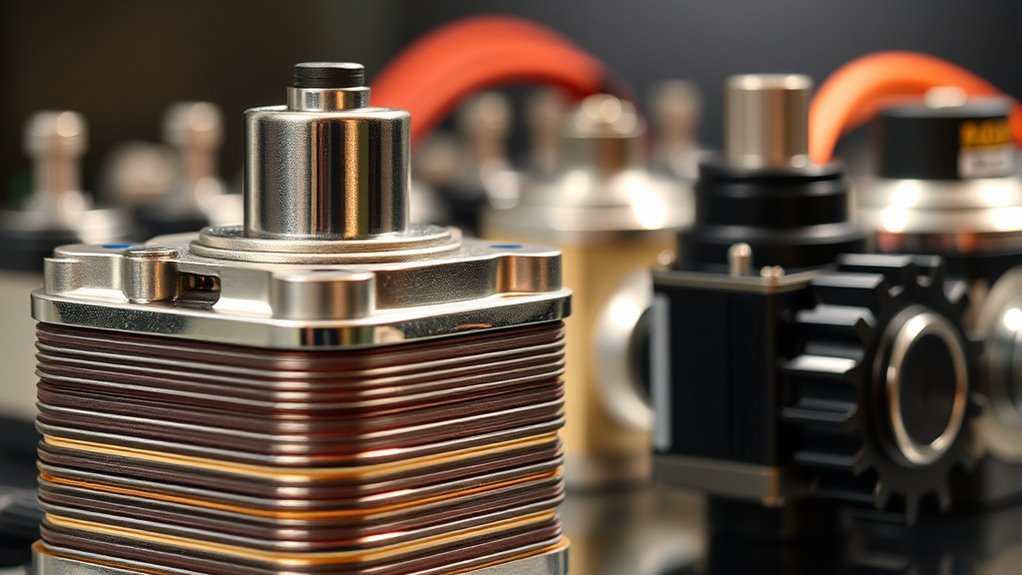
When exploring types of servo motors, you’ll find they’re primarily classified into DC and AC variations, each tailored to specific applications and load requirements. DC servo motors are subdivided into:
- Brushed DC Servo: Simple and cost-effective, ideal for applications needing straightforward control.
- Brushless Servo Motor: Offers higher efficiency and durability, perfect for demanding industrial applications.
AC servo motors excel at handling larger current surges, which is crucial for environments requiring precise control and high performance. They are commonly used in industrial scenarios.
Specialized types like the stepper motor combine features of both servos and stepper devices, ensuring high torque and closed-loop position feedback for accurate movement. Integrated servo motors with built-in drivers and feedback systems simplify installation in robotics and automation projects.
Role of Encoders in Servo Motors
When yoploring servo motors, understanding the role of encoders is crucial for grasping how precise positioning is achieved. You’ll encounter two main types: absolute encoders, which provide a specific position reading upon startup, and incremental encoders, which track position changes but need a reference point. The precision of your application relies heavily on choosing the right encoder type and resolution, impacting industries like robotics and automated manufacturing.
Types of Encoder Sensors
While exploring servo motors, understanding the role of encoder sensors is crucial for accurate motion control. Encoders provide vital position feedback by ensuring the angular position of the servo motor’s shaft is accurately monitored within a closed-loop system. Here are the two main types of encoder sensors you’ll encounter:
- Absolute Encoders: These give a unique position value at power-on, making them ideal for applications needing precise and reliable position data.
- Incremental Encoders: They measure changes in position. Though simpler and faster, they lack the precision of absolute encoders.
- Rotary Encoders: Commonly used in servo motors, they deliver precise angular position feedback.
- External Linear Encoders: These can reduce errors from the motor’s drivetrain, enhancing accuracy.
Absolute Vs Incremental Encoders
Understanding the differences between absolute and incremental encoders is key to optimizing servo motor performance. Absolute encoders provide unique position feedback for each shaft angle, ensuring precise control even after power loss. They’re ideal for high-precision applications, such as CNC machinery and robotics, where consistent servo motor performance is crucial. On the other hand, incremental encoders measure position changes from a known reference point. While cost-effective and widely used, they require resets after power interruptions and can suffer from cumulative errors without regular calibration. Absolute encoders offer multi-turn tracking and higher resolution, facilitating immediate, accurate positioning upon startup. Incremental encoders might need extra components for error correction, making them less suitable for applications demanding precise control.
Encoder Role in Precision
Having explored the distinctions between absolute and incremental encoders, it’s clear that encoders play a pivotal role in the precision of servo motors. Encoders allow closed-loop systems to control motor function precisely by providing vital position feedback and speed information. The effectiveness of these motors hinges on the encoder’s resolution—higher resolution means better precision and fewer errors. Rotary encoders, commonly used in modern servos, can deliver thousands of pulses per revolution, ensuring accurate angular position assessment. Sometimes, external linear encoders are used to counteract mechanical inaccuracies.
Here’s how encoders enhance servo motor precision:
- Position Feedback: Reliable data for motor adjustments.
- Closed-loop systems enable precise control.
- High Resolution: More pulses, finer accuracy.
- Angular Position: Exact movement tracking.
Applications of Servo Motors
With their incredible precision and control, servo motors revolutionize tasks across numerous industries. In robotics, servo motors provide precise control and high speed, utilizing position feedback for assembly and material handling tasks. Their role in CNC machinery ensures intricate machining processes crucial for manufacturing complex components. Servo motors excel in industrial applications, offering speed and motion control to optimize conveyor systems for efficient logistics.
In media production, camera gimbals rely on servo motors to stabilize filming, compensating for unwanted movements. Meanwhile, in the medical field, servo motors are essential for surgical robots and prosthetics, delivering the precise adjustments needed for delicate procedures. Servo motors are the backbone of innovation across various sectors.
Integrated Servo Motor Solutions
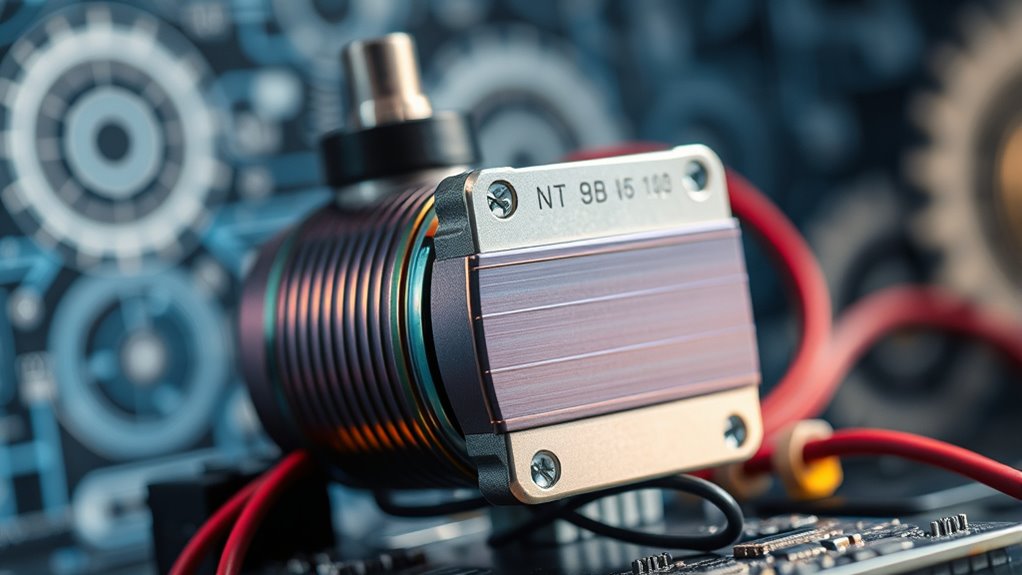
When tackling complex automation challenges, integrated servo motor solutions offer a streamlined approach by combining the motor, driver, encoder, and control electronics into one compact package. Integrating servo motors simplifies installation and saves space, which is crucial for high-density applications. These systems often use brushless AC motors, ensuring high performance and efficiency, especially when precise control and rapid response are needed.
Integrated systems enhance overall performance with cohesive control systems, providing:
- Precise Position Control: Advanced feedback mechanisms like rotary encoders enhance accuracy.
- Simplified Wiring: Streamlined connectivity reduces setup complexity.
- Built-in Safety Features: Easier maintenance and reliability in demanding environments.
- Compact Design: Optimal for space-constrained applications.
Integrated servo motors offer a powerful, efficient solution for advanced automation needs.
Advances in Servo Motor Technology
As technology progresses, servo motors evolve, incorporating groundbreaking advancements that boost performance and efficiency. Integrated servomotors combine the motor, driver, encoder, and control electronics into a single, efficient unit. This innovation streamlines installation and enhances precise control through improved pulse and feedback systems. Battery-free absolute encoders further elevate reliability by tracking positions without external power. Meanwhile, brushless AC motors deliver increased torque and responsiveness, maintaining a compact design perfect for industrial applications. Advanced feedback mechanisms, like rotary encoders, ensure faster, more accurate operations. Additionally, closed-loop stepper motors incorporate servomotor-like feedback, offering smoother motion control at lower costs. These advances in servo motor technology open up new possibilities across various applications.
Conclusion
You’ve now grasped the essentials of servo motors, understanding their precise control capabilities and how they outperform stepper motors in many applications. With various types and the crucial role of encoders, servo motors are indispensable in fields like robotics and industrial automation. As technology advances, integrated solutions continue to enhance their efficiency and versatility. Whether you’re working on cutting-edge machinery or exploring new tech possibilities, servo motors are pivotal to driving innovation forward.
FAQs
1. What Is a Servo Motor Used For?
You use them for precise control in robotics, CNC machinery, and camera stabilization. They’re crucial in conveyor systems and medical applications, providing the accurate adjustments and movements for efficient automation and delicate procedures. They’re indispensable in tech.
2. What Are the 3 Types of Servo Motors?
You’re asking about the three types: DC, AC, and stepper motors. DC types are great for small projects, AC for industrial tasks, and stepper motors offer precise positioning. Each has unique benefits based on your needs.
3. What Is the Difference Between a Servo Motor and a Regular Motor?
You’re comparing two motor types. A regular motor runs on simple voltage input, while a servo motor uses feedback to maintain precision in position and speed. Unlike regular motors, servos offer higher torque, faster response, and programmable positions.
4. What Is the Working Principle of a Servo Motor?
You observe a closed-loop control system at work. It compares desired and actual positions, generating an error signal. You adjust the motor using PWM to achieve precise positioning, conserving energy by halting once the target is reached.