

Unveiling the Essential: What is an Oscillator in Electronics?
Oscillators play a crucial role in the world of electronics. These devices generate repetitive waveforms, making them fundamental components in various electronic applications, from clocks and radios to radar systems. In this article, we will delve into the world of oscillators, exploring their types, working principles, and significance in electronic circuits.
What is an Oscillator?
An oscillator is an electronic circuit that generates a continuous and periodic waveform without needing an external input signal. It creates an alternating current (AC) or voltage signal that repeats at a particular frequency. This capability to produce a consistent waveform makes oscillators a fundamental building block in electronics.
Oscillators find applications in various fields, such as communications, timing circuits, signal generators, etc. They are essential in ensuring precise timing and frequency control, making them indispensable in many electronic devices.
Types of Oscillators
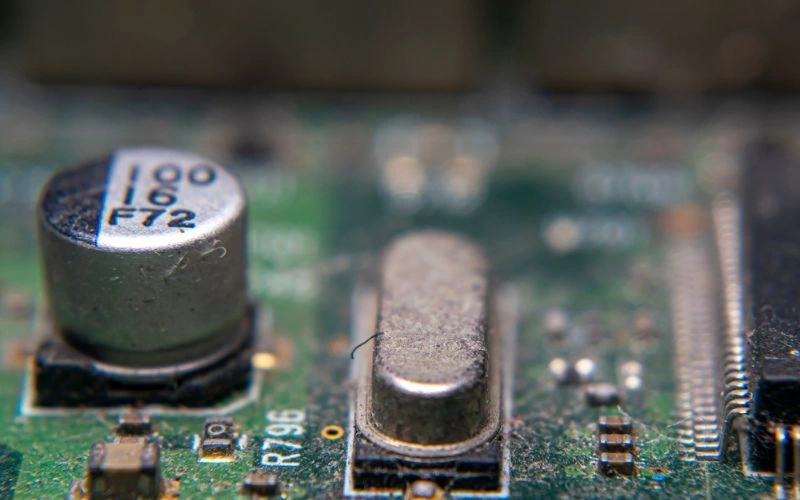
Oscillators come in various types, each designed for specific purposes. The two primary categories of oscillators are:
Sinusoidal Oscillators
Sinusoidal oscillators generate sinusoidal (sine wave) output signals. These oscillators are widely used in applications requiring a pure and consistent sine wave. The sine wave is a fundamental electronic waveform known for its smooth and repetitive nature. Examples of sinusoidal oscillators include the Wien bridge oscillator, Colpitts oscillator, and the classic LC (inductor-capacitor) oscillator.
Non-Sinusoidal Oscillators
Non-sinusoidal oscillators, on the other hand, produce output waveforms that are not pure sinusoids. These oscillators are used in applications requiring square, triangular, or sawtooth waveforms. Non-sinusoidal oscillators are often employed in digital circuits, pulse-width modulation (PWM), and applications where square waves are needed. The most common non-sinusoidal oscillator is the astable multivibrator, which generates square wave output.
Oscillator Circuit Components
To understand how oscillators work, let’s break down their key components:
Active Elements
Active elements are essential for providing gain to compensate for the inevitable signal losses within the oscillator circuit. Common functional elements include transistors (bipolar junction or field-effect transistors), operational amplifiers (op-amps), and vacuum tubes (in older designs). The active element amplifies the weak signal to ensure sustained oscillation.
Feedback Network
The feedback network takes a portion of the oscillator’s output and feeds it back to the input with the correct phase and amplitude. This feedback reinforces the input signal, causing it to oscillate. Depending on the oscillator type, the feedback network can consist of passive elements like resistors and capacitors or other components like inductors.
Frequency-Determining Elements
As the name suggests, frequency-determining elements control the output waveform’s frequency. These components can include capacitors, inductors, and crystals. The values and arrangement of these elements dictate the oscillation frequency of the circuit.
Working Principles of Oscillators

Oscillators work on the principle of positive feedback. The key to their operation is maintaining a consistent phase and amplitude relationship between the input and feedback signals. The Barkhausen Criterion, named after the German physicist Heinrich Georg Barkhausen, is a fundamental concept in oscillator theory. It states that for sustained oscillations, the loop gain (the product of the gains of the active element and the feedback network) must be equal to or greater than 1, and the phase shift around the feedback loop should be 360 degrees (or a multiple of 360 degrees).
Applications of Oscillators
Oscillators find widespread use in various electronic applications. Some of the common applications include:
- Clock Generators: Oscillators are crucial for timekeeping in devices like watches, clocks, and microcontrollers.
- Signal Generators: They are used in signal generators to produce reference waveforms for testing and calibration.
- Radio Transmitters: Oscillators play a vital role in generating carrier signals in radio communication.
- Frequency Synthesizers: In applications where precise control of frequencies is required, such as in radar systems.
- Audio and Music Synthesis: Non-sinusoidal oscillators are used in musical instruments to create different tones and sound effects.
- Digital Electronics: In digital circuits, square wave oscillators are employed in clock signal generation.
Design Considerations for Oscillators
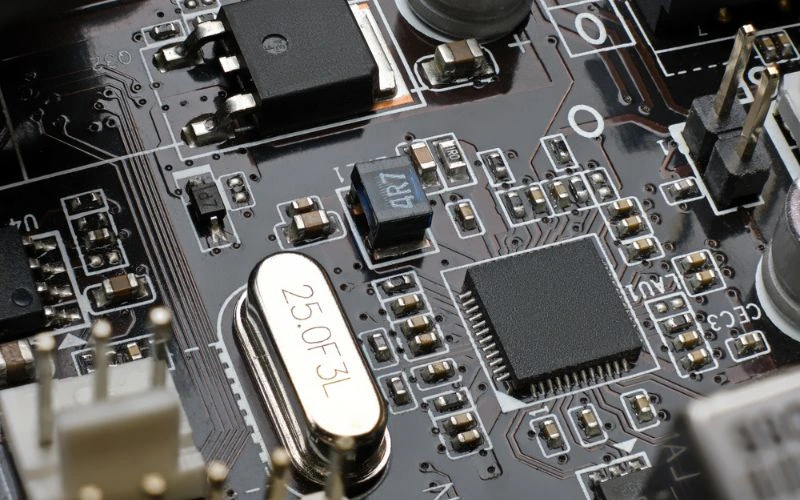
When designing an oscillator circuit, several factors need to be considered to ensure its stability, accuracy, and reliability. These considerations include:
- Frequency Stability: The oscillator’s frequency should remain relatively constant over temperature changes and component variations. Crystal oscillators, for instance, offer excellent frequency stability.
- Amplitude Control: Maintaining a consistent amplitude of the output signal is crucial in some applications. Amplitude stabilization techniques, like automatic gain control (AGC), can be employed.
- Phase Noise: Phase noise refers to unwanted fluctuations in the phase of the output signal. In applications like radar and wireless communication, minimizing phase noise is critical.
- Start-Up Time: Some applications require a quick start-up time, while others can tolerate a longer initialization period. The choice of components and design should align with the desired start-up time.
- Power Consumption: Power-efficient oscillators are essential for battery-powered devices, where minimizing power consumption is a primary concern.
- Aging and Drift: Components used in oscillators can experience aging and drift over time. These effects can impact frequency stability, so circuit design should account for them.
Conclusion
In conclusion, oscillators are the heartbeat of many electronic devices, allowing them to generate precise and repetitive waveforms. Their various types and configurations make them versatile tools for engineers and hobbyists alike, catering to a wide range of applications in electronics. Understanding oscillators and their components is fundamental for anyone working with electronic circuits.
FAQs
1. What is the main purpose of an oscillator in electronics?
The primary purpose of an oscillator in electronics is to generate a continuous and periodic waveform, such as a sine wave or a square wave, without the need for an external input signal. They are essential for applications that require precise timing, signal generation, and frequency control.
2. What are some common frequency-determining elements used in oscillators?
Common frequency-determining elements in oscillators include capacitors, inductors, and crystals. These components are carefully chosen to set the desired oscillation frequency based on the oscillator’s application.
3. Can I build an oscillator circuit on a breadboard?
Yes, building a simple oscillator circuit on a breadboard is possible, especially for educational purposes or prototyping. To create basic oscillators, you can use commonly available components like resistors, capacitors, and transistors. However, surface-mount or specialized components may be required for high-precision applications to achieve accurate and stable frequencies.
