Navigating the Realm of Oscillatory Transients in Power Quality
Oscillatory transients are transient voltage or current fluctuations caused by lightning strikes, switching operations, or sudden load changes. They can damage equipment and cause instability and power outages. To manage them, we must understand their characteristics, origins, and effects on power quality. By doing so, we can ensure electrical networks’ stability, reliability, and best performance during unpredictable and dynamic transient events.
Understanding Oscillatory Transients
Understanding oscillatory transients is essential in various fields of science and engineering. These transients refer to the temporary disturbances or fluctuations observed in oscillatory systems before reaching steady-state behavior. By studying these transients, researchers can gain insights into the dynamic behavior of complex systems and analyze their response to external perturbations.
Definition and Characteristics

Oscillatory transients are rapid and short-lived fluctuations in voltage or current within electrical power systems. These transients exhibit high-frequency oscillations caused by various factors such as lightning strikes, switching operations, or load connections and disconnections. They typically last a few microseconds to milliseconds and can significantly impact power quality.
An Oscillatory (periodical) transient may be a fulminant, non–power frequency modification within the steady state condition of voltage, current, or together, with each positive and negative polarity value.
An oscillatory transient comprises a voltage otherwise current whose instantaneous values change polarity quickly. It’s delineated by predominate frequency, interval, and magnitude. These predominate frequency subclasses outlined in the Table below are low, medium, and high. The frequency series for these arrangements is selected to overlap with common forms of power network oscillatory transient sensations.
Origins and Sources
- Lightning-induced transients: Lightning strikes, either direct or indirect, can introduce high-energy transients into power systems.
- Switching transients: The rapid switching of electrical circuits, such as opening or closing breakers, can generate transients due to abrupt changes in current or voltage.
- Load transients: Connecting or disconnecting loads with high inrush currents or sudden changes in power demand can result in transients.
Impulsive Transients
A transient with a primary frequency part between 5-500 KHz with a length measured in the tens of microseconds (or many cycles of the principal frequency) is termed a medium-frequency transient. Succeeding condenser energization leads to periodical transient currents within the tens of kilohertz, as illustrated in Figure. Cable switching leads to periodical voltage transients in the same frequency vary. Medium-frequency transients can even result from a system response to associate degree impulsive transient.

A transient with a primary frequency part of less than five rates and a length from 0.3 to 50 ms is considered a low-frequency transient. This class of phenomena is often encountered in utility sub-transmission and distribution systems and is caused by many events. The foremost frequent is condenser bank energization, which typically leads to associate degree periodical voltage transient with a primary frequency between 300 and 900 Hertz. The height magnitude will approach a 2.0 pu. However, depending on the system damping, it is usually a 1.3 to 1.5 chemical element with a length of between 0.5 and three cycles. The distribution system can find oscillatory or transients with principal frequencies less than three hundred Hetem. These are usually associated with Ferro resonance and electrical device energization. Transients involving series capacitors may additionally fall under this class. They occur once the system responds by ringing low-frequency elements in the electrical device influx current (2 & 3 harmonics) or when uncommon conditions end in Ferro resonance.
It is additionally attainable to reason transients (and different disturbances) per their mode. A transient in an exceedingly three-phase system with a separate neutral conductor will be either common mode or normal mode, counting on whether or not it seems between line or neutral and ground or between line and neutral.
Impacts of Oscillatory Transients
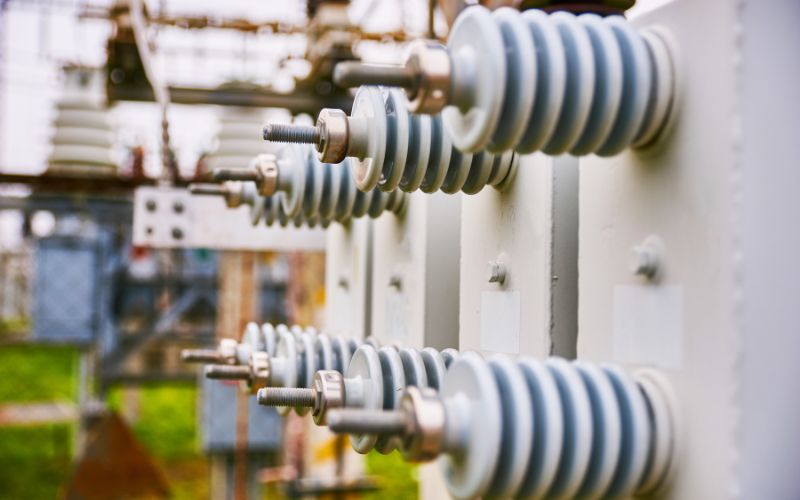
- Equipment Damage Oscillatory transients can cause insulation breakdown, semiconductor device failure, and degradation of sensitive electronic components. Equipment such as motors, transformers, and electronic devices are particularly susceptible to damage from these transients.
- System Instability Transients can lead to voltage sags, swells, or frequency variations, destabilizing the power system. This instability can result in cascading failures, voltage flicker, and disturbances in sensitive equipment.
- Power Quality Degradation Oscillatory transients contribute to power quality issues such as harmonic distortion, voltage flicker, and waveform distortions. These effects can disrupt equipment performance, leading to inefficiencies and malfunctions.
Mitigating Oscillatory Transients
- Surge Protection Devices (SPDs) Installing surge protection devices at strategic locations within the electrical network can divert excessive transient energy and protect equipment from damage.
- Filtering and Conditioning Utilizing filters and voltage conditioning equipment can mitigate the effects of transients by suppressing high-frequency components and smoothing out voltage fluctuations.
- Grounding and Bonding Proper grounding and bonding practices help dissipate transient energy and minimize the potential for voltage rise or equipment damage.
- Protective Relays and Circuit Breakers Implementing protective relays and fast-acting circuit breakers can detect and respond to transient events, isolating affected areas and preventing further damage.
- Education and Training Promoting awareness and Training on power quality issues, including oscillatory transients, can enable operators and maintenance personnel to effectively identify, analyze, and address transient-related challenges.
Future Trends and Challenges
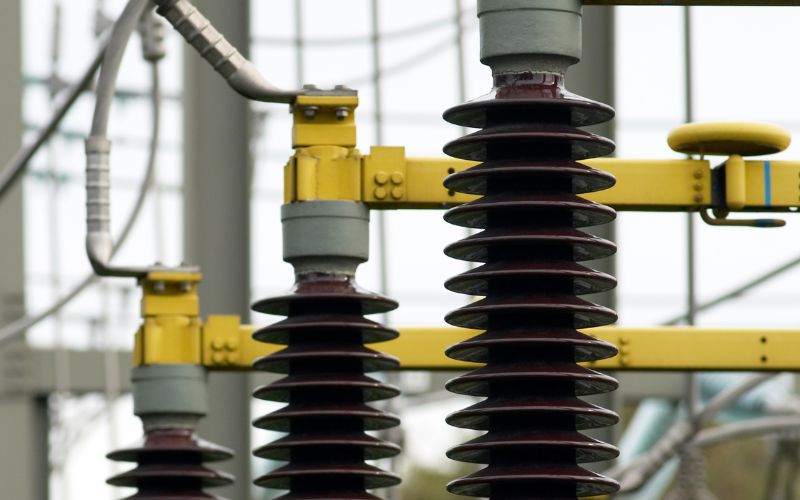
- Increasing Complexity of Power Systems With the integration of renewable energy sources, energy storage, and smart grid technologies, power systems are becoming more complex, posing new challenges in managing and mitigating oscillatory transients.
- Grid Resilience and Transient Mitigation Research and development efforts focus on enhancing grid resilience through advanced transient detection and mitigation techniques, such as using advanced sensors, real-time monitoring, and predictive analytics.
Conclusion
Navigating the realm of oscillatory transients in power quality is essential to ensure the stability and reliability of electrical networks. Understanding these transients’ origins, impacts, and mitigation strategies is crucial for protecting equipment, maintaining system stability, and ensuring high power quality standards. By implementing appropriate mitigation measures and staying ahead of emerging challenges, power system operators and engineers can navigate the realm of oscillatory transients effectively, leading to more resilient and efficient power systems.