Understanding Voltage Sensors: Basics of Electrical Measurement
Imagine harnessing the power of electricity at your fingertips. The surge of energy, the pulse of potential, is controlled and measured by a single element – voltage sensors. In this blog post, we peel back the layers to unveil the core aspects of these remarkable devices that play an integral part in our daily lives. Dive into the electrifying world of voltages, currents, and their quantification mechanics as we show how voltage sensors bridge human potential with electrical reality. Don’t resist the current; it’s time to make sense of these impressive voltage sentinels! Their role may seem invisible, but their impact is tremendous – whether dealing with household appliances, industrial equipment, or advanced technology components. Get enlightened with “Understanding Voltage Sensors: Basics of Electrical Measurement.”
A voltage sensor is a device used to measure the electrical potential difference between two points in an electrical circuit. It detects and converts the voltage signal into a readable form, such as analog or digital output, which can be used for monitoring, control, or data acquisition. Voltage sensors often utilize techniques like voltage dividers or Hall effect sensors to measure voltage levels in a circuit accurately. However, it is important to note that specific details and functionality may vary depending on the type and model of the voltage sensor being used.
Different Types of Voltage Sensors

Voltage sensors, or potential transformers, are incredibly useful devices in electrical engineering. They allow the voltage output measurement from a power source safely and efficiently. However, voltage sensors come in different types suited for varied applications.
Analog vs. Digital
In the realm of voltage sensors, there are two primary types: analog and digital. Each operates distinctively, impacting electrical measurement accuracy, speed, and cost-effectiveness.
Analog Voltage Sensors: Continuous Signals
Analog sensors have a long-standing presence, utilizing continuous signals to represent measurements across a range. Their output spans any value between the minimum and maximum thresholds, ensuring smooth transitions. These sensors work by converting real-world voltage inputs into linearly varying outputs.
- Continuous signal representation
- Smooth transitions and tracking
- Output varies linearly with input
- Real-world voltage converted into proportional output
Digital Voltage Sensors: Precision in Binary
Digital sensors convert variable voltages into binary numbers, offering a more precise and faster alternative. The output is exact or close to it, eliminating the approximations associated with analog devices.
- Binary representation of measured values
- Faster and more accurate
- Exact output without approximation
- Quick conversion of variable voltages
Analog vs. Digital in Practical Terms
Comparing these two types practically, consider the analogy of temperature measurement. Analog thermometers require interpretation based on the position of the mercury or liquid line, while digital thermometers provide decimal point readings without ambiguity.
- Analog requires interpretation
- Digital offers clear and precise readings
- Example: Temperature measurement analogy
Cost Considerations: Analog’s Advantage
When evaluating cost-effectiveness, analog sensors generally prove less expensive. This is attributed to their utilization of fewer electronic components compared to their digital counterparts.
- Analog sensors are cost-effective.
- Less expensive due to fewer components
- Economical choice for certain applications
Analog’s Water Flow Analogy
Analog sensors can be likened to measuring water flow with blocks of varying sizes. The movement is evident, and changes over time are discernible by observing each block’s space on a self-contained square base.
- Analogy: Water flow measured with varying blocks
- Changes over time revealed by block movement
- Movement signifies transitions and alterations
Digital’s Snapshot Analogy
Conversely, digital sensors are comparable to timed snapshots capturing the liquid’s movement. This enables a quick determination of the flow rate over time, with each image representing the movement at a specific moment.
- Analogy: Timed snapshots of liquid flow
- Quick determination of flow rate over time
- Each image indicates the rate of change
Circuit-Integrated vs. Standalone
Voltage sensors come in two main categories – circuit-integrated and standalone sensors. A circuit-integrated voltage sensor is an integrated chip sensor already part of an electronic device, often embedded into a printed circuit board. In contrast, standalone voltage sensors are external devices that can be used for multiple applications. Standalone sensors often provide more flexibility in the measurement range and have added features such as visual display, temperature compensation, or wireless connectivity.
When selecting which type of voltage sensor to use, it’s essential to consider how versatile it needs to be. If you only intend to measure voltage within a device that cannot be modified extensively, then a circuit-integrated sensor would suffice. However, a standalone voltage sensor will prove more useful if your application requires interfacing with various electronic devices.
- The global voltage sensor market was valued at approximately USD 2.5 billion in 2019, with expected growth over the next few years, demonstrating its significant importance to numerous industries.
- In a world increasingly relying on renewable energy sources like solar power, voltage sensors play an integral role, with studies showing they contribute to improving the overall efficiency of solar panel systems by up to 15%.
- According to a report published in 2020, the automotive industry represented over 30% of voltage sensor usage due to advanced features like anti-lock braking systems (ABS) and electric power steering, where voltage sensors are integral components.
Choosing the Right Voltage Sensor

Selecting the right voltage sensor involves understanding key factors that influence its performance. Before deciding on a particular brand or manufacturer of the voltage sensor, the following considerations must be taken into account:
Measuring Range
Voltage sensors are designed with specific ranges in mind; hence, choosing one that measures within the required range for your application is crucial. Selecting a compatible range with your Microcontroller Unit (MCU) for accurate readings is important.
Accuracy and Resolution
Different sensors have varying degrees of precision and resolution depending on their built-in capacitors or digital signal processing algorithms. Choosing an appropriate sensitivity rating is vital depending on your measured variables’ magnitude.
Interface Type
Voltage sensors usually connect via I2C or analog signals, so ensure compatibility with your MCU interface is guaranteed.
Noise Rejection Capabilities
External electrical noise influences sensors’ accuracy. A good voltage sensor should mitigate said effects by including filters to block unwanted environmental noise.
Imagine wanting to measure the voltage output of a solar panel for an off-grid system that produces 48V. To ensure accurate measurements, find a voltage sensor that can handle high voltages (e.g., 60V +) with minimal error rates, has sufficient resolution to detect minor changes at high-voltage ranges, and comes with an appropriate interface type.
Choosing the right voltage sensor is crucial in obtaining accurate signals related to your measurements. Carefully consider what application you need for the sensor and tailor your selection based on the discussed factors.
Key Factors to Consider
Voltage sensors, also known as voltage detectors, are crucial electrical measurement tools that play a significant role in modern electronics. However, before using these sensors, it is essential to understand critical factors that influence the accuracy of your measurements.
Firstly, selecting a suitable sensor that matches specific application requirements is vital. This decision should be informed by measurement range, accuracy, cost, and ease of use.
Additionally, it’s crucial to understand the signal conditioning process that voltage sensors undergo. A voltage sensor typically produces an output signal proportional to the input voltage. Hence, factors like sensor sensitivity and resolution are critical considerations that affect the accuracy of your measurements.
Finally, the environment where measurements take place can impact results. Environmental factors like humidity and temperature changes can alter signal conditioning components or fluctuate readings.
Utilizing Voltage Sensors
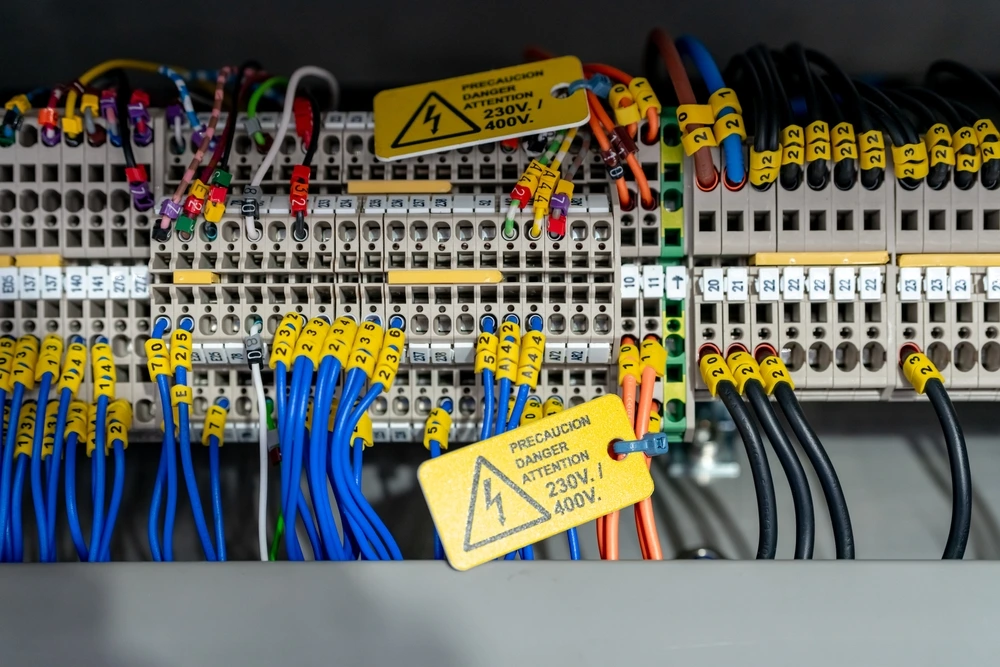
After selecting an appropriate voltage sensor and factoring in environmental variables, understanding strategies for accurate measurements is crucial when utilizing voltage sensors in electrical systems.
Firstly, ensure that all connection points are secure and free from oxidation. Obtaining consistent readings would require eliminating resistance changes caused by loose or corroded terminals.
When making measurements, paying attention to scaling factors specified within various datasheets supplied by manufacturers is crucial. This provides information on how the sensor output correlates with input voltage. A calibration procedure that adjusts these scaling factors may be necessary to improve accuracy.
For example, a multiple-point calibration strategy could enhance accuracy if a voltage sensor has an output range between 0-5 volts, indicating a 0V-100V circuit range input.
It is important to note that voltage sensors operate differently based on their classification: non-contact-based vs contact-based(type). Understanding these unique operating characteristics can further aid in obtaining accurate readings per application demands.
Finally, minimizing noise interference is another key strategy for ensuring accurate sensor measurements. Shielding the voltage measurement path or locating the sensor away from areas of known noise sources can reduce unwanted interference.
Strategies for Accurate Measurements
Voltage sensors are fundamental to measuring electrical currents, but inaccuracies can significantly impact the final results. Therefore, it’s imperative to implement the best strategies to ensure reliability and precision in measurements. One such strategy is calibration. Calibration involves comparing readings obtained from a device to known values. By doing this, inconsistencies are detected early on, and corrective measures are taken to enhance accuracy. Another strategy is temperature compensation – It ensures that voltage measurements obtained in different temperatures don’t skew the results using a temperature-dependent electrical component.
Suppose you’re installing solar panels on your roof to run your home appliances. You’ll want to measure the voltage output of these panels accurately. Using calibrated instruments with temperature-compensating capabilities will help you obtain accurate and reliable results even as temperatures fluctuate between seasons.
Other techniques include ensuring proper grounding, regular maintenance of instruments, and minimizing interference from external sources.
Pros and Cons of Using Voltage Sensors

Voltage sensors offer many benefits, making them essential devices in electrical measurement. For one, they offer an accessible method of measuring electrical signals’ amplitude and polarity compared to alternative methods like oscilloscopes. They also offer non-contact detection, ideal for circuits needing isolation or high-voltage differentials.
However, there are several drawbacks people should consider when using voltage sensors. They can introduce significant errors depending on their impedance values, thus requiring calibration efforts periodically, changing resistors within their circuitry, etc.
Despite these disadvantages, voltage sensors are still the preferred choice for many applications due to their reliability and affordability compared to other alternatives.
Think of it like choosing between driving a sports car that’s reliable, fast and affordable versus taking a luxury yacht where costs add up quickly, navigating harbors isn’t always practical but provides more comfort amenities.
Ultimately, determining the best tool for the job based on project needs and weighing the pros and cons matters most.