A Dive into Binary to Gray Code Conversion and Its Applications
In the realm of digital circuits and encoding, the transformation from binary to gray code plays a pivotal role. Understanding this process involves delving into the intricacies of bits, codes, conversions, and algorithms. In this comprehensive guide, we will explore the nuances of binary to gray code conversion, its applications, and the various methods, including a deep dive into a Python-based converter. Let’s embark on a journey through the binary and gray code landscape, unraveling the mysteries behind this essential operation.
The Basics: Binary and Gray Code
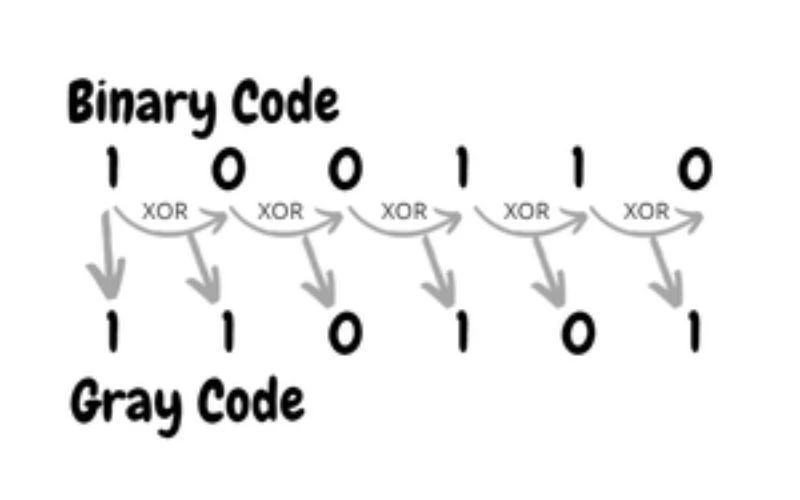
At the heart of digital communication lies the binary numeral system, a fundamental language of computers that employs 0s and 1s to represent information. Complementing binary code is the Gray code, a unique binary numeral system where successive values differ by only one bit. These foundational coding systems form the backbone of digital computations and data representation.
Binary Code Overview
Binary code is the fundamental language in computing, using combinations of 0s and 1s to represent information. Each digit in a binary sequence is called a bit, and these bits form the building blocks for encoding various data types in computers. Understanding binary code is essential for anyone venturing into the world of digital communication and computation.
Decoding Gray Code
Understanding the Conversion Process
The conversion from binary to gray code involves systematically transforming each bit in the binary sequence. This operation is essential in digital circuitry, ensuring efficient communication and minimizing errors during data transmission.
Truth Table Insights
To grasp the intricacies of binary to gray code conversion, let’s take a closer look at the truth table that governs this transformation:
| Binary (Input) | Gray Code (Output) |
|---|---|
| 000 | 000 |
| 001 | 001 |
| 010 | 011 |
| 011 | 010 |
| 100 | 110 |
| 101 | 111 |
| 110 | 101 |
| 111 | 100 |
Analyzing this truth table reveals the logical operations that define the conversion process.
Exploring Binary Code in Depth
Before we embark on the intricacies of binary to gray code conversion, let’s take a moment to delve deeper into the world of binary code. As the fundamental language of computers, binary code is not just about representing data with 0s and 1s; it involves a complex interplay of arithmetic operations and hierarchical bit significance. Understanding these nuances is crucial for mastering the art of binary to gray code conversion.
Binary Arithmetic
In this section, we unravel the layers of binary arithmetic, the backbone of digital computations. From basic addition to complex operations, we explore how the binary numeral system handles mathematical processes. Understanding binary arithmetic is not only fundamental to coding but also lays the groundwork for comprehending the subsequent intricacies of binary to gray code conversion.
MSB and LSB Significance
The Most Significant Bit (MSB) and Least Significant Bit (LSB) play pivotal roles in the representation of binary numbers. This subsection delves into the significance of these bits, elucidating how their hierarchical arrangement impacts the interpretation of binary sequences. Unraveling the MSB and LSB provides crucial insights into the structural composition of binary numbers.
Binary-Coded Decimal (BCD)
Binary-Coded Decimal (BCD) is more than just a representation of decimal numbers in binary form. This subtopic explores the application of BCD in computing and digital electronics. Understanding the relationship between BCD, binary, and gray code adds depth to our comprehension of these coding systems.
Binary Code in Electronics
Here, we explore the omnipresence of binary code in the field of electronics. Its ability to represent intricate information with simplicity is harnessed in the design and operation of various electronic circuits. Grasping the role of binary code in electronics is crucial for comprehending the broader spectrum of digital systems.
Unveiling the Python Algorithm
For those venturing into the world of programming, a Python-based converter is a handy tool. Let’s explore a simple algorithm to convert binary to gray code using Python:
def binary_to_gray(binary):
gray = binary[0]
for i in range(1, len(binary)):
gray += str(int(binary[i-1]) ^ int(binary[i]))
return gray
# Example Usage
binary_sequence = “101010”
gray_code_result = binary_to_gray(binary_sequence)
print(f”Binary: {binary_sequence}nGray Code: {gray_code_result}”)
This Python script showcases the XOR (^) operation, a fundamental logic gate, to achieve the binary to gray code conversion.
Applications Across Platforms

Now that we have grasped the fundamental aspects of binary and gray code, it’s time to explore their applications across diverse platforms. The versatility of binary code extends beyond digital circuits and opens doors to innovative applications in programming languages, web development, and more. Let’s delve into the various realms where binary and gray code find practical significance.
Binary Code in Programming Languages
We uncover the role of binary code in programming languages, particularly in low-level operations. Understanding bitwise operations and binary manipulations enhances a programmer’s ability to optimize code for efficiency. We’ll explore the bridge between low-level binary operations and high-level programming languages, adding versatility to one’s coding skills.
Binary Code in Web Development
The realm of web development harnesses binary code for handling images, files, and data transfer. This subtopic delves into how binary data is encoded and decoded in web technologies, shedding light on the intricacies of managing digital information efficiently in HTML and other web platforms.
Binary to Gray Code Converter in Circuitry
Here, we take a closer look at the practical application of binary to gray code conversion in electronic circuits. Understanding the intricate circuitry involved in converters, particularly the use of logic gates like XOR gates, unveils the inner workings of this essential component in digital systems.
Mapping Binary to Gray Code in Excel
For those dealing with data in spreadsheet form, this section explores how to map binary to gray code in Excel. The powerful functions provided by Excel facilitate seamless conversion, empowering users to analyze and manipulate binary and gray code data efficiently.
Selenium and Binary Code
In the ever-evolving world of web automation, Selenium proves to be a versatile tool. This subsection showcases how Selenium can be harnessed for tasks related to binary and gray code in web applications. From data extraction to manipulation, Selenium offers a dynamic platform for handling binary-coded data in diverse scenarios.
Binary Code in Verbal Communication
Binary Code in Microsoft Applications
Equivalence in Binary Sequences
Exploring equivalent binary sequences deepens our understanding of the vast possibilities within the binary numeral system. Unraveling patterns and equivalences adds a layer of sophistication to binary and gray code manipulation.
Conclusion
In conclusion, the journey from binary to gray code is a fascinating exploration into the world of digital communication and computation. From the basics of binary arithmetic to the intricate circuitry of converters, this guide has covered a spectrum of topics, providing a holistic view of this essential coding transformation. Whether you are a programmer, electronics enthusiast, or web developer, the knowledge of binary to gray code conversion opens doors to innovative applications and solutions.
FAQs
How does the XOR operation facilitate binary to gray code conversion?
The XOR (exclusive OR) operation plays a central role in binary to gray code conversion. It involves comparing two bits and outputting 1 if the bits are different, and 0 if they are the same. In the conversion process, XOR is applied sequentially to each bit, producing the corresponding gray code.
Why is binary-coded decimal (BCD) significant in the context of binary and gray code?
BCD, or Binary-Coded Decimal, is a binary representation of decimal numbers. It is valuable in digital electronics and computing as it provides a straightforward way to represent decimal digits using binary code. Understanding BCD adds depth to the broader exploration of binary and gray code.
How can Selenium be used for tasks related to binary and gray code in web applications?
Selenium, a popular tool for web automation, can be utilized for tasks involving binary and gray code in web applications. It provides features for data extraction, manipulation, and interaction with web elements, making it a versatile platform for handling binary-coded data in various scenarios.