How Do Generators Produce Electricity? A Simple Guide
Imagine you’re standing beside a humming generator, curious about the magic happening inside. Generators transform mechanical energy into electrical energy through electromagnetic induction—sounds complex, right? But it’s all about a conductor moving within a magnetic field to induce electric charges. The engine powers this movement, while the generator’s design dictates the current type and strength. Want to understand how magnets and motion create electricity? There’s more to uncover. Discover How Do Generators Produce Electricity?
Key Takeaways
- Generators convert mechanical energy into electrical energy through the process of electromagnetic induction.
- A conductor moving within a magnetic field induces electric charges, producing electricity.
- The engine provides mechanical energy, which the alternator converts into electrical energy.
- The strength of the magnetic field and the speed of the conductor’s movement influence the current’s strength.
- Design elements, such as coil turns and magnetic field strength, enhance the generator’s efficiency.
Understanding the Basic Principle of Generators
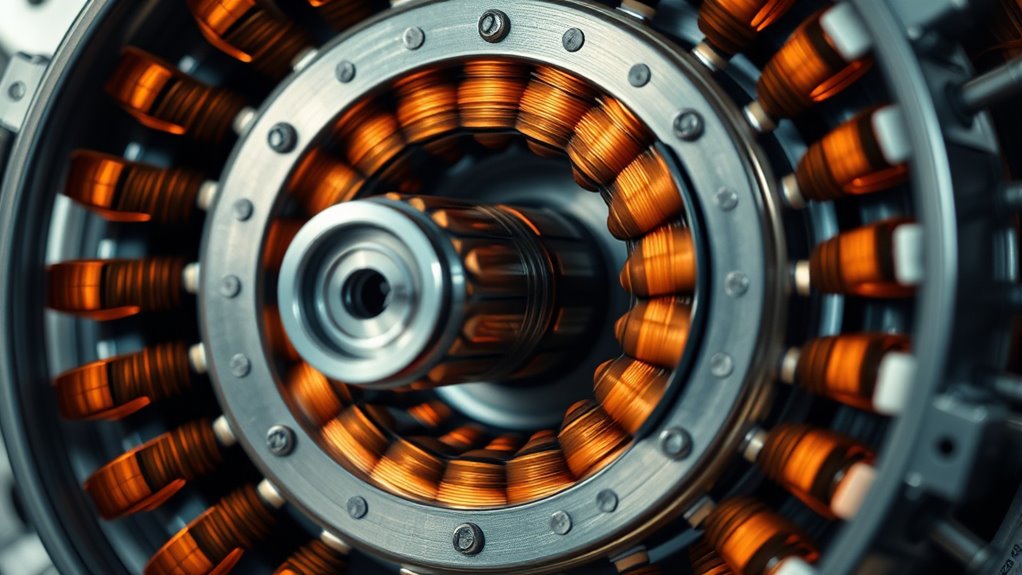
Generators are fascinating machines that convert mechanical energy into electrical energy through the process of electromagnetic induction. This process, pioneered by Michael Faraday in 1831, involves moving a conductor within a magnetic field, prompting electric charges to flow and generate electrical energy.
The engine in a generator supplies the mechanical energy needed to drive this process. As the conductor moves, it cuts through magnetic lines of force, inducing an electric current. This current can be either alternating current (AC) or direct current (DC), depending on the generator’s design.
The alternator, a key component, plays a crucial role in converting mechanical energy into electrical output. By understanding this basic principle, you’ll gain insight into how generators efficiently produce electricity for various applications.
The Role of Electromagnetic Induction in Electricity Generation
Building on the basic principle of generators, electromagnetic induction stands at the heart of electricity generation. Discovered by Michael Faraday, this process involves moving a conductor, like copper coils, through a magnetic field to induce an electric current.
The speed at which the conductor moves and the strength of the magnetic field directly affect the current’s strength. Different generator types produce alternating current (AC) or direct current (DC) based on their design, such as the use of a commutator for DC output.
The armature and stator’s design, along with the number of wire coil turns, play an essential role in enhancing the generator’s efficiency. Ultimately, this technique efficiently converts mechanical energy into electrical energy, powering various applications.
Key Components of a Generator and Their Functions
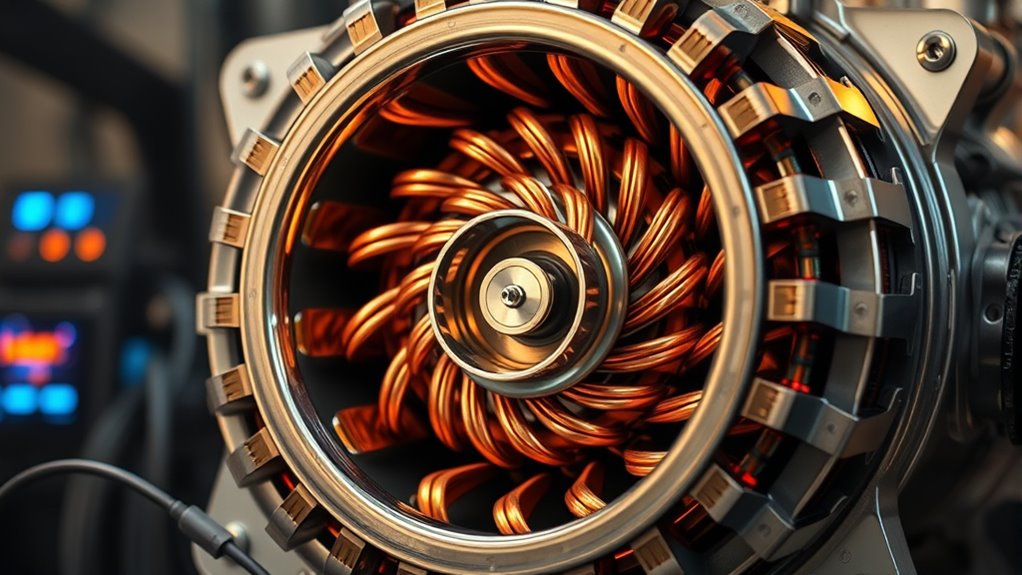
When you explore how generators produce electricity, you’ll notice that three key components play pivotal roles: the engine, the alternator, and the voltage regulation system.
The engine acts as the primary power source, driving the alternator, which then converts mechanical energy into electrical energy.
Meanwhile, the voltage regulation system ensures the output remains stable and meets our needs.
Engine Power Source
The heart of a generator is its engine, which transforms fuel into mechanical energy, driving the entire operation. The engine’s size determines the generator’s power output, directly impacting its capabilities.
Efficient engine designs, like Overhead Valve (OHV), enhance both efficiency and performance. The fuel system ensures a steady fuel supply, allowing for operation of 6 to 8 hours.
Regular maintenance of the lubrication system is crucial for achieving peak engine performance and extending its longevity.
You’ll find the control panel indispensable for managing critical functions, monitoring engine speed, and guaranteeing desired electrical output.
Here are key aspects to reflect on:
- Engine efficiency affects overall performance.
- Fuel system components guarantee continuous operation.
- The lubrication system prevents engine wear.
- The control panel facilitates easy management.
Understanding these elements maximizes the effectiveness of your generator.
Alternator Energy Conversion
As you explore how a generator functions, the alternator plays an essential role in converting mechanical energy from the engine into electrical energy.
At its core, the alternator uses electromagnetic induction to achieve this transformation. It comprises two main parts: the stator, which features large copper windings that create a stationary magnetic field, and the rotor, which spins within the stator.
This rotation generates alternating current (AC) as the magnetic field induces electric current flow. The efficiency of an alternator depends on the winding design and magnetic field strength. Increasing the number of wire turns in the coil can result in a higher output voltage.
Brushless alternators enhance durability and reduce maintenance by eliminating friction-related wear, making them an excellent choice for reliable energy conversion.
Voltage Regulation System
An essential component of any generator is its voltage regulation system, which guarantees a steady and consistent electrical output.
By controlling the output voltage, the voltage regulator ensures a stable electrical supply, adjusting the field current in response to the generator terminal voltage. This system is typically found in the main control or terminal box of the alternator, guaranteeing operational efficiency.
It also plays a significant role in preventing voltage spikes that could damage electrical equipment.
- Converts alternating current (AC) to direct current (DC) when needed
- Maintains safe limits for the generator’s electrical output
- Supports various electrical applications
- Requires regular maintenance for peak performance
To keep your generator running smoothly, remember to maintain the voltage regulator regularly.
The Importance of Fuel, Lubrication, and Cooling Systems
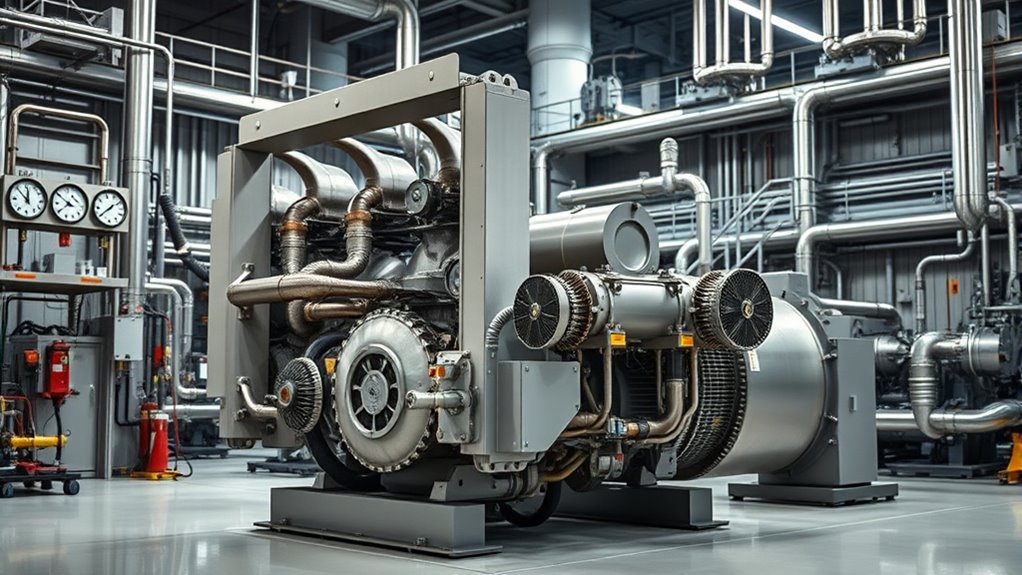
When maintaining a generator, understanding the importance of its fuel, lubrication, and cooling systems is crucial for achieving peak performance.
The fuel system, including tanks, pipes, filters, and injectors, guarantees a steady supply for smooth operation, typically providing 6 to 8 hours of runtime.
Proper maintenance of the lubrication system, using engine oil to minimize friction, is essential for the engine’s longevity and reliability. Regular checks and oil changes prevent wear and potential engine failures.
The cooling system regulates temperature, preventing overheating by dissipating excess heat during operation.
Types of Current Produced by Generators
Generators are remarkable machines that can produce two main types of electrical current: alternating current (AC) and direct current (DC). AC generators, also known as alternators, are commonly used in power plants and homes. They convert mechanical energy into electrical energy using electromagnetic induction, with the current reversing direction periodically.
DC generators, also known as dynamos, provide a steady flow of electrical energy in one direction, making them ideal for battery charging.
Key points include:
- AC power involves current that changes direction.
- DC power maintains a constant direction.
- The output voltage depends on the number of wire turns in the coil.
- Permanent magnets are used in small generators, while electromagnets are suited for larger ones.
Both AC and DC generators effectively harness energy, transforming it for various applications using their unique mechanisms.
The Use of Magnets in Electricity Production
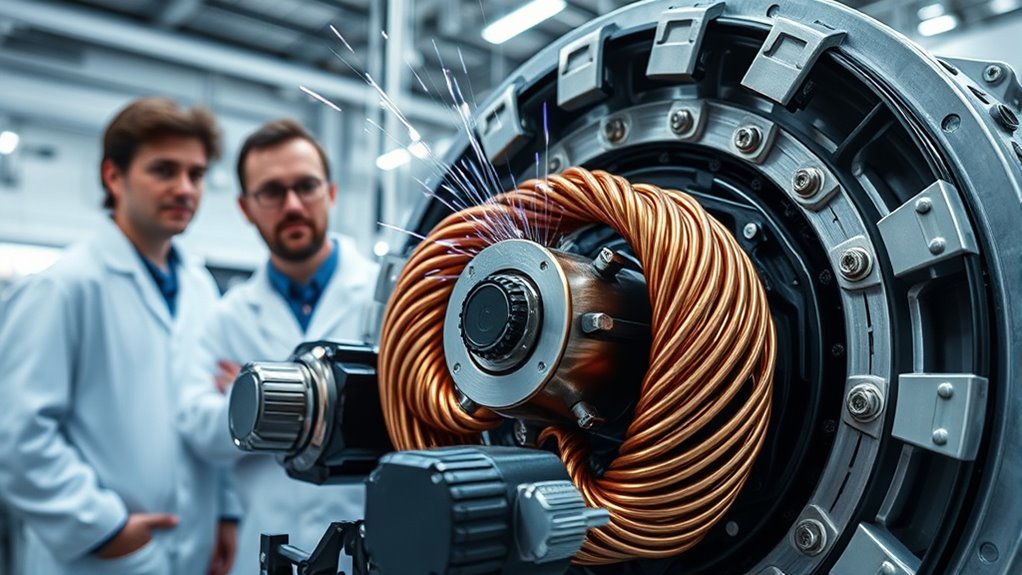
Magnets play an essential role in electricity production, making the magic of generators possible. Through electromagnetic induction, a conductor moving within a magnetic field induces electric charges. Generators utilize either permanent magnets or electromagnets. Permanent magnets are often used in smaller generators, whereas electric magnets require a power source. As the rotating shaft turns, it causes the armature’s wire windings to interact with the magnetic field, creating electricity.
| Emotion | Explanation |
|---|---|
| Awe | Witness the power of magnetic forces! |
| Curiosity | How do these invisible fields work? |
| Wonder | Small magnets create vast energy! |
| Discovery | See the science behind everyday electricity! |
AC generators produce alternating current, while DC generators utilize a commutator to generate direct current. The voltage output depends on magnet strength and coil design.
Factors Influencing Generator Efficiency and Power Output
Understanding the factors that influence generator efficiency and power output is essential for optimizing performance. The engine’s size and type directly impact efficiency, with larger engines often providing better energy conversion and electrical power.
The alternator’s design, particularly the quality of the stator and rotor, minimizes energy loss, thereby enhancing the output voltage.
Consider these key points:
- Engine speed: Higher speeds increase output voltage and power.
- Magnetic field strength: Stronger fields boost electrical power production.
- Fuel used: Cleaner fuels lead to more efficient combustion and lower emissions.
- Maintenance practices: Regular oil changes and lubrication maintain efficiency.
Conclusion
You’ve now got a solid grasp of how generators produce electricity. By harnessing electromagnetic induction, generators convert mechanical energy into electrical energy, with key components such as the engine, conductor, and magnetic field playing vital roles. Don’t forget the importance of fuel, lubrication, and cooling systems in maintaining efficiency. Whether it’s AC or DC, the type of current depends on the generator’s design. Remember, the strength of the magnetic field and speed of movement greatly influence power output.
FAQs
1. How Does a Generator Create Electricity?
You’ll find that a generator creates electricity by converting mechanical energy into electrical energy. It spins a rotor inside a stator, causing copper coils to move in a magnetic field and inducing an electric current through electromagnetic induction.
2. How Does a Generator Run Without Electricity?
You’re curious how generators run without electricity. They convert mechanical energy from sources like gasoline engines into electrical power. By rotating coils within a magnetic field, they induce an electric current, providing power without needing an external electrical source.
3. How Does a Generator Produce Power?
To get power from a generator, connect your devices to the generator’s output terminals. Verify that the voltage and current match your devices’ requirements. Start the generator, and it’ll supply electricity to your connected equipment efficiently.
4. Does a Generator Produce Voltage or Current?
You’re wondering if a generator produces voltage or current. It generates voltage through electromagnetic induction. The current depends on the connected load and circuit resistance, while the voltage is determined by the generator’s design and operation.