Application of Dc Generator | Benefits in Various Industries
You’re likely familiar with DC generators, but have you considered their diverse applications? From powering regenerative braking systems in transportation to ensuring reliable energy supply in remote telecommunications setups, DC generators are indispensable. They even play an essential role in keeping medical equipment running smoothly. Are you curious how they convert mechanical energy into the direct current that powers such vital devices? Keep exploring to discover their impact across various sectors. Learn more about the Application of DC Generator.
Key Takeaways
- DC generators convert mechanical energy into electricity for remote power generation and battery charging.
- They support transportation systems by providing propulsion power and regenerative braking in electric vehicles and railways.
- Telecommunications ensure reliable power for lighting and communication equipment in remote areas.
- Medical equipment applications use DC generators for consistent power supply to life-saving devices and diagnostics.
- They enhance energy efficiency and support renewable energy integration in various industrial and commercial sectors.
Understanding DC Generators

When you explore the world of DC generators, you’ll discover how they efficiently convert mechanical energy into direct current electricity. They harness electromagnetic induction, relying on components like the stator, rotor, and commutator to generate power.
DC generators’ applications span from power generation in remote areas to battery charging, electric vehicles, and even telecommunications. Their versatility makes them indispensable in various fields.
Among the types of DC generators, self-excited ones—such as shunt, series, and compound—stand out due to their unique characteristics and adaptability.
Efficiency is key when using DC generators; factors like copper and core losses can impact performance. Understanding these elements will help you optimize their use for maximum electrical output.
Separately Excited DC Generators
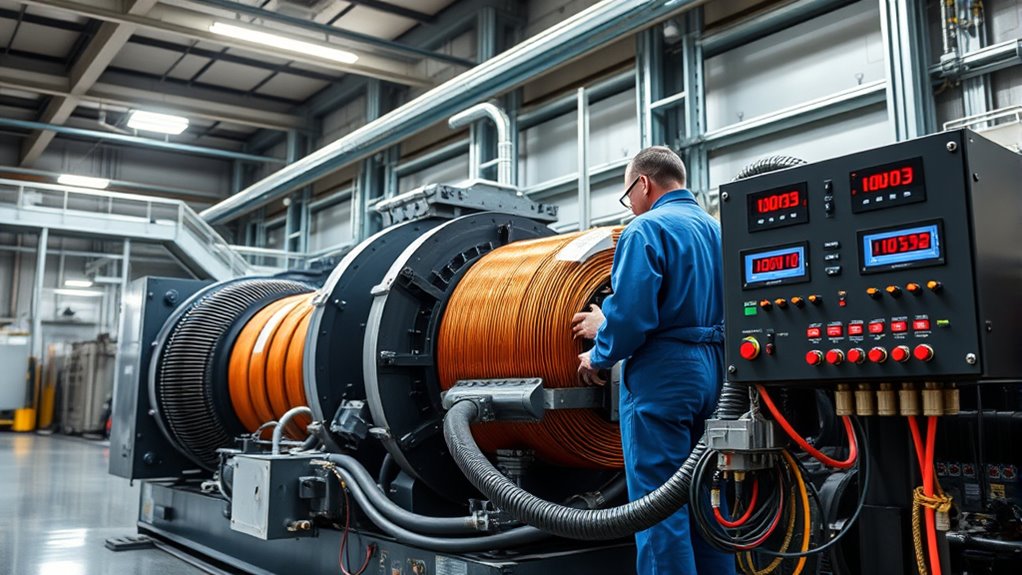
When you explore separately excited DC generators, you’ll find they can maintain stable operation even with fluctuating field excitation, which is key for precise voltage control.
This makes them perfect for applications needing steady voltage, like speed regulation in DC motors.
Although more costly due to the need for an external excitation source, their reliable performance justifies their use in specific scenarios.
Voltage Control Applications
Have you ever wondered why separately excited DC generators are favored for precise voltage control applications?
These generators excel because they deliver various voltage outputs, making them perfect for laboratory testing. They stand out because:
- Voltage Control: Unlike self-excited generators, they utilize an independent DC source for field winding excitation, ensuring consistent voltage and stable conditions.
- Reliable Power Sources: They’re preferred in applications needing dependable power sources, such as serving DC motors in speed control systems like the Ward Leonard System.
- Critical Applications: Although they are more expensive, their capability to handle variations without significant fluctuations makes them ideal for critical applications demanding precision.
You’ll find them indispensable when voltage stability and reliability are paramount.
Stable Operation Features
Separately excited DC generators boast several stable operation features that stand out in many applications.
By using an independent DC source for field windings, you can achieve precise control of the output voltage, regardless of load or current variations. This guarantees reliable performance and stable operation, even when field excitation changes.
These generators can deliver various voltage outputs, making them perfect for laboratory testing or any application requiring adjustable voltage levels.
These generators excel in speed control, especially in systems like Ward Leonard.
Although more expensive than self-excited types, their stable operation and precise control make them indispensable in specialized applications where reliability is vital.
Shunt Wound DC Generators
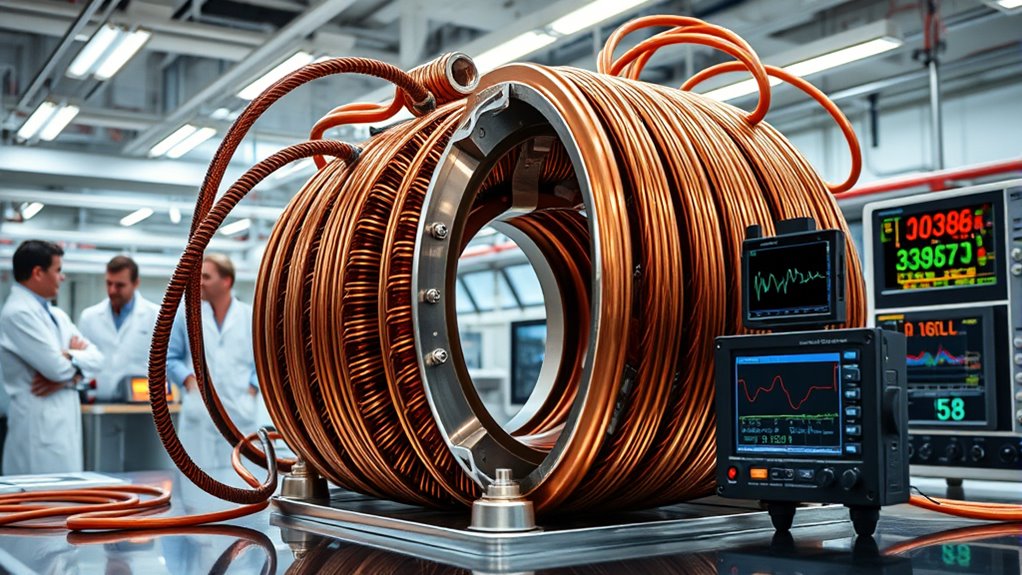
When you use shunt-wound DC generators, you benefit from their ability to maintain a constant voltage supply, which is perfect for short-distance power needs.
These generators are particularly effective for battery charging applications, as they guarantee stable voltage levels that promote battery health.
Constant Voltage Supply
While maintaining a stable voltage output is essential in many applications, shunt wound DC generators excel in this area, making them ideal for systems like battery chargers and general lighting.
These DC generators are designed for constant voltage and reliable power supply, which are vital for voltage stability despite variations in load. Here’s why they’re indispensable:
- Voltage Consistency: Shunt-wound generators stabilize the voltage, ensuring efficient battery charging and lighting.
- Reliable Excitation: They’re effective in providing excitation for alternators, contributing to a steady power flow.
- Versatile Applications: Suitable for general lighting systems, they offer dependable service in office buildings and residential spaces.
Their parallel-connected field windings allow them to counteract load changes, ensuring a constant voltage supply even over varied conditions.
Battery Charging Applications
Thanks to their ability to maintain a stable and constant voltage output, shunt wound DC generators are particularly well-suited for battery charging applications.
These DC generators are indispensable when you need reliable performance in systems that require dependable power. They’re perfect for charging lead-acid batteries in electric vehicles and forklifts, guaranteeing your operations remain efficient.
Their design allows them to handle varying load conditions, which is vital for maintaining battery health during charging cycles. These generators ensure seamless availability of emergency lighting and uninterruptible power supplies (UPS).
Their ability to maintain consistent terminal voltage makes them ideal for short-distance power supply applications, where voltage drop is minimal and reliable performance is necessary.
Series Wound DC Generators
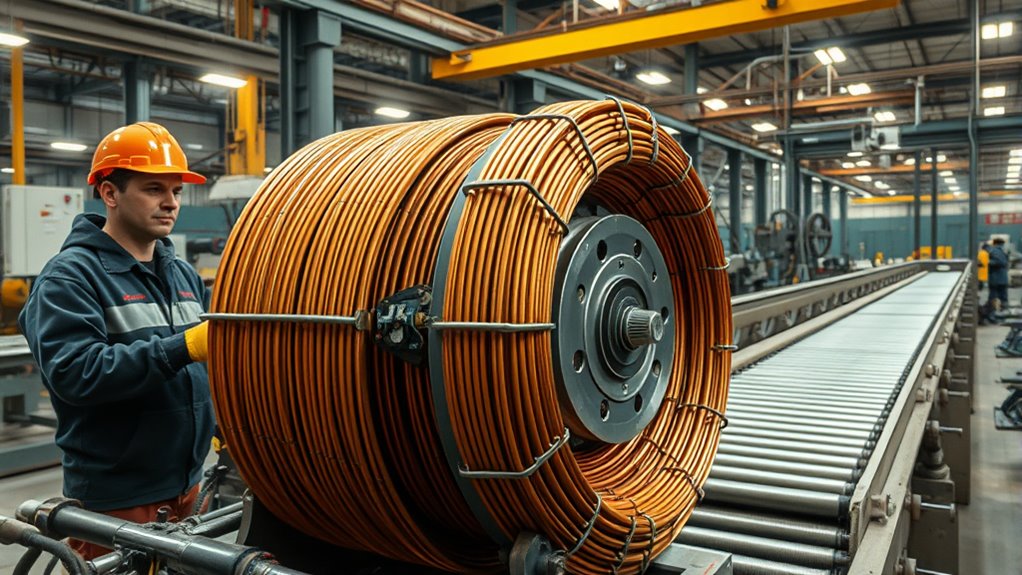
Although series wound DC generators mightn’t be the most versatile among their peers, they excel in applications where maintaining a constant current is vital.
These generators are particularly valuable in systems requiring stable performance. Here’s why:
- Regenerative Braking: In DC locomotives, series DC generators aid in regenerative braking, converting kinetic energy back into electrical energy and boosting efficiency.
- Voltage Boosters: effectively counteract voltage drops in long feeder lines, making them ideal for railway services that require stable voltage levels.
- Series Arc Lighting: Their ability to deliver constant current guarantees consistent brightness for series arc lighting, which is significant for reliable lighting solutions.
Compound Wound DC Generators
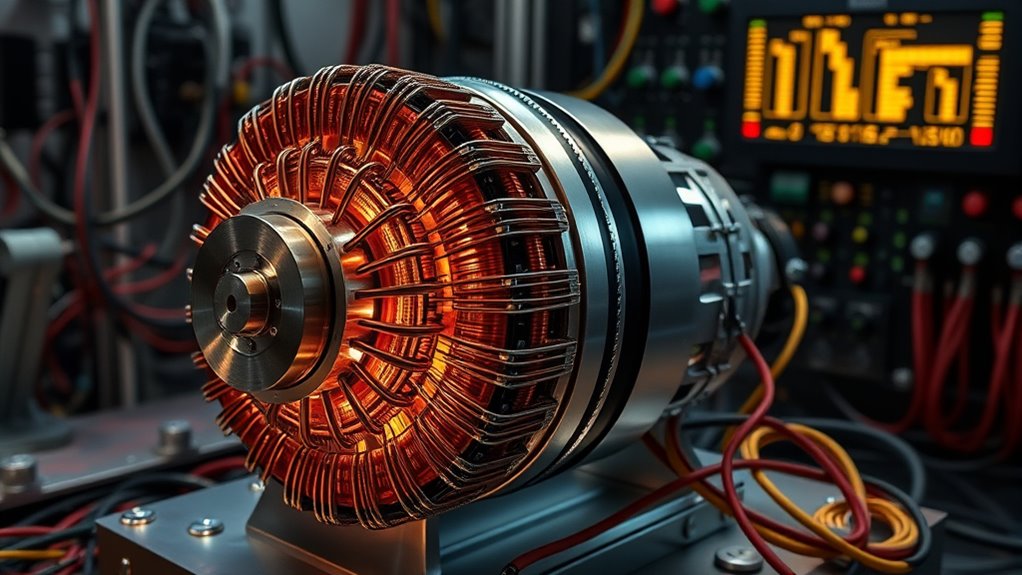
Compound wound DC generators, blending the features of shunt and series field windings, offer remarkable versatility in maintaining voltage stability under varying load conditions.
These generators are essential for ensuring a stable voltage output in many settings.
Cumulative compound generators stand out for lighting and heavy power services, effectively compensating for voltage drops. They’re perfect when you need a reliable power supply.
For long-distance power transmission, over-compounded versions excel, maintaining constant voltage on the consumer’s end.
In contrast, differential compound generators are the go-to for applications like arc welding. They provide constant current and easily handle large voltage drops.
This versatility makes compound wound DC generators invaluable in industrial applications, ensuring reliability and efficiency in power delivery.
Power Generation Applications
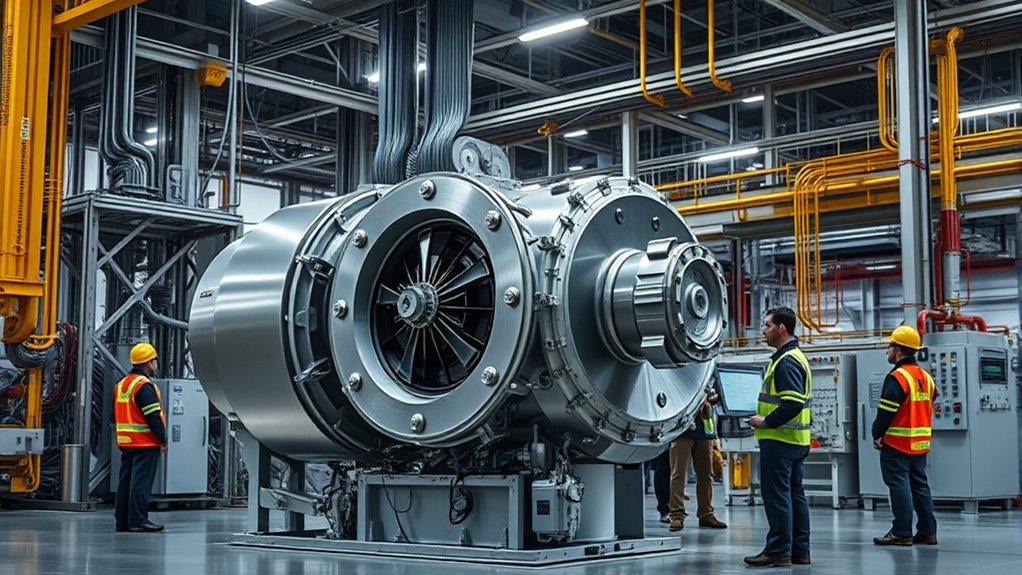
DC generators provide reliable electricity in remote locations where conventional power sources aren’t available. They play a vital role in power generation by converting mechanical energy into direct current, ensuring dependable electrical energy for various needs.
They’re indispensable in renewable energy systems, where they transform energy from sources like wind and hydro into consistent direct current.
Here’s how DC generators make a difference:
- Emergency Power: They act as alternative sources during outages, keeping critical applications like telecommunications and medical facilities running smoothly.
- Industrial Support: In industrial applications, they supply the consistent direct current needed for processes like welding and electroplating.
- Efficiency Boost: When paired with energy storage systems, they enhance efficiency and load management during power generation.
Transportation Applications
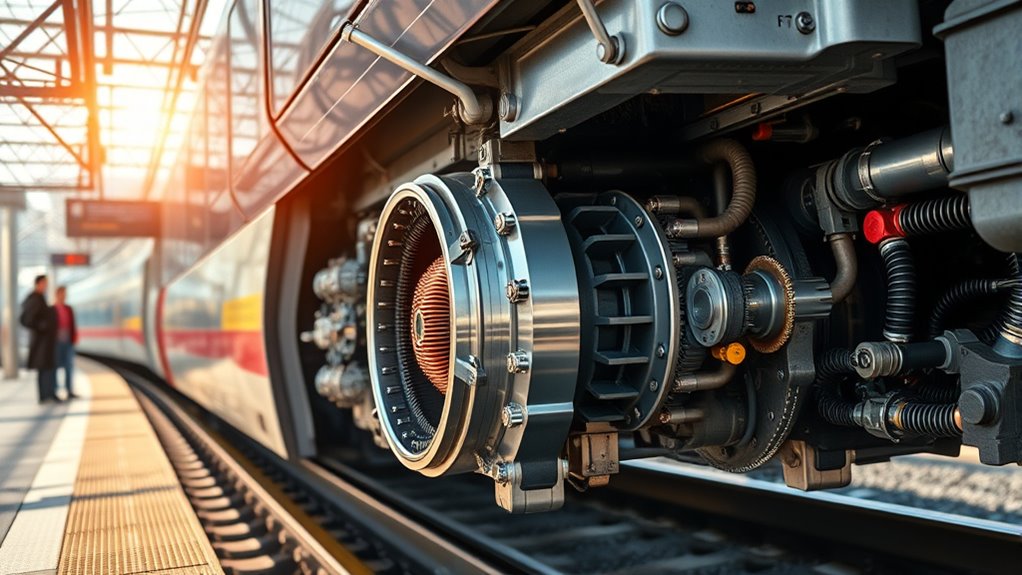
DC generators offer significant advantages in transportation. They convert mechanical energy into electrical power, ensuring efficient propulsion and system reliability.
In railway systems, DC locomotives utilize series-wound DC generators for regenerative braking, transforming kinetic energy into electrical energy. This process boosts efficiency and provides a reliable power supply for train operations. These generators support electrical systems for lighting, communication, and operational functions, ensuring consistent performance.
Using synchronous and asynchronous DC generators in transportation applications enhances energy efficiency, promoting economic and ecological benefits.
Telecommunications Applications
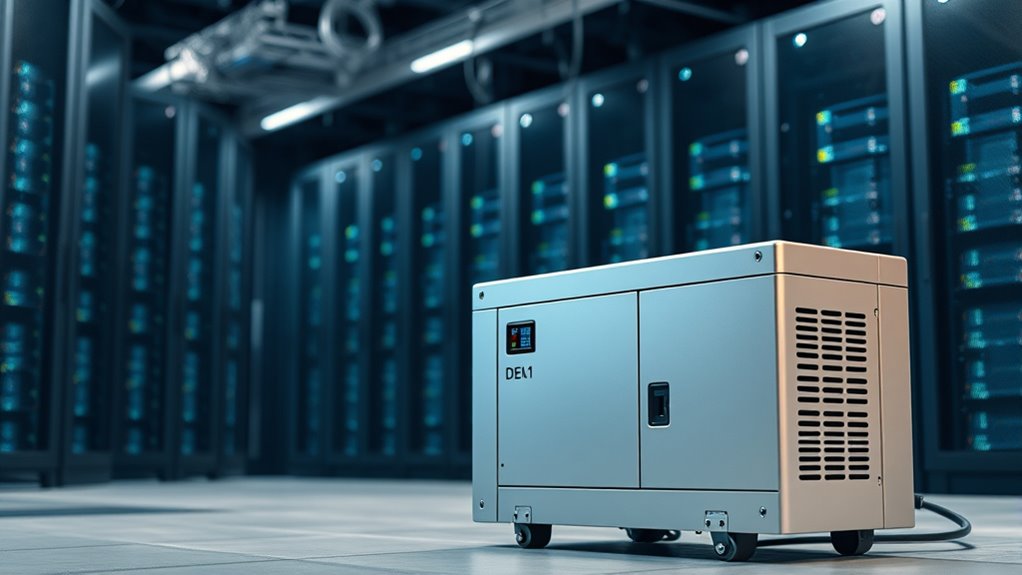
Telecommunications rely heavily on DC generators to guarantee a steady flow of electricity, especially in remote areas with limited grid access.
These generators are essential for maintaining a reliable energy source and ensuring that lighting and communication equipment operate without interruption.
Here’s how they make a difference:
- Hybrid Generator Systems: DC generators work seamlessly with hybrid systems, enhancing energy efficiency by reducing fuel consumption.
- Integration with Renewable Energy Sources: Combining DC generators with solar or wind power guarantees sustainable, reliable electrical power for telecommunications infrastructure.
- Uninterrupted Operation: DC generators provide continuous power in harsh weather or emergencies, preventing service disruptions.
Medical Equipment Applications
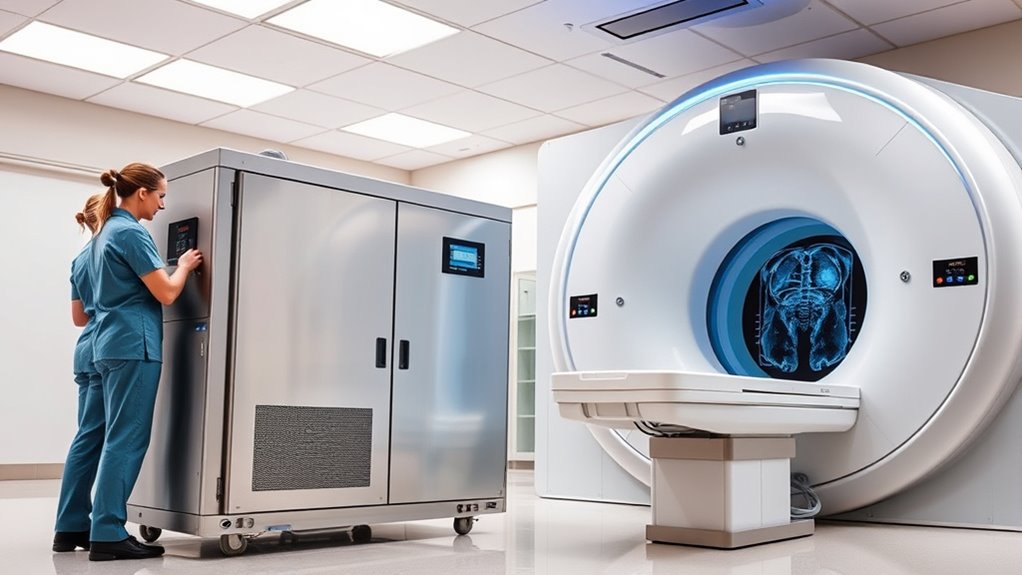
While reliability in power supply is essential, DC generators play a significant role in medical facilities by guaranteeing life-saving devices receive a consistent flow of electricity.
You rely on them to provide the direct current for essential imaging devices like X-ray machines, MRI scanners, and ultrasound equipment. These devices demand stable power to guarantee accurate diagnostics and patient safety.
In emergencies, DC generators act as necessary backup power, maintaining the operation of crucial medical equipment when the main energy supply is compromised. Their ability to deliver consistent voltage output is particularly important for sensitive applications where power fluctuations could endanger patients.
Conclusion
You’ve seen how essential DC generators are across various sectors. They convert mechanical energy into stable direct current, ensuring reliable power for critical applications. Whether enhancing regenerative braking in transportation, providing steady electricity in remote telecommunications setups, or powering life-saving medical equipment, DC generators play a pivotal role. Understanding the different types—like separately excited, shunt wound, series wound, and compound wound—helps you appreciate their versatility and importance in today’s world.
FAQs
1. What Are the Applications of DC GGenerators
You’re wondering where DC generators are useful, right? They’re vital for off-grid power, running telecom towers, supporting medical equipment, integrating renewable energy, and charging batteries with constant voltage. They guarantee reliability wherever electricity is essential.
2. What Are the Applications of Generator?
Generators can provide electricity during power outages, support construction sites, and supply energy for outdoor events. They also guarantee critical infrastructure, like hospitals and data centers, stays operational when the main power grid fails.
3. What Is an Example of a DC Generator?
You might consider a separately excited DC generator as an example. It’s often used in laboratories for testing because it provides stable voltage outputs. This can help you conduct precise experiments with varying voltage requirements.
4. What Are the Applications of DC Power?
DC power is used in telecommunications for consistent electricity, medical equipment for critical diagnostics, renewable energy systems for sustainable generation, battery charging for efficient recharging, and electric vehicles for powering onboard systems.