Transmission Line Insulators | Types & Applications
When you think about transmission lines, insulators might not be the first component that comes to mind, but they’re essential to electrical safety and efficiency. You’ll find that these unsung heroes prevent current from straying into unwanted paths and protect both the system and its surroundings. Each type of insulator, from pin to suspension and strain, plays a distinct role. Curious about how these components withstand harsh environments and what materials make them tick?
Key Takeaways
- Transmission line insulators prevent unintended current flow and ensure electrical isolation in power systems.
- Pin insulators are used for low-voltage applications up to 33 kV, often made from porcelain or glass.
- Suspension insulators consist of disc-shaped units designed for high-voltage lines exceeding 33 kV, offering high mechanical strength.
- Material choices, such as porcelain, glass, and polymer, affect insulator performance and environmental durability.
- Insulator selection depends on voltage compatibility, mechanical strength, and environmental resistance for effective system reliability.
Understanding Electrical Insulators
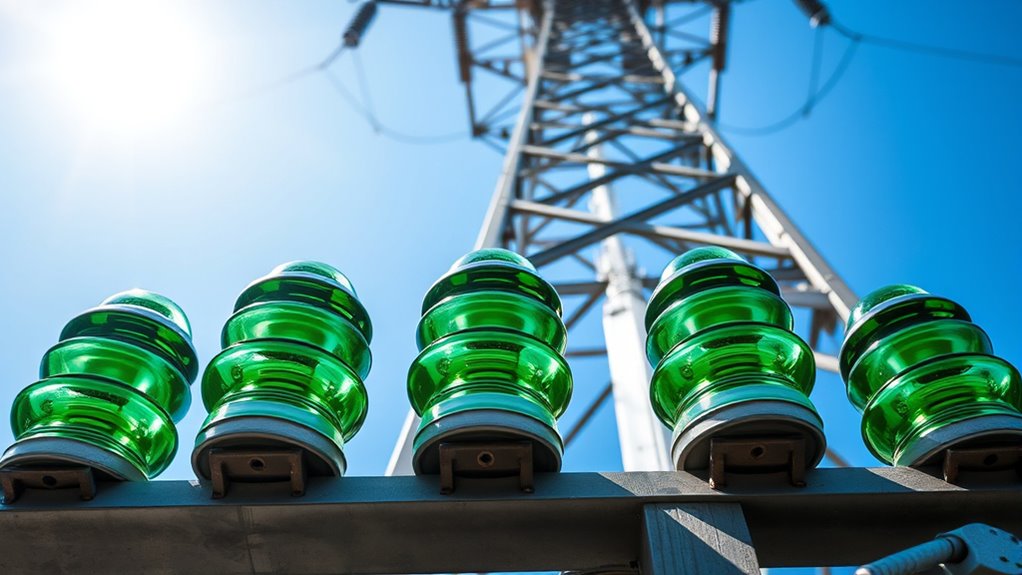
When you think about electrical systems, insulators mightn’t be the first components that come to mind, yet they play an essential role in ensuring safety and efficiency.
Insulators are crucial in transmission lines, as they impede the flow of electric current and prevent unintended transfer of electricity. You’ll find pin insulators used for lower voltage applications, while suspension insulators handle medium to high voltages.
Their mechanical strength is significant, particularly when considering environmental factors such as pollution and temperature fluctuations. Materials such as porcelain offer excellent electrical insulation and durability, making them ideal for a wide range of conditions.
Properly designed insulators maintain safe distances between conductors and structures, preventing electrical arcing or short circuits, and thus ensuring reliable and secure operation of electrical systems.
Types of Transmission Line Insulators
In the domain of electrical transmission, understanding the various types of insulators is essential to ensuring system reliability and safety.
Pin Insulators are ideal for low-voltage applications up to 33 kV, made from porcelain or glass, and feature rain sheds to enhance performance.
For high voltage, Suspension Insulators excel in overhead power lines, composed of disc-shaped units that provide superior mechanical strength.
Strain Insulators manage significant tension at dead ends or corners in transmission lines, using porcelain discs and metal links.
Stay Insulators, crafted from porcelain, insulate stay wires from the ground, promoting safety in low-voltage scenarios.
Finally, Shackle Insulators, also known as spool insulators, are prevalent in low-voltage distribution networks, supporting conductors with tapered holes to ensure even load distribution.
Characteristics of Pin Insulators
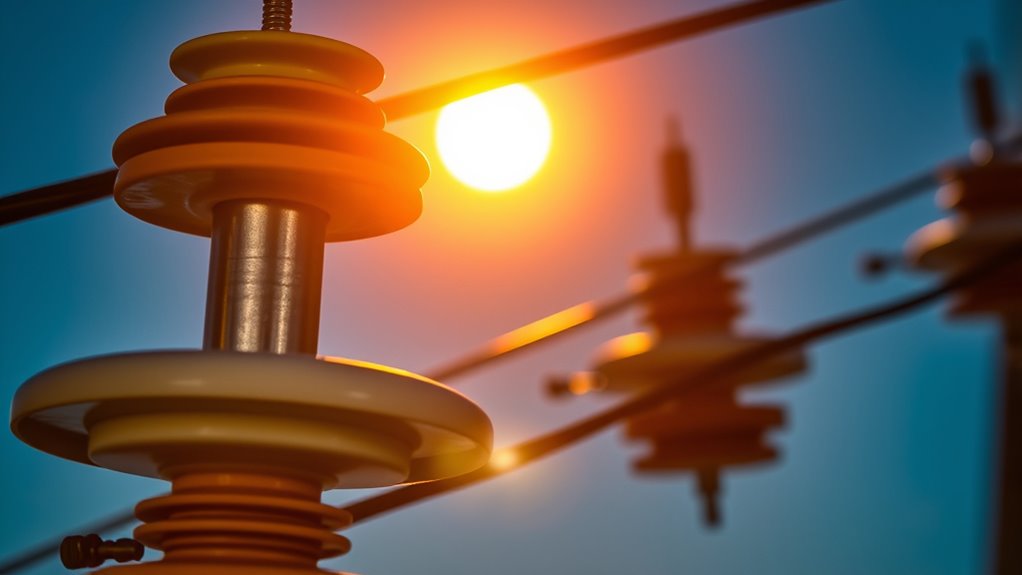
Although pin insulators are primarily designed for low-voltage applications, they can efficiently handle voltages up to 33 kV thanks to their robust design.
You’ll find these insulators are often made from porcelain, offering excellent electrical insulation. Despite their heft and brittleness, porcelain guarantees durability and reliability.
Pin insulators come in single, double, or triple-part units, which are necessary for higher voltage applications to counter size and strength limitations. The inclusion of rain sheds enhances their functionality by extending the leakage path, helping prevent flashover during wet conditions.
However, their mechanical strength is limited, making them less ideal for high-voltage applications. In such scenarios, you’d typically opt for suspension insulators, which better handle higher mechanical demands.
Features of Suspension Insulators
As you explore the features of suspension insulators, you’ll find they’re engineered for medium to high-voltage transmission lines, especially for voltages over 33 kV.
These insulators consist of multiple disc-shaped units connected in series, increasing their insulation strength. Each disc enhances the overall flashover voltage, making them suitable for high-voltage conditions.
Their mechanical strength supports the conductors while ensuring electrical isolation from supporting structures. One key advantage is their maintenance flexibility; if a disc becomes damaged, it can be easily replaced. This offers significant maintenance advantages over pin insulators.
However, they require taller supporting structures and larger spacing between conductors. This makes suspension insulators ideal for long-distance transmission lines, where weight and size are essential considerations.
The Role of Strain Insulators
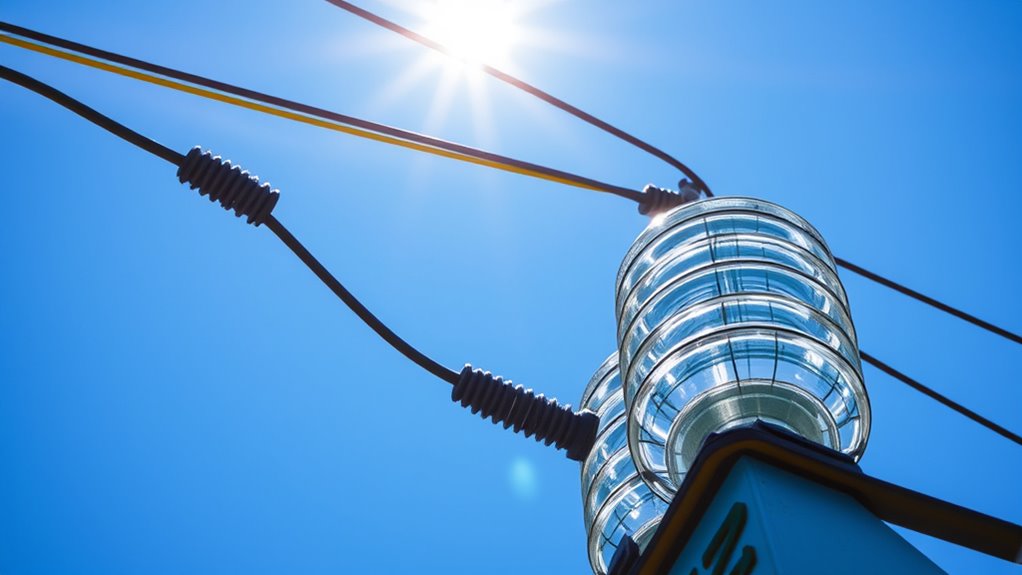
When managing transmission lines, strain insulators play an essential role in handling mechanical tension at dead ends or sharp corners.
These insulators, often made of multiple porcelain discs connected by metal links, guarantee stability and safety. They’re ideal for medium to high-voltage applications, offering both high mechanical strength and electrical insulating properties.
Strain insulators are vital because they:
- Maintain a safe distance between conductors and supporting structures to prevent electrical arcing.
- Withstand significant tensile loads, safeguarding the integrity of transmission lines.
- Adapt to directional changes without compromising safety.
- Use more discs for higher voltage ratings to effectively manage both electrical and mechanical loads.
Applications of Shackle and Stay Insulators
When considering low-voltage distribution networks, shackle insulators are indispensable for providing both mechanical support and reliable electrical insulation.
They’re designed with a tapered hole that evenly distributes load, ensuring the system’s reliability.
Meanwhile, stay insulators are essential for maintaining tension and stability, particularly at bends or dead ends, by insulating stay wires from the ground and preserving the integrity of overhead lines.
Shackle Insulator Uses
Though the popularity of underground cable distribution has grown, shackle insulators remain vital in specific low-voltage applications where overhead lines are used. They provide mechanical support and electrical insulation for conductors, ensuring the safe and reliable delivery of power.
Shackle insulators, typically made of porcelain, excel in durability and dielectric properties. Their design allows for:
- Installation flexibility: Use them horizontally or vertically to suit your needs.
- Enhanced structural integrity: Pair with stay insulators to reinforce overhead lines.
- Preventing electrical faults: Distribute loads evenly to minimize the risk of breakage.
- Ideal for low-voltage distribution: Perfect for areas not suited to underground cables.
Despite declining use, shackle insulators still play a significant role in maintaining the efficiency and safety of overhead electrical systems.
Stay Insulator Roles
Despite the growing shift towards underground cable systems, stay insulators remain indispensable in ensuring the stability and safety of overhead power lines. You’ll find them essential in low-voltage lines, insulating stay wires from the ground. Made from durable porcelain, stay insulators are crafted to endure mechanical stresses and prevent electrical discharge, effectively maintaining the integrity of transmission lines.
In distribution networks, shackle insulators, also known as spool insulators, play a crucial role. They support conductors, offering necessary electrical insulation to preserve overhead power systems.
Both stay and shackle insulators are engineered to reduce breakage risks during adverse weather conditions, thereby boosting the reliability of electrical distribution. By keeping conductive and non-conductive elements safely separated, these insulators extend the performance and lifespan of power infrastructure.
Materials Used in Insulator Manufacturing

In the domain of transmission line insulators, material selection is crucial to ensure optimal performance and durability.
When you’re considering materials, focus on their unique attributes:
- Porcelain: Known for its excellent dielectric properties and mechanical strength, it’s durable but heavy and brittle.
- Glass: Made from toughened glass, it offers high electrical resistance and easy visual inspection, ensuring reliability.
- Polymer: Silicone rubber insulators are lightweight, flexible, and exhibit remarkable environmental resilience against UV radiation and pollution.
- Material Balance: Each material is selected based on specific project needs, taking into account factors such as insulation properties and environmental conditions.
Your choice between porcelain, glass, and polymer directly impacts the performance and longevity of insulators in transmission lines, making it crucial to weigh these characteristics in insulator manufacturing carefully.
Key Considerations for Insulator Selection
When selecting insulators for transmission lines, it is essential to ensure they’re compatible with the line’s voltage to prevent electrical breakdowns and flashovers.
It’s vital to choose insulators with sufficient mechanical strength to withstand environmental stresses, such as wind and ice.
Additionally, consider the environmental durability against factors such as UV radiation and pollution to maintain long-term performance.
Voltage Compatibility
Choosing the right insulator for a transmission line hinges on voltage compatibility, a crucial factor that ensures the system’s reliability and safety. Insulators must match the line’s specific voltage level to prevent failures.
For instance, pin insulators are suited for voltages up to 33 kV, while suspension insulators are designed to manage higher voltages. As voltage levels rise, you need more insulators per kilovolt to guarantee sufficient dielectric strength and reduce flashover risks.
Keep in mind:
- Flashover distance is significant to avoid electrical arcing.
- Adequate dielectric strength is crucial for high-voltage environments.
- Environmental conditions can affect insulator performance.
- Mechanical strength influences insulator durability.
Environmental Durability
While selecting insulators for transmission lines, don’t underestimate the importance of environmental durability. Environmental factors, such as UV radiation, temperature changes, and moisture, can significantly impact an insulator’s insulating properties and dielectric strength.
It’s imperative to choose materials that resist these challenges. Pollution also plays a significant role; it can degrade insulator performance, making resistance to contamination essential.
Polymer insulators often outperform traditional porcelain materials by providing superior resistance to chemical exposure and extreme temperatures. To guarantee reliable performance, evaluate dielectric strength under varying conditions, as moisture or pollution can lower flashover voltage.
Design features like rain sheds and petticoats are fundamental in combating environmental factors, maintaining insulator integrity, and securing overall reliability in harsh conditions.
Mechanical Strength
Understanding mechanical strength is essential in selecting the right transmission line insulators, as these components mustn’t only support the conductors’ weight but also endure environmental forces like wind and ice.
You need to verify that the insulators can withstand high-voltage applications without physical failure. Here’s what to take into account:
- Material selection: Choose between porcelain insulators for rigidity and polymer insulators for flexibility.
- Tensile loads: Verify they can withstand the specific tensile loads based on standardized ratings.
- Installation conditions: Evaluate the particular installation scenarios, such as strain or suspension needs.
- Environmental forces: Confirm insulators are suited to endure expected weather conditions.
These considerations guarantee that the transmission line insulators perform effectively and safely, maintaining the integrity of your system.
Conclusion
You’ve now got a solid grasp of transmission line insulators and their vital role in electrical systems. Understanding the differences between pin, suspension, and strain insulators helps you select the most suitable option for your specific needs. Consider the unique properties of materials like porcelain, glass, and polymer when making your selection. Remember, selecting the right insulator is essential for maintaining system integrity, especially in tough environmental conditions. Keep these insights in mind to guarantee safety and efficiency in your electrical systems.
FAQs
1. What Are the Insulators Used in Transmission Lines?
You’ll find pins, suspensions, strain, shackles, and post insulators in transmission lines. They’re chosen based on voltage and mechanical needs. Material choice affects their performance against stress and environmental factors, ensuring safety and efficiency in power distribution.
2. What Insulation for Transmission Lines?
When selecting insulators for transmission lines, consider both voltage levels and environmental conditions. Pin insulators are suitable for use up to 33 kV. Select suspension or strain insulators for use with higher voltages. Materials like porcelain, glass, or polymer offer durability.
3. What Are the Different Types of Powerline Insulators?
You’re looking at several types of powerline insulators: pin insulators for low voltage, suspension insulators for medium to high voltage, strain insulators for tension areas, stay wires for stay wires, and shackles for low-voltage distribution.
4. How Many Insulators per Kv?
You typically need more insulators as voltage increases. For low voltages, you’d use one insulator per 1-3 kV. Higher voltages require more, such as 5-10 insulators per 100 kV, depending on specific conditions.