Empowering Technology: A Guide to Electromagnetic Relay
You might not think about them often, but electromagnetic relays are pivotal in your daily interactions with technology. These devices act as gatekeepers in electrical systems, where a minimal input controls much larger currents, safeguarding sensitive components and ensuring operational safety. As you consider the various types found in everything from your car to your office’s HVAC system, you’ll discover each type’s unique ability to optimize performance and reliability. However, the true breadth of their application and the subtle nuances that make one type more suitable for a specific function than another are aspects that might surprise you. What specific benefits could these relay types offer in your next project?
Key Takeaways
- Electromagnetic relays control high-power circuits using low-power signals through magnetic actuation.
- Common types include latching, reed, and polarized relays with distinct characteristics and applications.
- They are extensively used in automotive systems, home automation, and industrial machinery for enhanced safety and energy efficiency.
- Relays provide electrical isolation in circuits, safeguarding sensitive components and extending system durability.
- Maintenance involves regular cleaning of contacts and coils, mechanical wear checks, and testing for proper operation and continuity.
Basics of Electromagnetic Relays
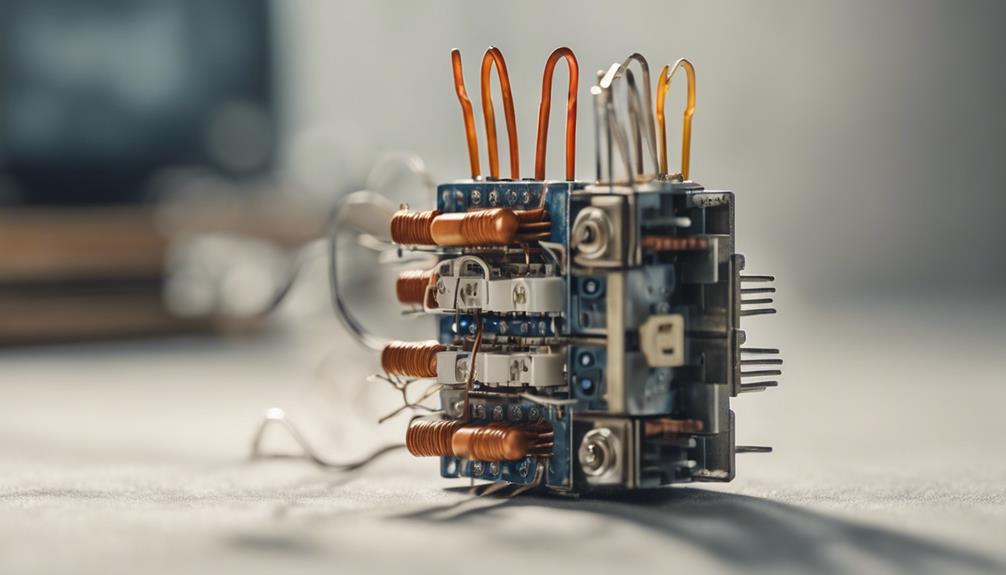
Electromagnetic relays often serve as vital switches in electrical circuits, enabling you to control a high-power circuit with a low-power signal. The operating principle behind these devices relies heavily on magnetic components. Fundamentally, introducing a small electrical current to the relay’s coil generates a magnetic field.
This magnetic field activates the relay by moving a ferromagnetic armature, connecting or disconnecting the high-power circuit’s components. It’s fascinating how this process allows you to use minimal power to manage much larger electrical loads. The armature’s movement, either pulling in to close the circuit or releasing to open it, is central to the relay’s function. This action is swift and precise, ensuring that the operation of the circuit can be controlled reliably and efficiently.
Understanding this mechanism is important because it highlights the relay’s ability to function as an effective intermediary. You’ll find these magnetic components at the heart of the relay, working tirelessly to translate your low-power commands into significant electrical actions. This is how a simple input through a small, manageable signal can lead to substantial outputs, making electromagnetic relays invaluable in various applications.
Common Types and Configurations
Delving into the various types of electromagnetic relays, you’ll discover several configurations tailored to meet different electrical needs. Each type and configuration is crafted with unique relay materials and coil designs that optimize performance for specific circuits and functionality.
Here are three common types of electromagnetic relays:
- Latching Relay: Unlike standard relays, a latching relay maintains its contact position once power is removed, thanks to its mechanical memory. This feature is particularly useful in applications where power conservation is essential. The latching relay materials are designed to endure minimal wear during toggling between states.
- Reed Relay: This type uses a reed switch where the contacts are sealed within a glass tube, protecting them from external contaminants. Reed relays are known for their fast switching speeds and compact size. The coil design in reed relays is typically optimized for minimal power consumption and can handle a variety of signal levels.
- Polarized Relay: This relay utilizes a permanent magnet and can only be activated when the current passes through its coil in a specified direction. This offers enhanced control over switching operations, and the precise coil design helps maintain the relay’s sensitivity and reliability.
Each relay type leverages specific materials and designs to fulfill distinct electrical roles without stepping into their broad applications and uses.
Key Applications and Uses

Having explored the common types of electromagnetic relays, let’s examine how they are applied across various industries and devices. You’ll find these relays are vital for safety integration and promoting energy efficiency in many systems. In the automotive industry, for instance, they control headlights, wipers, and indicators, ensuring that these systems operate only when necessary and reducing energy wastage.
In home automation systems, electromagnetic relays manage lighting and heating, playing a significant role in energy conservation. They enable devices to switch on or off automatically based on preset conditions, optimizing energy use and contributing to a more sustainable environment.
In industrial settings, these relays guarantee safety by controlling high-power machinery. They ensure that machines operate within safe parameters, reducing the risk of accidents and enhancing overall workplace safety.
Here’s a glance at how electromagnetic relays impact different sectors:
| Industry | Application | Impact |
|---|---|---|
| Automotive | Control systems | Enhances safety, saves energy |
| Home Automation | Lighting and heating | Optimizes energy use |
| Industrial | Machinery operation | Increases safety, reduces hazards |
This table underscores the versatility and critical nature of electromagnetic relays in modern technology.
Advantages in Circuit Design
Relays offer several benefits in circuit design, allowing you to manage complex connections with simplicity and reliability. As you explore the world of circuit design, you’ll find that integrating relays can greatly enhance the efficiency and functionality of your systems. Here’s why they’re so advantageous:
- Isolation and Safety: Relays provide excellent electrical isolation between the control and high-power circuits. This separation safeguards your sensitive components from potential high-voltage or high-current damage.
- Extended Durability: Relay durability is a standout feature. They’re built to last and handle high voltages and currents without deteriorating quickly. This means you won’t have to replace them as often, which can save you time and money in the long run.
- Efficient Switching: The relay’s switching speed is impressive. They can turn on and off much faster than many mechanical switches. This rapid action is important in applications where timing and response speed are critical, enhancing the overall responsiveness of your circuit designs.
Troubleshooting and Maintenance Tips

To keep your relays functioning at their best, regularly check and clean their contacts and coils. Dust, corrosion, and other contaminants can decrease your relay’s efficiency and shorten its lifespan. You’ll also want to perform component testing periodically to make sure everything is operating as it should. This not only helps extend the relay’s lifespan but also prevents unexpected failures in critical applications.
Here’s a simple maintenance and troubleshooting guide you can follow:
| Maintenance Task | Frequency |
|---|---|
| Clean contacts and coils | Every 6 months |
| Check for mechanical wear | Annually |
| Test relay operation | Every 3 months |
| Inspect wiring connections | Every 6 months |
If you’re facing issues with your relays, don’t panic. First, verify the power supply is correctly configured and delivers the required voltage. Next, examine the relay for any visible damage or unusual noise, indicating mechanical failures. Finally, the relay will be tested with a multimeter to check for continuity; this will confirm whether the internal switch mechanism is functioning properly. Systematic troubleshooting can save you time and keep your systems running smoothly.
Conclusion
As you explore electromagnetic relays, you’ll appreciate their versatility and reliability in various applications.
Whether you’re working with latching, reed, or polarized types, each offers unique advantages for your circuit designs.
Remember, these relays enhance performance and guarantee safety and durability.
Don’t forget to check and maintain them to avoid any routine disruptions.
Embrace the benefits of electromagnetic relays, and your electrical systems will greatly improve efficiency and reliability.
FAQs
What is the purpose of an electromagnetic relay?
Electromagnetic relays serve as switches in electrical circuits, allowing the control of high-power components with low-power signals. They enhance safety and efficiency by isolating sensitive electronics from potentially damaging currents.
What are the common types of electromagnetic relays?
Common types include latching relays, which maintain contact position after power removal, reed relays known for fast switching speeds, and polarized relays, which activate only with specific current directions. Each type offers unique benefits for different applications.
How do you maintain electromagnetic relays?
Regular maintenance involves cleaning contacts and coils to remove dust and corrosion. Check for mechanical wear annually. Test relay operation every few months for optimal performance. Proper maintenance ensures the optimal performance and longevity of relays in electrical systems.