Ferroelectric Materials: Exploring the Wonders of Polarization
Ferroelectric materials, distinguished by their unique property of spontaneous electric polarization reversible by an external electric field, have long intrigued scientists and researchers. Due to their rapid and efficient polarization switching capabilities, their versatility finds application in many fields, from cutting-edge memory devices to sensors and actuators. These materials are pivotal in modern technology, enabling high-speed data storage and processing. Beyond their technological utility, ferroelectric materials offer a fascinating domain for probing fundamental physics principles. Researchers delve into their atomic-level intricacies, unveiling new phenomena and expanding our comprehension of solid-state physics.
In essence, ferroelectric materials are both technological marvels and subjects of scientific inquiry. Their ability to swiftly switch polarization states drives advancements in electronics and offers a rich landscape for exploring the depths of fundamental physics. This journey into ferroelectricity promises technological innovation and a deeper understanding of the underlying principles governing matter at the atomic level.
What are Ferroelectric Materials?
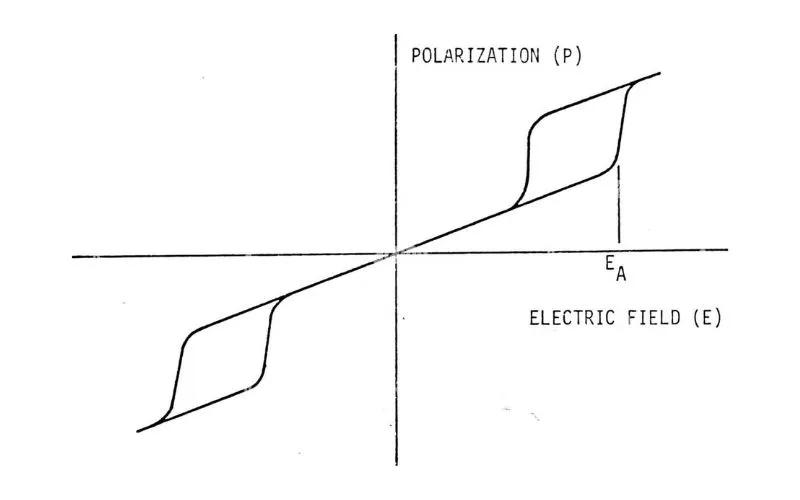
Ferroelectric materials represent a distinctive class of materials renowned for their spontaneous electric polarization, reversible by an external electric field. This property sets them apart from conventional dielectric materials and underpins their immense value across diverse technological applications. A hysteresis loop in their polarization-electric field relationship underscores their ability to retain polarization even after removing the applied field, making them indispensable for memory devices, sensors, actuators, and capacitors.
These materials are widely used in non-volatile memory devices like FeRAM and FRAM, owing to their capacity to retain data without power. Their reversible polarization facilitates precise control and sensing of mechanical movements, benefiting piezoelectric sensors and actuators. It also stems from their crystal structure, characterized by asymmetric unit cells capable of polarization in specific directions. Overall, ferroelectric materials are indispensable in modern technology, offering various applications rooted in their unique electrical properties.
How Do Ferroelectric Materials Work?
Ferroelectric materials possess spontaneous electric polarization, which can be reversed by an external electric field, making them valuable in various applications.
- Spontaneous Polarization: Atoms align in a specific direction without external stimulus, creating domains with different polarization directions.
- Crystal Structure: Most ferroelectrics have a perovskite structure, enabling the formation of dipoles within the material.
- Reversible Polarization: External electric fields can reorient domains, resulting in macroscopic polarization changes.
- Technological Applications: Used in non-volatile memory devices, sensors, and other innovative technologies.
With their spontaneous polarization and reversible states, Ferroelectric materials operate based on internal atomic alignment and external electric field influence. This unique combination enables their utility in various technological applications, from memory devices to sensors, driving innovation in multiple fields.
What are the Applications of Ferroelectric Materials?
Due to their unique properties, ferroelectric materials find diverse applications across industries, ranging from non-volatile memory devices to sensors and electro-optic devices.
Non-Volatile Memory Devices
Ferroelectric materials are the foundation for non-volatile memory devices like Ferroelectric Random Access Memory (FeRAM), which can retain data even without an electric field. This makes them invaluable for applications requiring fast, reliable memory storage.
Piezoelectric Sensors
Sensors can effectively convert mechanical stress into electrical signals by utilizing the piezoelectric properties of ferroelectric materials. As a result, these materials serve as integral components in pressure sensors, accelerometers, and ultrasound piezoelectric transducers, playing vital roles in the healthcare and automotive industries.
Electro-Optic Devices
Ferroelectric materials play a crucial role in electro-optic devices by enabling modulation of optical properties in response to electric fields. Consequently, this capability finds application in modulators, switches, and tunable lenses, driving advancements in telecommunications, laser systems, and optical computing.
Energy Harvesting and Storage
Overall, the applications of ferroelectric materials continue to expand as researchers discover new ways to harness their unique properties for technological advancements.
How are Ferroelectric Materials Different from Piezoelectric Materials?
| Property | Ferroelectric Materials | Piezoelectric Materials |
|---|---|---|
| Spontaneous Polarization | Exhibits spontaneous electric polarization | Does not exhibit spontaneous polarization |
| Reversibility | An external field can reverse polarization | Generates electric charge in response to stress |
| Memory Storage Capability | Can store information as polarization states | Used in various applications but not for memory |
| Hysteresis Loop | Presence of hysteresis loop in polarization curve | No hysteresis behavior in the polarization curve |
| Applications | Memory devices, sensors | Sensors, actuators, energy harvesting devices |
In summary, ferroelectric and piezoelectric materials exhibit unique electrical properties. Ferroelectric materials display spontaneous polarization and memory storage capabilities, while piezoelectric materials generate electric charges in response to stress and deformation.
Can Ferroelectric Materials be used in Memory Devices?

Due to their distinctive properties, ferroelectric materials have emerged as promising candidates for memory devices. With their ability to exhibit spontaneous electric polarization reversible by an external electric field, they offer a compelling solution for non-volatile memory applications. Their capacity to retain information without a constant power supply is advantageous, making them well-suited for power-sensitive applications like mobile and IoT devices. Additionally, their fast switching speeds, high endurance, and capability for multi-level cell operation enhance their appeal for high-performance memory devices, promising increased storage capacity and efficiency.
Continued research in ferroelectric materials is driving advancements in memory technology. With ongoing exploration of new materials and optimization of existing ones, coupled with the development of thin film deposition techniques enabling seamless integration into semiconductor processes, the prospects for ferroelectric-based memory devices are promising. As these efforts progress, we anticipate significant strides in-memory technology, leveraging the unique capabilities of ferroelectric materials to usher in the next generation of memory devices.
Are Ferroelectric Materials Environmentally Friendly?
The environmental implications of ferroelectric materials are subject to various considerations, from production processes to end-of-life disposal methods. Assessing their eco-friendliness requires a nuanced evaluation of these factors and ongoing efforts to mitigate environmental concerns.
Production Process Sustainability
The manufacturing of ferroelectric materials traditionally involves the use of heavy metals and other potentially harmful substances, raising concerns about environmental impact. However, technological advancements have led to the development of more sustainable production methods aimed at reducing the use of hazardous materials and minimizing waste generation.
End-of-Life Disposal
Ensuring proper disposal of ferroelectric materials at the end of their lifespan is crucial to prevent environmental harm. Additionally, implementing effective recycling and reuse strategies can help mitigate the environmental impact of these materials. This approach reduces the burden on landfills and promotes resource conservation.
Environmental Benefits of Applications
Despite concerns, using ferroelectric materials in various applications can offer environmental benefits. For instance, their role in energy storage devices contributes to reducing reliance on fossil fuels, lowering greenhouse gas emissions, and promoting sustainability in energy usage.
Ongoing Research and Development
Researchers and developers actively focus on enhancing ferroelectric materials’ sustainability through continued research and development. Innovations in production techniques, recycling methods, and application design aim to address environmental challenges, ensuring that these materials can continue to advance technology while minimizing their environmental footprint.
How are Ferroelectric Materials Synthesized?
Researchers synthesize ferroelectric materials using various methods tailored to achieve specific properties and applications. These techniques offer precise control over composition, structure, and film thickness, allowing researchers to create materials suited for diverse technological needs.
- Solid-State Reaction Method: High-purity starting materials are mixed and heated to form the desired compound, offering control over composition and structure.
- Sol-Gel Process: Metal alkoxides undergo hydrolysis and condensation to form a gel, which is then heated to produce the ferroelectric material. This method provides better homogeneity and enables the creation of thin films.
- Chemical Vapor Deposition (CVD): Depositing thin films of ferroelectric materials onto substrates with precise film thickness and composition control makes them suitable for microelectronics applications.
- Hydrothermal Synthesis: Heating a high-pressure aqueous solution in which dissolved precursors promote crystal growth is particularly useful for producing complex structures and compositions.
These synthesis methods offer researchers flexibility in tailoring ferroelectric materials to meet the demands of various technological applications, ensuring efficient and precise fabrication of materials with desired properties.
What are the Challenges in Using Ferroelectric Materials?
Conclusion
In conclusion, ferroelectric materials are remarkable substances with unique properties that respond to electric fields, offering vast potential in various technological applications. Their significance spans memory devices to sensors, promising to revolutionize industries with distinct characteristics that differentiate them from piezoelectric materials. While the synthesis process may pose complexities, ongoing advancements aim to streamline production, albeit challenges such as stability and scalability persist.
The future of ferroelectric materials appears promising, with ongoing research poised to unveil breakthroughs and address environmental concerns essential for sustainable development. Ferroelectric materials’ undeniable impact on technology and science underscores the importance of staying informed and receptive to new possibilities as we continue exploring their boundless potential together.
FAQs
What are the key differences between ferroelectric and piezoelectric materials?
Ferroelectric materials exhibit spontaneous electric polarization reversible by an external electric field, distinguishing them from piezoelectric materials. While ferroelectric materials can store information as polarization states and exhibit a hysteresis loop in their polarization-electric field curve, piezoelectric materials generate electric charges in response to stress and deformation.
How do ferroelectric materials contribute to sustainable development?
Ferroelectric materials offer potential benefits for sustainable development through their energy harvesting and storage applications. Their high dielectric constants and low energy losses make them suitable for capacitors and actuators, facilitating advancements in renewable energy systems and electronic devices. Additionally, efforts in recycling and reusing ferroelectric materials can help mitigate their environmental impact and promote resource conservation.