Applications of Induction Motors: Industrial and Home Uses
You probably interact with induction motors more often than you think. These motors power everything from the appliances in your home to the heavy machinery in industrial settings. They’re essential for maintaining comfort and efficiency, but have you ever wondered how they work or why they’re so reliable? Understanding their working principles and various applications can deepen your appreciation for this technology. Let’s explore the versatility of induction motors and see why they’re considered vital across different sectors.
Key Takeaways
- Induction motors power essential household appliances like fans, refrigerators, and washing machines.
- They drive heavy industrial machinery, including pumps, compressors, and conveyor systems.
- Commercial settings use induction motors for lifts, escalators, and food processing equipment.
- Induction motors with variable-speed drives enhance energy efficiency and reduce mechanical stress.
- Specialized applications include induction heating for automotive and aerospace industries.
Working Principles
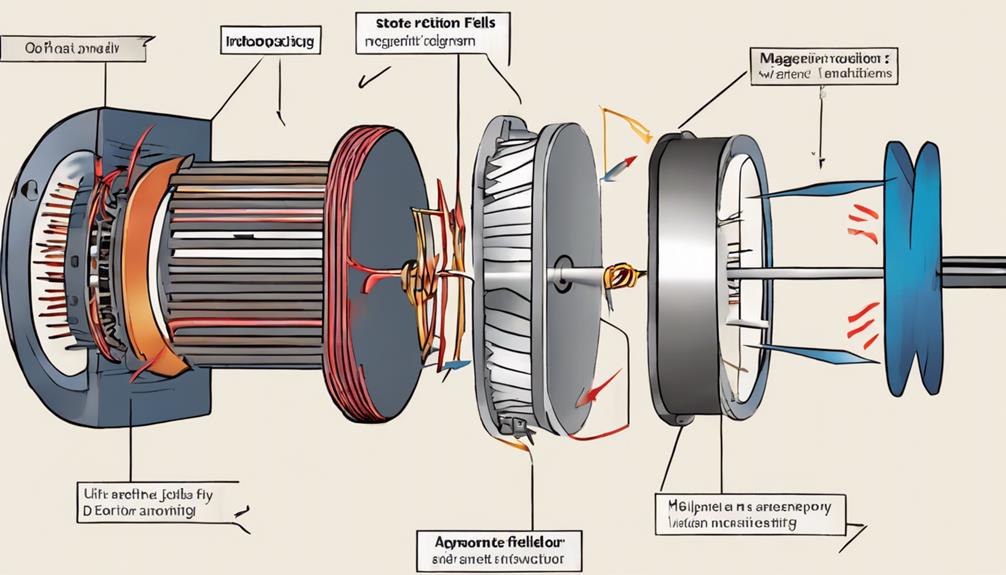
Understanding how induction motors operate through the creation of a rotating magnetic field is essential to understanding their working principles. AC induction motors rely on an AC supply to generate rotating magnetic fields within the stator. This rotating field is key to inducing currents in the rotor windings via electromagnetic induction.
When the three-phase power supply is applied to the stator, it produces a rotating magnetic field. This field induces an electromotive force (EMF) in the rotor windings, causing currents to flow. The interaction between the magnetic fields of the stator and the rotor generates the torque necessary for the motor to operate.
Induction motors operate slightly lower than the synchronous speed, which is the speed of the rotating magnetic field. This difference in speed, known as slip, is vital for generating torque. The rotor wouldn’t experience the necessary relative motion to induce current without slip.
Rotor Types
Understanding how induction motors generate torque through the interaction between the stator and rotor magnetic fields sets the stage for exploring the different rotor types. Primarily, you’ll encounter two types: squirrel cage rotors and wound rotors.
Squirrel cage rotors are the most common. They consist of conductive bars made of aluminum or copper, connected by shorting rings. This design ensures a straightforward, sturdy construction that offers high efficiency and good speed regulation. Because of their robust build, you don’t have to worry much about maintenance. These rotors are widely used in various applications due to their reliability and minimal need for upkeep.
On the other hand, wound rotors feature three-phase windings connected to slip rings. This setup allows variable speed control and high starting torque, making them ideal for applications requiring precise speed adjustments. Brushes provide external connections for electricity delivery in these motors. Additionally, wound rotors maintain a high power factor across all loads, making them energy-efficient even under varying conditions.
Choosing between squirrel cage rotors and wound rotors depends on your specific requirements. Wound rotors are your go-to if you need high starting torque and speed control. For simpler, maintenance-free applications, squirrel cage rotors are a solid choice.
Household Applications

Induction motors are crucial in many household applications, powering essential appliances like fans, air conditioners, and refrigerators. In your home, single-phase induction motors are the unsung heroes behind these devices, ensuring they operate efficiently and reliably. You rely on these motors for their quiet operation and long service life, contributing to the smooth functioning of essential domestic equipment.
Think about your daily comfort and convenience—those fans that cool your rooms, air conditioners that maintain the perfect temperature, and refrigerators that keep your food fresh. These appliances make your life easier, and induction motors are at the heart of their performance. They provide the stability and reliability you need in your household applications, ensuring that comfort and convenience are always within reach.
Here’s a quick glimpse at how induction motors power your home:
| Appliance | Function |
|---|---|
| Fans | Circulate air for cooling |
| Air Conditioners | Maintain desired room temperature |
| Refrigerators | Keep food fresh and safe |
| Washing Machines | Clean clothes efficiently |
Industrial Applications
Induction motors are essential in industrial settings due to their robustness and efficiency. They’re widely used in various industrial applications, such as driving pumps, compressors, and conveyor systems. Their ability to handle heavy loads makes them perfect for powering machinery involved in cutting, shaping, and manufacturing processes across multiple industries.
In the oil and gas sector, induction motors drive turbines and generators, as well as other critical equipment essential for production and processing. They guarantee smooth and continuous operations, which is crucial in such a high-stakes environment.
Likewise, induction motors operate pumps, compressors, and agitators in the refining industry, all of which are necessary for the intricate refining processes.
The HVAC industry also heavily relies on induction motors. They power fans, blowers, and pumps in heating, ventilation, and air conditioning systems, ensuring efficient and reliable operation. This keeps your industrial environments comfortable and safe.
Commercial Uses
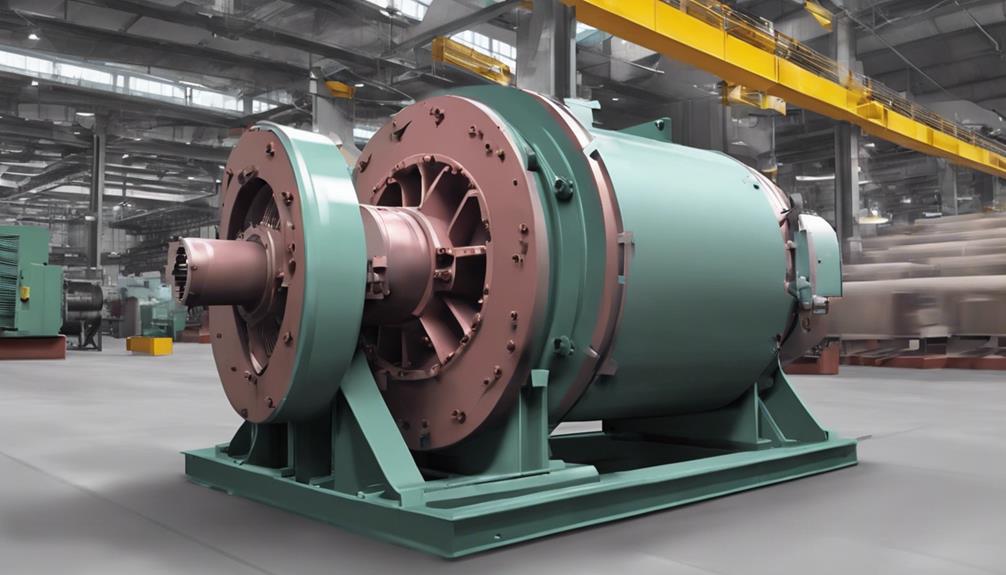
Due to their versatility and reliability, induction motors are indispensable in commercial settings. They’re extensively used for driving pumps, fans, and conveyor systems. In commercial environments, these motors power essential industrial machinery like lifts, escalators, and material handling equipment, guaranteeing smooth operations.
In HVAC systems, induction motors play a pivotal role by providing reliable air circulation and temperature control, making them essential for maintaining a comfortable environment.
Commercial kitchens also rely on these motors for various food processing equipment, such as mixers, grinders, and slicers, which help streamline food preparation tasks.
Furthermore, induction motors are vital in packaging industries for driving conveyors, filling machines, and labeling equipment, contributing to efficient production lines. These motors ensure that packaging processes run seamlessly, improving productivity and reducing downtime.
Here’s a quick overview of where you’ll see induction motors in action:
- HVAC systems: Guaranteeing efficient air circulation and temperature control.
- Commercial kitchens: Powering mixers, grinders, and slicers for food processing.
- Packaging industries: Driving conveyors, filling machines, and labeling equipment for streamlined operations.
Energy Efficiency
When you choose induction motors, you’re opting for energy efficiency that can reach up to 95%, which reduces operating costs greatly. Their modern designs lessen environmental impact by converting electrical energy into mechanical power with minimal wastage. This makes induction motors a smart choice for sustainable and eco-friendly operations, helping you achieve your sustainability goals.
Reduced Operating Costs
Harnessing induction motors’ energy efficiency can significantly reduce operating costs. Under full load conditions, you can benefit from energy efficiencies of 85-97%, which means less energy wastage and lower power consumption.
Modern designs of induction motors are crafted to minimize energy wastage, which directly impacts energy bills. Optimizing the utilization of these motors will result in substantial long-term cost savings.
To maximize these benefits, proper maintenance is vital. Regular upkeep ensures that your induction motors operate at peak efficiency, reducing operating costs. Here are some key points to keep in mind:
- Energy efficiencies: Operating induction motors at higher efficiencies can result in noticeable savings on energy bills.
- Maintenance: Proper and timely maintenance optimizes the motor’s performance, ensuring long-term cost savings.
- Modern designs: Newer models are built to minimize energy wastage, reducing overall power consumption.
Environmental Impact
Energy-efficient induction motors significantly decrease the environmental impact of industrial operations. These motors minimize energy wastage by achieving up to 95% efficiency, leading to significant energy conservation. When you utilize energy-efficient induction motors, you consume less power, directly lowering your electricity consumption. This saves on operating costs and contributes to sustainable industrial practices.
Reducing electricity consumption means a smaller carbon footprint and lower greenhouse gas emissions. Opting for these motors supports a greener future by minimizing the environmental impact of your operations. Every kilowatt-hour saved translates into fewer emissions, directly benefiting the planet.
The improved efficiency of modern induction motors is crucial in promoting sustainable industrial practices.
Specialized Applications
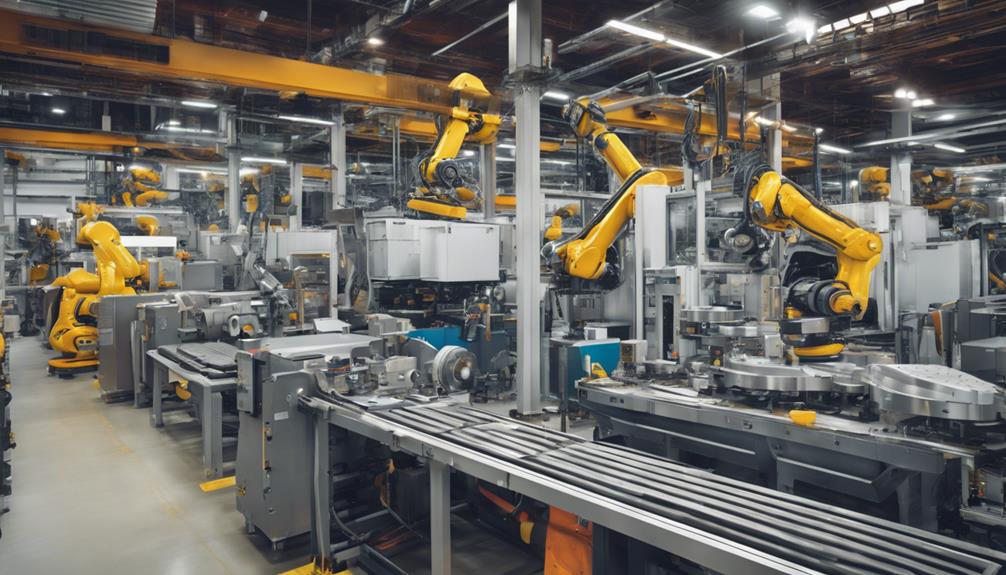
When considering specialized applications of induction motors, you should know they play a key role in induction heating for rapid and precise temperature control. They also feature variable speed drives essential for optimizing performance through torque slip management.
Additionally, induction motors are critical in industries requiring high-demand operations, such as oil and gas, manufacturing, and HVAC systems.
Induction Heating Uses
Induction heating is a powerful technique that leverages electromagnetic induction to heat conductive materials quickly and efficiently. This technology is widely used for metal heat treatment, forging, welding, and brazing. By utilizing electromagnetic induction, you can achieve localized and uniform heating, which reduces energy consumption and enhances production efficiency.
In the automotive industry, induction heating is essential for brazing and forging. It lets you precisely control temperatures, ensuring minimal material distortion and high-quality results. The aerospace industry also benefits from induction heating, which treats metals for components that require exacting standards and reliability. Manufacturing and metalworking sectors rely on this method for quick heating, superior temperature control, and energy efficiency.
Here’s why induction heating is a game-changer across various industries:
- Efficient and Rapid Heating: Achieves desired temperatures much faster than traditional methods.
- Localized Heating: Focuses heat on specific areas, reducing waste and improving precision.
- Energy Savings: Lower energy costs due to its efficient heating process.
Whether in automotive, aerospace, or general manufacturing, induction heating offers unparalleled advantages for your metalworking needs.
Variable Speed Drives
In specialized applications, variable speed drives (VSDs) bring unmatched precision to induction motors. They’re essential when you need adjustable speeds for operations like conveyors, pumps, and fans. Using frequency converters, these drives adjust the motor speed precisely to match your operational requirements, ensuring efficiency and flexibility.
One notable benefit of VSDs is their ability to optimize energy consumption. Rather than continuously running a motor at full speed, you can adjust the speed based on the load, greatly reducing energy usage. This not only lowers your energy bills but also contributes to a greener environment.
Moreover, VSDs significantly reduce mechanical stress on equipment. By smoothly ramping up and down the motor speeds, you minimize wear and tear, extending the lifespan of your machinery. This is particularly advantageous in manufacturing, HVAC, and material handling industries, where equipment durability is vital.
The versatility of variable speed drives in induction motors enhances their applicability across various sectors. Whether you’re looking to improve efficiency in a manufacturing setup, optimize HVAC systems, or streamline material handling processes, VSDs offer a reliable and adaptable solution.
Torque Optimization Techniques
Torque enhancement methods in induction motors are crucial to achieving peak performance in specialized applications. By adjusting rotor resistance, you can manage torque output and customize it to meet your application’s specific requirements. This practice not only boosts motor efficiency but also enhances overall performance.
Implementing rotor resistance control allows you to achieve the best torque-slip characteristics suited to various operating conditions. This technique is particularly advantageous in specialized applications where precise torque control is crucial.
Here’s how you can leverage torque enhancement methods:
- Rotor Resistance Control: By adjusting the rotor resistance, you can fine-tune the torque output to match specific operating conditions, improving performance.
- Field-Oriented Control: Advanced control strategies like field-oriented control can further enhance torque optimization, providing better motor efficiency and response.
- Performance Improvement: Consistently adjusting torque for optimal slip characteristics ensures that your induction motors operate at peak efficiency.
Maintenance Tips
Proper upkeep is crucial for optimizing your induction motor’s efficient and long-lasting performance. Start by regularly inspecting and cleaning the motor to prevent dust accumulation and overheating. Dust can cause the engine to run hotter, leading to potential damage or reduced effectiveness.
Check and tighten electrical connections to maintain peak performance and safety. Loose connections can result in poor electrical contact, increasing the risk of overheating and equipment failure.
Lubricate bearings according to the manufacturer’s recommendations. Proper lubrication reduces friction and wear, extending the life of your motor’s bearings. Additionally, monitor the motor’s temperature during operation. Abnormal heating could be an early sign of underlying issues, such as overloading or poor ventilation.
Don’t overlook the importance of scheduling periodic professional maintenance. A professional can thoroughly inspect your motor and address any potential issues before they become significant problems. This proactive approach not only helps in prolonging the motor’s lifespan but also maximizes its operational efficiency.
Conclusion
You’ve seen how induction motors are crucial in various sectors, from home appliances to critical industrial machinery. Their robust working principles and diverse rotor types guarantee efficiency and reliability. Induction motors are essential, whether driving household conveniences, powering industrial equipment, or facilitating commercial operations. Embrace their energy efficiency and follow maintenance tips to keep them running smoothly. Induction motors truly are the backbone of modern mechanical applications.
FAQs
What are the common applications of induction motors in industries?
Induction motors are widely used in various industrial applications for their durability, reliability, and efficiency. Common uses include:
- Pumps and Compressors: Induction motors drive water pumps, air compressors, and oil pumps in industries because they can handle continuous and heavy-duty operations.
- Conveyor Systems: Used in manufacturing and assembly lines, these motors help power conveyor belts, ensuring smooth and efficient movement of materials.
- Fans and Blowers: Industrial fans and blowers in HVAC systems often use induction motors to regulate airflow in large facilities.
- Machine Tools: Induction motors are ideal for operating lathes, drills, milling machines, and other metalworking and machining tools.
- Cranes and Hoists: These motors are used in cranes and hoisting equipment to lift and move heavy loads safely and effectively.
Industrial Applications:
- Pumps and compressors for fluid movement.
- Conveyor systems for material handling.
- Fans and blowers in HVAC systems.
- Machine tools in manufacturing.
- Cranes and hoists for lifting.
How are induction motors used in household appliances?
Induction motors are commonly found in household appliances because they are cost-effective, reliable, and require low maintenance. Some everyday applications include:
- Washing Machines: The spinning and agitation cycles in washing machines rely on induction motors for efficient operation.
- Refrigerators: Induction motors drive the compressors in refrigerators, which help cool and maintain temperature.
- Air Conditioners are used in air conditioning units to power fans and compressors for effective cooling.
- Vacuum Cleaners: The suction mechanism in vacuum cleaners is powered by induction motors to create the airflow necessary for cleaning.
- Kitchen Appliances: Devices like blenders, mixers, and grinders use small induction motors for their high-speed performance.
Household Applications:
- Washing machines for spin cycles.
- Refrigerators for cooling.
- Air conditioners for fans and compressors.
- Vacuum cleaners for suction.
- Kitchen appliances for high-speed functions.
Why are induction motors preferred in electric vehicles?
Induction motors are popular for electric vehicles (EVs) due to their high efficiency and robust performance. Key reasons include:
- High Torque: Induction motors provide excellent torque characteristics essential for quick acceleration in electric vehicles.
- Durability: They are durable and can withstand varying speeds and loads, making them suitable for the dynamic conditions of EVs.
- Cost-Effective: Induction motors are relatively inexpensive to produce, which helps reduce the overall cost of electric vehicles.
- Regenerative Braking: These motors support regenerative braking, which converts kinetic energy back into electrical energy to recharge the vehicle’s battery.
Benefits of EVs:
- High torque for fast acceleration.
- Durable under different conditions.
- Cost-effective and reliable.
- Supports regenerative braking.
How are induction motors utilized in commercial buildings?
In commercial buildings, induction motors are essential for the smooth operation of several systems. Common applications include:
- Elevators and Escalators: Induction motors provide the power needed to operate elevators and escalators in office buildings, malls, and airports.
- HVAC Systems: Heating, ventilation, and air conditioning systems rely on induction motors for efficient temperature control and air circulation.
- Industrial Fans: These motors drive large fans that provide ventilation and air distribution in commercial and industrial settings.
- Water Pumps: Induction motors are used in water supply systems to ensure consistent water flow and pressure throughout the building.
Commercial Uses:
- Elevators and escalators in buildings.
- HVAC systems for temperature control.
- Industrial fans for ventilation.
- Water pumps for consistent flow.
What makes induction motors ideal for agricultural equipment?
They are widely used in agricultural equipment due to their robustness and ability to handle heavy loads. Applications in agriculture include:
- Irrigation Pumps: These power water pumps that irrigate fields, ensuring efficient crop distribution.
- Threshers and Harvesters: These motors drive threshing and harvesting machines that separate grains from the husks efficiently.
- Grain Elevators: Induction motors power grain elevators, which help transport grains to storage facilities.
- Fans for Drying: They are used in grain dryers and fans to reduce the moisture content in crops, enhancing storage life.
Agricultural Applications:
- Irrigation pumps for water distribution.
- Threshers and harvesters for crop processing.
- Grain elevators for storage.
- Fans for drying crops.