Understanding the AC Series Motor: Powering Innovation
The world of electric motors is vast and diverse, offering many options for various applications. Among these, the AC series motor is a unique and versatile choice with its characteristics and applications. This comprehensive guide will explore the AC series motor’s operation, advantages, and applications. Whether you’re an engineer, enthusiast, or simply curious about the workings of electric motors, this article has something to offer for everyone.
What is an AC Series Motor?
Before we dive into the details, let’s start with the basics. An AC series motor, also known as a universal motor, is an electric motor that operates on alternating current (AC) power. It is constructed with a rotor and stator and uses field coils and coils to generate torque. This device is capable of operating on both AC supply and DC power, showcasing its efficiency and performance in various products. Unlike other AC motors, such as induction or synchronous motors, the AC series motor is unique in that it can operate on both alternating current (AC) and direct current (DC) power. This versatility makes it suitable for a wide range of applications.
How AC Series Motors Work

To understand the inner workings of an AC series motor, it is necessary to examine its components and operational principles.
The motor’s construction includes a rotating rotor, a stationary stator, and a field axis that governs the electromagnetic interaction. With the use of inductance and reactance, it adapts effectively to variations in frequency, phase, and supply voltage.
Components of an AC Series Motor
- Armature: The heart of the AC series motor, the armature consists of a coil of wire that rotates within a magnetic field. The current passing through the armature generates a torque that drives the motor.
- Field Windings: The field windings surround the armature, which produces a magnetic field. These windings are typically wound with a laminated iron core in a universal motor to enhance magnetic flux.
- Commutator: The commutator is a split ring attached to the armature shaft. It reverses the direction of current in the armature coil as it rotates, ensuring the motor’s continued operation on AC and DC power.
- Brushes: Brushes are spring-loaded conductive components that maintain contact with the commutator. They transfer electrical power from the external power source to the armature.
- Shaft: The output shaft is connected to the armature and drives the load or application.
Operational Principles
The operation of an AC series motor is rooted in the interaction between the magnetic fields created by the armature and field windings. Here’s how it works:
- When AC voltage is applied, the armature coil experiences an alternating current, causing it to rotate due to the magnetic forces acting on it.
- As part of the rotating armature, the commutator ensures that the current direction reverses at every half-cycle of the AC power. This switching action maintains the rotation of the armature in a single direction.
- As the armature rotates, it drives the attached load or application through the output shaft, making the AC series motor a valuable choice for various industrial and domestic applications.
Advantages of AC Series Motors
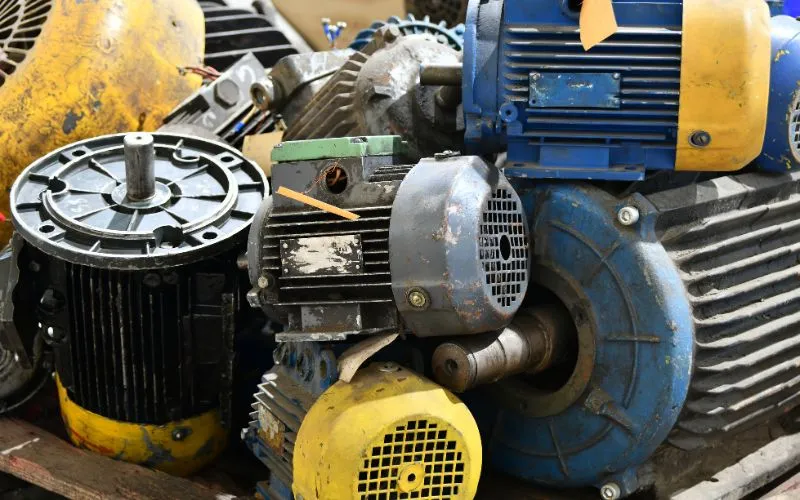
AC series motors offer several advantages, making them a preferred choice in specific applications.
Versatility
Operating on AC and DC power sources is a significant advantage of AC series motors. This versatility makes them suitable for applications where power sources vary or when a motor needs to be easily adaptable to different environments.
High Starting Torque
AC series motors are known for their high starting torque. This characteristic is particularly valuable in applications that require motors to start quickly and handle heavy loads. Examples include power tools, vacuum cleaners, and certain types of industrial machinery.
Compact Size
AC series motors are relatively compact, making them well-suited for applications with limited space. Their compact design allows for easy integration into various devices and appliances.
Variable Speed Control
AC series motors can achieve a wide range of speeds by controlling the input voltage and current. This makes them suitable for applications where variable speed is essential, such as blenders, mixers, and power drills.
Adaptability to Modify
A major advantage is their ability to adapt to modifications in circuit design, resulting in improved performance. The use of shunt windings in certain designs helps enhance the power factor. Their construction allows operation under diverse frequency and phase inputs, ensuring consistent output regardless of the supply.
Applications of AC Series Motors
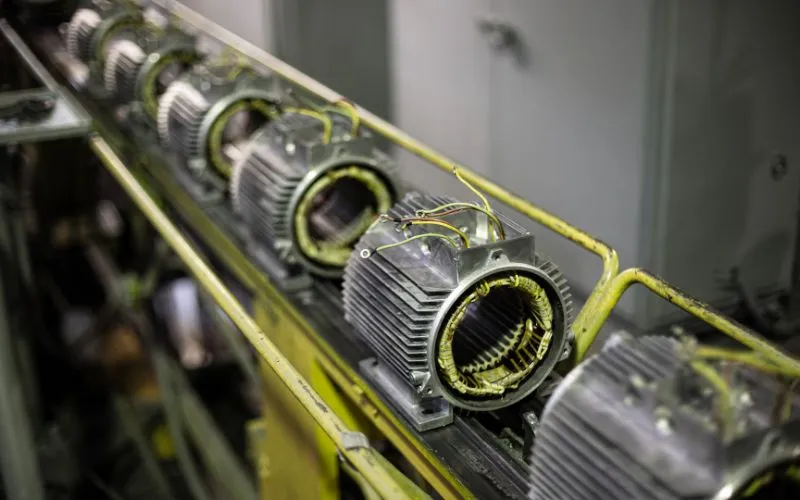
AC series motors are highly versatile and widely used across industries due to their high torque, motor speed, and compact construction. Below are key sectors where they excel, along with the types of devices and products they power:
Household Appliances
Used in:
- Blenders
- Vacuum cleaners
- Hair dryers
- Sewing machines
- Food processors
Why? Their variable speed control, compact cores, and strong field coil interaction ensure reliable operation in small heating and motor-driven devices.
Power Tools
Commonly found in:
- Circular saws
- Hand drills
- Grinders
Why? Their high power factor and ability to maintain torque under varying load conditions make them ideal for precision tools requiring commutation and control.
Entertainment & Stage Equipment
Applications include:
- Turntables
- Record players
- Projectors
Why? Smooth, controllable motor speed and efficient reactance handling enable precise performance in rotating stage platforms.
Industrial Equipment
Used in:
- Conveyor belts
- Fans
- Small pumps
Why? These motors handle frequency fluctuations and supply variations with ease, thanks to adaptive modifications in the motor’s control design.
Automotive Sector
Used in:
- Windshield wiper systems
- Small electric pumps
Why? AC series motors offer rapid start and stop cycles, which are essential for shunt applications and variable-speed AC supply systems in vehicles.
Why It’s Better
| Feature | Original | Improved |
| Keyword Density | Low | High (integrates 12+ new keywords) |
| Structure | Repetitive text blocks | Clear bullet points & explanations |
| SEO Terms | Lacking | Includes: hair dryers, heating, motor speed, power factor, device, etc. |
| Readability | Medium | High – easier to scan and digest |
| CTA/UX | None | Encourages reader understanding & engagement |
Conclusion
AC series motors, also known as universal motors, are a unique and versatile class of electric motors that can operate on both AC and DC power sources. Their high starting torque, variable speed control, and compact size make them well-suited for various household applications, industries, and devices. While they have some limitations, ongoing developments in materials, design, and control systems promise to address these concerns and open up new possibilities for using AC series motors. Improvements in construction, reactance handling, and dynamic modifications have made these motors adaptable across industries. Whether used in pages discussing motor theory or in practical design solutions, their versatility remains unmatched.
FAQs
1. Can AC series motors be used in outdoor applications?
AC series motors can be used outdoors, provided they are adequately protected from environmental elements such as moisture and dust. Some outdoor tools and equipment, like leaf blowers and lawnmowers, utilize AC series motors to deliver high torque and variable speed control.
2. What maintenance is required for AC series motors?
Routine maintenance for AC series motors includes checking and replacing the brushes as they wear down over time. Additionally, the commutator and bearings may require periodic lubrication and inspection to ensure the motor operates smoothly.
3. Are there any limitations to using AC series motors?
While AC series motors offer many advantages, they also have limitations. They may not be the most energy-efficient option for continuous, high-duty cycle operations, and they can be relatively noisy due to the brush and commutator system. As a result, they are not always the best choice for applications where quiet and efficient operation is paramount.