Air Chilled Systems | Benefits & Features
You’ve probably heard about air-chilled systems as an eco-friendly alternative to traditional cooling methods, but have you considered their real impact on efficiency and cost? By utilizing ambient air, these systems eliminate the need for water, making them a smart choice for environmentally-conscious operations. They’re available in various forms, from portable units to large-scale installations, offering flexibility for different needs. But what sets them apart in the world of cooling solutions? Let’s explore the key components and functions that make air-chilled systems a game-changer in thermal management.
Key Takeaways
- Air chilled systems use surrounding air for eco-friendly cooling, reducing water use and environmental impact.
- They efficiently transfer heat from industrial processes, data centers, or HVAC systems to the outside environment.
- Various models, including scroll and screw compressors, offer tailored solutions for specific cooling needs.
- Portable and stationary options provide flexibility or enhanced performance based on application requirements.
- These systems are cost-effective, energy-efficient, and suitable for facilities aiming to lower operational costs.
Understanding Air Chilled Systems

Understanding air-cooled systems is a game-changer in cooling technology. These systems utilize surrounding air to cool processes or equipment, eliminating the need for traditional water-based methods. With the growing emphasis on sustainability, air-cooled systems stand out as an environmentally friendly choice. By bypassing water usage, they help conserve a valuable resource while reducing the environmental impact of water treatment and disposal.
Air-cooled systems are eco-conscious and cost-effective. They reduce water-related expenses, such as sourcing and treatment, and often require less maintenance. This economic advantage makes them an attractive option for facilities aiming to lower operational costs without compromising performance.
You’ll also appreciate their ability to maintain the best operating temperatures. These systems ensure efficient heat transfer outside the space by circulating air to dissipate heat. This capability is optimal in data centers, industrial applications, and HVAC systems, where precise temperature management is essential.
Key Components and Functions
To understand the key components and functions of air-chilled systems, recognizing how they effectively utilize ambient air to reject heat is crucial. These systems are designed to facilitate efficient cooling by transferring heat from spaces like industrial processes, data centers, or HVAC systems to the outside environment. At the core, air-chilled systems use water or other fluids circulating through the system to absorb excess heat from equipment or spaces.
The process begins when the fluid absorbs heat, increasing its temperature. This heated fluid is then directed to an air-cooled heat exchanger, where the magic happens. Here, fans blow ambient air across the fluid, enabling heat transfer. As the air absorbs the heat, it rises and dissipates into the atmosphere—a process known as heat rejection.
Air-cooled systems are particularly advantageous because they don’t generate cold. Instead, they rely on this natural heat rejection method to maintain optimal temperatures, making them an energy-efficient solution for various industrial processes.
Types of Air-Cooled Chillers

When considering the types of air-cooled chillers, you’ll encounter options like scroll and screw compressors, each with unique benefits. Portable models offer flexibility for various applications, while stationary ones are suited for long-term installations. Efficiency and size can vary greatly, so matching the chiller type to your needs is essential.
Scroll vs. Screw Compressors
In the world of air-cooled chillers, choosing between scroll and screw compressors can greatly impact the system’s performance and suitability for your needs.
Scroll compressors are often the go-to choice for smaller applications because they offer compactness and efficiency. They operate with fewer moving parts, resulting in quieter performance and less maintenance, which can be a significant advantage if you’re looking for simplicity and reliability.
On the other hand, if your cooling demands are larger, screw compressors might be the better option. These units in air-cooled chillers provide higher capacity and are known for their reliability, especially when handling varying load demands. Screw compressors continuously operate, making them ideal for environments where consistent performance is essential.
When deciding between the two, consider your specific cooling requirements, the available space, and budget. Scroll compressors might save you on maintenance and noise, but screw compressors will deliver robust performance for more demanding applications. Ultimately, your choice should reflect the balance between your efficiency needs, capacity requirements, and overall operational goals. By understanding these factors, you’ll make a more informed decision that aligns perfectly with your chilling needs.
Portable vs. Stationary Models
Choosing between portable and stationary air-cooled chillers depends on your specific cooling needs and operational environment. Portable air-cooled chillers are your go-to choice if you require flexibility and mobility. They’re compact, easy to transport, and perfect for temporary cooling applications such as spot cooling and emergency cooling. However, remember that portable models generally have lower cooling capacities than their stationary counterparts. This makes them ideal for situations where you need cooling in different locations or for short-term projects.
On the other hand, if your cooling requirements are long-term and fixed, stationary air-cooled chillers are more suitable. These units are built for permanent installation in industrial settings, providing higher efficiency and robust performance for continuous operation.
With greater cooling capacities, stationary air-cooled chillers can efficiently handle more demanding cooling tasks, making them the preferred choice for extensive cooling applications.
Ultimately, your choice depends on whether you need a short-term, flexible solution or a long-term, high-capacity cooling system. Evaluate your cooling capacity needs and weigh the efficiency and performance of each option to ensure you select the right type of air-cooled chiller for your specific requirements.
Efficiency and Size Variability
Air-cooled chillers excel in their versatility, providing a range of efficiency and size options to meet diverse cooling demands. Whether managing small-scale operations or large industrial processes, these chillers offer flexibility. Their size variability guarantees they can fit into various spaces while maintaining peak performance. Different types, such as scroll, screw, reciprocating, rotary, and centrifugal chillers, cater to specific cooling needs and applications.
Key Features of Air-Cooled Chillers:
- Efficiency: These chillers, with advanced components like condenser fans, expansion valves, and evaporators, ensure effective operation for a wide range of applications. They’re designed to optimize energy use and reduce waste.
- Size Variability: From portable models that bring flexibility in deployment to stationary units that offer consistent cooling for industrial processes, you can choose the right size to fit your specific requirements.
- Components and Operation: The efficient integration of key components streamlines the operation, making them easier to set up and maintain. This enhances performance and minimizes downtime, guaranteeing your cooling systems run smoothly.
Choosing the right air-cooled chiller depends on your specific cooling needs, ensuring maximum efficiency and reliability.
Operational Mechanisms
When exploring the operational mechanisms of air-cooled systems, focus first on the heat transfer process. These systems efficiently absorb heat from industrial equipment or HVAC systems and release it outside using ambient air.
You’ll also find that compressors play an essential role in circulating fluids, ensuring effective heat absorption and dissipation.
Heat Transfer Process
Heat transfer in air-chilled systems involves a critical process where ambient air is the medium for rejecting heat. You see, these systems excel in using ambient air to facilitate heat transfer by circulating water or fluids. This fluid absorbs heat from the space you’re cooling, making the heat rejection process incredibly efficient. Here’s how it typically works:
- Heat Absorption: The fluid absorbs heat from the area needing cooling. It’s important for maintaining the desired temperature in industrial processes, data centers, and HVAC systems.
- Heat Dissipation: The absorbed heat gets transferred to the outdoor environment. This step doesn’t generate cold but focuses on heat dissipation, ensuring efficient cooling.
- Ambient Air Utilization: By using ambient air, the system effectively dissipates the heat outside, ensuring that the internal environment remains cool.
Compressor Functionality
The compressor is a vital component in air-cooled systems, driving heat transfer efficiency. Its main job is to pressurize the refrigerant, making it essential for efficient heat absorption in the evaporator. As the refrigerant’s pressure and temperature rise, it becomes prepared to absorb heat effectively, enhancing the system’s cooling capacity.
| Component | Functionality |
|---|---|
| Compressor | Pressurizes refrigerant |
| Refrigerant | Carries heat to the evaporator |
| Evaporator | Facilitates heat absorption |
| Cooling | Boosts energy efficiency and capacity |
Different applications might require different types of compressors, such as scroll or screw compressors, each chosen based on specific needs. This selection directly impacts the system’s energy efficiency and cooling capacity. Choosing the right compressor for your air-chilled system is not just about picking one off the shelf; it’s about matching it to your specific operational demands for the best performance.
Moreover, maintaining your compressor is essential. Proper maintenance ensures longevity and efficient functionality, preventing energy waste and ensuring your system runs smoothly. Remember, your system’s efficiency and cooling power depend significantly on the compressor’s operational health.
Environmental Impact and Efficiency
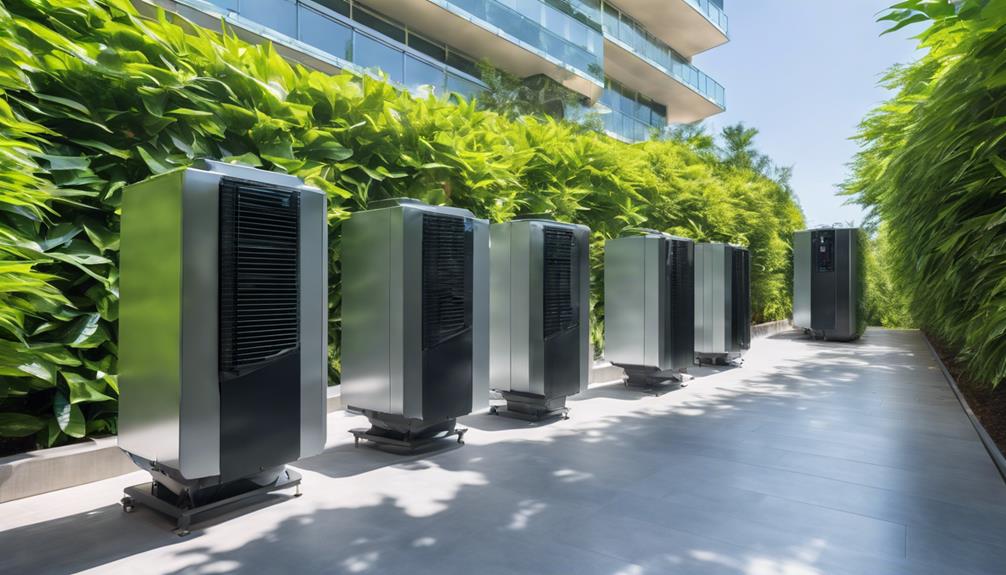
Air-chilled systems stand out for their lower environmental impact than traditional water-cooled systems, mainly due to their reduced water usage and minimal need for chemical treatments. By utilizing air-cooled chillers, you’ll experience high efficiency in heat rejection, which plays a significant role in energy savings. This efficiency is further amplified by advanced technologies like variable speed drives and magnetic bearings, making these systems a sustainable choice for environmentally-conscious operations.
Here are some key benefits of air-chilled systems:
- Reduced Water Consumption: Since they use ambient air for heat rejection, air-chilled systems minimize water consumption, making them ideal for areas with limited water resources or where water conservation is essential.
- Energy Efficiency: Integrating variable speed drives and magnetic bearings in air-cooled chillers enhances their performance, leading to significant energy savings and lower operating costs.
- Environmental Impact: These systems lessen the ecological footprint of traditional methods by reducing water and chemical use.
Applications and Advantages
Versatility defines air-chilled systems as they seamlessly integrate into diverse environments, offering efficient cooling options for modern applications. You’ll find them in data centers, industrial processes, and HVAC systems, where the demand for reliable cooling is high. These systems shine by eliminating water usage, making them environmentally friendly—ideal where water conservation is a priority or availability is limited.
Air-chilled systems present several advantages over traditional water-cooled alternatives. For one, they boast a simplified setup with fewer components, which translates to reduced maintenance requirements. This ease of installation and upkeep means you can focus more on your core operations rather than worrying about complex cooling system issues.
Plus, these systems can be tailored to meet specific cooling needs, ensuring excellent performance efficiency across various sectors.
Their adaptability is a game-changer in applications where water usage is a concern. Whether running a data center in a water-scarce region or managing an industrial process that can’t afford water-related downtime, air-chilled systems offer a practical solution.
Conclusion
You now have a solid grasp of air-chilled systems and their key components. By choosing the right type, like scroll or screw compressors, you can optimize your cooling processes while minimizing environmental impact. These systems not only cut down operational costs but also enhance energy efficiency. Whether you’re cooling industrial processes, data centers, or HVAC systems, air-chilled systems offer a flexible and eco-friendly solution. Embrace this technology for smarter, greener operations.
FAQs
1. What Is the Difference Between Chillers and Air Conditioning Systems?
You should know that chillers offer higher cooling capacity and energy efficiency compared to air conditioning systems. Although chillers have a greater environmental impact, their installation process and maintenance requirements can lead to cost savings in large-scale applications.
2. What are the advantages of air-cooled chillers?
Air-cooled chillers are appreciated for their energy efficiency, lower maintenance needs, and positive environmental impact. They offer cost savings, precise temperature control, and longevity benefits, making them a smart choice for sustainable and efficient cooling solutions.
3. How Do Chilled Water Air Conditioning Systems Work?
You use chilled water systems for their energy efficiency and cooling capacity. They absorb heat, reducing environmental impact. During installation, they offer cost advantages. You’ll appreciate the lower maintenance requirements compared to others, enhancing cost comparison benefits.
4. Does an Air Cooled Chiller Use Refrigerant?
Yes, an air-cooled chiller uses refrigerant to enhance heat transfer and cooling capacity. It’s efficient but requires regular maintenance to minimize energy consumption and environmental impact, ensuring the best refrigerant efficiency and system performance.