Direct Current (DC): Definition, Full Form, and Uses
When you think about DC, you might wonder what makes it vital in our daily lives and technology. Direct Current, or DC, flows consistently in one direction, making it integral to batteries, electronic devices, and low-voltage systems. Unlike Alternating Current (AC), which periodically reverses direction, DC offers a stable and predictable flow. But what exactly does this mean for its electronics, telecommunications, and even renewable energy applications? To fully appreciate the impact and versatility of DC, let’s explore its components and common uses.
Key Takeaways
- DC stands for Direct Current, a type of electrical current.
- Direct Current flows in one direction only, unlike Alternating Current (AC).
- DC is commonly used in batteries, electronic devices, and low-voltage power systems.
- Alessandro Volta and Thomas Edison were key figures in the development of DC.
- Renewable energy systems, like solar panels, produce Direct Current electricity.
Understanding Direct Current

Understanding Direct Current (DC) starts with recognizing its fundamental characteristic: the one-way flow of electric charge. This constant flow distinguishes DC from its counterpart, Alternating Current (AC), which cyclically changes direction. You’ll encounter DC in batteries, electronic devices, and low-voltage power systems, where a consistent voltage and current flow are crucial.
DC is crucial in converting electrical energy to usable forms in various applications. For example, power plants often produce AC, but this AC can be transformed into DC for specific purposes through rectifiers. In telecommunications, DC guarantees stable power for dependable communication. Likewise, in automotive systems, DC supplies power to everything from ignition to infotainment.
DC’s history started with Alessandro Volta in 1800, and it gained widespread attention through Thomas Edison‘s work in indoor lighting. Edison’s utilization of DC for indoor lighting paved the way for modern electrical power systems. However, AC eventually became the norm for power distribution due to its effectiveness over long distances.
Components of DC Circuits
Delving into the components of DC circuits, you’ll find that they typically include DC voltage sources like batteries or power supplies, alongside resistive elements such as resistors. These components form the backbone of any DC circuit. The power supply provides the necessary low voltage to drive the current through the circuit. The current flows unidirectionally from the positive terminal of the voltage source to the negative terminal, guaranteeing a steady and constant flow, which is ideal for many electrical systems.
DC circuits can also include resistors, capacitors, and inductors. While capacitors store energy in an electric field, and inductors store energy in a magnetic field, these components influence the circuit’s behavior without altering the fundamental nature of the direct current. They can impact how the current ramps up or down, providing more control over the electrical system’s performance.
Understanding these components is vital for designing and analyzing electrical systems that rely on direct current. Whether you’re working with low-voltage electronics or larger power systems, knowing how each part interacts ensures your designs are efficient and reliable.
Common DC Applications

After grasping the components of DC circuits, you can explore how direct current is used in various applications that touch everyday life. DC power is a versatile power source, essential for different electrical systems.
One common application is charging batteries for electric vehicles and portable electronic devices. Your smartphone, laptop, and electric car rely on DC to charge efficiently. Many electronic systems, such as computers, TVs, and smartphones, operate on DC power internally. These devices convert AC from wall outlets into DC to function properly.
DC power also benefits LED lighting systems, allowing for efficient and effective illumination. Moreover, DC is vital for power supplies in various electronic devices, providing a stable and reliable power source.
Renewable energy systems, like solar panels, produce DC electricity that can be used directly or converted for grid integration. This makes DC an integral part of modern energy solutions.
Here’s a table summarizing these applications:
| Application | Description |
|---|---|
| Battery Charging | Charges electric vehicles and portable devices |
| Electronic Systems | Powers internal circuits of computers, TVs, and smartphones |
| LED Lighting | Powers efficient and effective lighting systems |
| Power Supplies | Provides stable and reliable power for electronic devices |
| Renewable Energy | Utilizes DC from solar panels for direct use or grid integration |
Understanding these applications reveals the significant role of DC in everyday technology and sustainability.
DC in Building Systems
DC in building systems is more common than you might imagine. It’s frequently used for extra-low voltage and low-voltage applications, making it ideal for many building infrastructures.
Many electronic devices within buildings either require or produce direct current. This includes lighting systems, power supplies, and various electronic gadgets you use daily.
DC power systems that use lower voltages can be safer and more efficient for specific applications. They handle smaller amounts of power, often making the components less costly. This cost-effectiveness extends to batteries frequently charged using DC power from sources like solar panels or dedicated battery chargers.
Direct current is vital in powering and maintaining various systems and devices within building infrastructure. For example, lighting systems that run on DC power can offer more stable and reliable performance. Integrating solar panels with DC setups can greatly enhance energy efficiency, reducing electricity costs.
Historical Development and Uses
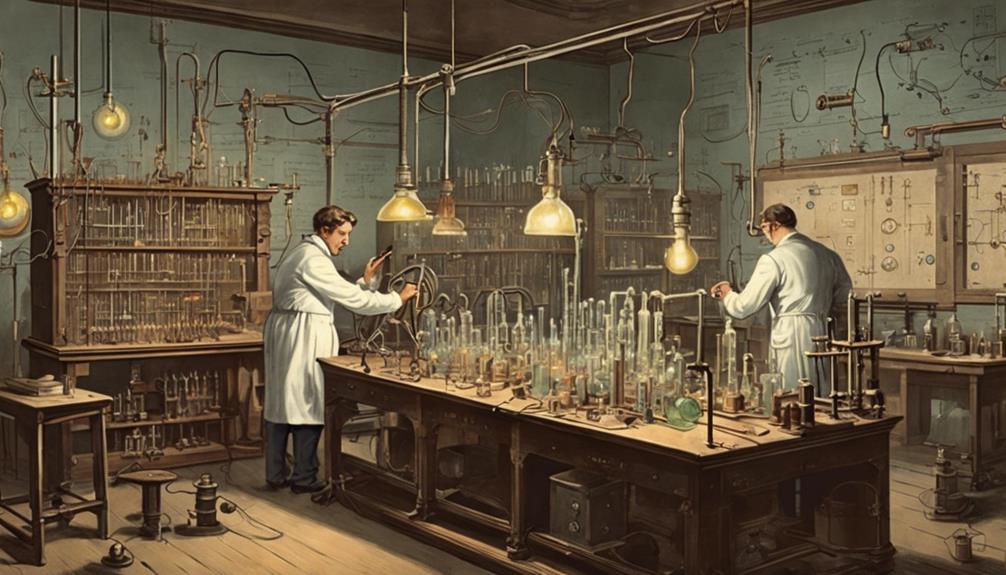
The historical development of direct current (DC) has profoundly shaped modern technology, starting with the ground-breaking work of Alessandro Volta. In 1800, Volta introduced the world to DC by inventing the voltaic pile, the first chemical battery capable of producing a steady flow of electricity. This breakthrough laid the foundation for the future of electrical power.
In the late 19th century, Thomas Edison further advanced DC technology by popularizing its use for indoor lighting systems. Edison’s low-voltage DC systems became a standard in homes and businesses, showcasing the practical applications of DC in everyday life.
Today, DC is often used in automotive applications, powering essential systems like batteries, starter motors, and various electronic components. Its reliability and efficiency make it ideal for such uses. Telecommunication equipment also relies on DC, typically using a standardized 48V DC power supply to guarantee consistent and reliable operation.
Moreover, High-Voltage Direct Current (HVDC) systems play a vital role in bulk electrical power transmission. Compared to alternating current (AC) systems, they offer lower electrical losses over long distances, making them an efficient choice for modern power grids.
Conclusion
You’ve now got a solid grasp of Direct Current (DC). It’s clear how important DC is, from powering your gadgets to driving renewable energy solutions. By understanding its consistent flow and applications, you’ll appreciate why it’s crucial to modern technology. So, next time you use a battery or any low-voltage device, you’ll know DC’s role in making it all work seamlessly. Keep exploring, and you’ll uncover even more about this essential current!
FAQs
What does DC stand for in electrical terms?
DC stands for Direct Current. It refers to the flow of electric charge in a single, consistent direction, typically from a positive terminal to a negative terminal. DC is commonly used in batteries, electronic devices, and other low-voltage power systems.
Key Point:
- DC means Direct Current.
- Electric charge flows in one direction.
- It is commonly used in batteries and electronics.
What are the main uses of Direct Current (DC)?
Direct Current (DC) has several important applications, particularly in electronics and low-voltage devices:
- Batteries: DC is the standard current form for all types of batteries, including those in cars, mobile phones, and flashlights.
- Electronics: Most electronic devices, such as laptops, smartphones, and TVs, use DC to operate their internal circuits.
- Solar Power Systems: Solar panels generate DC electricity, which is then converted to AC to power household appliances.
- Electric Vehicles (EVs): Electric vehicles run on DC batteries that power their motors.
Applications:
- Batteries in electronic devices.
- Powering electronic circuits.
- Solar power generation.
- Electric vehicles.
What is the difference between DC and AC?
The main difference between Direct Current (DC) and Alternating Current (AC) lies in the direction of the flow of electricity:
- DC (Direct Current): Flows in one consistent direction, typically from positive to negative. It is used in batteries, electronics, and low-voltage applications.
- AC (Alternating Current): This type of current changes direction periodically, flowing back and forth. It is used in household power supplies and can efficiently transmit over long distances.
Key Differences:
- DC flows in one direction; AC alternates.
- DC is used in electronics; AC is used in household power.
- AC is better for long-distance transmission.
Why is Direct Current (DC) used in electronics?
Direct Current (DC) is preferred in electronics for several reasons:
- Stable Voltage: DC provides a stable voltage level for sensitive electronic components.
- Low-Voltage Applications: Most electronic devices operate on low-voltage DC power, which is safer and more efficient for these applications.
- Battery Compatibility: Batteries generate DC, making it the natural choice for portable devices like phones, laptops, and tablets.
Benefits of DC in Electronics:
- Provides stable voltage.
- Ideal for low-voltage devices.
- Compatible with battery-powered gadgets.
Can Direct Current (DC) be converted to Alternating Current (AC)?
Direct Current (DC) can be converted to Alternating Current (AC) using an inverter. This conversion is necessary for applications like solar power systems, where DC generated by solar panels is converted to AC to match the requirements of home appliances and the electrical grid.
Conversion Process:
- The inverter converts DC to AC.
- Essential for solar power and home applications.
- Allows compatibility with the electrical grid.