Moving Iron Instruments: Types, Working Principle & Applications
You’ve probably encountered various measuring devices, but have you explored the moving iron instrument? It’s a fascinating tool that measures current or voltage using a simple yet clever mechanism involving a soft iron vane. This device can handle both AC and DC currents, making it incredibly versatile. There’s more to uncover about its construction, operation, and types, along with its benefits and challenges. Curious about its inner workings? Let’s continue.
Key Takeaways
- Moving iron instruments measure AC and DC currents using a soft iron vane in a magnetic field.
- They feature both attraction and repulsion types, with attraction using a coil and disc, and repulsion using two vanes.
- These instruments have a robust design, fewer moving parts, and can withstand temporary overloads.
- The instruments are cost-effective and offer a high torque-to-weight ratio for accurate measurements.
- Non-linear scale and susceptibility to hysteresis errors and stray magnetic fields are potential limitations.
Construction and Components of Moving Iron Instruments
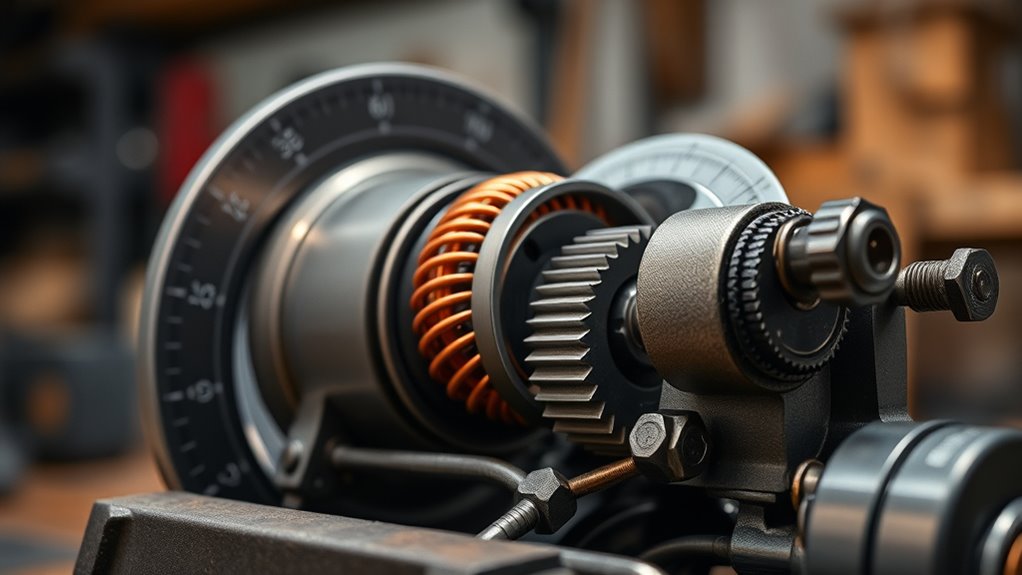
Moving iron instruments are fascinating devices that use a soft iron movable element, or vane, placed within the magnetic field generated by a stationary coil. This coil, typically made of copper or aluminum wire, becomes an electromagnet as current flows through it.
In attraction-type instruments, a flat, stationary coil and an iron disc attract each other. Conversely, the repulsion type uses two magnetized iron vanes, one fixed and one movable, repelling each other when energized.
Control springs manage the torque, while damping torque, often achieved with aluminum pistons, stabilizes the pointer for accuracy. These components are housed in a non-magnetic casing, shielding them from external magnetic fields, which ensures that your measurements remain precise and reliable.
Working Principle and Operation
When exploring the working principle of moving iron instruments, you’ll find that they rely on the magnetic force generated by a current-carrying coil. This magnetic field interacts with a soft iron vane, creating deflecting torque.
As the current flows, the magnetic attraction varies, causing the iron vane to move. In attraction-type instruments, the vane is drawn into the coil, while in repulsion-type instruments, magnetized vanes repel each other. This movement causes the pointer to deflect over a calibrated scale, indicating the current or voltage magnitude.
The deflection is proportional to the square of the current, ensuring accurate readings. To stabilize the pointer, air friction or other damping methods, such as aluminum pistons, are used, thereby maintaining precision in the instrument’s operation.
Types of Moving Iron Instruments

Delving into the types of moving iron instruments, you’ll find two primary categories: the Attraction type and the Repulsion type. In the Attraction type, a moving element, typically an iron disc, is pulled into a coil as the current magnitude rises. This setup relies on a magnetic field to create torque, with the spring stabilizing the pointer.
The Repulsion type involves two iron vanes, both magnetized by the current, causing them to repel each other. This repulsive force moves the vane, making it suitable for both AC and DC applications due to its non-polarized nature.
Here’s a quick comparison:
| Type | Mechanism | Application |
|---|---|---|
| Attraction | Iron disc and coil | Simplicity |
| Repulsion | Two repelling vanes | AC and DC |
Both types guarantee effective pointer stabilization.
Advantages of Moving Iron Instruments
Despite their traditional design, moving iron instruments offer several distinct advantages that make them a practical choice for measuring electrical currents. One of the primary advantages is their versatility; they can measure both AC and DC currents without any modifications. This makes moving iron instruments ideal for various electrical applications.
Their robust construction, featuring fewer moving parts, enhances durability and reduces the risk of mechanical failure, ensuring reliable performance. Plus, they’re cost-effective because they require fewer wire turns than permanent magnet devices, which cuts manufacturing costs.
The high torque-to-weight ratio minimizes friction errors, providing accurate measurements. With their ability to withstand temporary overloads, moving iron instruments stand out as dependable and versatile tools in your arsenal for making effective electrical measurements.
Limitations and Challenges
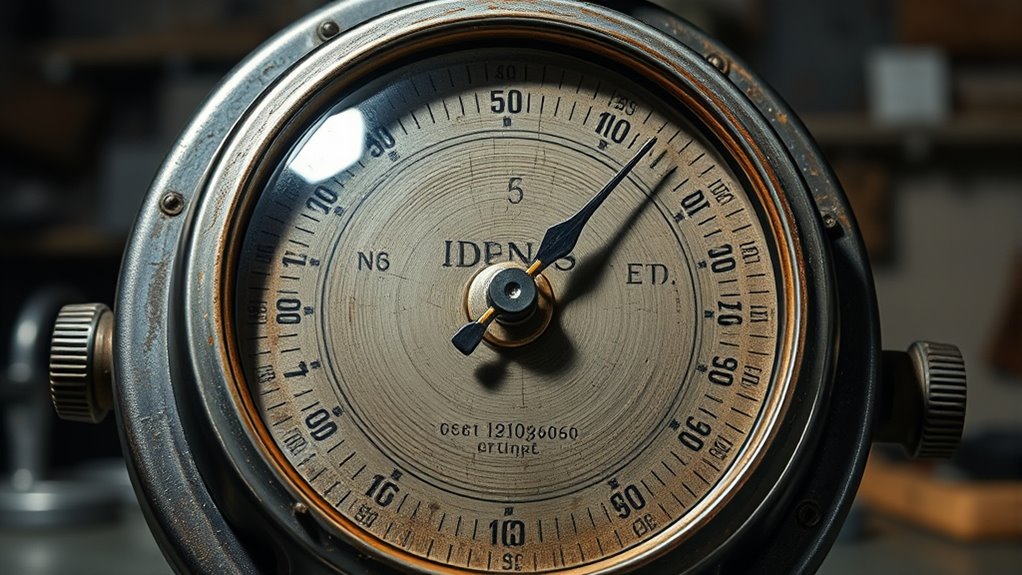
While moving iron instruments has its advantages, they also come with several limitations that you should be aware of.
One significant disadvantage is their non-linear scale, which affects precision, especially at lower current values. These instruments are prone to hysteresis errors, causing inaccuracies due to the magnetic properties of iron. Stray magnetic fields can interfere with the instrument’s magnetic field, resulting in additional measurement errors.
Non-linear scales and hysteresis errors hinder accuracy, with stray magnetic fields compounding measurement inaccuracies.
Additionally, frequency variations in AC applications can alter inductance, impacting accuracy. Mechanical wear over time can degrade reliability, requiring regular maintenance to guarantee consistent performance.
Ultimately, these factors contribute to potential inaccuracies, making moving iron instruments less ideal for applications that require high precision and reliability, despite their other beneficial qualities.
Conclusion
In using moving iron instruments, you benefit from their versatility and durability, making them ideal for measuring both AC and DC currents. Despite challenges like non-linear scales and hysteresis errors, their cost-effectiveness and robust construction make them a practical choice. Whether you opt for the attraction or repulsion type, you’ll find these instruments reliable for various applications. Remember to take their limitations into account, but appreciate the efficiency they bring to your electrical measurements.
FAQs
1. What Is the Moving Iron Instrument?
You’re curious about a device that measures electrical parameters, such as current and voltage. It uses magnetic attraction principles with a movable iron vane. It’s versatile, handling both AC and DC, but be aware of potential scale accuracy issues.
2. Do Moving Iron Instruments Work on AC or DC?
You don’t need to worry about modifications because these instruments handle both AC and DC seamlessly. They work effectively by leveraging magnetic fields to provide accurate measurements, making them a versatile choice for diverse electrical systems.
3. How Does a Moving Iron Ammeter Work?
You see a moving iron ammeter work by using a soft iron vane. The coil’s magnetic field moves the vane, indicating the magnitude of the current. It’s versatile for both AC and DC applications, with damping that enhances accuracy and stability.
4. Do Moving Iron Instruments Have a Scale?
Yes, they do have a scale. You’ll find it’s essential for converting the movement of the indicator into readable values. Make certain it’s well-calibrated to avoid errors, especially since precision can vary at different levels.