

The Working of LED: An Explanation and Guide to LED Technology
In the age of modern technology, where energy efficiency is paramount, Light Emitting Diodes (LEDs) reign supreme as a beacon of sustainable illumination. These tiny heroes are everywhere – from massive stadium screens to humble household lightbulbs and even on your smartphone screens. But have you ever wondered how these minuscule components work? How do they significantly slash energy consumption compared to their traditional incandescent counterparts? We invite you to journey with us as we delve deep into the intricate workings of LED technology, lighting up its secrets and revealing why this technology is redefining our illuminated world.
LEDs are electronic components that emit light when a current flows through them. They use a process called electroluminescence, which involves the movement of electrons across a semiconductor material. When an electric current is applied to an LED, the movement of electrons causes the release of energy in the form of photons, resulting in visible light. The color of an LED depends on the materials used to make it, and they have various applications in areas such as electronics, communications, and lighting due to their efficient operation and long lifespan compared to traditional light sources like incandescent bulbs or fluorescent tubes.
Science Behind LED Technology

Understanding the science behind LED technology is crucial to grasp its functioning. LED, short for Light-Emitting Diode, operates on a phenomenon called electroluminescence. This process involves the emission of light when an electric current passes through a semiconductor material in the diode. Unlike traditional incandescent bulbs that rely on heating a filament to create light, LEDs leverage the properties of semiconductors to generate illumination efficiently.
Think of an LED as a tiny “traffic controller” for electrons. When the diode is turned on, it allows a stream of electrons to flow from one side (the negative or cathode) to the other (the positive or anode). As these electrons move across the semiconductor material, they recombine with “holes” – empty spaces available for electrons – releasing energy as photons or light.
Consider an analogy with children playing with building blocks to understand this process better. Imagine you have two blocks, one consisting of blue blocks (representing electrons) and another set of red blocks (representing holes). Now, connect these sets with a bridge made of magnetic material (representing the semiconductor material). As you bring blue and red blocks together on the bridge, they bind and release energy in the form of sound or light.
Now that we comprehend how electroluminescence powers LEDs, let’s dive into an essential component enabling this phenomenon: semiconductors.
- Understanding the functioning of LED technology is crucial, and it operates on electroluminescence – a process involving the emission of light when an electric current passes through a semiconductor material in the diode. Unlike traditional incandescent bulbs, LEDs leverage the properties of semiconductors to generate illumination efficiently. Therefore, semiconductors are an essential component enabling electroluminescence and powering LEDs.
Role of Semiconductors
Semiconductors play a fundamental role in LED technology by providing an environment where electroluminescence can occur. These materials have unique electrical properties, bridging the gap between conductors and insulators. How do semiconductors enable this bridging effect?
At their core, semiconductors primarily comprise atoms arranged in regular patterns. However, some atoms within the structure possess one or more extra electrons, while others lack a few electrons to achieve stability. This disparity in electron count creates what’s known as a bandgap – an energy range where electrons are unavailable for bonding.
In their natural state, semiconductors have two distinct energy bands: valence and conduction bands. The valence band holds electrons tightly bound to atoms, whereas the conduction band contains unbound or “free” electrons that can move around more easily. Typically, the bandgap between these two energy levels determines whether a material behaves as a conductor, insulator, or semiconductor.
Visualize semiconductors as a ladder with two steps – the lower step representing the valence band and the higher step symbolizing the conduction band. Electrons in the lower step need enough energy to climb up to the higher step before moving freely within the material.
Semiconductors made from specific materials such as gallium arsenide (GaAs) or indium gallium nitride (InGaN) are utilized for LEDs. These materials possess unique properties that allow for efficient electroluminescence under certain conditions.
By doping these materials with impurities through a process called doping, engineers can alter their electrical properties and manipulate electron movement. This controlled doping allows for the creation of LEDs that emit light across different colors or wavelengths based on the specific semiconductor material used.
Now that we understand the critical role of semiconductors let’s explore how current and power come into play within LED technology.
Understanding Current and Power in LEDs
To truly grasp the workings of LED lights, it is crucial to understand the key concepts of current and power. Current, measured in Amperes (A), refers to the flow of electric charge through a conductor, such as a wire. In the case of LEDs, current is responsible for activating the electrons within the semiconductor material, causing them to emit light.
On the other hand, power is the rate at which energy is transferred or converted per unit of time and is measured in Watts (W). In the context of LED lights, power determines the intensity or brightness of the emitted light. Higher power leads to brighter illumination, while lower power produces dimmer outputs.
The relationship between current and power in an LED can be understood through Ohm’s law, which states that current flowing through a device is directly proportional to its voltage and inversely proportional to its resistance. In simplest terms, when a voltage is applied across an LED, it allows the flow of current based on its unique resistance characteristics.
However, it’s important to note that LEDs have a specific forward voltage drop that needs to be accounted for during operation. Exceeding this forward voltage may result in excessive current flow and potentially damage the LED. Hence, using resistors or appropriate drivers in LED circuitry is recommended to ensure proper current regulation and avoid adverse effects.
Consider an analogy: Think of an LED as a faucet and current as water flowing through it. The brightness achieved depends on how wide we open the faucet (every day) and how much water pressure (power) we apply.
Now that we have understood the significance of current and power in LEDs let’s explore some unique properties that make these lights stand out from traditional lighting technologies.
- Today’s highly efficient LED bulbs can convert over 90% of the input power to light, while only about 10% is wasted as heat.
- A 2020 research conveyed that more than 50% of all new lighting installations worldwide are based on LED technology due to their superior performance and longevity.
- According to the U.S. Department of Energy, LEDs use at least 80% less energy than incandescent lighting and last 25 times longer.
Unique Properties of LED Lights
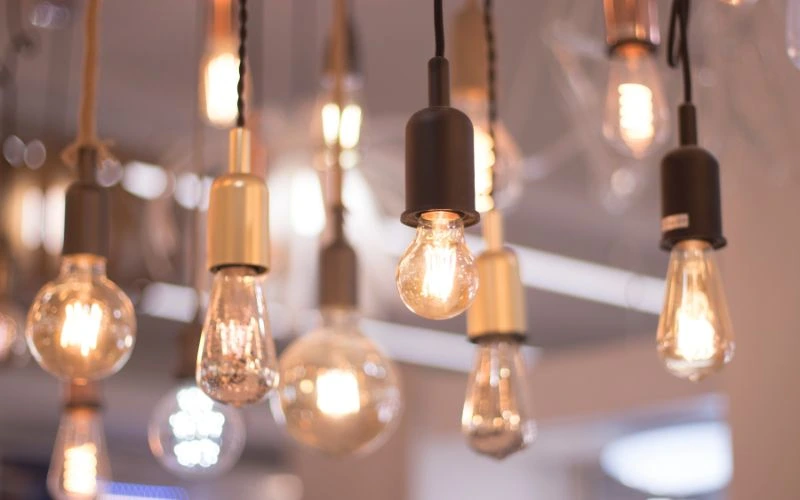
LEDs possess a range of extraordinary properties that have revolutionized the lighting field. One such property is energy efficiency. Unlike incandescent bulbs, which convert a significant portion of electrical energy into heat, LEDs are highly efficient in converting electricity directly into light. As a result, they require less power to produce the same brightness, making them an environmentally friendly and cost-effective choice.
Another remarkable property of LEDs is their long lifespan. LED lights have a considerably longer operational life compared to traditional bulbs. On average, an LED can last up to 50,000 hours or more, whereas incandescent bulbs typically last only around 1,200 hours. This extended lifespan significantly reduces the frequency of replacements, leading to reduced maintenance costs and waste generation.
Furthermore, LEDs offer versatility in color options. LEDs can emit light in various colors using different materials and fabrication techniques without requiring filters or gels. This ability makes them ideal for applications where specific colors are desired, such as stage lighting or decorative purposes.
Imagine having an artist’s palette with limitless colors at your fingertips, allowing you to paint vibrant scenes and set captivating moods effortlessly. LEDs provide just that for lighting designers and enthusiasts!
LEDs also operate instantly, reaching full brightness almost instantly when powered on. Unlike traditional lighting technologies that require a warm-up period before achieving maximum illumination, LEDs provide immediate light output.
Additionally, their solid-state nature makes LED lights highly resistant to shock and vibrations. This robustness makes them durable and suitable for various applications, such as automotive lighting or outdoor installations, subject to environmental factors.
Having explored the unique properties of LED lights, we now understand why these innovative light sources have gained immense popularity in recent years.
Insights into Brightness and Illumination
Understanding the concept of brightness and illumination is crucial when exploring LED technology. Unlike traditional lighting technologies, LEDs emit light through a process called electroluminescence. In simple terms, electroluminescence occurs when an electric current passes through a semiconductor material, causing it to emit photons or light particles.
When discussing brightness in the context of LEDs, we refer to the intensity of light emitted by an LED. This measurement is typically expressed in lumens (lm), which indicates the total amount of visible light produced by the LED source. Higher lumen values signify greater brightness.
However, it’s important to note that brightness alone doesn’t determine how well a specific space will be illuminated. Illumination, however, refers to the quantity of light falling on a surface area, measured in lux (lx). A higher lux value indicates better illumination.
To understand this better, consider the following example: You have two different LED bulbs with equal lumen output, but one has a narrower beam angle. The bulb with the narrower beam angle will provide higher illumination in a specific area as more concentrated light is directed onto that area.
Moreover, brightness and illumination can be subjective based on individual preferences and usage scenarios. For instance, a brightly lit retail store might require high levels of both brightness and illumination to highlight products effectively and create an inviting atmosphere for customers. In contrast, soft ambient lighting in a cozy living room might prioritize lower levels of brightness and illumination for a comfortable ambiance.
Now that we have gained valuable insights into brightness and illumination in the context of LED technology, let us explore the evolution of LEDs over the years.
Evolution Of LED Over The Years

The journey of LED technology has been nothing short of remarkable. LEDs have come a long way, from their humble beginnings as indicator lights in electronic devices to becoming an energy-efficient lighting solution for various applications.
In the early days, LEDs were primarily used as indicator lights in electronics due to their small size and low power consumption. However, advancements in semiconductor materials and manufacturing techniques paved the way for brighter and more efficient LEDs.
An important milestone in LED technology was the development of blue LEDs in the 1990s by Japanese researchers Isamu Akasaki, Hiroshi Amano, and Shuji Nakamura. This breakthrough discovery laid the foundation for creating white LEDs by combining blue LEDs with phosphor coatings. White LEDs quickly gained popularity as they offered improved energy efficiency compared to traditional incandescent or fluorescent lighting.
Since then, ongoing research and innovation have led to significant improvements in LED technology. The efficacy of LEDs has increased over time, meaning more light output can be achieved with lesser energy consumption. This has made LEDs highly desirable for various applications, from residential and commercial lighting to automotive lighting, outdoor displays, and even horticultural lighting systems.
Think of LED technology as a thriving tree that started as a tiny seed. It grew stronger roots and branches yearly, blossoming into an incredible illumination source.
As LED technology advances, we’ll likely see further developments in color rendering capabilities, dimming options, smart lighting integrations, and enhanced longevity. These advancements will only solidify LEDs’ position as the future of lighting technology.
LED Usage in Different Scenarios

LED technology has revolutionized how we illuminate our world, offering numerous benefits over traditional lighting solutions. The versatility of LEDs allows for their usage in a wide range of scenarios, catering to various needs and requirements. Let’s explore some of the different scenarios where LED lighting excels.
In the realm of residential lighting, LEDs have become increasingly popular. They are now commonly used in household fixtures such as light bulbs, lamps, and even decorative lighting options. LEDs’ energy efficiency allows homeowners to reduce electricity bills while enjoying high-quality illumination throughout their living spaces.
In commercial settings, LEDs have proven to be highly effective. Their long lifespan and low maintenance requirements make them ideal for businesses looking to minimize operational costs. Additionally, LEDs offer superior color rendering capabilities, making them suitable for retail environments where accurate color representation is essential.
For instance, imagine walking into a clothing store relying on fluorescent lighting. The hues and shades of the garments might appear distorted or muted compared to how they would look under natural light. However, by replacing the fluorescent lights with LEDs, the true colors of the clothing can be showcased accurately, enhancing the shoppers’ experience.
The automotive industry has also embraced LED technology due to its versatility and durability. From headlights and tail lights to interior lighting and dashboard displays, LEDs offer superior brightness and longer lifespan than traditional incandescent bulbs. Furthermore, they consume less power, which is especially valuable in electric vehicles, where every ounce of energy matters.
Outdoors: LED lighting is crucial in illuminating streets, parks, parking lots, and other public spaces. High-intensity LED lights and directional nature ensure optimal visibility while minimizing light pollution. Additionally, their long lifespan reduces maintenance costs and contributes to sustainable lighting solutions for municipalities.
Now that we understand the diverse applications of LED lights across different scenarios, let’s take a closer look at some popular applications where LED technology has significantly impacted.
Popular Applications of LED Lights
The rise of LED technology has transformed traditional lighting and opened up new possibilities for innovative applications. Here are some popular and cutting-edge areas where LEDs are making a remarkable difference:
- Smart Lighting: With the advent of smart homes, LED lights have become integral to automated lighting systems. These lights can be controlled remotely, dimmed or brightened as desired, scheduled to turn on/off, and can even change colors to create different moods.
- Display Technology: LED displays are widely used in various settings, such as large-scale outdoor billboards and digital signage. LEDs’ brightness, color accuracy, and flexibility make them superior for delivering impactful visual content.
- Backlighting: LEDs have revolutionized the display industry by providing thin, energy-efficient backlighting solutions for televisions, computer monitors, and mobile devices. The uniform illumination produced by LEDs enhances visual clarity and reduces eye strain.
- Horticulture Lighting: LEDs have found their way into indoor gardening and greenhouse applications. By emitting specific wavelengths of light optimized for plant growth, LED grow lights provide plants with the necessary light spectrum to thrive, thereby boosting productivity and reducing energy consumption.
- Artistic Lighting Effects: LEDs offer endless possibilities for creating captivating lighting effects in art installations, stage performances, and architectural designs. Their small size and ability to produce vibrant colors add a dynamic element to visual compositions.
For example, imagine visiting an interactive art exhibit that utilizes LED lighting to transform the space into a magical wonderland. The interplay of colors, illuminating sculptures, and synchronized light patterns could transport you into a completely immersive experience.
From mundane household use to awe-inspiring artistic installations, LED lights have become the go-to lighting solution in many applications.
