

What Is a Semiconductor? Basics of Modern Electronics
A semiconductor is a material that controls the flow of electricity. It does not let electricity pass freely like a conductor (such as copper), and it does not entirely block it like an insulator (such as rubber). It falls somewhere in the middle. That’s why it is called a “semi”-conductor. It partly conducts electricity. What makes semiconductors special is that we can control how much electricity they allow to pass through. This control is what powers modern electronics.
Semiconductors are found in almost every device we use today. Your smartphone, laptop, TV, washing machine, and even cars rely on them to function. Without semiconductors, devices would be unable to perform tasks such as processing data, storing files, playing music, or connecting to the internet. These materials are the core of chips, integrated circuits, and processors. They make technology smarter, faster, and more reliable.
Please keep reading to learn how semiconductors work, what they’re made of, and why they matter. Let’s break it down and explain everything in simple words.
What Materials Make Up a Semiconductor?
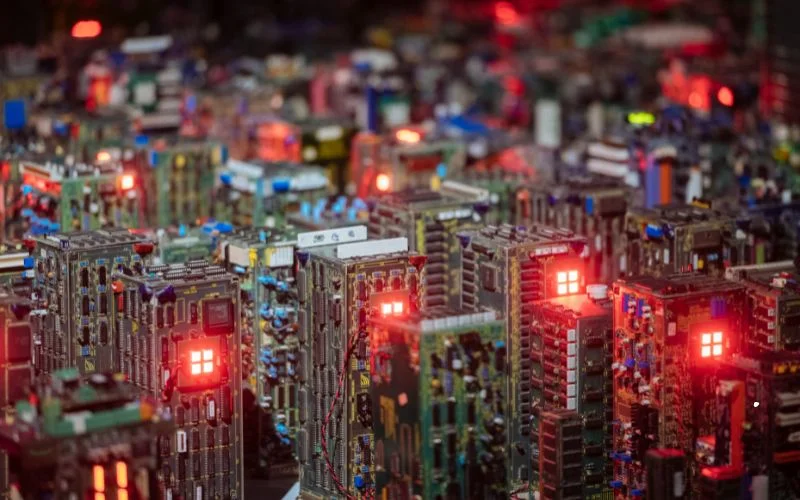
The most common material for semiconductors is silicon. It is formed from sand and is then cleaned and shaped into extremely pure crystals. These crystals are sliced into thin wafers and used to make chips.
Other materials include:
- Germanium – also used in early computers
- Gallium arsenide – used in solar panels and LEDs
However, silicon is king because it is inexpensive, readily available, and effective.
How Semiconductors Work: A Simple Explanation
Semiconductors control how electricity flows. They do this by adding other atoms to the material. This process is called doping. There are two main types of doped semiconductors:
N-type Semiconductor
- Extra electrons are added
- These electrons carry a negative charge
- The current flows because of these free electrons
P-type Semiconductor
- Fewer electrons are added, creating holes
- These holes act like positive charge carriers
Electrons jump into holes, and this movement generates an electric current. When you join P-type and N-type materials together, you make a PN junction. This is the building block of devices like diodes and transistors.
Why Are Semiconductors Important?
Semiconductors are everywhere. They control power, store data, and help devices think. They are tiny, but they accomplish a great deal of work. These chips manage the flow of signals and energy, making devices smarter, faster, and more efficient while using less power.
Here’s What Semiconductors Power:
- Smartphones: CPUs, memory, screen drivers, and power management chips
- Laptops: Processors, RAM, storage chips, and graphics units
- Cars: Engine control, parking sensors, backup cameras, and infotainment systems
- Medical Tools: Heart monitors, X-ray machines, and life-saving diagnostic devices
- Smart Homes: Video doorbells, bright lights, thermostats, and voice assistants like Alexa or Google Home
They also power industrial robots, satellites, game consoles, and everything in between. From simple toys to space tech, semiconductors are essential for modern living.
They are essential to modern life.
Key Parts Made From Semiconductors
Learn more about the key parts of a semiconductor:
1. Diodes
- Allow current in one direction only
- Used in charging circuits and LED lights
2. Transistors
- Act like switches or amplifiers
- Used in processors and radios
3. Integrated Circuits (ICs)
- Combine thousands of tiny transistors
- Found in phones, computers, and smart TVs
These parts are small, but they perform complex tasks very quickly.
How Semiconductors Are Made?
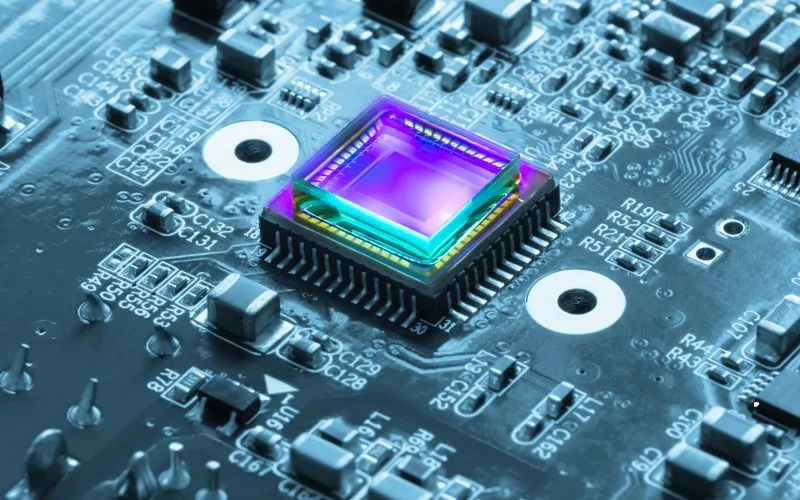
Making a semiconductor chip is a delicate process that takes place in a cleanroom; even a single dust particle can damage a chip. Here’s how it works:
1. Purify Silicon from Sand
Silicon is extracted from quartz sand by heating it in a furnace at extremely high temperatures. The result is metallurgical-grade silicon, which is then refined into ultra-pure electronic-grade silicon. This high-purity silicon is crucial for constructing transistors that operate reliably in microchips.
2. Grow a Crystal and Slice It into Wafers
A single silicon crystal is grown using the Czochralski method, forming a large cylindrical ingot. This ingot is carefully sliced into ultra-thin, round wafers using diamond saws. The wafers are then polished until they are mirror-smooth, preparing them for circuit printing.
3. Print Circuit Patterns with Light (Photolithography)
A light-sensitive coating called photoresist is applied to the wafer’s surface. Ultraviolet light is projected through a mask to transfer tiny circuit patterns onto the wafer. The exposed areas are chemically developed, creating precise paths for the circuit layout.
4. Dope the Material
Doping introduces specific impurities such as boron or phosphorus into the silicon surface. This process changes the electrical properties, forming N-type or P-type regions. These regions are crucial for creating transistors that regulate the flow of electrical current.
5. Add Layers of Metal for Connections
Thin layers of conductive metal are deposited to form pathways between transistors. Multiple metal layers are stacked and separated by insulating material to form a 3D circuit. These connections act like tiny wires, enabling the chip to send and receive electrical signals.
6. Test and Cut the Wafers into Chips
Each chip is tested for performance, power efficiency, and any manufacturing defects. Working chips are precisely cut from the wafer using a laser or diamond saw. They are then packaged in protective cases and prepared for use in electronic devices.
These steps need machines, clean air, and skilled engineers.
Where Are Semiconductors Made?
Semiconductors are produced in sophisticated manufacturing plants, known as fabs. These fabs are among the most advanced and costly manufacturing environments in the world. These factories must have thousands of times cleaner conditions than a hospital operating room to produce semiconductors. Because even a dust speck can destroy the microscopic circuits on a chip, air, temperature, humidity, and vibration are controlled.
Semiconductor Types: Two Main Groups
Semiconductors can be divided into two main types based on how they are doped (which means adding impurities to improve conductivity). These types are P-Type and N-Type.
1. Discrete Semiconductors
- Small, single-use parts
- Example: a single diode or transistor
2. Integrated Circuits (ICs)
- Many parts in one small chip
- Example: microprocessor or memory chip
Integrated circuits are more common now because they save space and power.
What Makes Semiconductors Smart?
Semiconductors respond to voltage, heat, or light. You can turn them on or off very fast. This speed helps:
- Run apps on phones
- Play music and video
- Connect to Wi-Fi and Bluetooth
Smart chips also consume less power, which in turn makes batteries last longer.
Future of Semiconductors
Semiconductors continue to shrink, increase in speed, and become more powerful. Engineers now build chips with billions of tiny transistors packed into a space smaller than a fingernail. In the future, semiconductors will enable:
- Self-driving cars to process road data instantly and drive safely
- Phones are to last longer on a single charge with better energy efficiency.
- Robots are to understand tasks, react quickly, and work alongside humans.
- AI tools to learn faster, solve problems, and power smart assistants
They will also play a big role in space tech, 5G networks, and quantum computing, bringing smarter systems to life.
Where to See Semiconductors in Real Life?
You don’t need a lab to see semiconductors; they’re all around you. Open up a broken phone, TV remote, or old computer, and you’ll find small black chips with metal pins. These chips are semiconductors. They may look simple, but inside, they contain millions or even billions of tiny electronic parts. You can also find them in a car’s engine control unit, microwave, or even a modern washing machine. These chips control everything from power use to signals and data. If you’re curious, take apart an old gadget and look for those small black rectangles; that’s where the magic happens.
Curious about how tech components work? Explore and buy basic parts from My Tech Info to learn hands-on!
Final Word: Why You Should Care?
Semiconductors are the brain and heart of modern technology. They power the devices we use every day, from smartphones and laptops to cars, medical machines, and even refrigerators. Without them, digital life as we know it would not exist. These tiny chips help us communicate, learn, work, travel, and stay healthy. Whether you’re a student, an engineer, or simply someone curious about how things work, learning about semiconductors gives you a deeper understanding of the technology that shapes our world. Understanding how they function also opens doors to innovation, new career opportunities, and more informed tech decisions in daily life.
Want to Learn by Doing?
Start with simple kits and try making small circuits; it’s fun and helps you understand how chips work.
DIY Electronics Kits at My Tech Info
FAQs
1. What is a semiconductor in simple words?
A semiconductor is a material that controls the flow of electricity. It doesn’t conduct electricity as well as metal, but it doesn’t block it like rubber. It sits in between. This makes it helpful in building innovative electronics that can switch, store, or process information.
2. Why are semiconductors important in electronics?
Semiconductors are the core of chips used in phones, computers, televisions, cars, and other devices. They help devices run apps, save data, and connect to networks. Without semiconductors, modern electronics would not work.
3. What is the most common material used in semiconductors?
Silicon is the most common semiconductor material. It is found in sand, is easily purified, and works well for making electronic chips. Other materials include germanium and gallium arsenide, but silicon is the most widely used.
4. Which countries lead in semiconductor manufacturing?
Top countries include Taiwan (home to TSMC), South Korea (Samsung, SK Hynix), the United States (Intel, NVIDIA, Qualcomm), and China (SMIC). These countries invest heavily in chip production and technology.
5. How are semiconductors used in daily life?
Semiconductors are found in nearly all modern devices. They power smartphones, laptops, home appliances, medical tools, and even cars. They make devices smarter, faster, and more energy-efficient.