Exploring the Electrical Conductivity in Metals and Materials
As we journey into the remarkable world of modern technology, it’s essential to understand the foundations on which our digital civilization is built.
Electrical conductivity is a fundamental property that describes how well a substance allows the flow of electric current. It is closely related to resistivity (ρ), with the relationship defined by the equation: σ = 1/ρ, where σ is the symbol for conductivity. The definition of conductivity often involves understanding its relationship with other electrical properties such as impedance, capacitance, and dielectric behavior, particularly when analyzing materials at different frequencies. For instance, due to dissolved ions, salt water has a much higher conductivity than pure water. The conductor’s length and the cross-sectional area influence the measured resistance, hence the conductivity. Scientific articles and citations often provide detailed information and experimental data to support findings on conductivity. In technical documentation, the content may include conductance values, which are the reciprocal of resistance. Using formulas involving frac notation to highlight ratios, it might use symbols like ρ and σ to express these properties. Understanding conductivity is essential in fields ranging from materials science to electronics, as it determines how efficiently current can pass through a medium.
Understanding the Science of Electrical Conductivity
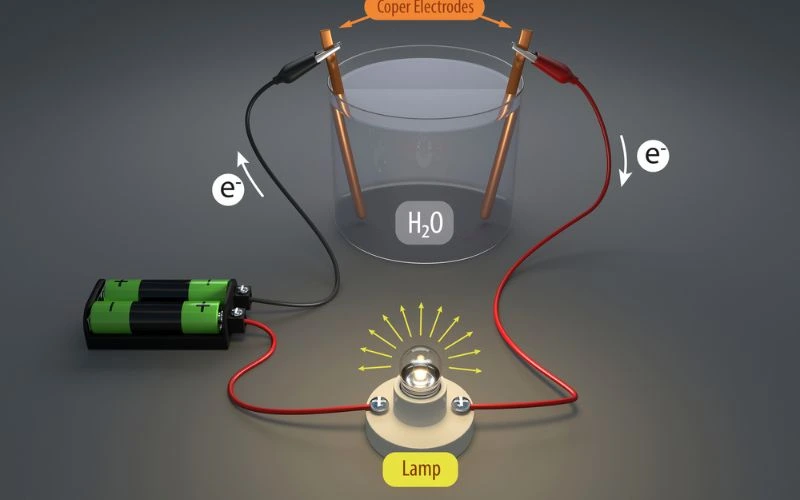
Electrical conductivity is crucial in many aspects of our modern world. It refers to the ability of a material to conduct electric current, allowing the flow of electrons through it. Metals are well-known for their high electrical conductivity due to mobile electrons within their atomic structures. These mobile electrons can easily move through the material when an electric field is applied, enabling the efficient transmission of electrical energy.
Imagine a copper wire connecting the two ends of a circuit. When a voltage is applied at one end, copper’s abundance of free electrons allows them to move freely and carry the electric charge across the wire to power devices or generate useful electrical signals.
We must examine metals’ atomic structure to understand why they are such good conductors. In metallic materials, valence electrons separate from their parent atoms and form what’s known as a “sea of delocalized electrons.” This sea of electrons is not bound to any specific atom, making them highly mobile and able to transfer electrical charge efficiently throughout the material.
However, not all materials exhibit high electrical conductivity like metals. Insulators, for example, have extremely low electrical conductivity because they lack these delocalized electrons. Few free or mobile charges are available for carrying electric current in insulating materials like rubber or plastic.
- According to a study published in Materials Today, silver has the highest electrical conductivity of all elements, measured at approximately 63 x 10^6 Siemens per meter at room temperature.
- As per the research in the Journal of Applied Physics, copper, known for its high conductivity, falls slightly behind silver with an electrical conductivity value of about 59 x 10^6 Siemens per meter.
- In contrast, plastics generally are strong electrical insulators rather than conductors. For example, Teflon’s very low electrical conductivity measures approximately 10^-16 Siemens per meter as per Polymer International in 2020.
How to Measure Electrical Conductivity

Scientists and engineers rely on various measurement techniques to quantify and compare the electrical conductivity of different materials. One common method is measuring resistance, essentially the opposite of conductivity. Resistance is measured in ohms (Ω) and indicates how much a material opposes the flow of electric current.
An ohmmeter or multimeter is the most straightforward way to measure resistance. Applying a known voltage to a material sample and measuring the resulting current flowing through it can calculate the resistance using Ohm’s law (R = V/I), where R is resistance, V is voltage, and I is current.
For instance, if a voltage of 5 volts is applied across a material sample, and the resulting current is measured as 1 ampere, the resistance would be 5 ohms. This value can then be used to infer the conductivity of the material.
However, it’s important to note that measuring electrical conductivity is more complex than just measuring resistance. Factors such as temperature, impurities, and the presence of magnetic fields can significantly affect conductivity values. Therefore, researchers often perform precise measurements while carefully controlling these variables to obtain accurate and reliable results.
In addition to direct measurement techniques like resistance, specialized instruments such as conductivity meters or four-point probe setups offer more accurate ways of determining electrical conductivity. These methods directly measure electrical conductivity in Siemens (S) or micro Siemens (µS) units.
Think of these instruments as powerful magnifying glasses that can zoom in on the behavior of electrons within materials, allowing us to understand their conductivity characteristics with greater precision.
- To measure the electrical conductivity of materials, scientists and engineers commonly use resistance measurements. This is done by applying a known voltage to a material sample and measuring the resulting current flowing through it. However, other factors, such as temperature and impurities, can affect conductivity, so researchers must carefully control these variables to obtain reliable results. Specialized instruments like conductivity meters or four-point probe setups provide more accurate ways of determining electrical conductivity and offer a direct measurement in Siemens or microsiemens units, allowing for a better understanding of a material’s conductivity characteristics.
Comparison between Conductors and Insulators

When exploring the science of electrical conductivity, it is crucial to understand the fundamental differences between conductors and insulators. Conductors are materials that allow electric current to flow easily through them, while insulators impede or prohibit the movement of electric charge. This disparity arises due to variations in their atomic or molecular structures and the behavior of their electrons.
Let’s consider a simple analogy to help visualize this concept. Imagine a group of people trying to move through a crowded city street. In this scenario, conductors would be like wide highways with numerous lanes, allowing smooth and efficient traffic flow. On the other hand, insulators would resemble narrow alleys that force people to walk in single file, leading to congestion and slower movement.
The key factor distinguishing conductors from insulators lies in their ability to facilitate the movement of electrons. In conductors like metals, atoms have loosely held outermost electrons that are not bound strongly to specific nuclei. These “free” or “delocalized” electrons can move more freely within the material, transferring electric charge effectively. As a result, metals exhibit high electrical conductivity.
In contrast, insulators have tightly bound electrons within their atomic structures, making it difficult for electric charge to flow through them. The tight electron-nucleus bond prevents free electron movement and inhibits conductivity. Examples of common insulators include rubber, plastic, wood, and glass.
It’s important to note that there are also materials known as semiconductors that fall between conductors and insulators in terms of electrical conductivity. Semiconductors have properties that allow them to conduct electricity under specific conditions but with less efficiency than conductors.
Now that we have discerned the distinction between conductors and insulators let us delve into the significant role metals play in electrical conductivity.
Role of Metals in Electrical Conductivity

Metals are renowned for their exceptional ability to conduct electricity, which makes them indispensable in various industries. This remarkable property stems from the unique arrangement of electrons within metal atoms and the characteristics of their electron cloud.
In metals, valence electrons – the outermost electrons involved in bonding – are not confined to a single atom but instead form a shared electron “sea” that permeates the entire crystal lattice structure. These delocalized electrons are mobile and can move through the material freely when influenced by an electric field.
Metals’ high electrical conductivity can be attributed to this sea of mobile electrons. When an electric potential difference is applied across a metal, the delocalized electrons respond by flowing in a coordinated manner, carrying electric charge throughout the material with minimal resistance.
The presence of this electron sea gives metals several distinct properties. Firstly, it allows for efficient electric charge transfer from one point to another, making metals ideal for creating electrical circuits. Secondly, metals possess low electrical resistance due to the ease with which electrons can move through them. This low resistance reduces energy losses as heat during conduction.
It’s worth noting that metals vary in their electrical conductivity depending on factors like temperature, purity, and alloy composition. Some of the most conductive metals include silver, copper, and aluminum, which find extensive use in electrical wiring, power transmission lines, and electronic components.
For instance, imagine your smartphone without its intricate circuitry of copper wires connecting various components. Without metals’ excellent electrical conductivity, our modern technology would not function as efficiently as today.
As we have uncovered the valuable role played by metals in electrical conductivity and how they facilitate efficient charge transfer, let us now explore their practical applications across diverse industries.
Practical Applications in Various Industries

The science of electrical conductivity plays a pivotal role in numerous industries, enabling advancements and innovations that enhance our daily lives. Let’s explore some practical applications of electrical conductivity across various sectors.
Electrical conductivity is essential for the electronics industry’s functioning devices, such as smartphones, computers, and televisions. Conductive materials like copper, aluminum, and gold are utilized in circuits and wiring to ensure efficient flow of electric current. These devices could not transmit data or perform their intended functions without electrical conductivity.
The automotive industry heavily relies on electrical conductivity for multiple aspects. Electric vehicles require conductive materials to enable power transmission and charging systems. Additionally, advanced sensor technologies utilize conductive materials to facilitate accurate measurements and diagnostics in modern cars. The integration of electrical conductivity helps enhance safety, efficiency, and performance in automotive applications.
Aerospace is another field where electrical conductivity is crucial. Materials with high electrical conductivity are employed in aircraft wiring systems to ensure reliable communication between different components. These conductive materials also play a vital role in lightning strike protection, protecting the aircraft from damage during adverse weather conditions. Furthermore, electrical conductivity is utilized in satellite technology to enable uninterrupted communication signals between Earth and space.
In the medical industry, electrical conductivity finds application in various areas, such as diagnostic equipment, implantable devices, and electrostimulation therapies. Conductive materials like silver or carbon are used in electrodes for capturing bioelectric signals for diagnostic purposes. Implantable devices such as pacemakers rely on electrical conductivity to deliver precise electric impulses for heart rate regulation. Electrotherapy techniques use controlled electrical currents to stimulate muscles and nerves for rehabilitation.
Moreover, electrical conductivity is vital in renewable energy generation through solar panels and wind turbines. Conductive materials like silicon or indium tin oxide enable the conversion of sunlight into electricity by facilitating the flow of electrons. Similarly, wind turbines utilize conductive materials to transmit the generated electricity efficiently.
These are just a few examples showcasing the wide-ranging applications of electrical conductivity across industries. The significance of this scientific principle cannot be overstated, as it enables technological advancements that drive progress in our modern world.
Now that we have examined practical electrical conductivity applications, let’s explore innovative material development to enhance conductivity further.
Innovative Material Development for Enhanced Conductivity

Innovators and researchers constantly strive to develop materials with improved electrical conductivity characteristics. This pursuit leads to groundbreaking advancements and new possibilities for various industries. Let’s explore some innovative approaches to material development focused on enhancing conductivity.
One such area of exploration involves the utilization of conductive polymers and additives. These materials offer unique properties compared to traditional conductors like metals. Conductive polymers provide design flexibility, lower costs, greater density, and dimensional stability compared to heavy metal and ceramic parts. By incorporating conductive polymers into electronic devices, researchers aim to enhance performance while reducing weight and production costs.
Nanomaterials also significantly improve electrical conductivity. For instance, graphene, a single layer of carbon atoms arranged in a hexagonal lattice, exhibits extraordinary electrical conductivity due to its unique atomic structure. Researchers are exploring methods to incorporate graphene into various applications, such as batteries, supercapacitors, and flexible electronics, to enhance their performance and efficiency.
Another area of interest lies in exploring carbon nanotubes (CNTs) for their exceptional electrical conductivity properties. CNTs are cylindrical structures composed of rolled-up carbon sheets with incredibly high aspect ratios. They exhibit excellent electrical conductivity along with remarkable mechanical strength. Incorporating CNTs into composites or coatings can enhance their electrical properties while maintaining other desirable physical characteristics.
Imagine a future where electronics are more powerful and significantly lighter, thanks to the integration of conductive polymers or nanomaterials like graphene or carbon nanotubes. Such innovative material developments have the potential to revolutionize various industries, enabling the creation of more advanced and efficient technologies.
Having explored innovative material development strategies for enhanced conductivity, we gained insight into an important aspect – understanding the impact of temperature, impurities, and magnetic fields on conductivity.
Impact of Factors such as Temperature, Impurities, and Magnetic Fields on Conductivity

Various factors, such as temperature, impurities, and magnetic fields, greatly influence a material’s electrical conductivity. Understanding how these factors affect conductivity is crucial in many industries, including electronics and energy production.
Temperature
One of the primary factors that affects electrical conductivity is temperature. As the temperature of a material increases, its conductivity generally decreases. This is because an increase in temperature leads to increased thermal vibrations of atoms or ions in the material, which can disrupt the flow of electrons. In metals, for example, the increased thermal vibrations cause more frequent collisions between electrons and lattice ions, resulting in higher resistance and reduced conductivity.
Think of it like navigating a crowded room. When the room is cool and calm, moving around freely is easier. However, as more people start moving and colliding with one another due to higher temperatures, it becomes difficult to navigate through the crowd smoothly.
Impurities
Impurities in a material can also significantly impact its electrical conductivity. Impurities can introduce defects or alter the material’s crystal structure, affecting the free movement of charge carriers (such as electrons). These defects act as scattering sites for charge carriers, leading to increased resistance and reduced conductivity. The effect of impurities on conductivity depends on their concentration and nature.
| Material | Conductivity Without Impurities | Conductivity With Impurities |
| Copper | High | Reduced |
| Silicon | Low | Highly Affected |
Consider a smooth highway versus a road with obstacles like potholes or traffic cones. A clean street allows for smooth flow and faster travel (higher conductivity), while obstacles hinder movement and slow down traffic (reduced conductivity).
Magnetic Fields
Another factor that can influence electrical conductivity is the presence of magnetic fields. When a material is subjected to a magnetic field, it can induce an electromagnetic force on the charge carriers, which affects their motion. This force can alter the paths of charge carriers, leading to changes in conductivity.
Imagine walking in a straight line while someone pulls you sideways with a magnet. It becomes challenging to maintain your intended trajectory, similar to how charge carriers in a material experience deviations due to a magnetic field.
Understanding the impact of temperature, impurities, and magnetic fields on conductivity provides valuable insights into how materials behave under different conditions. It also emphasizes the importance of controlling these factors in various applications, such as electronic devices or power transmission systems.