Unraveling the Star Delta Connection in Motor Control Systems
In the dynamic world of electrical engineering, the star delta connection is a cornerstone in the efficient and controlled operation of electric motors, particularly in industrial settings. This article has unraveled the intricacies surrounding the star delta connection, elucidating its significance, applications, advantages, and the technical details involved in its implementation. From the nuanced process of motor starting to the distinct characteristics of star and delta connections, this comprehensive exploration aims to equip engineers and enthusiasts with a profound understanding of a technique that seamlessly balances power efficiency with operational reliability.
What is a Star Delta Connection?

A star-delta connection, also known as a wye-delta connection, is a method used to connect electric motors to power sources. This technique involves two main configurations – the star (Y) and delta (Δ). The motor is initially connected in a star configuration for starting, and once it gains sufficient speed, it is switched to a delta configuration for running.
Star Connection
The star connection, also known as the Y connection, is a configuration where three winding ends are connected to a common point, forming the shape of a star. In this arrangement, each winding is connected to one power supply phase. The common point is then connected to the neutral or ground, depending on the system.
Characteristics of Star Connection
- Balanced Voltages: In a star connection, the voltages across each winding are balanced, ensuring stable operation.
- Lower Line Voltage: The line voltage in a star connection is lower than the phase voltage by a factor of √3, making it suitable for applications with lower voltage requirements.
- Reduced Starting Torque: Star-connected motors typically exhibit lower starting torque than delta-connected motors.
Delta Connection
The delta connection, also known as the Δ connection, connects the three winding ends in a closed loop, resembling the Greek letter delta (Δ). In this configuration, each winding is connected in series with the next, creating a closed circuit without a neutral connection.
Characteristics of Delta Connection
- Higher Line Voltage: Delta-connected motors have a higher line voltage than the phase voltage by a factor of √3, making them suitable for applications requiring higher voltage.
- Increased Starting Torque: Delta-connected motors generally exhibit higher starting torque, making them suitable for applications with high starting load requirements.
- No Neutral Connection: Unlike the star connection, the delta connection does not involve a neutral connection.
Difference between Star and Delta Connection
Understanding the differences between star and delta connections is crucial for selecting the appropriate configuration based on specific application requirements.
| Characteristic | Star Connection | Delta Connection |
|---|---|---|
| Voltage Configuration | Balanced across phases | Higher line voltage |
| Line Voltage | Lower than phase voltage by √3 | Higher than phase voltage by √3 |
| Starting Torque | Lower | Higher |
| Neutral Connection | Involves a neutral connection | No neutral connection |
| Suitable Applications | Lower voltage requirements | Higher voltage requirements |
Delta to Star Transformation
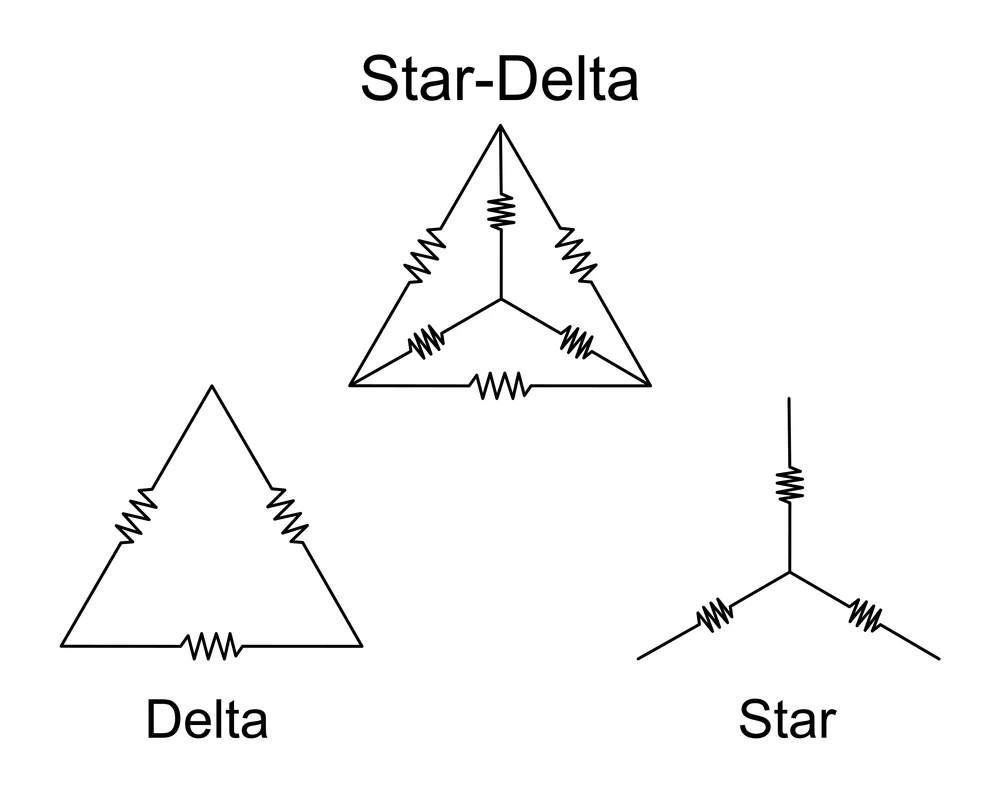
The delta-to-star transformation, also known as delta-to-star conversion or reconfiguration, is a technique used to convert a delta-connected system to a star-connected system. This transformation is often required in electrical systems for various reasons, such as changing load requirements or motor characteristics.
Steps for Delta to Star Transformatio
- Identify the three winding ends in the delta configuration.
- Connect one end of each winding to form the star point.
- Connect the other ends of the windings to the power supply phases.
Star to Delta Transformation
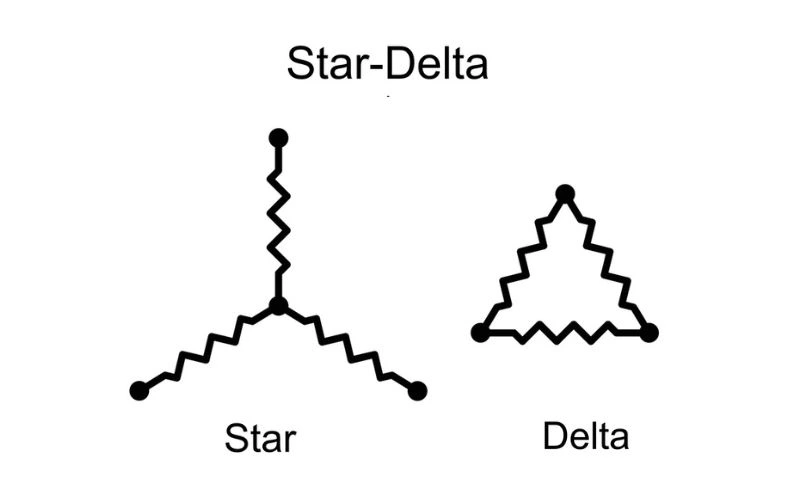
Conversely, the star-to-delta transformation involves converting a star-connected system to a delta-connected system. This transformation is useful when load characteristics or voltage requirements change.
Steps for Star to Delta Transformation:
- Identify the common star point and disconnect it.
- Connect the free ends of the windings to form a closed delta loop.
- Connect the line conductors to the newly formed delta configuration.
Advantages of Star Delta Connection
Implementing a star-delta connection offers several advantages, making it a popular choice in electrical engineering.
Reduced Starting Current
One of the primary benefits of the star delta connection is the significant reduction in starting current. This is particularly advantageous in situations where a sudden surge in current can lead to voltage drops or impact other connected devices.
Smooth Motor Starting
The star delta connection ensures a smooth and controlled start for electric motors. The gradual transition from star to delta configuration minimizes mechanical stress on the motor, extending its operational life.
Energy Efficiency
Employing a star-delta connection improves energy efficiency during the starting phase. Lower starting currents reduce power consumption, contributing to overall energy conservation.
Disadvantages of Star Delta Connection
The star delta connection does come with its share of drawbacks. First, it involves a more complex wiring setup, which can increase installation time and costs. Secondly, during startup, the motor generates reduced torque due to the lower current, potentially impacting its ability to initiate heavy loads. A star-delta starter is also required, adding extra equipment costs and maintenance considerations.
Complex Wiring
Implementing a star-delta connection requires a more complex wiring setup compared to a direct-on-line (DOL) connection, which can increase installation time and cost.
Reduced Torque at Startup
While the reduced starting current benefits the electrical supply, it also means that the motor generates lower torque during startup. This can affect the motor’s ability to start heavy loads.
Additional Equipment
A star delta starter is required to automatically switch the motor’s connection from star to delta. This additional equipment adds to the overall system cost.
Motor Control Strategies
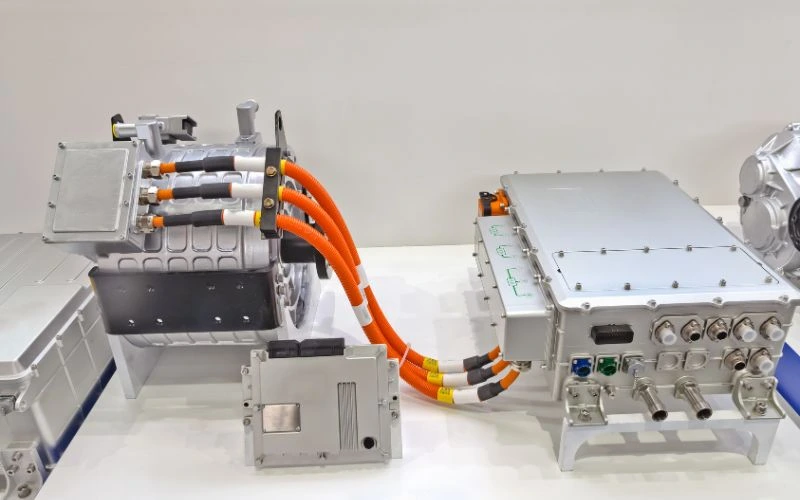
In modern industries, star delta connections synergize with advanced strategies like Variable Frequency Drives (VFDs) for precise motor speed control. VFDs adjust frequency and voltage, enhancing energy efficiency and process control. Soft starters gradually increase motor speed, reducing stress on components during startup.
Variable Frequency Drives (VFDs)
Integrating Variable Frequency Drives (VFDs) with star delta connections has become increasingly prevalent in modern industrial settings. VFDs allow for precise motor speed control by adjusting the frequency and voltage supplied to the motor. This synergy enhances energy efficiency and enables better control over processes, making it a popular choice for industries striving for automation and optimization.
Soft Starters
Star delta connections are also compatible with soft starters, which facilitate a gradual increase in motor speed by controlling the voltage during startup. Soft starters minimize electrical and mechanical stress, reducing wear and tear on the motor components. This prolongs the motor’s lifespan and contributes to a more reliable and cost-effective operation.
Conclusion
FAQs
1. Why is a star-delta connection used for motor starting?
In a star-delta connection, the motor starts in a star configuration, drawing a lower current during startup. This reduces the initial load on the power supply, preventing voltage dips and ensuring a smooth start for the motor.
2. What are the key advantages of implementing a star-delta connection?
The primary advantages include reduced starting current, smooth motor starting, and improved energy efficiency. These factors contribute to the extended operational life of electric motors and overall system reliability.
3. Are there any limitations to using a star-delta connection?
While highly effective, a star-delta connection may not suit all motors. It is typically employed when reduced starting current and gradual acceleration are critical. The transition from star to delta configuration should also be carefully controlled to avoid operational issues.