Exploring the Single Line-to-Ground Fault Phenomenon
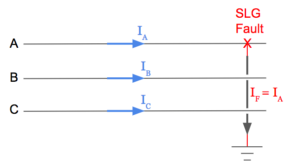
Consider a 3-phase system with an earth-neutral system. Let a single line to ground fault occur on the red phase, as shown in the figure below. It is clear from this figure that:


 Understanding Single Line-to-Ground Fault
 Understanding Single Line-to-Ground Fault
A Single Line-to-Ground Fault occurs when one of the power lines comes into direct contact with the ground or any other low-impedance path. This creates an unintended current flow from the power line to the ground, bypassing the electrical load and protective devices. SLGF is also known as a ‘ground fault’ or ‘earth fault.’
Single Line to Ground Fault Current
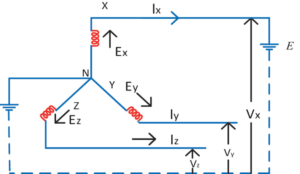
 will be derived. Let
  be the generator’s positive, negative, and zero sequence impedances, respectively. Co, consider the closed-loop NREN; as the sequence currents produce voltage drops due to their respective sequence impedances only, we have,
Explanation of experiment for Single Line to Ground Fault


It may be noted here that if the neutral is not grounded, then zero sequence impedance will be infinite, and the fault current is zero. This is expected because no path exists for the fault current flow.
Phase Voltages at fault


Summary of results

Causes of Single Line-to-Ground Fault
Several factors can lead to SLGF, including:
Insulation Failure
Deterioration, aging, or damage to the insulation of electrical conductors can cause a line-to-ground fault. This can happen due to environmental conditions, physical wear and tear, or excessive electrical stress.
Equipment Failure
Faulty electrical equipment, such as transformers, circuit breakers, or motors, may cause an accidental connection between a power line and the ground.
External Factors
Environmental factors like lightning strikes, fallen conductive objects, or excavation equipment accidents can also trigger SLGF.
Effects of Single Line-to-Ground Fault
SLGF can have several serious consequences:
Disruption of Power Supply
The fault can result in power outages, impacting homes, businesses, and critical infrastructure.
Fire Hazard
The fault current can generate excessive heat, potentially leading to electrical fires and extensive property damage.
Electrical Hazards
The current condition of the grounding system poses a significant risk of electric shock to nearby personnel.
Detecting and Locating SLGF

Electrical engineers and system operators use specialized protection relays and equipment to detect and locate ground faults. High-impedance grounding systems make finding the spot easier as fault currents are limited, while low-impedance systems can make fault detection more challenging.
Mitigation and Prevention
To mitigate the impact of SLGF, several strategies are employed:
Ground Fault Protection
Ground fault protection devices, such as ground fault circuit interrupters (GFCIs) and differential relays, are installed to detect and disconnect power in case of a ground fault.
Routine Maintenance
Regular inspection and maintenance of electrical equipment and insulation are essential to identify potential faults before they become critical.
Grounding Systems
Proper electrical system grounding helps divert fault currents safely and effectively.
Importance of Electrical Safety

SLGF emphasizes the importance of electrical safety in both residential and industrial settings. It underscores the need for continuous monitoring, inspection, and adherence to electrical codes and standards to prevent accidents and protect personnel and property.
Conclusion
Single Line-to-Ground Faults are common electrical problems with severe consequences if not detected and addressed promptly. Understanding the causes, effects, and mitigation measures of SLGF is essential for ensuring a safe and reliable electrical infrastructure. Promoting electrical safety awareness and implementing proper protection mechanisms can minimize the risk of ground faults and create a safer environment for everyone.
FAQs
What is a Single Line-to-Ground Fault?
A Single Line-to-Ground Fault (SLG fault) occurs when one conductor of a power system makes an unintended connection with the ground. This fault is one of the most common in power systems and can occur in overhead and underground transmission lines.
Key Characteristics:
- Fault Path: The fault creates a path between one phase conductor and the ground, allowing current to flow through the ground or any connected grounded structures.
- Voltage Imbalance: The SLG fault causes an imbalance in the voltage distribution across the system, leading to further complications if not properly managed.
What causes a Single Line-to-Ground Fault?
Single Line-to-Ground Faults can occur due to various factors, including:
- Environmental Factors:
- Cause: Lightning strikes, strong winds, or heavy rain can damage insulation or cause conductors to contact the ground, leading to an SLG fault.
- Examples: Lightning hitting a transmission line or a tree branch falling on a power line during a storm.
- Insulation Failure:
- Cause: Over time, the insulation on conductors can degrade due to aging, thermal stress, or mechanical damage, leading to a breakdown and contact with the ground.
- Examples: Cracked or worn-out insulation in cables or wires, leading to exposure and ground contact.
- Physical Damage:
- Cause: Accidental physical damage to power lines, such as vehicle collisions with poles, excavation work, or falling objects, can cause a conductor to touch the ground.
- Examples: A construction crew accidentally cutting an underground cable or a vehicle hitting a utility pole.
- Animal Interference:
- Cause: Animals like birds or squirrels can cause SLG faults by contacting live conductors and grounded structures.
- Examples: A bird bridging a conductor and a grounded part of a power line, causing a fault.
What are the effects of a Single Line-to-Ground Fault on a power system?
A Single Line-to-Ground Fault can have several significant effects on a power system:
- Voltage Imbalance:
- Effect: The fault causes an imbalance in the system’s phase voltages, which can lead to overvoltages in the unfaulted phases. This imbalance can stress equipment and lead to further faults or damage.
- Increased Ground Currents:
- Effect: The fault causes a large current to flow through the ground or grounding system. This can result in excessive heating, damage to grounding systems, or even ground potential rise, posing a safety hazard.
- System Instability:
- Effect: The fault can cause fluctuations in the power system, potentially leading to oscillations or instability, particularly if the fault is not cleared promptly.
- Damage to Equipment:
- Effect: Prolonged exposure to the fault can cause thermal or electrical damage to transformers, generators, and other equipment connected to the system, potentially leading to expensive repairs or replacements.
- Service Interruption:
- Effect: Depending on the severity and location of the fault, it can lead to power outages or customer service interruptions, particularly if the fault is not isolated quickly.
How are Single Line-to-Ground Faults detected and protected against?
Detecting and protecting against Single Line-to-Ground Faults is crucial for maintaining the safety and reliability of power systems:
- Ground Fault Relays:
- Protection: Ground fault relays are designed to detect ground faults by measuring the difference between the currents in the three-phase conductors. The relay triggers protective devices to isolate the affected section if a fault is detected.
- Neutral Grounding:
- Protection: Properly grounding the system’s neutral point helps limit the magnitude of fault currents, reducing the potential damage from an SLG fault. Grounding methods include solid grounding, resistance grounding, and reactance grounding.
- Circuit Breakers and Fuses:
- Protection: Circuit breakers and fuses interrupt the flow of fault current. These devices automatically disconnect the affected circuit when a ground fault is detected to prevent further damage.
- Isolation Transformers:
- Protection: Isolation transformers can limit the effects of ground faults by isolating sensitive equipment from the faulted section of the power system.
- Surge Protectors:
- Protection: Surge protectors help protect equipment from voltage spikes caused by SLG faults, especially those induced by lightning or other transient events.
- Ground Fault Monitoring:
- Protection: Continuous ground fault monitoring systems can detect and alert operators to ground faults as they occur, allowing for quick identification and response to minimize damage and service interruptions.
By understanding the causes and effects of Single Line-to-Ground Faults, power system operators can implement effective protection strategies to mitigate risks and ensure the safety and reliability of the electrical grid.