MHD Power Generation: Principles, Benefits, and Applications
When you think about the future of power generation, MHD technology likely isn’t the first thing that comes to mind, yet it holds incredible promise. By turning superheated plasma directly into electricity using magnetic fields, MHD power generation bypasses the need for traditional mechanical components, offering efficiency levels of up to 90%. This could mean cleaner air and fewer pollutants. However, the journey toward widespread adoption is riddled with obstacles like material constraints and high initial costs. So, what makes this technology worth considering despite these challenges? Let’s explore further.
Key Takeaways
- MHD power generation converts thermal energy directly into electricity using highly conductive ionized gas, achieving up to 90% efficiency.
- The technology eliminates mechanical components, relying on Faraday’s law of electromagnetic induction for electric current generation.
- Types of MHD generators include Faraday, Hall, and Disc generators, each utilizing different methods for efficient power production.
- Environmental benefits include reduced pollutants and cleaner air, but high initial costs and material challenges limit economic feasibility.
- MHD systems face obstacles like electrothermal instability and the need for durable, high-temperature materials to ensure reliability and efficiency.
History and Development
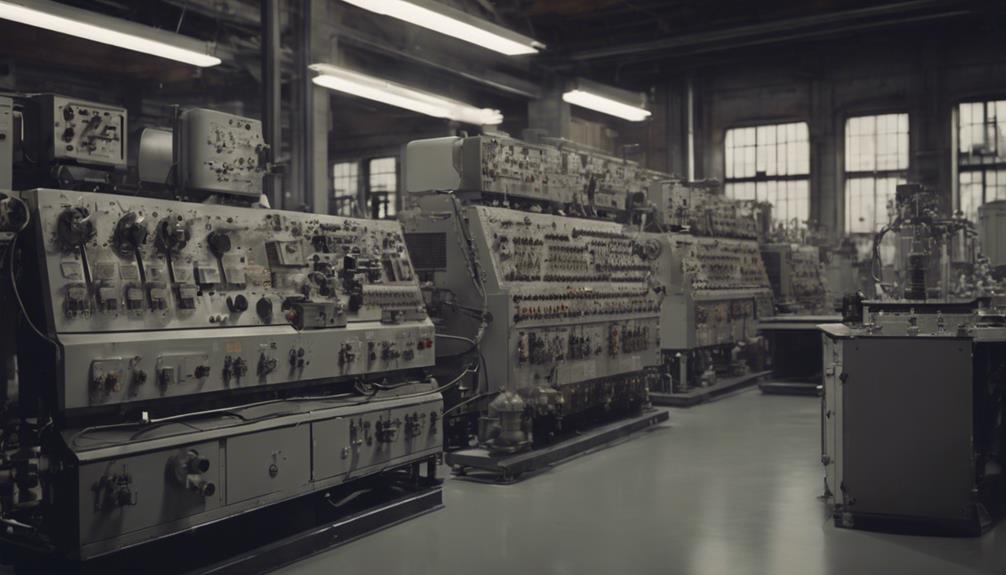
1832 Michael Faraday‘s experiment with the river Thames marked the beginning of magnetohydrodynamic (MHD) power generation. By measuring the current induced by the river’s flow in Earth’s magnetic field, Faraday laid the groundwork for this innovative technology. The concept of MHD power generation evolved greatly over time, driven by its potential to revolutionize how we convert heat into electrical energy.
MHD technology harnesses the movement of plasma—a highly conductive, ionized gas—under high temperatures, sometimes reaching up to 3000 K. Unlike traditional methods that rely on mechanical components, MHD eliminates these steps, directly converting thermal energy into electrical power. This approach increases efficiency, often up to 90%, and enhances reliability by reducing mechanical wear and tear.
Faraday’s early insights were pivotal, but it wasn’t until extensive research in the 20th century that MHD power generation gained broader acceptance. Researchers recognized that using hot conductive plasma in a magnetic field could efficiently generate electrical power without moving parts. This resulted in rapid power output and cost-effectiveness, setting MHD apart from conventional power generation methods.
The development of MHD technology marks a significant milestone in the quest for efficient and sustainable energy solutions.
Working Principle
Imagine harnessing the power of a star; that’s fundamentally what MHD power generation does by converting the energy of superheated plasma directly into electricity. MHD stands for magnetohydrodynamics, which utilizes a conductive plasma’s thermal or kinetic energy. This plasma is then directed through a magnetic field, a pivotal component of the system.
The working principle is based on Faraday’s law of electromagnetic induction, which states that a voltage is induced in a conductor moving relative to a magnetic field. In MHD generators, the conductive plasma acts as the moving conductor. Electric currents are generated and captured as they flow through the magnetic field, producing electricity without traditional mechanical parts.
Efficiency is a standout feature of MHD power generation, often reaching up to 90%. This high efficiency is partly due to eliminating mechanical parts, enhancing the system’s operational reliability.
Operational temperatures can soar as high as 3000 K. MHD technology maximizes efficiency by directly converting heat to electricity to achieve peak performance. It offers a reliable alternative to conventional power generation methods.
Types of MHD Generators
Understanding the types of MHD generators helps you grasp the various methods employed to harness plasma’s energy for electricity. In MHD systems, different designs, such as the Faraday generator, Hall generator, and Disc generator, play pivotal roles.
The Faraday generator uses a wedge-shaped tube to induce voltage in a conductive fluid, following Faraday’s law of electromagnetic induction. Here, the Lorentz Force acts on the charged particles in the plasma, creating an electric current. Material challenges arise due to the high-temperature environment and fuel compatibility, which must be addressed for efficient energy conversion.
The Hall generator, on the other hand, employs segmented electrodes to manage current flow, minimizing losses via the Hall effect. This method enhances efficiency by reducing resistance and improving current distribution across the MHD system.
Then, there’s the Disc generator, which utilizes circular Helmholtz coils to generate power more effectively. This design aims for efficient magnetic field distribution and energy conversion, making it a robust option for magnetohydrodynamic power generation.
Each type of MHD generator has unique advantages and material challenges. Still, all contribute significantly to the field of energy conversion by leveraging the principles of Faraday’s law and the Lorentz Force.
Efficiency and Design Challenges
Achieving high efficiency in MHD power generation hinges on overcoming significant design challenges and material limitations. MHD generators can reach impressive energy efficiency levels, with closed-cycle disc systems achieving up to 22% and coal-fired plants reaching 60%. However, these systems face obstacles, such as electrothermal instability and needing materials that can withstand high temperatures.
Material selection is pivotal for ensuring durability and efficiency. You need components that can handle extreme heat without degrading. Additionally, magnet refrigeration is essential to maintain the performance of the superconducting magnets used in MHD generators.
Another hurdle is the lack of large-scale commercial testing and a proven reliability track record. This absence has slowed the adoption of MHD technology despite its high potential and environmental benefits. Moreover, the initial lifecycle costs are significant, making it a less attractive option for immediate investment.
Here’s a quick snapshot of the challenges and considerations:
| Challenge | Importance | Impact |
|---|---|---|
| Electrothermal Instability | Affects operational stability | Requires advanced control systems |
| Material Selection | Ensures durability at high temps | It involves costly, high-performance materials |
| Magnet Refrigeration | Maintains magnet efficiency | Adds complexity and cost |
| Commercial Testing | Proves reliability and efficiency | Limited data hinders adoption |
Addressing these challenges can reveal the full potential of MHD power generation.
Environmental and Economic Impact
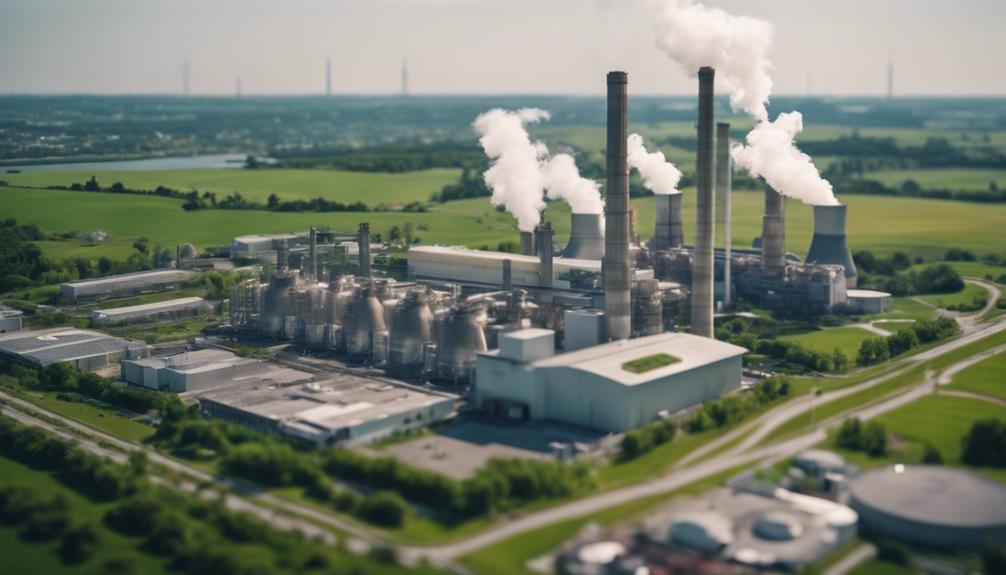
MHD power generation promises to reduce environmental pollution while offering high efficiency, but its economic feasibility remains challenging. By achieving energy efficiency levels of up to 65%, MHD technology notably lowers the environmental impact compared to traditional power plants. Fewer pollutants are emitted, contributing to cleaner air and a healthier ecosystem.
However, the economic challenges of MHD power generation can’t be overlooked. High lifecycle costs and initial investment costs are major barriers to its widespread adoption. The materials required for MHD technology must withstand extreme conditions, raising concerns about material compatibility and durability. These factors drive up the overall expenses, making it less attractive financially.
Additionally, efficiency concerns, particularly in maintaining consistent performance over time, add to the economic hurdles. Despite the potential for high efficiency and reduced pollutants, the high lifecycle costs and significant initial investment make MHD technology a difficult sell in the current market.
Conclusion
You’ve learned that MHD power generation is a revolutionary technology with high efficiency and environmental benefits. However, it’s not without challenges like material limitations and high costs.
Despite these hurdles, the potential for cleaner air and reduced pollutants makes it worth considering. By addressing the current issues, MHD power generation could become a key player in the future of sustainable energy.
So, stay informed and keep an eye on this promising technology!
FAQs
What is MHD power generation?
MHD (Magnetohydrodynamic) power generation generates electricity by using a conductive fluid, such as a plasma or liquid metal, moving through a magnetic field. This interaction generates an electric current without the need for mechanical parts.
What are the benefits of MHD power generation?
MHD power generation offers several benefits, including higher efficiency, reduced mechanical wear and tear due to the lack of moving parts, and the potential for lower environmental impact. It also allows for direct conversion of thermal energy to electrical energy.
Where is MHD power generation used?
MHD power generation is primarily used in experimental and specialized applications, such as space propulsion systems and research facilities. While it has potential for broader use, commercial adoption is limited due to technical and economic challenges.