Factors to be considered for electrical machine design
The design of electrical machines is a complex and critical process that involves not only the meticulous evaluation of circuits, systems, and control mechanisms but also the careful consideration of manufacturing, testing, and troubleshooting procedures. Engineers must approach these aspects with precision to create a successful electrical machine design, whether motors, generators, transformers, or other electromagnetic devices. Furthermore, the construction and installation processes must be carried out with an eye for detail, ensuring safety standards are consistently met. These multifaceted tasks, when executed properly, guarantee optimal performance, efficiency, and reliability in the realm of electrical machinery.
Factors in Electrical Machine Design
The basic elements of all magnetic attraction equipment are the field and coil winding supported by dielectric or insulation, a cooling system, and mechanical components. Therefore, the factors for thought within the electrical machine design are;
Magnetic circuit or the flux path
Ought to establish the needed quantity of flux exploitation minimum emf. The core losses ought to be less.

Here are the key factors to be considered for the magnetic circuit or the flux path in electrical machine design presented :
Core Material Selection
- Choose materials with high magnetic permeability and low hysteresis and eddy current losses.
- Common materials include silicon steel, iron, ferrites, and soft magnetic composites.
Magnetic Path Length
- Minimize the length of the magnetic path to reduce reluctance.
- Lower reluctance allows for better magnetic flux flow, enhancing the machine’s magnetic performance.
Cross-Sectional Area
- Optimize the cross-sectional area to increase the magnetic flux carrying capacity.
- A larger cross-sectional area reduces magnetic reluctance and allows for higher flux density.
Magnetic Saturation
- Avoid operating near the saturation point of the core material to prevent excessive losses.
- Magnetic saturation occurs when the flux density reaches its maximum limit.
Leakage Flux Control
- Minimize leakage flux to improve machine efficiency.
- Proper core shaping, sizing, and magnetic shields help reduce magnetic line leakage.
Cogging and Ripple Torque
- Address cogging torque and torque ripple in certain machines, such as permanent magnet motors.
- Proper magnetic circuit design can mitigate these effects and improve motor performance.
Electromagnetic Analysis
- Use advanced electromagnetic analysis techniques like finite element analysis (FEA).
- FEA allows simulation and optimization of the magnetic circuit’s performance.
Electric circuits or windings
It ought to guarantee that the needed voltage is evoked with no quality in the winding arrangement. The copper losses ought to be less.
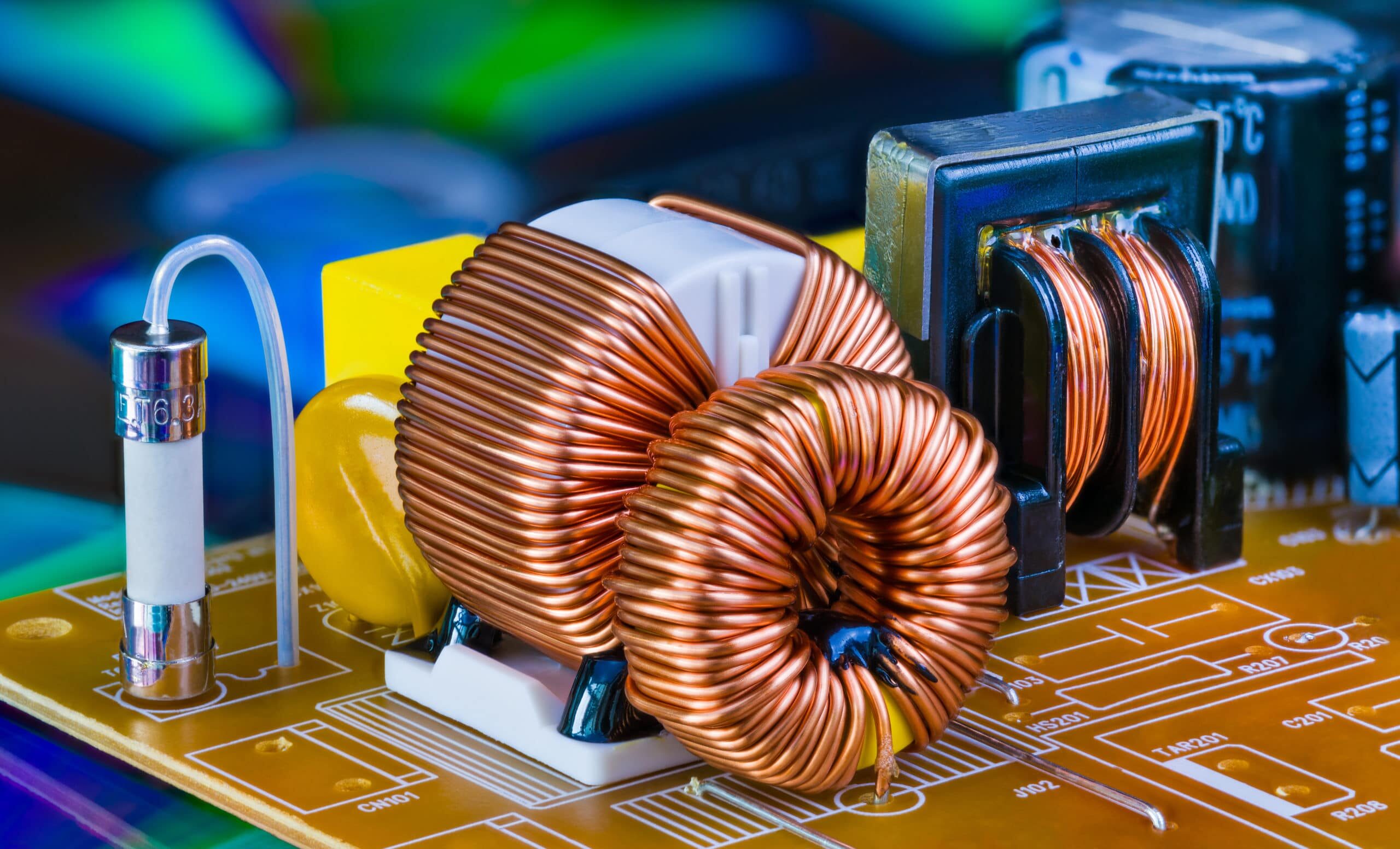
- Coil Winding Design: Determine turns, wire gauge, and layout for optimal performance.
- Winding Material and Insulation: Choose suitable materials and insulation to prevent short circuits.
- Winding Arrangement: Select appropriate patterns like concentric or lap windings.
- Cooling of Windings: Implement effective cooling mechanisms to dissipate heat.
- Electrical Losses: Minimize losses by using suitable materials and design.
- Voltage and Current Ratings: Determine appropriate ratings based on power requirements.
- Short Circuit and Overload Protection: Incorporate protective mechanisms.
- EMI Mitigation: Implement measures to reduce electromagnetic interference.
- Winding Manufacturing and Assembly: Consider ease of production and quality
Machine Parts in Electrical Machine Design
The art of prosperous design lies not solely in partitioning the conflict for the area between iron, copper, insulation, and fluid but in improving the production and operative and maintenance charges.
- Stator: Stationary part housing coils for generating the magnetic field.
- Rotor: Rotating part interacting with the magnetic field to produce mechanical output.
- Windings: Conductive coils carrying the current to generate the magnetic field.
- Core: Laminated steel provides a low-reluctance path for magnetic flux.
- Bearings: Support rotor shaft and reduce friction during rotation.
- Shaft: Transfers mechanical power to external devices.
- Cooling System: Dissipates heat to maintain safe operating temperatures.
- Frame and Housing: Structural enclosure protecting internal components.
- Terminal Box: Enclosure for external electrical connections.
- Slip Rings or Commutators: Transfer electrical power in certain machines.
- Brushes: Maintain electrical contact in brushed machines.
- Poles: Concentrate magnetic field in machines with electromagnets.
- End Bells: Coverings enclosing the stator and rotor.
These components contribute to electrical machines’ performance, efficiency, and reliability.
Commutation in DC Machine
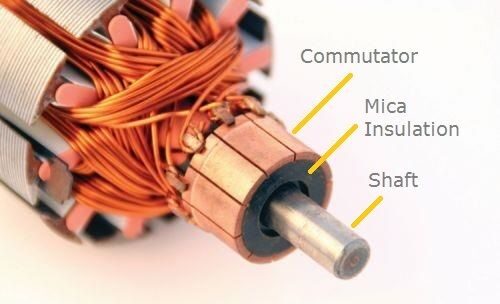
Commutation in DC machines is the process of transferring current between the stationary and rotating parts. It ensures smooth current flow and proper operation using brushes and a commutator. Effective commutation minimizes sparking and ensures reliable performance.
Role of Commutator and Brushes
- In DC machines, the rotor consists of a cylindrical core with coils of wire wound around it, forming the armature winding.
- The commutator is a segmented cylindrical device mounted on the rotor shaft, providing electrical connections to the armature winding.
- Carbon brushes press against the commutator segments, maintaining electrical contact with the rotating armature.
Process of Commutation
- As the rotor rotates, the coils of the armature winding cut across the magnetic field created by the stator (field winding or permanent magnets).
- The interaction between the magnetic field and the armature winding induces a voltage in the coils, leading to current flow through the armature winding.
- As a coil moves from one magnetic pole to another, the direction of current in that coil must be reversed to maintain continuous rotation.
Commutator Segments and Polarity
- The commutator segments are made of a good electrical conductor (usually copper) and are insulated from each other.
- Coil sides.
- The polarity of the commutator segments changes as the rotor rotates, ensuring the reversal of the current direction in the armature coils.
Brush-Commutator Interaction
- The carbon brushes maintain contact with the commutator segments as the rotor rotates.
- As a coil approaches a brush, the current flow switches to the meeting that maintains contact with the commutator segment.
- As the coil moves away from the brush, the current is disconnected, and the wave becomes disconnected from the power source.
Challenges in Commutation
- Commutation is not entirely instantaneous, and time is required for the current reversal.
- If commutation is not smooth, arcing and sparking can occur, leading to brush and commutator wear and decreased machine efficiency.
- Factors affecting commutation quality include brush quality, commutator condition, and coil design.
Improving Commutation
- Proper brush selection and maintenance are essential to ensure good electrical contact and minimize sparking.
- Regular inspection and maintenance of the commutator surface help prevent uneven wear and maintain commutation efficiency.
Additional Commutation Considerations
The factors, except for the on top of that, needs to be thought of are
- Limitations in design (saturation, current density, insulation, temperature rise, etc.)
- Customer’s desires
- National and international standards
- Convenience in line and transportation
- Maintenance and repairs
- Environmental conditions etc.
Related Article:
FAQs on Electrical Machines Design
What are the key factors to consider for electrical machine design?
Factors such as efficiency, torque, stator and rotor specifications, number of poles, and type of application play crucial roles in electrical machines’ design. Additionally, engineers must analyze various technologies and methods to ensure optimal product performance.
How can students enhance their understanding of electrical machine design?
Students interested in electrical machine design can explore various resources, including books, courses, and research papers. Learning from renowned authors like Juha Pyrhonen and Tapani Jokinen can provide valuable insights into the subject.
What are some common applications of electrical machine design?
Electrical machine design finds applications in various industries, such as power electronics, manufacturing, and software development. Engineers often use simulations and FEAs to test and optimize prototypes for specific applications.
How does electrical machine design contribute to sustainable technologies?
Electrical machine design plays a pivotal role in developing energy-efficient products. Engineers focus on improving efficiency and reliability, thus reducing energy consumption and contributing to sustainability efforts.
What are the primary challenges in rotating electrical machine design?
Rotating electrical machines face design challenges related to selecting appropriate materials, considering magnetic reluctance, and ensuring reliability in various operating conditions. Engineers often use data analysis and simulations to address these challenges effectively.