Different Types of Insulation Materials: A Complete Guide
When considering insulation for your home, you’re faced with numerous options, each offering distinct benefits. From traditional Fiberglass to eco-friendly cellulose, the variety can be overwhelming. You’ll want to understand each material’s R-value, which measures its effectiveness. Whether interested in fire-resistant mineral wool or sustainable natural fibers, each choice offers unique advantages. Curious about which insulation suits your needs best? There’s much more to explore in this domain.
Key Takeaways
- Fiberglass insulation offers R-values from R-2.9 to R-3.8, suitable for standard framing installations.
- Mineral wool is non-combustible with R-values between R-2.8 and R-3.5, providing excellent fire resistance.
- Cellulose insulation is eco-friendly, offering R-values from R-3.1 to R-3.7, made from recycled paper.
- Foam board insulation provides high R-values ranging from R-4 to R-6.5 per inch, ideal for attics and foundations.
- Spray foam insulation expands to fill gaps, with R-values between R-6 and R-7, creating an air-tight seal.
Understanding Insulation and R-Value
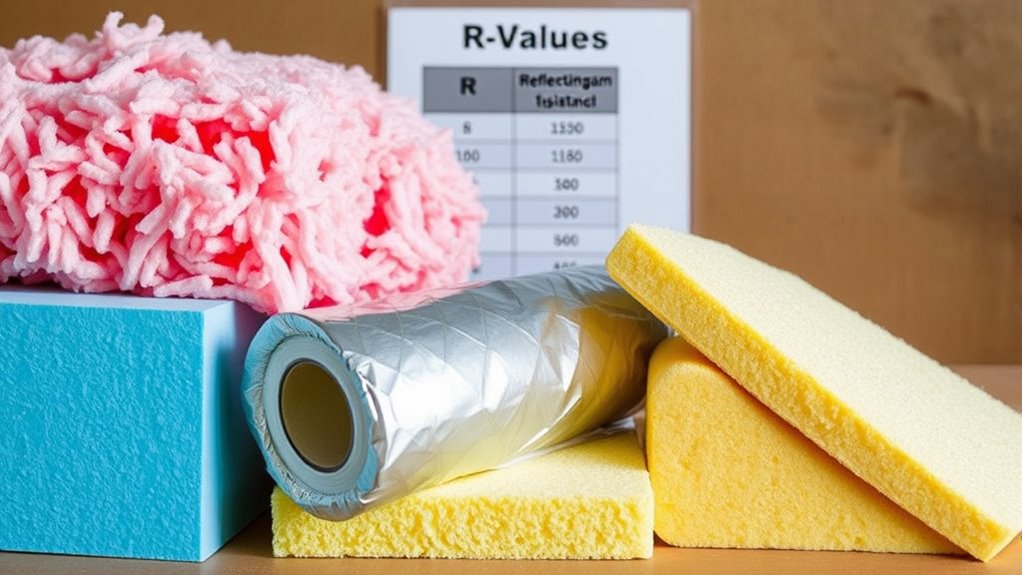
Understanding insulation and R-value is key when looking to improve your home’s energy efficiency. Insulation reduces heat transfer, and the R-value measures its effectiveness—a higher R-value means better performance.
Materials like Fiberglass, cellulose, and mineral wool offer various R-values, generally from R-2.2 to R-3.8 for loose fill and R-2.9 to R-3.8 per inch for batts, enhancing your home’s energy efficiency.
Installing radiant barriers helps reflect heat, while vapor barriers prevent moisture, maintaining comfort and efficiency. Proper installation is crucial to achieve the desired R-value, so follow local codes and specifications closely.
This guarantees your insulation performs effectively, keeping your home comfortable and energy-efficient year-round.
Common Insulation Materials
Choosing the right insulation material for your home can considerably impact energy efficiency and comfort.
Here’s a quick guide to common insulation materials:
- Fiberglass Insulation: This is the most common type, with R-values ranging from R-2.9 to R-3.8 per inch.
It’s made from woven fine glass strands but requires careful handling due to potential irritation.
- Mineral Wool: This non-combustible material, which includes glass wool and rock wool, offers R-values between R-2.8 and R-3.5.
It withstands temperatures up to 1,400°F, enhancing fire resistance.
- Cellulose: An eco-friendly option made from recycled paper, cellulose has R-values from R-3.1 to R-3.7.
It’s treated for fire resistance but may settle over time.
Explore these options to find the best fit for your home’s needs!
Loose Fill and Blown-In Insulation
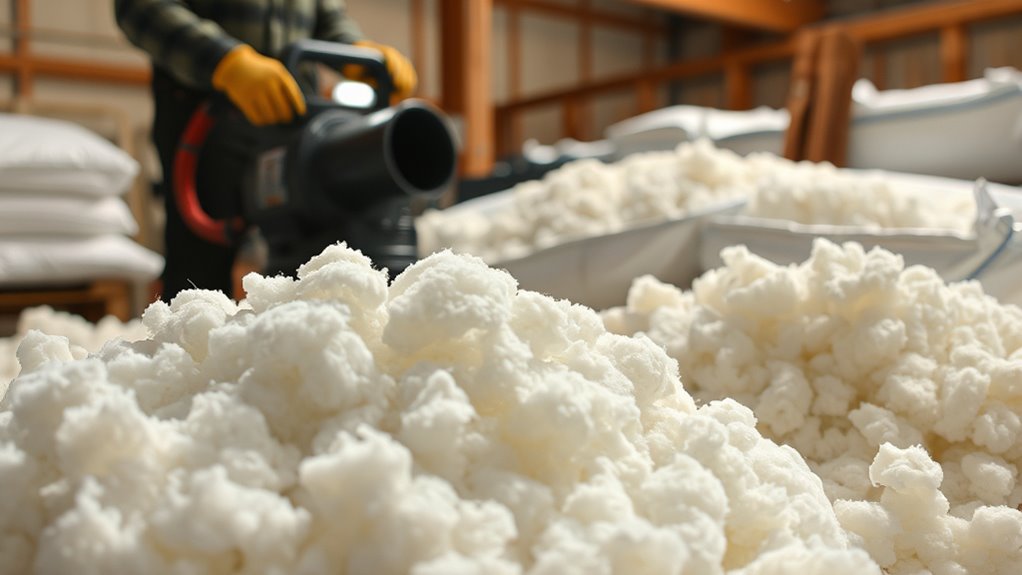
When considering loose fill and blown-in insulation, it’s crucial to understand the installation process, which typically requires pneumatic equipment for effective application.
You’ll find common materials like Fiberglass, cellulose, and mineral wool, each offering different R-values and benefits.
This type of insulation is perfect for attics and irregular spaces, making it ideal for retrofitting older homes where traditional methods may not suffice.
Installation Process Overview
Although installing loose fill and blown-in insulation might seem challenging, mastering the process can transform your home’s energy efficiency. Loose-fill insulation uses pneumatic equipment to fill attics and wall cavities with materials like cellulose and Fiberglass.
To achieve the best thermal performance, focus on the installation process, guaranteeing proper density to prevent settling. Pay attention to R-values, which typically range from R-2.2 to R-3.8 per inch, enhancing your home’s insulation.
When starting this project, remember:
- Safety First: Always wear safety gear, including masks and goggles, to protect against dust and irritation.
- Equipment Mastery: Use pneumatic equipment effectively for even distribution.
- Density Check: Maintain proper density, especially with cellulose, to avoid settling and promote long-term efficiency.
Retrofitting older homes with this method can greatly improve energy performance.
Common Material Options
While you’re exploring insulation options to enhance your home’s energy efficiency, loose fill and blown-in insulation materials stand out for their versatility and effectiveness.
Among the affordable types of insulation, these common insulation materials include cellulose and fiberglass loose-fill insulation.
Cellulose loose-fill insulation, made from recycled paper, offers R-values between R-3.1 and R-3.7 and, due to its treatment, boasts fire resistance.
On the other hand, fiberglass loose fill insulation is non-combustible, providing R-values from R-2.2 to R-3.8.
Both options guarantee excellent thermal performance when properly installed.
Utilizing pneumatic equipment, loose fill insulation fills gaps and conforms to irregular spaces, enhancing energy efficiency.
Remember, proper installation is vital to maintain its R-values and overall effectiveness.
Ideal Application Areas
Exploring insulation options reveals the importance of selecting the right materials for specific areas in your home.
Loose fill insulation excels in attics and hard-to-reach spaces, delivering excellent thermal resistance with R-values from R-2.2 to R-3.8. It’s perfect for DIY projects, adapting to irregular spaces and guaranteeing an even distribution with proper installation.
Common materials like Fiberglass, cellulose, and mineral wool cater to various needs.
Blown-in insulation is ideal for retrofitting older homes. It allows you to insulate wall cavities without major renovations, boosting energy efficiency.
Here’s how you can apply these materials:
- Attics: Use loose fill for superior thermal resistance.
- Older Homes: Retrofit with blown-in insulation.
- DIY Projects: Guarantee even distribution with proper techniques.
Insulation Batts and Rolls
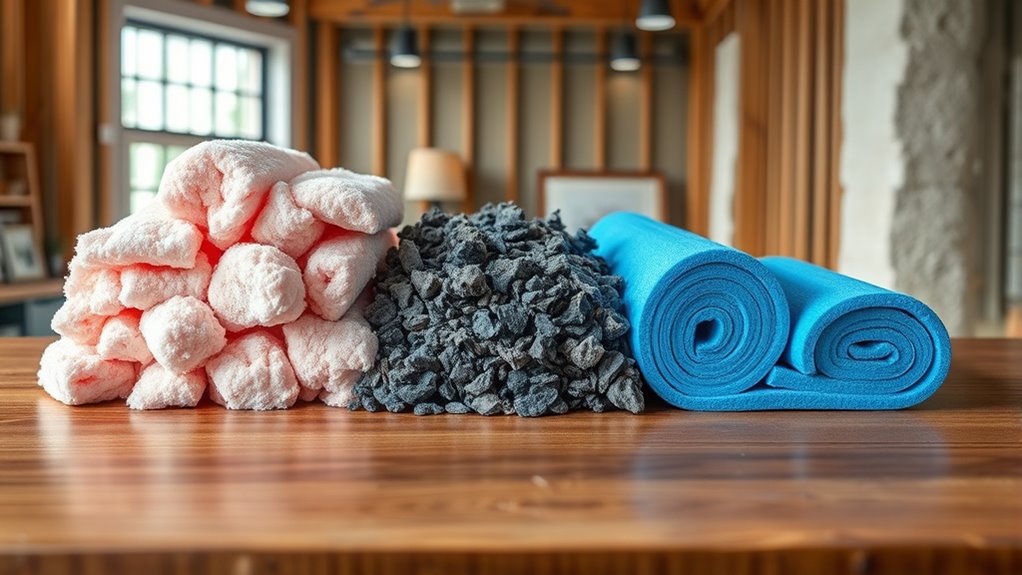
When considering insulation batts and rolls, you’ll find material choices like Fiberglass and mineral wool, each offering unique benefits.
Fiberglass is cost-effective and non-combustible, while mineral wool adds soundproofing advantages.
To maximize efficiency and safety, guarantee proper installation by avoiding gaps and compression.
Material Choices and Benefits
Many homeowners find that insulation batts and rolls are an excellent choice for improving energy efficiency and comfort.
These materials, often made from Fiberglass or mineral wool, cater to DIY enthusiasts aiming for maximum performance.
Here’s why you should consider them:
- Thermal Resistance: Insulation batts and rolls provide effective thermal resistance, with R-values ranging from R-2.9 to R-3.8 per inch, reducing heat transfer in unfinished walls.
- Fire Resistance: Mineral wool batts offer added fire resistance, making them ideal for areas exposed to high temperatures.
- DIY-Friendly: Easy to install, they fit seamlessly between standard framing, minimizing gaps and enhancing energy efficiency. This allows you to cut labor costs while improving your home’s insulation.
Installation Tips and Safety
Before installing insulation batts and rolls, it’s important to prioritize safety by wearing protective gear such as gloves, safety glasses, and masks to prevent irritation from fiberglass particles and dust. For proper installation, cut the batts to fit snugly between framing members. This avoids gaps that could reduce energy efficiency. Stagger seams to minimize air leaks, and use a vapor barrier if needed to prevent mold growth in colder climates—secure batts with staples or adhesive to maintain their properties.
| Step | Tip |
|---|---|
| 1. Wear Gear | Use gloves, safety glasses, and masks. |
| 2. Cut Accurately | Fit batts snugly to avoid gaps. |
| 3. Stagger Seams | Minimize air leaks and improve performance. |
| 4. Add Barrier | Use a vapor barrier in cold climates. |
| 5. Secure Batts | Use staples or adhesive. |
Foam Board and Spray Foam Insulation
Due to their impressive thermal resistance properties, foam board and spray foam insulation are popular for enhancing home energy efficiency.
Foam board insulation offers high R-values, ranging from R-4 to R-6.5 per inch, making it ideal for foundation walls and attics. It’s lightweight and easy to install, but due to flammability concerns, remember to apply fireproofing treatments.
Spray foam insulation, on the other hand, achieves R-values between R-6 and R-7 per inch. It expands to fill gaps and create an airtight seal, perfect for insulating irregularly shaped spaces. Because of its complex application process, it usually requires professional installation.
Here’s why you should consider these options:
- High R-values
- Air-tight sealing
- Versatile applications
Radiant and Vapor Barriers

Radiant and vapor barriers are essential in optimizing your home’s energy efficiency. Radiant barriers, made from reflective aluminum foil, combat heat conduction by deflecting heat away, making them perfect for hot climates and attics. They boost insulation effectiveness without an R-value, enhancing overall energy efficiency. Vapor barriers, made from polyethylene or kraft paper, prevent moisture accumulation by blocking water vapor in cold or humid climates. Proper installation on the warm side of the insulation is vital to avoid mold.
| Barrier Type | Key Function |
|---|---|
| Radiant Barrier | Reflects heat, enhances energy efficiency |
| Vapor Barrier | Prevents moisture, supports insulation effectiveness |
| Material Example 1 | Reflective Aluminum Foil (Radiant) |
| Material Example 2 | Polyethylene/Kraft Paper (Vapor) |
These barriers greatly improve your home’s comfort and energy savings.
Eco-Friendly and Recycled Insulation Options
When considering insulation for your home, eco-friendly and recycled options enhance thermal efficiency and promote sustainability.
These choices help you reduce waste and support sustainable building practices. Here are three options to weigh:
- Cellulose Insulation: Made from recycled paper products, cellulose offers R-values between R-3.1 and R-3.7. It’s an effective thermal insulator and a great way to minimize waste.
- Natural Fiber Insulation: Options like sheep’s wool and denim cotton provide sustainable solutions. They offer good thermal resistance and require fire-resistant treatment. Denim cotton repurposes textile waste and is non-toxic.
- Straw Bale Insulation: With an R-value of around 0.26, straw bales are renewable and excel in eco-friendly construction, providing excellent thermal performance.
Conclusion
When choosing insulation, consider each type’s R-value and specific benefits. You’re not just looking for energy efficiency; you also want to think about fire resistance, sustainability, and ease of installation. Fiberglass, mineral wool, cellulose, and natural fibers like sheep’s wool and denim cotton provide unique advantages. By understanding these options, you can make a smart choice that aligns with your environmental values and meets your building’s needs.
FAQs
1. What Are the 4 Common Types of Insulation?
You’re likely considering insulation types for your project. Four common options include Fiberglass, cellulose, mineral wool, and polyurethane foam. Each has unique R-values, benefits, and precautions. Choose based on your specific needs and installation conditions.
2. What Are 3 Good Insulating Materials?
You should consider Fiberglass, cellulose, and polyurethane foam. Fiberglass is cost-effective, cellulose is eco-friendly, and polyurethane foam offers high insulation efficiency. Each has unique benefits, so choose based on your specific needs and installation environment.
3. What Are the Different Types of Insulating Materials?
You’ll find various insulating materials, such as Fiberglass, mineral wool, cellulose, polyurethane foam, and polystyrene. Each has unique properties, so consider factors like R-value, cost, eco-friendliness, and safety requirements when choosing the best fit.
4. What Is the Best Home Insulation Material?
You should choose the best home insulation material based on your specific needs. Consider factors like budget, thermal resistance, and fire safety. Fiberglass is cost-effective, while polyurethane offers a high R-value. Evaluate what’s most important for your situation.