Corona Discharge: Mechanisms, Uses, and Importance
You’re about to uncover the intriguing world of corona discharge, an electrical phenomenon with both beneficial and challenging aspects. When the electric field around a conductor surpasses the surrounding air’s dielectric strength, it can cause ionization, leading to power loss and the release of gases like ozone. But what makes this phenomenon so valuable to industries, and how do they manage the fine line between harnessing its potential and mitigating its environmental impact? By exploring its initiation mechanisms and applications, you’ll grasp why understanding corona discharge is essential in today’s technological landscape.
Key Takeaways
- Corona discharge occurs when the electric field surpasses the dielectric strength, commonly around sharp corners and small wires.
- It leads to power loss, noise generation, and the production of harmful gases like ozone and nitric oxide.
- Positive coronas are uniform and efficient in ozone production, while negative coronas have higher electron density.
- Industrial applications include ozone generation for purification and enhancing material surface adhesion and printability.
- Mitigation techniques involve improved insulation, corona rings, and optimizing conductor size and spacing to manage the discharge.
Understanding Corona Discharge
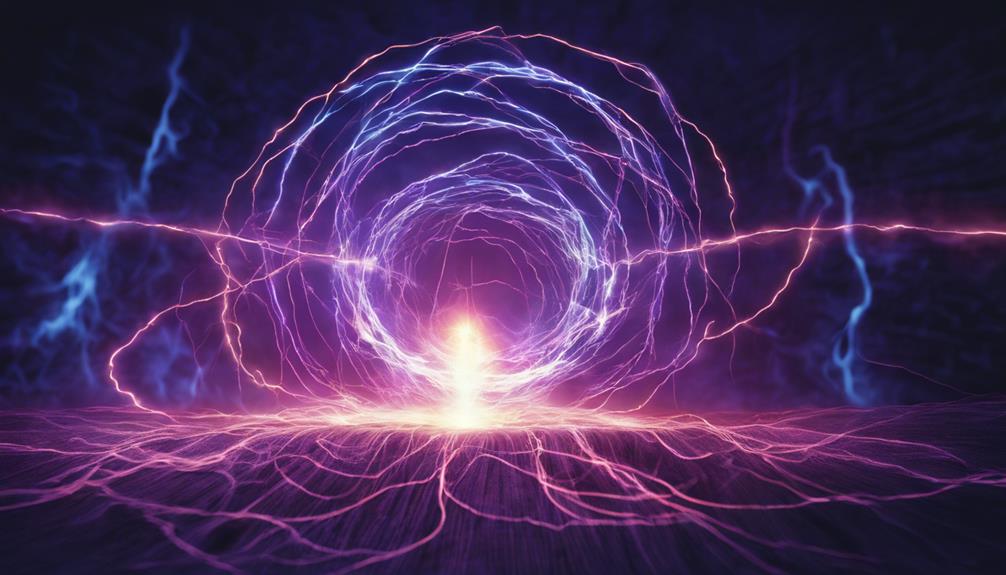
Understanding corona discharge is essential when dealing with high-voltage systems. It occurs when the electric field at a conductor’s surface surpasses the dielectric strength of the surrounding medium, typically air at atmospheric pressure. This high potential causes the ionization of the air molecules, creating a plasma region.
You’ll often see corona discharge in areas with highly curved surfaces, such as sharp corners or small-diameter wires, where the electric field is most intense.
Corona discharge isn’t just a fascinating phenomenon; it has practical implications. As the current flows from a high-voltage electrode into the neutral surrounding fluid, it can lead to power loss and generate audible and radio-frequency noise. Additionally, it can produce harmful gases such as ozone and nitric oxide, which you certainly want to avoid.
You can employ improved insulation techniques and use devices like corona rings to manage this. These tools help distribute the electric field more evenly, minimizing the likelihood of discharge. In addition, designing high-voltage equipment with smooth, rounded surfaces can greatly reduce the occurrence of corona, ensuring your systems run efficiently and safely.
Initiation and Types
Initiating corona discharge involves the presence of a high voltage that creates a uniform electric field, leading to distinct types of corona: positive near the anode and negative near the cathode. Corona discharge occurs when the electric field intensity is strong enough to cause air ionization surrounding the conductor. This forms a plasma region where positive and negative coronas exhibit different characteristics.
Positive coronas are known for their uniform characteristics and efficient ozone production, making them suitable for specific applications. On the other hand, negative coronas demonstrate a higher electron density and behave in a mono-uniform manner. These initiation mechanisms are essential for understanding how high-voltage discharge can be harnessed effectively.
Consider the impact of corona discharge on various aspects:
- Mystical Glow: Imagine witnessing the eerie glow surrounding high-voltage equipment, evoking awe and curiosity.
- Breath of Fresh Air: Positive coronas efficiently produce ozone, contributing to cleaner air.
- Revolutionary Treatments: Surface treatment processes benefit from the unique ionization properties.
Industrial Applications

When you explore industrial applications of corona discharge, you’ll find its important role in ozone generation techniques and material surface enhancement.
Ozone produced through corona discharge is vital for purifying water and air, making it an essential component in environmental management.
Additionally, corona discharge modifies material surfaces to improve adhesion and printability, benefiting sectors like electronics and textiles.
Ozone Generation Techniques
Ozone generation through corona discharge offers a versatile and efficient technique for various industrial applications. By ionizing oxygen molecules, this method converts them into ozone, a powerful tool in industries like water treatment, air purification, and chemical synthesis. You can rely on high-voltage corona discharge systems to effectively produce ozone, leveraging voltage, gas flow rate, and electrode design to optimize performance. These systems create reactive oxygen species ideal for disinfection and sterilization tasks.
Imagine your impact when using this technology:
- Cleaner Water: Transform polluted water sources into safe, pure water supplies for communities and industries.
- Purified Air: Breathe easier knowing your environment is free from harmful pollutants and pathogens.
- Innovative Chemistry: Enhance chemical processes by integrating ozone, promoting sustainable practices and cutting-edge results.
The efficiency of ozone generation is closely linked to the parameters you control. Adjusting voltage levels and gas flow rates, alongside designing effective electrodes, can significantly impact the outcomes.
Material Surface Enhancement
The innovative use of corona discharge in material surface enhancement has revolutionized several industrial applications. It’s extremely useful for improving the adhesion on surfaces such as polypropylene, PVC, and PET. By altering surface roughness and increasing surface energy, corona treatment ensures that inks, coatings, and adhesives adhere much better. This technique is particularly beneficial in the plastic film, extrusion, and converting industries, where surface activation is essential for quality and efficiency.
Corona discharge offers a consistent and controllable method for surface modification, making it ideal for a wide range of polymers and materials. Whether you’re enhancing the wettability of natural fibers like wool or improving the surface characteristics of various plastics, this process delivers dependable results.
You can easily integrate corona treatment systems into your industrial applications to achieve the desired level of surface activation.
Material Treatment Uses
Corona discharge treatment is a powerful tool for enhancing surface energy and adhesion. It modifies the surface of materials like polypropylene and PVC by ionizing the surrounding medium, resulting in better adhesion to other substances.
This adaptable technique offers consistent, controllable surface activation for various substrates, such as polyethylene, vinyl, and plastic films.
Surface Energy Enhancement
Harnessing the power of corona discharge transforms the surface energy of materials like polypropylene and PVC, making them more receptive to adhesion. This process enhances your ability to paint and print on these surfaces, ensuring that inks and coatings stick effectively.
Corona discharge provides a reliable solution for surface activation and treatment by altering the surface roughness and hydrophobicity of polymers such as PET and polyethylene. It’s especially effective on two-dimensional objects and roll goods, commonly seen in the plastic film and extrusion industries.
Consider the following benefits of using corona discharge for surface energy enhancement:
- Improved Adhesion: You can be confident that treated surfaces will bond better, reducing issues with peeling and wear.
- Versatile Application: Embrace the flexibility of treating various materials, from intricate dimensional objects to broad-roll goods.
- Consistent Results: Experience peace of mind with a process that offers consistent and controllable surface treatment, enhancing the quality of your products.
Adhesion Improvement Techniques
Corona discharge remains a key player in material treatment as you explore techniques to improve adhesion. This method can enhance the surface energy of materials such as polypropylene, PVC, and PET. This increase in surface energy is important for better bonding with inks, coatings, or adhesives. The process involves altering the surface roughness, hydrophobicity, and chemistry of polymers. This activates the surface and makes it more receptive to bonding.
Corona discharge is particularly beneficial for adhesion improvement because it offers a consistent and controllable surface treatment. It’s especially effective for dimensional objects where uniform surface activation is essential. By modifying the surface characteristics, you can achieve improved adhesion without altering the material’s bulk properties.
Moreover, corona treatment ensures that adhesives and coatings adhere more effectively by reducing hydrophobicity and increasing surface roughness. This method isn’t only efficient and versatile and applicable to various materials and industries.
Whether working with packaging, automotive parts, or electronic components, corona discharge can enhance the bonding capabilities of your material.
Challenges and Solutions

Tackling the challenges of corona discharge requires a strategic approach, as these issues can lead to substantial power loss, signal interference, and even material degradation. To counteract the detrimental effects of corona discharge, you must focus on insulation enhancement. Enhancing insulation can reduce both power loss and interference, ensuring system reliability.
Consider using corona rings; they’re particularly effective at minimizing electric field intensity, thereby reducing ozone generation and preventing material degradation. Modifying electrode design is another crucial strategy. By optimizing the shape and surface smoothness, you minimize corona formation and its adverse consequences.
You might feel overwhelmed, but consider this:
- Power Loss and Environmental Impact: The energy wasted could power entire communities, while ozone harms the environment.
- Signal Interference: Imagine the frustration of disrupted communications in critical scenarios.
- Material Degradation: Consider costly repairs and deteriorating infrastructure’s safety risks.
Mitigation strategies are essential, especially in rainy or humid conditions, which can exacerbate corona discharge problems. Understanding the factors influencing these issues helps craft targeted solutions for high-voltage systems.
Positive vs. Negative Coronas
Understanding the distinct characteristics of positive and negative coronas is essential when examining corona discharges. Exogenous ionization events initiate positive coronas and efficiently produce ozone. They occur when the voltage polarity on highly curved electrodes is positive. The density of free electrons in these coronas is relatively low, affecting their ionization processes and producing more uniform characteristics than negative coronas.
Negative coronas, on the other hand, operate differently. They exhibit higher electron density and are characterized by nonuniformly nonuniform events. The electron avalanche process is a key feature here, where free electrons rapidly increase as they drift out of the ionizing region. This results in larger corona sizes than those seen in positive coronas.
The voltage polarity on curved electrodes determines whether you’ll see a positive or negative corona, with negative polarity favoring the latter.
Effects on High Voltage Lines
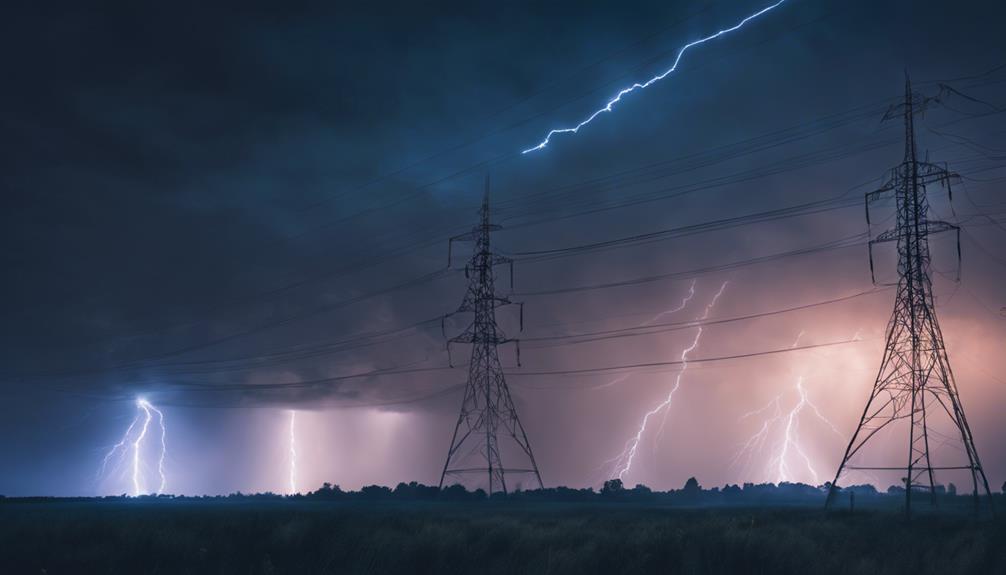
Corona discharge creeps into high-voltage lines, causing many issues that can’t be overlooked. When it occurs, you might notice power loss, which directly impacts the efficiency of electricity transmission. More than just an inconvenience, this loss translates to higher costs and wasted resources. As if that weren’t enough, interference with radio and TV signals can also arise, disrupting the clear communication you rely on daily.
The impact stretches beyond mere disruption:
- Vibrations: Corona discharge triggers vibrations on the lines, which can accelerate conductor aging and cause wear at critical anchor points.
- Ozone Transformation: It transforms dioxygen into harmful ozone, posing health risks and contributing to environmental damage.
- Audible Noise: The phenomenon creates a constant buzz, reminding you of its presence and the potential dangers lurking above.
These issues aren’t just technical nuisances; they have tangible effects on infrastructure and the environment. Over time, the significance of corona discharge on high-voltage lines grows, becoming an unavoidable challenge that demands attention and action to maintain the reliability and safety of power systems.
Impact of Weather Conditions
Weather conditions greatly impact corona discharge on high-voltage power lines, changing their effectiveness and durability. When rain, snow, or fog envelops these lines, water droplets can stick to conductors, leading to corona discharge. This phenomenon is worsened as humid or rainy weather alters the air density around the lines. Additionally, the electric field strength is influenced by factors like wind speed and precipitation intensity, which play an important role in the occurrence and severity of corona discharges.
Increased coronavirus can significantly affect power transmission efficiency and equipment longevity. When coronavirus occurs more frequently, energy losses increase, diminishing overall efficiency. Furthermore, continuous discharge can cause equipment wear and tear, reducing lifespan. To maintain peak performance, it’s vital to comprehend how different weather conditions can impact these systems.
Here’s a brief overview of how specific weather factors affect corona discharge:
| Weather Condition | Impact on Corona Discharge | Result of Power Lines |
|---|---|---|
| Rain | Boosts water droplets | Diminishes efficiency |
| Snow | Changes air density | Reduces equipment lifespan |
| Fog | Alter electric field strength | Raises energy loss |
Understanding these impacts aids in effectively organizing and upholding high-voltage power lines.
Mitigation Techniques
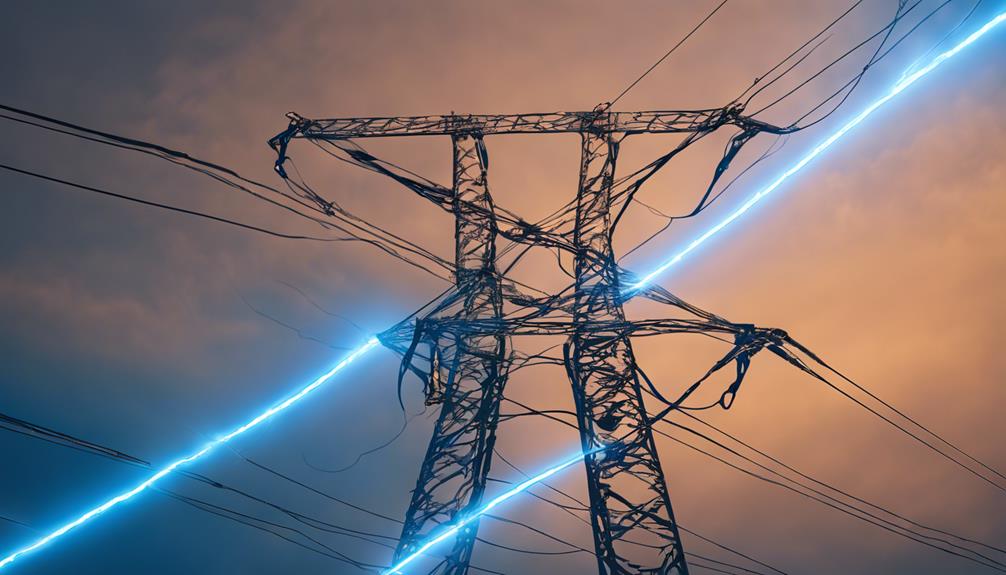
Several effective methods can alleviate the effects of corona discharge on high-voltage power lines. Increasing the conductor size and spacing can significantly diminish the electric field intensity, making it less probable for corona discharge to arise. Another intelligent strategy is using aluminum corona rings at sharp points on high-voltage lines. These rings help dampen corona formation by redistributing the electric field. Understanding the nature of conductor materials is also vital; it lets you select the right materials that minimize corona effects.
Engineers play a pivotal role in developing appropriate mitigation strategies. They consider factors like AC line resistance and current capacity to guarantee the system’s efficiency. Configuring conducting lines with suitable spacing and materials is essential for reducing corona discharges in power systems. Here’s why it matters:
- Enhanced Reliability: Ensuring your power system is less susceptible to corona discharge means fewer disruptions.
- Cost Efficiency: Proper mitigation techniques decrease maintenance and repair costs over time.
- Environmental Impact: Decreasing corona discharge helps lessen its ecological effects, making your system more sustainable.
Conclusion
You’ve explored the intriguing world of corona discharge, understanding its initiation mechanisms and distinguishing between positive and negative coronas. While industries utilize it for applications like ozone generation and material treatment, it’s essential to address related challenges, such as power loss and harmful gas production. Understanding its effects on high-voltage lines and the influence of weather conditions can help you implement efficient mitigation techniques, ensuring you optimize its benefits while reducing environmental impact.
FAQs
1. What Is the Meaning of a Corona Discharge?
You’re encountering an electrical phenomenon where atmospheric ionization occurs due to high voltage. Insulation breakdown happens, often around power lines, aiding in lightning protection. Unlike spark discharge, a corona ring manages electric fields to prevent further issues.
2. What Does Corona Discharge Look Like?
You’ll notice electric sparks and glowing plasma, representing ionized air, around high-voltage equipment. This atmospheric phenomenon results from electrical breakdown and appears as a luminous discharge with spectral colors resembling UV light. It creates a fascinating visual effect.
3. Is Corona Discharge Harmful?
It would help if you evaluated whether it’s harmful. Without safety precautions, health effects and environmental impacts can arise. Electrical fires, insulation, and electrical breakdowns may occur in power transmission. Plasma generation in industrial applications demands careful management.
4. Can You See Corona Discharge?
The visual effects of high-voltage phenomena can be seen, especially under specific atmospheric conditions. Scientific research shows that electromagnetic fields affect the color spectrum. Spectral analysis helps in understanding electrical safety and industrial applications.