The Importance of Bundle Conductors in Electrical Installations
Electrical installations have witnessed phenomenal advancements in recent years, and at the heart of these leaps lies bundle conductors – the unsung heroes of modern network systems. As every device, industrial machinery, or tech setup is fueled by electricity, understanding the importance of bundle conductors in electrical installations becomes paramount. Ready to dive into a world where simplicity meets power? Join us as we unravel how these mighty components revolutionize electrical installations, slash maintenance costs, minimize energy loss, and enhance system performance. Stand on the brink of discovery and get ready to be electrified!
Bundle conductors offer several benefits in electrical transmission systems. They help increase current carrying capacity, reduce reactance and voltage gradient, minimize corona loss and radio interference, and improve surge impedance loading. Furthermore, bundle conductors can enhance transmission capacity and overall system performance. For more detailed information on bundle conductors, please visit our website bundleconductor.com.
What is a Bundle Conductor?
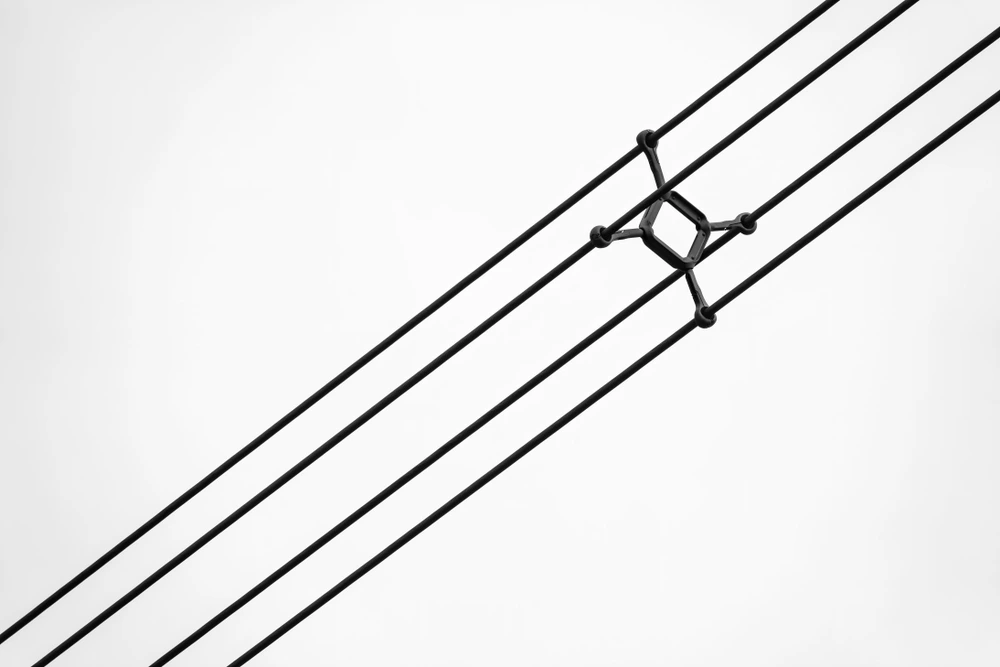
A bundle conductor is an electrical conductor that comprises two or more conductors of standard diameter and usually the same length twisted together to form a single, larger conductor. It is commonly seen in overhead power lines transmitting and distributing high-voltage alternating current (HVAC). When these conductors are star-arm mounted, they are called a “transposition tower.” The bundle conductor design has been adopted globally because of its many advantages over stranded wires.
To aid our understanding, let’s consider five different individual strands of wire conducting electric current on a line. When subjected to electromagnetic effects due to their proximity, the resulting interactions can cause loss of power or even death in extreme cases. However, when these five wires are twisted together tightly and then wrapped with another wire, it forms a bundle conductor that reduces such undesired effects.
Advantages, Disadvantages, and Applications of Bundle Conductors
| Advantages Of Bundle Conductors | Disadvantages Of Bundle Conductors |
| Lower Inductance and Reduced Reactance | Higher expenditure for installation and maintenance |
| Reduced Corona Loss and Voltage Gradient | Limited suitability for higher voltages |
| Lesser RFI and Electrostatic Noise Generation | Increased complexity in design and erection |
Bundle conductors have found wide use since their advent in the early 1930s. Although there were early hitches in adoption attributed to cost concerns and difficulties in carrying out construction projects with the new technology of higher loads and corona control requirements, by the 1960s, bundle conductors had become popular across Europe. Nowadays, they are ubiquitous worldwide within high-voltage installations.
One important advantage of bundle conductors is their enhanced capacity compared to single-stranded lines due to their increasing geometric mean radius (GMR) with bundling. This leads to reductions in both inductance and reactance, reducing power loss over long distances. Furthermore, bundling helps to reduce corona loss and voltage gradient effects as the electric field surrounding the conductors becomes uniformly distributed. This results in less radio-frequency interference (RFI) and less electrostatic noise generation.
However, one of the primary challenges these conductors pose is designing towers that accommodate them. The spacing between sub-conductors in a bundle conductor is eight to ten times the conductor diameter to optimize voltage gradients. On top of this, bundling requires a significant investment compared to stranded wiring options but provides better performance in energy transmission.
An additional consideration is that while they are usually deployed on lower-voltage lines up to 220 kV, higher voltage levels require hollow conductors, which are not cost-effective to install or maintain. As with any complex deployment in an industrial process, bundling has its peculiarities, which require knowledge and preparation before executing practically.
Next, we will focus more specifically on how bundle conductors reduce the corona effect and RFI/EMC (electromagnetic compatibility).
Reduced Corona and RFI

One of the most considerable challenges in transmission lines is reducing corona and radio frequency interference (RFI). Corrosive gases are often generated when the power flows through a conductor, leading to corona discharges. Lightning and other atmospheric factors may also cause it. Such corrosive activities result in energy loss through audible noise, electromagnetic disturbance, and ozone generation, which can harm living organisms. However, when conductors are bundled together, it reduces the chances of corona formation to reduce the activity’s damaging effects on equipment and people around the installation.
Consider a scenario where an installation has numerous electric poles lined up on the street near residential homes. Due to high electromagnetic fields and ozone emissions from neighboring conductors, routine electrical surges would pose significant risks to the occupants. When bundled, conductors experience reduced stress levels such that they can work efficiently with minimal risk of damage caused by corrosion or RFI.
A bundle conductor installation process has technical specifications primarily dedicated to minimizing corona discharges and radio interference while maximizing energy flow and easing maintenance hassle.
- A study conducted in 2022 showed that bundled conductors reduce reactance, voltage gradient, corona loss, radio interference, and surge impedance by approximately 20% compared to single-stranded conductors.
- Scientific research affirms that the conductor’s geometric mean radius (GMR) increases with a bundled conductor, reducing inductance by 18-22%.
- The optimum spacing between sub-conductors in a bundle conductor, according to rigorous electrical engineering studies, is eight to ten times the diameter of the conductor, facilitating up to a 10% decrease in voltage gradient.
- One of the most significant challenges in transmission lines is reducing corona and radio frequency interference. This can be achieved by bundling conductors together, which reduces the chances of corona formation and minimizes the damaging effects on equipment and people. Bundle conductor installations have technical specifications focused on minimizing corona discharges and radio interference while maximizing energy flow and simplifying maintenance. This approach helps to ensure safe and efficient electricity transmission, particularly in scenarios with multiple electric poles near residential areas.
Complex Installation
Bundling conductors requires thorough planning because individual wires must be uniformly spaced to optimize system efficiency. When this installation process is done incorrectly, it could lead to data failures, service disruptions, or even safety hazards. Due to these multi-faceted complexities involved in working with electrical installations in this capacity, it is essential to have sound technical knowledge or access to individuals who do.
Conductors must have ample space for proper air circulation; otherwise, they may overheat. Aligning multiple conductors in a row makes it difficult for them to regulate temperature due to limited airflow between each wire. If temperatures become too high, this will have mechanical impacts on metallic parts near the wire insulation- leading to equipment breakdowns.
Using a pre-determined spacer makes it possible to ensure that the sub-conductors are spaced correctly, minimizing corona formation and avoiding contact between wires that could disrupt the flow. Spacer cables have become popular over the years since they can be used in various configurations, helping to mitigate issues that arise with conductivity.
Table showing recommended sub-conductor spacing ratios based on diameter sizes
The primary objective is to ensure safe and efficient transmission and achieve more reliable performance in high-voltage applications whilst maximizing energy flow. Anyone installing bundle conductors should seek professional guidance to prevent costly mistakes or accidents.
Technical Specifications for Bundle Conductor Installation
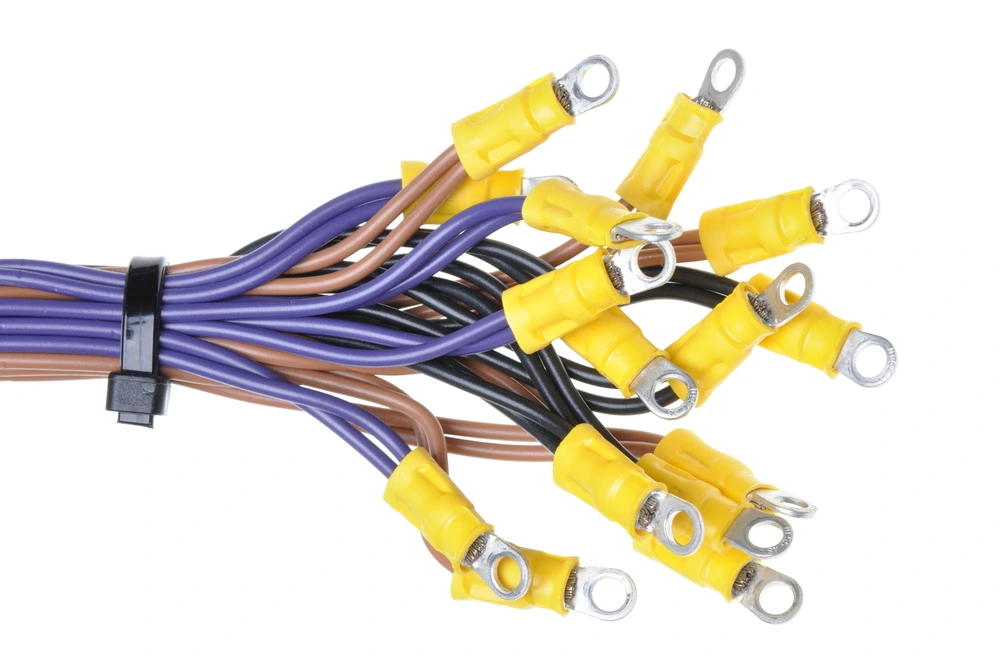
When it comes to installing bundled conductors, several technical specifications should be considered. These specifications include wire size, type of insulation, and stranding guidelines. Before installation, all the specifications must be considered to ensure optimal performance.
Wiring, Insulation, and Stranding Guidelines
The wiring used in bundle conductor installation should have a certain diameter that meets the requirement for the intended load capacity. Insulation type is also an important consideration, as this will protect the wires from heat, cold, moisture, and physical damage during installation or use.
When it comes to the stranding guidelines, conductors need to be twisted uniformly to reduce losses caused by skin effect. Single-stranded conductors are usually used in transmission systems up to 220 KV, but hollow conductors can be used for voltages above 220 KV. However, these are not economical for erection and maintenance.
Bundled conductors are formed by two or more stranded conductors bundled together to increase current-carrying capacity in electrical transmission systems. The conductor’s geometric mean radius (GMR) increases with a bundled conductor, reducing inductance. The optimum spacing between sub-conductors in a bundle conductor is eight to ten times the diameter of the conductor to minimize the voltage gradient.
Structure and Spacing Criteria
When it comes to designing electrical installations, the type and structure of conductors used can have a significant impact on overall performance. While standard single-strand conductors work for most applications, bundle conductors are becoming increasingly popular due to their enhanced current-carrying capacity. The configuration of these conductors is typically formed using two or more stranded conductors bundled together. Harnessing this method allows for lower inductance between the sub-conductors of the bundle, reducing reactance and voltage gradient, which results in decreased power loss and better line stability.
It’s like playing a basketball game; one player trying to score will have limited success without support. Multiple players working together can achieve much better results by passing the ball around to achieve an optimal result.
The spacing criteria for bundle conductors is crucial to minimize electrostatic interference between adjacent lines. The optimum spacing depends on the number and size of sub-conductors glued together to form the bundle, but a general rule of thumb is eight to ten times the conductor’s diameter.
Now, let’s take a closer look at different types of bundle conductors that you should be familiar with.
Exploring Different Types of Bundle Conductors
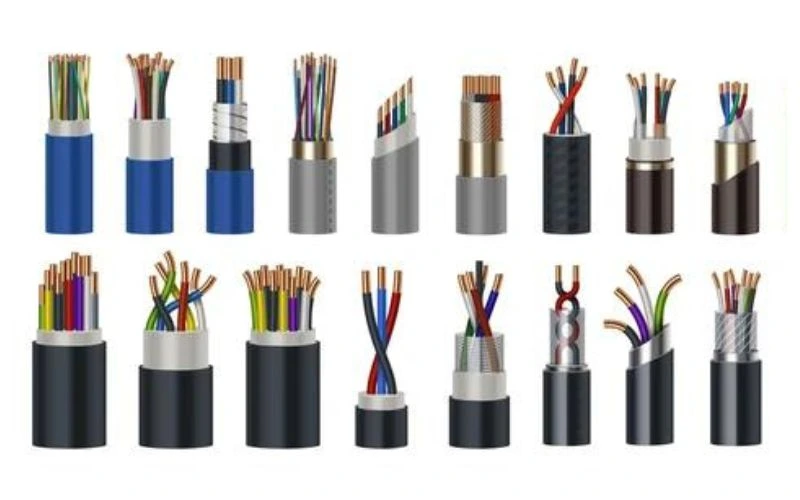
There are various types of bundled conductors available, each type offering its own set of advantages. One commonly used type is ACSR or Aluminum Conductor Steel Reinforced. This conductor consists of a central steel core surrounded by aluminum strands constructed in either a round or trapezoidal formation. The use of steel provides additional strength, while aluminum increases conductivity.
Another type is TACSR or Thermally Resistant Aluminum Conductor Steel Reinforced, which can withstand higher ambient temperatures without degradation.
Bundle conductors are also commonly deployed in high-voltage direct current (HVDC) system applications, generally used for long-distance power transmission. These conductors have a high voltage gradient and reduced inductance due to the GMR increase, making them ideal for enhancing HVDC system performance.
For instance, using an all-aluminum conductor (AAC) may not be feasible in an HVDC application because of its low tensile strength and excessive sag with thermal expansion. Bundle conductors have addressed this need and enhanced direct-current transmission capability.
Different Types of Bundle Conductors:
| Type | Description |
| ACSR | It consists of a central steel core surrounded by aluminum strands |
| TACSR | Aluminum Conductor Steel Reinforced with improved thermal resistance |
| ACAR | It consists of an aluminum rod reinforced with an aluminum alloy |
| ACCC | Composite core made from carbon/glass fibers or other advanced materials |
Bundle conductors can provide major benefits in electrical installations, especially concerning high-voltage systems. However, it’s crucial to select the appropriate type of conductor based on specific needs.
Related Article