Bridge Rectifier: A Gateway to Efficient Power Conversion
In today’s world, where electricity powers almost every aspect of our lives, efficient power conversion has become more crucial than ever. One key component that plays a vital role in this process is the bridge rectifier. This unassuming device might not garner much attention, but its significance cannot be underestimated.
A bridge rectifier is a circuit that converts alternating current (AC) into direct current (DC). It is widely used in various electronic applications, from power supplies to motor control systems. By rectifying the AC voltage, the bridge rectifier ensures a steady and reliable source of DC power, enabling the smooth operation of countless devices.
The concept behind the bridge rectifier is elegantly simple yet highly effective. It consists of four diodes arranged in a bridge configuration, hence its name. These diodes act as one-way valves, allowing current to flow in only one direction. As the AC voltage alternates between the positive and negative halves of the cycle, the diodes ensure that only the positive half is passed through, effectively rectifying the waveform.
The beauty of the bridge rectifier lies in its versatility. It can handle various input voltages, making it suitable for multiple applications. Whether converting low-voltage signals or high-voltage mains power, the bridge rectifier can adapt and deliver the desired output.
Moreover, the bridge rectifier’s efficiency has made it a popular choice in power electronics. By minimizing energy losses during the conversion process, it helps to conserve power and reduce wastage. This not only benefits the environment but also translates into cost savings for consumers and businesses alike.
In conclusion, the bridge rectifier is a gateway to efficient power conversion. Its ability to convert AC to DC with precision and reliability makes it an essential component in countless electronic devices. As we delve deeper into the world of bridge rectifiers, we will explore its inner workings, applications, and advancements that continue to shape the field of power electronics. So, let’s embark on this journey together and unravel the mysteries of the bridge rectifier.
What Is a Bridge Rectifier?
A bridge rectifier is an essential component in electronic circuits, particularly in power supplies. It converts alternating current (AC) into direct current (DC), allowing for the efficient operation of electronic devices. By rectifying the AC waveform, a bridge rectifier ensures that the current flows in only one direction, providing a steady and reliable power source.
The bridge rectifier consists of four diodes arranged in a bridge configuration. These diodes are semiconductor devices that allow the current to flow in one direction while blocking it in the opposite direction. When an AC input is applied to the bridge rectifier, the diodes alternate between conducting and stopping the current, effectively rectifying it.
One of the key advantages of a bridge rectifier is its ability to handle high currents and voltages. This makes it suitable for various applications, from small electronic devices to large power systems. Additionally, bridge rectifiers have a compact and simple design, making them cost-effective and easy to manufacture.
When selecting a bridge rectifier, it is important to consider its maximum current and voltage ratings, as well as its forward voltage drop. These specifications determine the rectifier’s suitability for a particular application. It is also worth noting that bridge rectifiers generate some heat during operation, so proper heat sinking is necessary to ensure their longevity.
In conclusion, a bridge rectifier is a crucial component in electronic circuits that converts AC into DC. Its ability to rectify the current and provide a steady power source makes it indispensable in various applications. By understanding the principles and specifications of bridge rectifiers, engineers and hobbyists can design and build efficient and reliable electronic systems.
How Does a Bridge Rectifier Work?
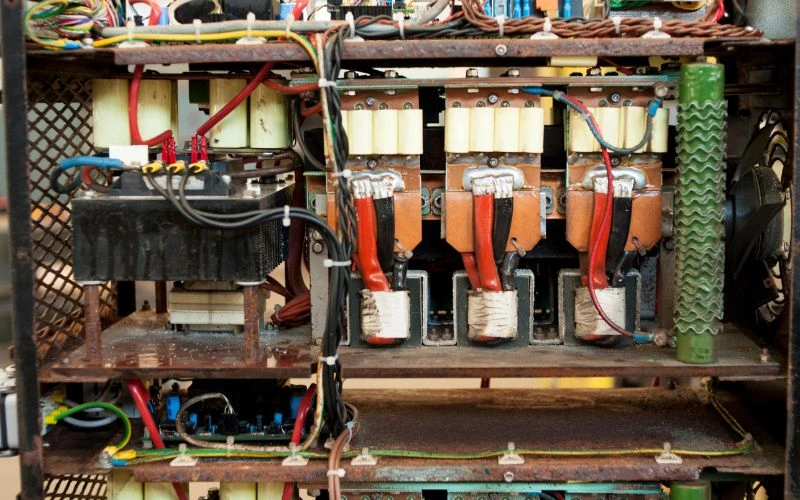
A bridge rectifier is an essential component in electronic circuits that converts alternating current (AC) to direct current (DC). It is widely used in power supplies and electronic devices to ensure a steady and reliable DC power source.
At its core, a bridge rectifier consists of four diodes arranged in a bridge configuration. These diodes are semiconductor devices that allow current to flow in only one direction. By strategically placing these diodes, the bridge rectifier can effectively convert AC to DC.
When an AC voltage is applied to the input of the bridge rectifier, the diodes alternate between conducting and blocking the current. During the positive half-cycle of the AC waveform, two diodes conduct, allowing current to flow through the load in one direction. On the negative half-cycle, the other two diodes conduct, reversing the direction of the current. This process effectively rectifies the AC waveform, resulting in a pulsating DC output.
To smooth out the pulsations and obtain a more stable DC output, a filter capacitor is often connected across the load. The capacitor charges up during periods of high voltage and discharges during periods of low voltage, reducing the ripple in the output.
The bridge rectifier offers several advantages over other rectifier configurations. It has a higher efficiency, as all four diodes are utilized in the rectification process. Additionally, it can handle higher currents and voltages, making it suitable for a wide range of applications.
In conclusion, the bridge rectifier is a crucial component in converting AC to DC in electronic circuits. Its simple yet effective design ensures efficient and reliable rectification, ensuring a smooth and steady DC power source.
What Are the Advantages of Using a Bridge Rectifier?
A bridge rectifier is an essential component in many electronic devices, converting alternating current (AC) into direct current (DC). It offers several advantages that make it a popular choice in various applications.
One of the main advantages of using a bridge rectifier is its efficiency. Unlike other rectifier configurations, such as half-wave rectifiers, the bridge rectifier utilizes both halves of the AC input waveform. This means it can convert a higher percentage of the input power into usable DC power, resulting in less power loss and improved overall efficiency.
Another advantage is the bridge rectifier’s ability to handle high currents. It consists of four diodes arranged in a bridge configuration, allowing it to manage higher current levels than other rectifier designs. This makes it suitable for applications that require high power outputs, such as power supplies for electronic devices or industrial equipment.
Additionally, the bridge rectifier offers better voltage regulation. It produces a smoother DC output by rectifying both the positive and negative halves of the AC input waveform. This results in a more stable and regulated DC voltage, which is crucial for sensitive electronic circuits that require precise voltage levels.
Furthermore, the bridge rectifier is compact and cost-effective. Its simple design and use of commonly available diodes make it a cost-efficient solution for converting AC to DC power. Its compact size allows for easy integration into various electronic devices, making it a versatile choice for many applications.
In conclusion, the bridge rectifier offers several advantages that make it a preferred choice for converting AC to DC power. Its efficiency, ability to handle high currents, voltage regulation, and cost-effectiveness make it a reliable component in many electronic devices and power supplies.
What Are the Disadvantages of Using a Bridge Rectifier?
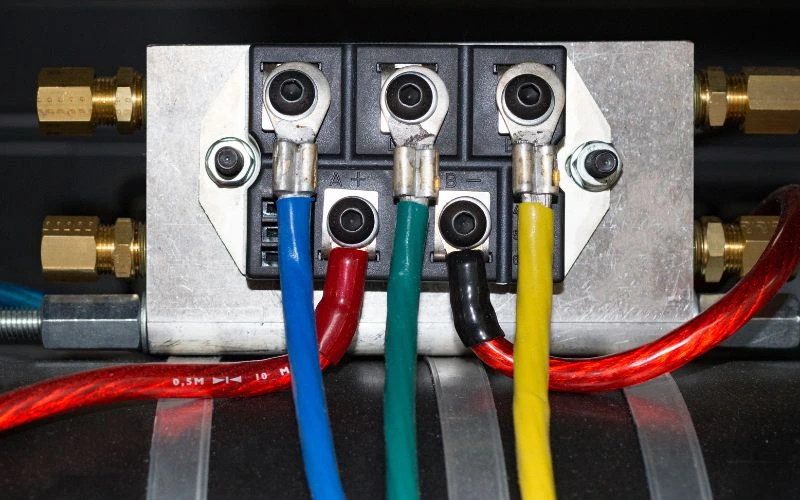
A bridge rectifier is a widely used circuit in electronic devices to convert alternating current (AC) into direct current (DC). While it offers several advantages, it also has a few disadvantages that should be considered.
One of the main disadvantages of using a bridge rectifier is the voltage drop across the diodes. Each diode in the bridge rectifier causes a drop of around 0.7 volts. This means that the output voltage of the rectifier will be lower than the input voltage, resulting in power loss. This voltage drop can be significant, especially in low-voltage applications.
Another disadvantage is the generation of harmonic distortion. When the AC input voltage is not a perfect sine wave, the bridge rectifier can introduce harmonic components into the output waveform. This can cause issues in sensitive electronic devices that require a clean and stable DC power supply.
The bridge rectifier circuit also has a relatively high output ripple voltage. The output voltage of the rectifier is not completely smooth and contains small fluctuations or ripples. This can be problematic in applications that require a precise and stable DC voltage.
Furthermore, bridge rectifiers are not suitable for high-frequency applications. The diodes used in the rectifier have a certain response time, which limits the frequency range of operation. At high frequencies, the diodes may not be able to switch fast enough, resulting in inefficient rectification.
In conclusion, while bridge rectifiers offer many advantages in converting AC to DC, they also have disadvantages. Understanding these limitations is crucial in selecting the appropriate rectifier circuit for specific applications.
What Are the Applications of Bridge Rectifiers?
Bridge rectifiers are essential electronic components widely used in various applications. Their ability to convert alternating current (AC) to direct current (DC) makes them indispensable in many electronic devices. Let’s explore some common applications where bridge rectifiers play a crucial role.
One of the primary applications of bridge rectifiers is in power supplies. They convert the AC power from the main supply to a stable DC voltage that can be used to power electronic devices. Whether it’s a computer, television, or any other household appliance, bridge rectifiers ensure a steady and reliable DC power source.
Bridge rectifiers are also extensively used in battery charging circuits. They rectify the AC power from the charger and convert it into DC to charge the batteries. This is crucial in applications such as electric vehicles, portable electronics, and renewable energy systems.
In motor control circuits, bridge rectifiers convert the AC voltage into DC, which is then used to drive the motor. This is particularly important in industrial machinery, robotics, and automation systems, where precise control of motor speed and direction is required.
Another application of bridge rectifiers is in welding machines. They convert the AC input into a DC output, which is necessary for welding operations. Bridge rectifiers provide the stable and consistent DC power required for effective and efficient welding processes.
Furthermore, bridge rectifiers find applications in audio equipment, where they convert the AC signal from audio sources into a DC signal for amplification and audio reproduction. They ensure the proper functioning of audio devices, such as speakers, amplifiers, and mixers.
In conclusion, bridge rectifiers are versatile components with diverse applications. From power supplies to battery charging circuits, motor control to welding machines, and audio equipment, bridge rectifiers play a vital role in converting AC to DC and enabling the smooth operation of various electronic devices and systems.
What Are the Different Types of Bridge Rectifiers?

A bridge rectifier is an electronic circuit that converts alternating current (AC) to direct current (DC). It is commonly used in power supplies and various electronic devices. There are different types of bridge rectifiers, each with advantages and applications.
One type of bridge rectifier is the single-phase bridge rectifier. It consists of four diodes arranged in a bridge configuration. This rectifier type is suitable for low-power applications and is commonly used in small electronic devices such as mobile phone chargers.
Another type is the three-phase bridge rectifier. It is used in high-power applications where three-phase AC power is available. This rectifier type is commonly used in industrial applications, such as motor drives and power supplies for large machinery.
Additionally, there are bridge rectifiers with different voltage and current ratings. These variations allow for the selection of a rectifier that matches the specific requirements of the application. It is important to choose a rectifier with the appropriate voltage and current ratings to ensure proper functioning and reliability.
Furthermore, some bridge rectifiers have built-in features such as overcurrent protection and thermal shutdown. These features enhance the safety and reliability of the rectifier, making it suitable for critical applications where the protection of the circuit is important.
In conclusion, bridge rectifiers are crucial in converting AC to DC in various electronic devices. Understanding the different types of bridge rectifiers and their applications can help select the right rectifier for a specific application. Whether it is a single-phase or three-phase rectifier or one with particular voltage and current ratings, choosing the appropriate rectifier ensures efficient and reliable power conversion.
What Are the Key Components of a Bridge Rectifier?
A bridge rectifier is an essential component in many electronic devices, converting alternating current (AC) to direct current (DC). Understanding its key components is crucial for anyone working with electrical circuits or interested in electronics. In this article, we will explore the important elements that make up a bridge rectifier.
The main components of a bridge rectifier include four diodes arranged in a bridge configuration. These diodes are typically made of semiconductor materials, such as silicon or germanium. They aim to allow current flow in only one direction, effectively rectifying the AC signal.
The diodes in a bridge rectifier are connected in a specific pattern, forming a bridge-like structure. The AC input is connected to the two opposite corners of the bridge, while the DC output is obtained from the other two corners. This arrangement ensures the current flows in the desired direction, resulting in a rectified output.
Another important component of a bridge rectifier is the load resistor. This resistor is connected in parallel with the DC output and helps regulate the current flowing through the circuit. By adjusting the value of the load resistor, the output voltage can be controlled.
Additionally, a bridge rectifier may include capacitors for filtering and smoothing the rectified output. These capacitors help reduce any ripples or fluctuations in the DC voltage, resulting in a more stable output.
In conclusion, the key components of a bridge rectifier include the four diodes arranged in a bridge configuration, a load resistor, and capacitors for filtering. Understanding how these components work together is essential for anyone with electronic circuits. By rectifying AC to DC, bridge rectifiers play a vital role in powering various electronic devices we use daily.
What Are the Common Issues with Bridge Rectifiers?

Bridge rectifiers are essential components in electronic circuits, converting alternating current (AC) to direct current (DC). While they are widely used and generally reliable, some common issues can arise with bridge rectifiers. Understanding these issues can help in troubleshooting and ensuring the smooth operation of electronic devices.
One common issue with bridge rectifiers is overheating. This can occur due to excessive current flowing through the rectifier, which leads to increased resistance and heat generation. Overheating can cause the rectifier to fail, leading to a loss of power or even damage to other components in the circuit. To prevent overheating, it is important to ensure that the rectifier is properly rated for the current it will handle and that it is adequately cooled.
Another issue that can occur is voltage drop. Bridge rectifiers have a forward voltage drop, meaning the output voltage will be slightly lower than the input voltage. While this is expected, excessive voltage drop can result in decreased efficiency and performance of the circuit. It is important to choose a rectifier with a low forward voltage drop to minimize this issue.
In addition, bridge rectifiers can be susceptible to reverse voltage breakdown. This occurs when a reverse voltage is applied to the rectifier, causing it to break down and conduct in the reverse direction. This can lead to damage or failure of the rectifier and other components in the circuit. To prevent reverse voltage breakdown, it is important to use diodes with a high reverse voltage rating and to ensure proper polarity in the circuit.
By being aware of these common issues with bridge rectifiers, engineers and technicians can take appropriate measures to prevent problems and ensure the reliable operation of electronic devices. Regular maintenance, proper component selection, and adherence to safety guidelines are crucial in maximizing the lifespan and performance of bridge rectifiers.
In conclusion, this post has covered various aspects of the keyword “bridge rectifier” to provide a comprehensive understanding of its importance and applications.
We began by exploring the basic concept of a bridge rectifier and how it functions. Understanding its working principles is crucial in grasping its significance in converting alternating current (AC) to direct current (DC).
Next, we discussed the advantages and disadvantages of using a bridge rectifier. The advantages include its simplicity, efficiency, and cost-effectiveness, making it a popular choice in various electronic devices. However, we also highlighted its limitations, such as voltage drops and the need for proper heat dissipation.
Furthermore, we explored the wide range of applications where bridge rectifiers play a crucial role. From power supplies in electronic devices to battery charging circuits, bridge rectifiers are essential in many industries.
We also delved into the different types of bridge rectifiers, including the full-wave and half-wave configurations, and discussed their unique characteristics and applications. Understanding these variations is vital for selecting the most suitable type for specific requirements.
Additionally, we examined the key components of a bridge rectifier, emphasizing the importance of diodes and their role in the rectification process. We also highlighted common issues that can arise with bridge rectifiers, such as diode failures and overheating, and provided tips on troubleshooting and preventive measures.
Looking ahead, future developments and trends in power electronics may impact the design and efficiency of bridge rectifiers. Advancements in semiconductor technology and the growing demand for renewable energy sources are expected to drive innovation in this field.
Finally, we would like to thank you for reading this post and encourage you to leave any comments or feedback. Your insights and experiences are valuable in fostering a collaborative learning environment. Stay tuned for more informative content on bridge rectifiers and related topics.