

Advantages and Disadvantages of Diesel Power
When considering diesel power, you’ll find both strong advantages and significant drawbacks. On one hand, diesel engines are known for their impressive fuel efficiency and durability, often outlasting their gasoline counterparts. However, they also contribute to environmental concerns with higher emissions of harmful pollutants. As you weigh the economic and ecological factors, there’s much more to uncover about diesel’s role in today’s energy landscape and what the future might hold. Learn more about Advantages and Disadvantages of Diesel Power.
Key Takeaways
- Diesel engines offer 20-35% more fuel efficiency than gasoline engines, resulting in cost savings.
- They provide higher torque and performance due to diesel fuel’s higher energy content.
- Diesel engines are reliable and durable, often lasting three times longer than gasoline engines with proper maintenance.
- Emissions from diesel engines include CO2 and NOx, contributing to air pollution and respiratory issues.
- Maintenance costs can be high due to specialized knowledge and potential component failures like fuel injectors.
Overview of Diesel Generators
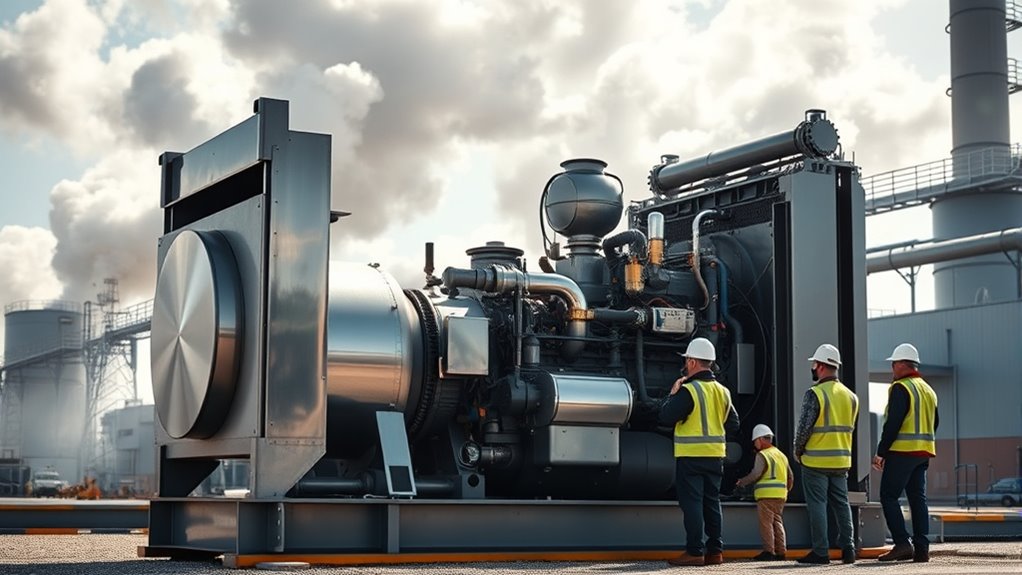
Diesel generators are essential for industries like telecommunications, construction, and events, thanks to their quick startup and reliable power supply. As you rely on these machines, it’s vital to understand their benefits and upkeep.
Diesel generators provide cost-effective power due to their impressive fuel efficiency, which translates to lower operational costs compared to other energy sources. Their robust design allows them to endure harsh conditions, making them ideal for heavy-duty and long-duration use.
When it comes to maintenance, diesel generators are relatively straightforward. You’ll find that routine tasks like oil changes and inspections are necessary to keep them running efficiently.
With fewer components than other generators, they simplify maintenance demands, ensuring you can focus on their performance and reliability in critical situations.
Key Advantages of Diesel Power
Renowned for their fuel efficiency, diesel engines offer significant advantages for long-term use.
You’ll find that they achieve 20% to 35% more distance per gallon than gasoline engines, making them a smart choice if you’re looking to save on fuel costs. Diesel fuel contains about 15% more energy than gasoline, providing higher torque for enhanced towing and hauling capabilities.
Furthermore, diesel engines are built to last, often outliving gasoline engines by three times, thanks to their robust components. Maintenance becomes less of a hassle as diesel engines don’t have spark plugs or carburettors, which means fewer interventions and reduced downtime.
Additionally, the lower ignition risk of diesel fuel guarantees greater safety in storage, ideal for industrial and remote applications.
Understanding Diesel Engine Efficiency
Although many factors contribute to engine efficiency, diesel engines stand out for their superior combustion process.
They’re more efficient than gasoline engines, converting 30-40% of fuel energy into power, compared to only 20-30% for gasoline. Diesel fuel itself contains about 15% more energy per gallon, which means you travel longer distances on less fuel. This makes diesel engines an economical choice for long trips and heavy-duty tasks.
Unlike gasoline engines, diesel engines don’t need spark plugs or distributors, eliminating ignition tune-ups and boosting efficiency. Regular maintenance is still essential to keep your diesel engine running effectively.
Additionally, diesel engines work at higher compression ratios, increasing thermal efficiency and reducing waste heat, which further enhances their performance and fuel economy.
Reliability and Longevity of Diesel Engines
Thanks to their robust design and engineering, diesel engines boast impressive reliability and longevity.
They’re built to withstand higher compression levels, making them more durable than gasoline engines. You’ll find that with proper maintenance, diesel engines can last over 30 years.
Routine upkeep is essential, but they can operate without major repairs for much longer than their gasoline counterparts. The heavy-duty components allow them to handle demanding tasks and harsh conditions without significant wear.
In high-torque applications, diesel engines have proven reliable, ideal for heavy-duty vehicles requiring consistent power.
Advances in diesel technology, spurred by low-emission standards, have further enhanced their reliability and longevity, reducing maintenance complexities.
Diesel engines are a solid choice for longevity and dependability.
Economic Considerations of Using Diesel

While diesel engines are known for their impressive reliability and longevity, their economic benefits can’t be overlooked either.
Diesel vehicles typically achieve a better fuel economy, offering 25 to 30 percent higher efficiency than gasoline engines. This translates to significant long-term savings on fuel costs.
Although diesel vehicles may come with a higher initial purchase price, their durability often leads to lower overall ownership costs over a longer time. The higher energy density of diesel fuel allows these engines to travel farther on a gallon, making them ideal for long-distance applications.
However, fluctuations in diesel fuel prices can affect cost-effectiveness. Despite potentially higher maintenance costs, the efficiency of diesel engines often offsets these expenses in heavy-duty and industrial settings.
Environmental Impact and Regulations
When considering diesel power, you’ll need to weigh its environmental impact, as diesel engines, while efficient, emit CO2 and other pollutants.
Maneuvering regulatory compliance can be challenging, with the EPA enforcing strict emission standards to curb these effects.
However, advancements in clean diesel technology are making it easier to meet these regulations while still benefiting from diesel’s efficiency.
Emissions and Pollution
Despite the advancements in diesel technology, diesel engines still pose significant environmental challenges due to their emissions.
Diesel exhaust contains higher levels of nitrogen oxides and particulate matter than gasoline engines, contributing to emissions and pollution in urban areas. These pollutants are linked to air quality issues and health risks.
Modern diesel vehicles, like the 2024 Sierra 1500 Duramax, emit approximately 416 grams of CO2 per mile, highlighting ongoing environmental concerns.
While the introduction of diesel exhaust fluid (DEF) reduces harmful emissions, it adds complexity and cost.
Although newer diesel engines meet stricter standards, older models fall short, exacerbating pollution.
It’s essential to weigh these factors when considering diesel engines, given their significant environmental footprint.
Regulatory Compliance Challenges
As diesel engines are celebrated for their fuel efficiency, they face growing regulatory hurdles due to emissions of CO2 and other pollutants.
You’re likely aware that these emissions demand adherence to stricter environmental standards, which is no small feat. The Diesel Emissions Reduction Act puts pressure on manufacturers to adopt advanced emission control systems, ensuring compliance with evolving regulations.
These systems are vital for reducing harmful emissions, but can lead to increased production costs and higher repair expenses.
Moreover, federal excise taxes on diesel fuel are heftier than those on gasoline, impacting your operational costs.
The fluctuating prices due to compliance efforts can challenge the economic feasibility of using diesel power.
Maneuvering through these regulatory compliance challenges is essential for maintaining diesel’s viability in today’s market.
Advancements in Clean Technology
Charting the regulatory landscape might be challenging, but it has sparked remarkable advancements in diesel technology. Modern diesel engines now showcase impressive environmental performance by considerably reducing CO2 emissions. For instance, the 2024 Sierra 1500 Duramax diesel emits only 416 grams/mile. Government regulations, like the Diesel Emissions Reduction Act, push these advancements in clean technology, ensuring compliance with stringent EPA emissions standards.
| Feature | Impact |
|---|---|
| CO2 Emissions | Reduced to 416 grams/mile |
| Diesel Emissions Reduction Act | Encourages cleaner technology |
| EPA Emissions Standards | Compliance and innovation |
| Diesel Exhaust Fluid (DEF) | Reduces nitrogen oxide emissions |
Maintenance Requirements for Diesel Engines
To keep your diesel engine running smoothly, regular maintenance is essential. Diesel engines thrive on consistent care, requiring diligent attention to several key components.
One important aspect is changing fuel filters every 10,000 to 20,000 miles. This step prevents clogging and maintains the integrity of the fuel system, guaranteeing efficient engine operation.
Don’t forget regular oil changes, typically every 5,000 to 7,500 miles, to maintain peak performance. Air filters also need periodic replacement, usually every 15,000 to 30,000 miles, to ensure proper airflow and engine efficiency.
Checking coolant levels and replacing them every 2 to 3 years, as per the manufacturer’s recommendations, is critical. Skipping these steps can lead to costly repairs, as diesel engines often require specialized knowledge for maintenance.
Challenges and Disadvantages of Diesel Power
When you consider the challenges of diesel power, environmental impact is a significant concern due to CO2 emissions and other pollutants.
You’ll also face high maintenance and repair costs, which can add up quickly, especially given the complexity of diesel engines.
Additionally, fluctuating fuel prices can affect your budget, making diesel power less predictable financially.
Environmental Impact Concerns
Although diesel engines are renowned for their efficiency and power, their environmental impact raises significant concerns. Diesel emissions include CO2 and harmful pollutants, degrading air quality, and accelerating climate change. Particulate matter from diesel can lead to respiratory issues, affecting communities near diesel operations. Diesel fuel also produces higher nitrogen oxides (NOx) than gasoline, contributing to smog and health problems. Despite advancements, older engines often fail to meet emissions standards, which further harms air quality.
| Emission Type | Source | Impact |
|---|---|---|
| CO2 | Diesel combustion | Climate change |
| Particulate Matter | Diesel engines | Respiratory issues |
| Nitrogen Oxides | Diesel fuel combustion | Smog, respiratory ailments |
| Older Engines | Non-compliance with standards | Air quality degradation |
| Regulatory Compliance | Diesel operations | Increased operational costs |
You must weigh these environmental challenges when considering diesel power.
Maintenance and Repair Costs
Maintaining diesel engines can be more demanding than their gasoline counterparts, primarily due to the specialized knowledge and parts required.
You’ll need to stay on top of regular maintenance like oil changes and filter replacements, which can add up to higher maintenance costs.
Diesel engines have components like fuel injectors and turbochargers that are prone to failure, resulting in hefty repair costs if not addressed quickly.
Despite their robust construction, these engines demand routine inspections to avoid issues like wet stacking, a problem that can lead to significant repair expenses.
- Specialized Knowledge Required: Diesel engines require specialized expertise for maintenance.
- Costly Components: Parts like turbochargers are expensive to repair.
- Routine Inspections: Prevents expensive future repairs and maintains efficiency.
Fuel Price Volatility
Fuel price volatility presents a significant challenge for diesel power users, impacting operational costs and budgeting. Diesel fuel prices fluctuate due to increased demand, production costs, and stricter environmental regulations. This unpredictability complicates your ability to manage expenses effectively.
The federal excise tax on diesel is higher than that on gasoline, further contributing to the volatility and resulting in elevated operational costs. Geopolitical events and natural disasters can cause diesel prices to spike unexpectedly, creating uncertainty for your business.
Additionally, fluctuations in the cost of diesel exhaust fluid (DEF), essential for meeting emissions standards, add to your financial burdens. Although diesel engines are efficient, the higher overall cost of diesel fuel can offset any savings, making it tough to budget accurately.
Future Trends and Alternatives to Diesel

As the world increasingly shifts its focus towards sustainability, the dominance of diesel power is being challenged by emerging technologies.
Future trends suggest a growing emphasis on cleaner technologies to combat diesel emissions. Electric vehicles (EVs) and renewable energy are leading this shift, with significant investments enhancing their appeal over traditional diesel.
Fuel cell generators, known for their efficiency and minimal upkeep, offer a viable alternative to diesel generators.
Government regulations are also pushing for low-emission diesel technologies, though meeting these standards can be costly.
Advances in battery and storage solutions further support renewable energy, potentially reducing diesel demand.
- Electric vehicles are on the rise.
- Fuel cell generators present cleaner options.
- Regulations promote low-emission solutions.
Conclusion
When considering diesel power, you’ll appreciate its efficiency and durability, making it ideal for tough environments. However, you’ll also face challenges with emissions and potentially higher maintenance costs. While diesel engines offer economic benefits and reliable performance, it’s essential to weigh these against their environmental impact. As regulations tighten and alternative energy sources emerge, you’ll need to stay informed about future trends to make the best choice for your power needs.
FAQs
1. What Are the Advantages and Disadvantages of Diesel Energy?
When you’re considering diesel energy, you’ll find it offers fuel efficiency and durability, lowering long-term costs. However, it’s essential to weigh environmental impacts, like CO2 emissions. Consider cleaner diesel technologies to mitigate these disadvantages for sustainable use.
2. What Are the Pros and Cons of Diesel?
You’re considering diesel’s pros and cons, right? You’ll appreciate its fuel efficiency and durability. However, you’ll face higher emissions and maintenance demands. Weigh these aspects carefully to decide if diesel suits your needs best.
3. What Are the Disadvantages of Diesel?
You’re facing higher emissions, stricter regulations, and potentially higher fuel costs with diesel. Maintenance is essential, demanding your time and expertise. Plus, diesel engines can be heavy and less portable, limiting their practicality for some uses.
4. What Is the Downside of Using Diesel Generators?
You might find diesel generators noisy, which can disturb your surroundings. They demand regular maintenance and repairs, which can be costly. Fuel prices fluctuate, affecting costs, and their heavy parts complicate transport, limiting portability and installation options.
