Differences Between Low and High Voltage Systems
Understanding the differences between low and high voltage is essential when exploring electrical systems. Low-voltage systems, ideal for homes, offer safety and lower costs. Meanwhile, high-voltage systems, suited for industrial uses, promise efficiency but bring complexity and risks. How do you decide which is best for your needs? Let’s explore the characteristics and applications to help you make an informed choice.
Key Takeaways
- Low voltage systems operate below 1,000 volts, while high voltage systems exceed 1,000 volts.
- High-voltage systems are used for efficient long-distance power transmission.
- Low-voltage systems are safer and more suitable for residential and small commercial applications.
- High-voltage systems require specialized safety measures and equipment.
- Low-voltage systems have lower initial installation costs compared to high-voltage systems.
Understanding Voltage Levels
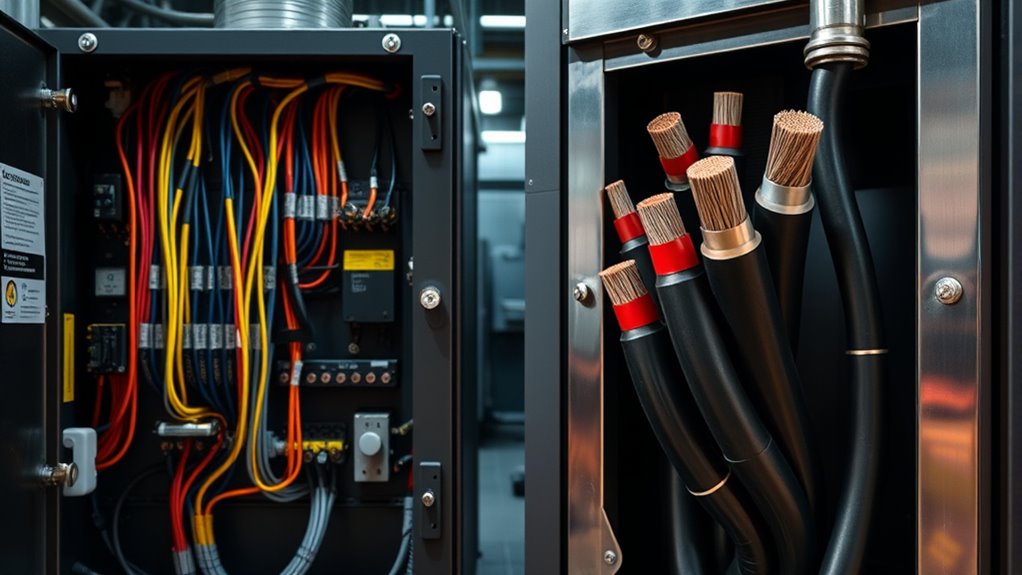
Voltage levels form the backbone of modern electrical systems, and understanding them is essential for anyone dealing with electricity.
Low-voltage systems operate under 1,000 volts AC and 1,500 volts DC and commonly power residential wiring, lighting, and gadgets.
In contrast, high-voltage systems exceed these limits, significantly influencing electricity transmission and power generation. They’re imperative for long-distance energy transport, ensuring power reaches urban and rural areas efficiently.
Between these lies medium voltage, ranging from 1,000 to 35,000 volts, often used in industrial applications for effective electricity distribution.
Grasping these distinctions helps in electrical engineering, enhancing system design and safety. Each voltage level serves unique functions, addressing specific needs across various sectors.
Characteristics of Low-Voltage Systems
When you consider low-voltage systems, you’ll find they’re ideal for common household applications like lighting and smart home devices.
These systems guarantee safety with their lower voltage levels and enhance energy efficiency, which is perfect for integrating renewable energy sources such as solar panels.
Common Household Applications
In many households, low-voltage systems play a crucial role in enhancing daily life through energy-efficient and convenient solutions. These systems typically operate between 5V and 24V and offer numerous household applications.
With low voltage, you can enjoy smart home systems that boost energy efficiency and convenience through devices like smart thermostats and lighting controls.
Here are some reasons you’ll love low-voltage systems:
- Safety Features: They reduce the risks associated with higher voltage systems.
- Cost-Effective Installation: They’re less expensive and require fewer safety precautions.
- Versatility: Ideal for applications like LED lighting, doorbells, and security cameras.
- Ease of Maintenance: Easier to maintain compared to high-voltage systems.
Low-power electronics and these efficient systems make your home smarter and safer.
Enhanced Energy Efficiency
Although high-voltage systems have their place, low-voltage systems shine when it comes to enhanced energy efficiency. Operating between 0 and 1,000 volts, these systems are less energy-intensive and safer.
Low-voltage systems generate minimal heat, reducing overheating risks and boosting energy efficiency. Applications like LED lighting and smart devices consume less power, lowering electricity bills and environmental impact.
Installation costs are generally lower for low-voltage systems, as they require thinner cables and simpler infrastructure than high-voltage systems. This makes them easier and more affordable to set up.
Plus, low-voltage technology pairs excellently with renewable energy sources like solar and wind, ensuring efficient energy generation and utilization in various electrical systems.
Characteristics of High-Voltage Systems
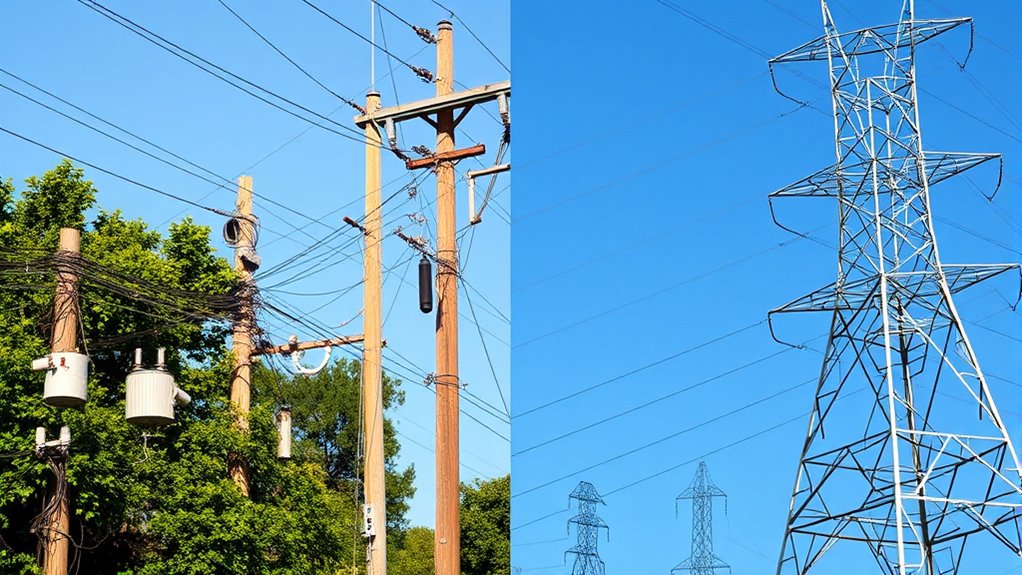
High-voltage systems operating above 1,000 volts AC and 1,500 volts DC play a crucial role in power generation, transmission, and distribution. They minimize resistance and Joule heating, allowing efficient power transmission over long distances.
Essential in industrial settings, these systems require specialized components to handle electrical energy safely. The risk of electrical arcing and severe burns demands strict safety measures.
Consider the following emotional impacts high-voltage systems can have:
- Awe: Marvel at the sheer power that can light up entire cities.
- Fear: Understand the potential dangers of electrical arcing.
- Reliance: Recognize their importance in powering crucial medical equipment.
- Responsibility: Appreciate the need for trained professionals to maintain safety.
High-voltage systems connect power plants to substations and large consumers.
Voltage Range Classifications
Knowing the voltage range classifications is essential for safety and efficiency when working with electrical systems.
Low voltage covers up to 1,000 volts AC and includes household device levels, while high voltage begins above that and poses greater risks.
Understanding these levels helps you adhere to safety guidelines and design systems that meet specific needs.
Voltage Levels Explained
Understanding voltage levels is key to ensuring safety and efficiency in electrical systems. Low-voltage systems, operating between 0 and 1,000 volts AC, are ideal for residential and commercial uses.
In contrast, high-voltage systems exceed 1,000 volts AC and are vital for electricity generation and long-distance transmission. Medium-voltage systems, ranging from 1,000 to 35,000 volts, serve industrial applications and facilitate efficient electricity distribution.
Extra-low voltage (ELV) systems, under 50 volts, provide safer options for applications like security systems.
When considering voltage levels, remember:
- Low voltage: safer for homes.
- Medium voltage: powers industries.
- High voltage: essential in power plants.
- ELV: safety in smaller gadgets.
Embrace the right voltage classification to maximize both safety and performance in your electrical systems.
Voltage Safety Guidelines
Although electrical systems are a staple of modern life, following their safety guidelines requires clarity and precision. Low-voltage systems, operating at 0 to 1,000 volts AC or 1,500 volts DC, are generally safer and are commonly used in homes and businesses. They pose fewer hazards but still require you to guarantee that wires aren’t damaged or exposed to prevent electrical shocks.
In contrast, high voltage systems exceed 1,000 volts AC or 1,500 volts DC, demanding stricter safety measures due to the risk of severe burns and electrical arcs. Proper protective clothing and equipment are vital to prevent dangerous contact.
Understanding these voltage range classifications is essential for designing electrical systems. It helps mitigate risks and guarantees safe, efficient operation across different applications.
Applications of Low-Voltage Systems
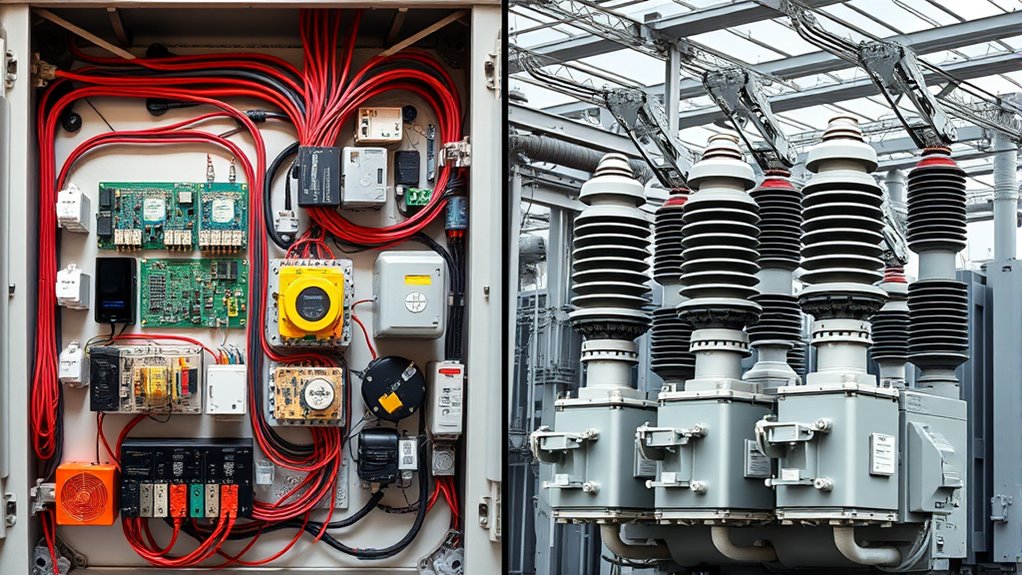
Whether setting up a home or managing a commercial space, low-voltage systems are invaluable due to their versatility and efficiency. Their applications range widely, enhancing energy efficiency and safety. They shine in:
- Security Systems: Low-voltage systems guarantee reliable and safe security installations.
- Lighting: They provide efficient lighting solutions that save energy and reduce costs.
- Smart Home Technologies: Enjoy a connected lifestyle with low-voltage devices.
- Renewable Energy Sources: Their compatibility with renewables boosts sustainability.
Installation is straightforward, and with their cost-effectiveness, they’re a wise choice.
In households, devices like laptops and phones thrive on low voltage, typically between 5 and 24 volts.
Besides being easy to maintain, these systems reduce heat generation, guaranteeing safety and reliability across applications.
Applications of High-Voltage Systems
High-voltage systems are indispensable when electricity needs to be delivered efficiently over long distances. Operating above 1,000 volts AC and 1,500 volts DC, these systems reduce resistance and energy losses, making them essential in power plants for generating and distributing electricity to urban and industrial areas.
High voltage applications extend to interconnecting electrical grids, ensuring a stable power supply across vast regions and enhancing voltage regulation. They’re also critical for powering heavy industrial equipment like motors and transformers.
In renewable energy, high-voltage systems efficiently transmit large amounts of power from wind and solar farms to consumption centers.
Even in the medical field, high voltage powers devices like X-ray and MRI machines, showcasing their diverse applications.
Safety Considerations for Low and High Voltage
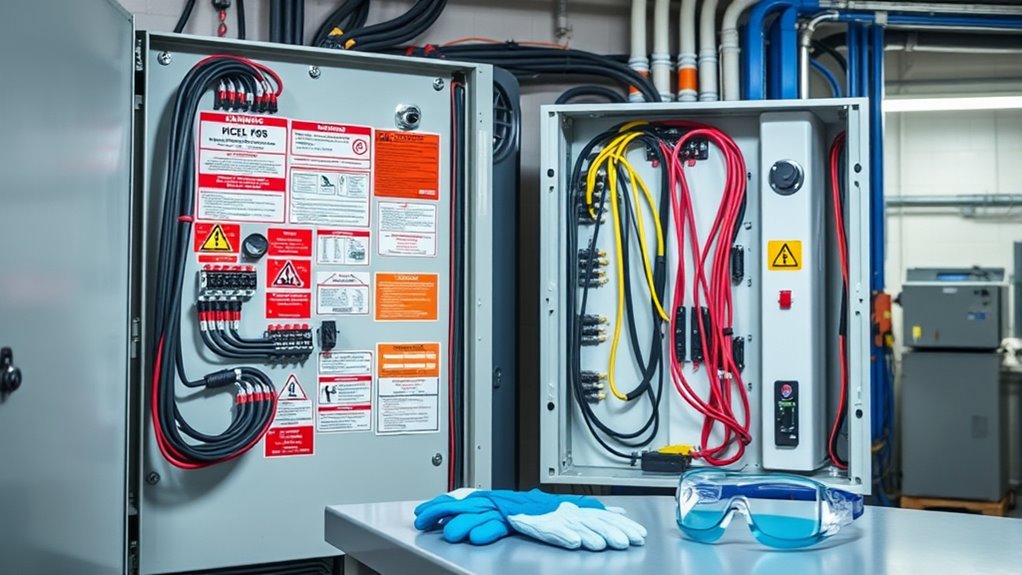
Electrical systems require strict adherence to safety protocols, especially high-voltage systems operating above 1,000 volts—these present severe risks, such as electrical arcing, which can be lethal.
Low-voltage systems might seem safer, but still pose a shock risk if wires are damaged or exposed. To guarantee electrical safety, follow these critical safety measures:
- Always wear specialized protective clothing and equipment when working with high-voltage cables.
- Maintain a safe distance and use insulated tools to minimize the shock risk.
- Ground equipment properly to prevent accidents.
- Regular inspections should be conducted to identify potential hazards early.
Cost Implications of Voltage Systems
High-voltage systems often have higher upfront costs but can offer long-term financial benefits.
The initial capital expenditure is substantial, mainly due to the expensive equipment and safety measures required for handling high voltage levels. Installation costs are also higher than those of low-voltage systems, as thicker conductors and robust insulation are necessary.
However, over time, high-voltage systems can reduce operational costs. They improve efficiency in power transmission, minimizing losses over long distances. This efficiency can offset the initial expenses.
On the other hand, low-voltage systems are more accessible for residential and small commercial applications, thanks to their lower initial costs. They’re ideal where high power isn’t needed, initially making them a cost-effective choice.
Selecting the Appropriate Voltage System
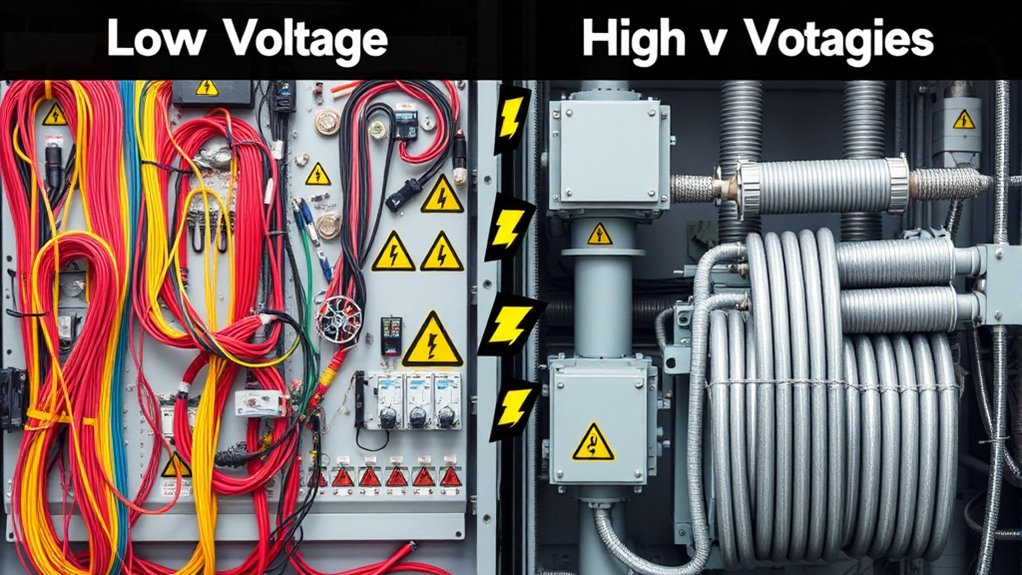
How do you choose the right voltage system for your needs? Selecting the appropriate voltage system requires carefully considering several factors to guarantee efficiency and safety. Here are key points to reflect on:
- Application Requirements: Are you powering consumer electronics or industrial machinery? Low-voltage systems suit home electronics, while high-voltage systems are needed for industrial applications and long-distance power transmission.
- Safety Implications: Low-voltage systems are generally safer for residential use. High-voltage systems, however, demand stringent safety measures due to risks such as electrical burns and arcing.
- Cost-Effectiveness: Evaluate your budget. Low-voltage systems are cheaper to install and maintain, whereas high-voltage systems offer efficient long-distance power transmission.
- Installation Environment: Consider where the system will be installed. Low-voltage systems suit typical residential settings, while high-voltage systems require specialized equipment and training.
Conclusion
When choosing between low- and high-voltage systems, consider your specific needs. Low-voltage systems are perfect for residential use, offering safety and ease of maintenance. High-voltage systems, while requiring more expertise and equipment, excel in industrial settings with their efficiency in long-distance power transmission. Always weigh safety, cost, and application. By understanding these differences, you’ll make an informed decision that best fits your requirements and guarantees peak performance and safety.
FAQs
1. What Is the Difference Between HT and LV?
You need to know that high-tension (HT) systems operate at higher voltages than low-voltage (LV) systems. HT is used for long-distance electricity transmission, while LV is for everyday devices. Safety and cost considerations also differ.
2. What Is the Voltage Difference Between Can High and Can Low?
You want to know the voltage difference between high and low systems. Low voltage usually tops at 1,000 volts, while high voltage starts there and can go up to 500,000 volts. The distinction is essential for safety and efficiency.
3. Is 240V High or Low Voltage?
You might wonder if 240V is high or low voltage. Under IEC standards, it’s classified as low voltage since it operates below 1,000 volts. Remember, even low voltage can be hazardous, so always prioritize safety.
4. What Is the Difference Between High Line and Low Line Voltage?
You must know that high line voltage exceeds 1,000 volts AC, while low line voltage stays under 50 volts. High voltage supports long-distance transmission, but it’s riskier. Low voltage suits residential use and is safer overall.