Unveiling the Power of Auto Transformers: What You Need to Know
In electrical engineering and power distribution, auto transformers play a crucial role. These versatile devices are essential for various applications, from voltage regulation in electrical grids to voltage transformations in industrial machinery. If you’ve ever wondered, “What is an autotransformer?” or want to deepen your knowledge about these intriguing devices, you’ve come to the right place.
In this comprehensive guide, we will unravel the mysteries of autotransformers, explore their working principles, applications, advantages, and disadvantages, and answer frequently asked questions to provide a well-rounded understanding.
What is an Auto Transformer?

An autotransformer, short for “autotransformer,” is an electrical transformer with a single winding instead of the two separate windings in conventional transformers. This single winding has at least three common terminals and two additional terminals. Autotransformers are designed to provide voltage transformation, voltage regulation, or phase-shifting capabilities.
The Basic Components
Before delving deeper into the functionality of autotransformers, let’s break down their basic components:
- Single Winding: As mentioned earlier, autotransformers have a single winding, which makes them distinct from conventional transformers. This winding is made of insulated copper or aluminum wire and is wound on a laminated core to minimize eddy current losses.
- Taps: Auto transformers have multiple taps or connection points along their winding. These taps allow for adjustable output voltage, making them versatile for various applications.
- Common Terminal: The common terminal connects one end of the winding. It serves as a reference point for both the input and output voltages.
Now that we have an overview of the components let’s explore how auto transformers work and their applications.
Working Principle of Auto Transformers
Autotransformers operate on the principle of electromagnetic induction, similar to conventional transformers. The key difference lies in the way they provide voltage transformation.
- Step-Up Operation: When the input voltage is applied across the winding’s two terminals, a portion of the winding acts as the primary coil, and the remaining portion acts as the secondary coil. You can achieve various output voltages by connecting the load to different taps along the winding. When the load is connected to a tap with fewer turns on the winding, it steps up the voltage, making it useful for voltage regulation.
- Step-Down Operation: Conversely, connecting the load to a tap with more turns on the winding results in a step-down in voltage. This step-down capability makes auto transformers suitable for applications requiring voltage reduction.
- Voltage Regulation: Auto transformers can regulate voltage within a specific range by adjusting the tap connections. This feature is particularly useful in scenarios where voltage fluctuations are common.
Applications of Auto Transformers
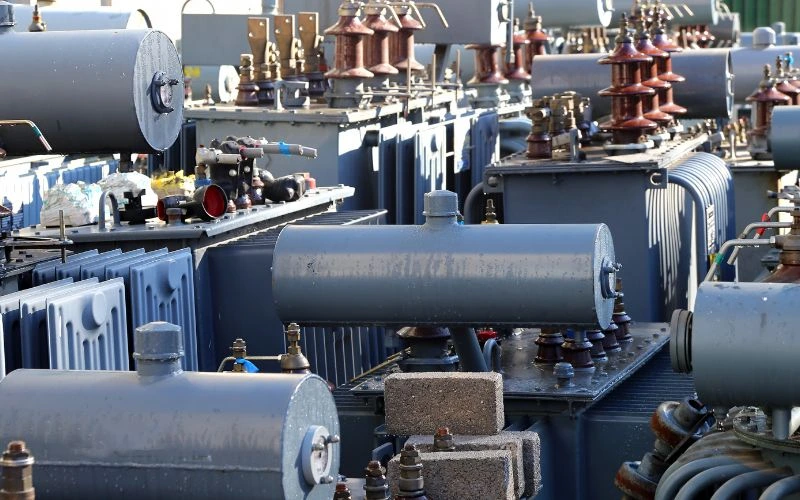
Autotransformers find extensive use in various applications across different industries. Here are some notable examples:
Electrical Grids
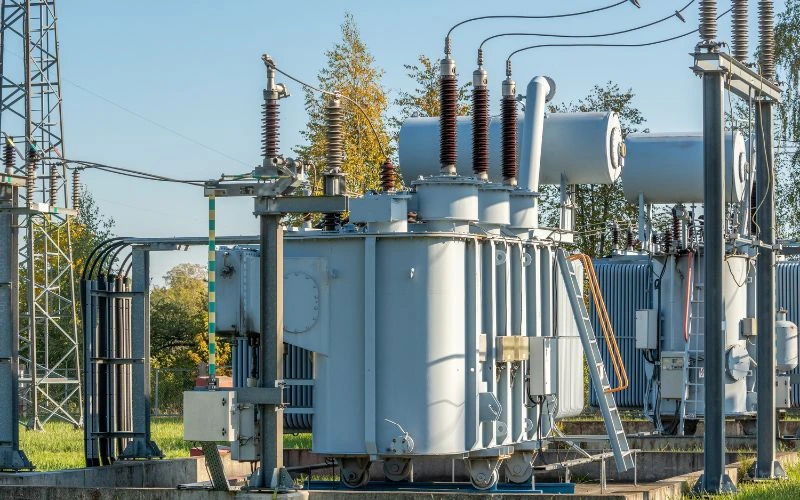
Autotransformers are essential components in electrical substations. They are vital in stepping up or down voltage levels to facilitate efficient power transmission and distribution. By adjusting the taps on the autotransformer, grid operators can regulate voltage and maintain system stability.
Industrial Machinery
In industrial settings, auto transformers are employed to adapt voltage levels to suit the requirements of heavy machinery and equipment. They ensure the machinery operates at the desired voltage, improving performance and efficiency.
Motor Starting
Autotransformers are often used in motor starting applications, requiring high starting torque. They provide a temporary voltage boost during startup and then step down once the motor reaches its full speed.
Voltage Stabilization
Autotransformers stabilize voltage in sensitive electronic equipment, preventing damage due to voltage fluctuations. They are commonly found in data centers, medical facilities, and laboratories.
Advantages and Disadvantages of Auto Transformers
Like any technology, auto transformers come with their own set of advantages and disadvantages.
Advantages
- Efficiency: Auto transformers are generally more efficient than their two-winding counterparts because they have fewer losses due to a single winding.
- Compact Size: Auto transformers are more compact and lightweight than traditional transformers, making them suitable for space-constrained applications.
- Cost-Efficiency: They are often more cost-effective to manufacture than isolation transformers, making them an attractive choice for various applications.
Disadvantages
- Reduced Isolation: Auto transformers do not provide the same level of electrical isolation as two-winding transformers, which may be a concern in certain applications.
- Limited Voltage Transformation Range: Auto transformers have a limited range of voltage transformations compared to isolation transformers.
- Safety Concerns: Due to the reduced isolation, auto transformers may pose a safety risk in specific scenarios, requiring additional precautions.
Sizing and Selection of Auto Transformers
When it comes to utilizing auto transformers effectively, proper sizing and selection are crucial. Here are some key considerations:
Load Characteristics
The type of load you intend to connect to the autotransformer plays a significant role in its selection. Different loads, such as resistive, inductive, or capacitive, may have varying voltage requirements and load characteristics. Ensure the selected autotransformer can handle the specific load type and its associated voltage fluctuations.
Voltage Requirements
Determine the voltage transformation ratio required for your application. Autotransformers come in various voltage ratings, so you must select one that can provide the necessary transformation to meet your voltage needs. Consider the primary (input) and secondary (output) voltage requirements.
Current Ratings
Autotransformers are rated for a maximum current they can handle safely. Exceeding the rated current can lead to overheating and damage. Calculating the expected load current and choosing an autotransformer with an adequate current rating is essential to handle the load safely.
Efficiency and Losses
Consider the efficiency of the autotransformer. Efficiency can vary based on the design and quality of the transformer. High-efficiency models will reduce energy losses, which is crucial for applications where energy conservation is a priority.
Space and Size Constraints
Autotransformers are known for compact size, but ensuring that the chosen transformer fits within the available space is essential. In some cases, custom-designed auto transformers may be necessary to meet specific size requirements.
Safety Standards and Codes
Adhere to safety standards and electrical codes when selecting and installing autotransformers. These standards provide guidelines for installing, grounding, and protection against electrical hazards. Compliance ensures the safe operation of the autotransformer.
Conclusion
In conclusion, auto transformers are versatile and valuable components in electrical engineering. Their ability to transform, regulate, and stabilize voltage levels makes them indispensable in various applications, from power distribution in electrical grids to enhancing the performance of industrial machinery. Understanding their working principles, advantages, and disadvantages is essential for anyone working with electrical systems or considering using autotransformers in their projects.
FAQs
1. Can an autotransformer convert AC to DC voltage?
No, auto transformers are designed for AC voltage transformation and regulation. You would typically use rectifier circuits or specialized power supplies to convert AC to DC voltage.
2. Are auto transformers more efficient than isolation transformers?
Autotransformers are generally more efficient due to their single-winding design, which results in fewer losses. However, their suitability depends on the specific application and requirements.
3. Are auto transformers safe to use in residential applications?
Autotransformers can be used in residential applications, but safety precautions must be taken, especially when dealing with higher voltage levels. Following electrical codes and guidelines is essential, and consulting a qualified electrician for proper installation and usage.