Ward Leonard Method: Principle, Working, and Applications
The Ward Leonard method might intrigue you if you’re interested in precise and reliable motor speed control. This technique, leveraging a DC generator to modulate a DC motor, motor, offers exceptional performance for demanding tasks like elevators and cranes. By adjusting the generatgenerator’sexcitation, you can achieve accurate speed adjustments in both directions, even enabling energy recovery through regenerative braking. But what makes this method stand out in industrial applications, and how do its components work together to improve efficiency? Let’s delete the nuances of this fascinating system.
Key Takeaways
- The Ward Leonard Method controls DC motor speed using a separately excited DC generator.
- Voltage output from the generator determines the motor’s motor, allowing precise adjustments.
- It is ideal for applications needing wide-range speed control, like elevators and cranes.
- Enables bidirectional motor control and regenerative braking for energy efficiency.
- Though effective, it involves complexity, high initial costs, and maintenance challenges.
Principle of Ward Leonard Method
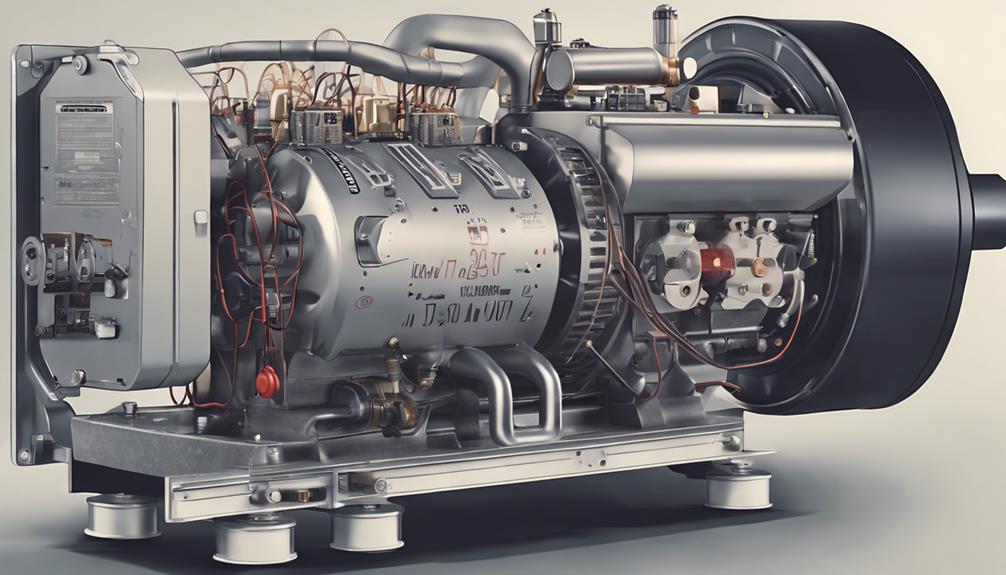
The Ward Leonard method revolves around controlling a DC motor by adjusting the voltage output of a connected DC generator. Developed by Harry Ward Leonard in the 19th century, this method uses a motor-generator set to achieve the desired speed control.
You have a DC generator (G) that powers a DC motor (M1). By varying the generator’s voltage, you can directly influence the speed of the DC motor.
A key component in this system is the field regulator. The field regulator controls the generator’s field excitation, which in turn adjusts the output voltage. This allows for precise control over the motor’smotor’s making the Ward Leonard method highly effective for applications requiring accurate speed adjustments.
One of the standout features of this system is its wide-range speed control. You can smoothly shift between different speeds, providing flexibility and efficiency in various industrial settings.
Whether you’re you’reg with machinery that needs fine-tuned speed adjustments or equipment requiring consistent speed control, the Ward Leonard method delivers reliable performance.
This method remains a benchmark for DC motor speed control due to its robustness and precision.
Components of the System
When you look at the Ward Leonard system, you’ll you’ll it revolves around a few key components. These include the DC motor, the separately excited DC generator, and the motor-generator set, each essential for precise speed control.
Motor-Generator Functionality
A Ward Leonard system relies on three primary components: a DC motor, a separately excited DC generator, and a motor-generator set. This configuration is designed to achieve precise speed control, guaranteeing stable and accurate operation.
- DC Motor: This motor acts as the driving motor and receives power from the generator.
- Separately Excited DC Generator: This generator functions as an amplifier with field and armature windings. Small changes in input current to the generatgenerator’swinding produce large variations in output voltage, allowing for precise speed control.
- Motor-Generator Set: This combination ensures smooth and accurate variation of speed in DC motors. The motor-generator set is critical for maintaining stable and reliable speed control.
- Speed Control Mechanism: The Ward Leonard system excels in high-precision and reliability applications because it can provide stable and accurate control over motor speed.
Control System Components
In the Ward Leonard system, several key components are working together to guarantee precise and stable speed control. At the heart of this setup is the DC motor, which acts as the driven motor responsible for executing the desired mechanical work. To control its speed, you rely on a separately excited DC generator. This generator is important because it provides variable voltage control, allowing you to adjust the speed of the DC motor smoothly and accurately.
The motor-generator set, often referred to as the M-G set, significantly amplifies the voltage. This ensures that the DC motor’s speed variations are smooth and stable, making the system ideal for applications that demand high precision.
An AC driving motor powers the entire system. This motor supplies the necessary energy to the motor-generator set, ensuring that the DC generator can produce the required variable voltage. Additionally, a synchronous motor may be incorporated to improve the system’s efficiency.
These control system components—Leonard Ward’s Ward’sor, separately excited DC generator, motor-generator set, AC driving motor, and sometimes a synchronous motor—work in harmony to deliver unmatched speed control and stability for various industrial applications.
Circuit Diagram

Through the circuit diagram of the Ward Leonard system, you’ll you’llw the DC motor, generator, and control components interconnect for precise speed control. The diagram is essential for understanding how these elements work together to achieve effective speed regulation.
Here’s Here’skdown of what you’ll you’lln the circuit diagram:
- DC Motor: This is the primary component whose speed you want to control. The motor receives its armature voltage from the generator, allowing for fine-tuned speed adjustments.
- Generator: It acts as the variable source of armature voltage for the motor. You can precisely regulate the motor’smotor’ by controlling the generator’s outputs..
- Control Components: These include variable resistors, often rheostats, which adjust the generatgenerator’s voltage. By varying these resistors, you directly influence the generatgenerator’sre voltage and consequently the motor’smotor’s
- Electrical Connections: The diagram shows how the motor, generator, and control components are wired together, illustrating the flow of electricity and pinpointing where adjustments can be made for effective performance.
Understanding this circuit diagram helps you grasp the electrical connections and each component’s role in the Ward Leonard speed control method.
Speed Control Mechanism
To control the speed of a DC motor in the Ward Leonard system, you adjust the generatgenerator’s voltage. This method hinges on varying the field excitation of the generator, which in turn changes the armature voltage applied to the motor. By manipulating this voltage, you can achieve precise and sensitive speed control. The relationship between the generator field voltage and the motor speed is key. When you increase the field excitation in the Ward Leonard control system, the generator output voltage rises, leading to a higher armature voltage and, consequently, an increase in motor speed. Conversely, reducing the field excitation lowers the generator output voltage, decreasing the motor speed. This setup allows for smooth and wide-range adjustments, making it highly effective for various industrial applications.
You can fine-tune the motor speed efficiently and flexibly through this method, ensuring excellent performance.
The Ward Leonard system’system’sy to provide a stable and adjustable voltage makes it an excellent choice for tasks requiring variable speed control. By leveraging this control system, you gain a powerful tool for managing the speed of DC motors with precision and ease.
Bidirectional Control
The Ward Leonard system easily controls motor speed in both forward and reverse directions, making it ideal for applications like elevators and cranes. This bidirectional control is achieved by adjusting the generator output voltage, allowing the DC motor to operate smoothly in both clockwise and counterclockwise directions. Such precise motor speed control is vital for tasks that demand versatile speed adjustments in various industrial settings.
Bidirectional control enhances the Ward Leonard system’system’sility and functionality. It’s noIt’sst about moving in two directions; it’s abit’sdoing so with precision and efficiency.
Here are some key benefits:
- Elevators: Ensure smooth and safe rides by precisely controlling ascent and descent speeds.
- Cranes: Accurately position heavy loads by fine-tuning the hoist speeds in both directions.
- Conveyor Belts: Manage material flow by adjusting belt speed to accommodate different production requirements.
- Machine Tools: Achieve intricate machining processes by varying speeds for different operations.
Regenerative Braking
When you incorporate regenerative braking into the Ward Leonard system, you enable energy recovery that boosts efficiency.
This mechanism converts kinetic energy into electrical energy, reducing overall energy consumption.
It’s particularly beneficial in industrial applications like elevators and cranes, where it can lead to cost savings and enhanced sustainability.
Energy Recovery Mechanism
Regenerative braking in the Ward Leonard system efficiently recycles braking energy back into the system, enhancing both energy consumption and sustainability. This method is pivotal for improving the overall efficiency and smooth operation of machinery. In industrial applications, where energy conservation is paramount, regenerative braking stands out as a key feature.
When you think about regenerative braking, consider the following benefits:
- Energy Consumption: By capturing and reusing braking energy, the system greatly reduces the need for external power sources, lowering overall energy consumption.
- Efficiency: This method boosts the efficiency of the entire system, ensuring that less energy is wasted and more is put to productive use.
- Smooth Operation: For applications like elevators, regenerative braking guarantees smooth and safe operation, providing a seamless experience for users.
- Industrial Applications: In settings where heavy machinery operates continuously, energy conservation through regenerative braking can lead to substantial cost savings and environmental benefits.
Incorporating regenerative braking into the Ward Leonard system not only makes it more efficient but also aligns with modern sustainability goals, making it a smart choice for many industrial applications.
Efficiency and Benefits
By incorporating regenerative braking into the Ward Leonard method, you can greatly enhance your system’system’sency and enjoy numerous benefits. By recycling the energy typically lost during braking, regenerative braking greatly boosts your system’s overall efficiency. This not only reduces energy consumption but also promotes sustainability in various industrial applications.
One key benefit of regenerative braking in the Ward Leonard method is its role in improving energy efficiency. The energy recovered during braking can be fed back into the system, leading to lower operational costs. This makes your industrial processes more cost-effective and environmentally friendly.
Regenerative braking is also important for smooth elevator operations, ensuring passenger safety and comfort. The accuracy and reliability of industrial processes using the Ward Leonard method are enhanced, thanks to the precise control regenerative braking offers. This precision is essential in applications requiring meticulous control and stability.
Moreover, reducing energy consumption contributes to a more sustainable operation, aligning with modern energy-saving initiatives.
Applications in Industries
Industries like manufacturing, transportation, and material handling greatly benefit from the Ward Leonard system’system’srative braking capabilities. This technology doesn’tdoesn’ttop machines; it captures and recycles the braking energy, making it a game-changer in industrial applications. By integrating regenerative braking, you’re you’rentially boosting energy conservation and promoting sustainability within your operations.
Imagine the following scenarios:
- Elevators: Smooth, reliable travel with enhanced passenger safety while conserving energy.
- Cranes: Efficiently lift and lower heavy materials with reduced energy waste.
- Manufacturing Lines: Seamless production flow with minimized energy loss during machine deceleration.
- Transportation Systems: Effective braking in electric trains and trams, contributing to overall sustainability.
The Ward Leonard Method’Method’srative braking is known for its high accuracy and reliability, critical for maintaining smooth operation in elevators and other sensitive applications. By adopting this technology, you’re you’rely improving operational efficiency but also aligning with energy-conscious practices.
This makes the Ward Leonard system an essential component for any industry aiming for energy conservation and sustainability. Regenerative braking is a key feature for modern, eco-friendly industrial applications.
Power Factor Improvement
In the Ward Leonard method, over-excited synchronous motors are essential for improving the system’system’sfactor by compensating for lagging reactive power. When you use these over-excited synchronous motors, they operate with a leading power factor. This leading power factor effectively cancels out the lagging reactive power typically present in the system, resulting in an enhanced overall power factor.
Improving the power factor has significant benefits. First, it increases the system’system’sency. When the power factor is closer to unity, you reduce the amount of reactive power in the system, meaning that more of the power generated is used for actual work rather than wasted. This optimization leads to lower energy losses and reduced operational costs.
Additionally, a better power factor contributes to the overall stability of the system. With reduced reactive power, the electrical system experiences fewer voltage fluctuations and operates more smoothly. This stability is important for maintaining consistent performance, especially in applications requiring precise control of motor speeds and torques.
Industrial Applications
The Ward Leonard method shines in industrial applications such as steel rolling mills and paper mills, where precise speed control is paramount. Maintaining consistent speed and torque is essential for high-quality production and operational efficiency in these environments. The Ward Leonard system excels in delivering this level of control, making it a go-to solution for various industries.
Here are some key industrial applications where the Ward Leonard system is indispensable:
- Steel Rolling Mills: Achieve precise control over the rolling speed, ensuring consistent thickness and quality of the steel sheets.
- Paper Mills: Maintain uniform speed in paper production, which is essential for producing smooth, even paper without defects.
- Mine Hoists: Provide accurate and reliable speed regulation necessary for the safe and efficient transport of materials in and out of mines.
- Diesel-Electric Locomotives: Enhance efficient speed control and operation of locomotives, ensuring smooth and reliable rail transport.
Advantages

You’ll You’llhat the Ward Leonard method offers unparalleled advantages in speed control and energy efficiency for DC motors.
The Ward Leonard system is renowned for its smooth speed control, allowing you to adjust motor speeds precisely over a wide range. This precision extends to both forward and reverse directions, making it incredibly versatile for various industrial applications.
A standout feature is its inherent regenerative braking capability. This means that energy can be efficiently fed back into the system during deceleration, reducing energy consumption and operational costs.
If you need to handle heavy and intermittent loads, the system’system’s slip ring induction motors with flywheels ensures stability and reliability.
Moreover, the Ward Leonard system benefits from the use of an over-excited synchronous motor, which can greatly enhance the power factor. This is important for improving overall system efficiency and reducing electrical losses.
Whether you’re you’reg with heavy machinery or delicate operations, the Ward Leonard method provides the kind of precise control that guarantees excellent performance and energy savings.
Drawbacks
When considering the Ward Leonard method, you’ll you’lleveral drawbacks that impact its practicality. These include:
- Efficiency and energy loss
- Complexity and maintenance requirements
- Significant cost and implementation challenges
Understanding these issues is essential before deciding if this method fits your needs.
Efficiency and Energy Loss
Energy losses in the Ward Leonard system greatly impact its overall efficiency. The motor-generator set and the variable resistor are the primary culprits behind these losses. When energy transforms through these components, inefficiencies arise, leading to significant energy losses. Consequently, thsystem’ssl efficiency is significantly reduced.
Here are four key points to keep in mind:
- Motor-Generator Set Losses: The motor-generator set is responsible for converting electrical energy into mechanical energy and vice versa. Each conversion step introduces energy losses, which accumulate and diminish the system’system’sency.
- Variable Resistor Losses: The variable resistor, essential for precise speed control, also contributes to energy losses. As energy dissipates in the form of heat within the resistor, the system’system’sency further declines.
- Maintenance Requirements: To address efficiency issues and mitigate energy losses, higher maintenance requirements are necessary. Regular maintenance ensures the system operates at its best, though it doesn’tdoesn’teliminate energy losses.
- Efficiency vs. Control: Despite the drawbacks in efficiency and energy losses, the Ward Leonard system excels in offering precise speed control. This precision is often important in applications where exact speed regulation outweighs the concern for energy efficiency.
Understanding these aspects can help you better appreciate the trade-offs involved in using the Ward Leonard system.
Complexity and Maintenance Requirements
Given the significant energy losses, the Ward Leonard system also presents challenges due to its complexity and maintenance requirements. The system’system’sle components, such as the DC motor, generator, and variable resistor, contribute to its high level of complexity. Each part must function smoothly, which demands regular maintenance to guarantee smooth and efficient operation. This maintenance can be time-consuming and requires specialized knowledge, making it less appealing for some applications.
Energy losses during the energy transformation process further impact the overall efficiency of the Ward Leonard system. These losses, combined with the complexity of the system, can reduce its appeal compared to more modern solutions. Additionally, the size constraints of the Ward Leonard system can be problematic. The equipment is typically large and heavy, making it difficult to integrate into spaces with limited room, especially for high-power applications.
Moreover, the system’system’sd overload capacity restricts its ability to handle quick load adjustments. Unlike modern electronic systems, the Ward Leonard method struggles with rapid changes in load, which can be a significant drawback in dynamic environments.
Cost and Implementation Challenges
The Ward Leonard system’system’snitial cost and substantial installation challenges make it less attractive for many applications. When you’re you’reering implementing this method, there are several significant drawbacks to keep in mind:
- Initial Cost: The system requires additional machines, considerably increasing the initial cost. If you’re you’re-conscious, this might be a deal-breaker.
- Floor Area: A large floor area is required for installation. You’ll You’llo make sure you have the necessary space, which can be a constraint in facilities where floor area is at a premium.
- Weight: The system is heavy, complicating the installation process. This added weight can lead to structural concerns and might require reinforced flooring, adding another layer of cost and complexity.
- Maintenance: Frequent maintenance is essential to keeping the system running optimally. This ongoing requirement means more downtime and higher operational costs.
Additionally, the Ward Leonard system often suffers from lower efficiency compared to modern alternatives. The machinery tends to produce more noise, which can be disruptive, especially in environments where silent operation is important.
Considering these factors, the Ward Leonard method may not be the best fit for every situation.
Conclusion
You’ve You’veed the Ward Leonard method, a versatile approach for controlling DC motor speed with precision. By adjusting the generatgenerator’s voltage, you can achieve reliable performance in both directions, enhancing efficiency through regenerative braking.
This method’method’sange control makes it perfect for industrial applications like elevators and cranes. While it offers significant advantages, it’s esit’sial to weigh its drawbacks for your specific needs.
Overall, the Ward Leonard method remains a robust option for precise motor control.
FAQs
What is the Ward Leonard method?
The Ward Leonard method is a classic system used for controlling the speed of DC motors. It involves the use of a motor-generator set, where the speed of the DC motor is regulated by varying the voltage supplied to it. This method is widely used for applications that require precise control of motor speed, such as in elevators and cranes.
Key Components:
- Prime Mover: A machine (like an AC motor or diesel engine) drives the DC generator.
- DC Generator: Provides variable voltage to control the DC motor speed.
- DC Motor: The motor whose speed is controlled by the generatgenerator’s.
How does the Ward Leonard method work?
The Ward Leonard method works by varying the voltage supplied to the DC motor. Here’s Here’s operates:
- Prime Mover: An AC motor or other prime mover drives the DC generator.
- DC Generator: The output voltage of the generator can be controlled by adjusting the field current of the generator.
- DC Motor: The variable voltage from the DC generator is supplied to the armature of the DC motor, which controls its speed. A higher voltage results in higher motor speed, while a lower voltage reduces the speed.
The speed of the DC motor is directly proportional to the voltage applied to it, allowing smooth and wide-range control of motor speed.
Steps:
- Prime mover drives the DC generator.
- The generator provides adjustable voltage.
- The motor speed varies with the applied voltage.
What are the advantages of the Ward Leonard method?
The Ward Leonard method offers several advantages, particularly in applications where precise speed control is required:
- Wide Range of Speed Control: It provides a smooth and continuous range of speed control, from zero to maximum speed.
- High Starting Torque: The system can produce a high starting torque, which is beneficial for heavy-duty applications like cranes and elevators.
- Reversibility: The motor’smotor’sion can be easily reversed by reversing the polarity of the generatgenerator’s making it suitable for applications requiring forward and reverse motion.
- Good Speed Regulation: The Ward Leonard system maintains a consistent motor speed under varying load conditions.
Advantages:
- Smooth and wide speed control.
- High starting torque.
- Easy reversibility for forward and reverse motion.
- Consistent speed regulation under different loads.
What are the disadvantages of the Ward Leonard method?
Despite its advantages, the Ward Leonard method has some drawbacks:
- High Initial Cost: The setup requires multiple machines (prime mover, generator, motor), making installation expensive.
- Maintenance Requirements: The system has mechanical parts that wear out over time, requiring regular maintenance.
- Large Size: The motor-generator set is bulky, making it unsuitable for limited-space applications.
- Inefficiency at Low Loads: Compared to modern electronic speed control methods, the system can be less efficient, especially at lower loads.
Disadvantages:
- High initial cost and complexity.
- Requires regular maintenance.
- It’s bulky and takes up space.
- Lower efficiency at low loads.
Where is the Ward Leonard method used?
The Ward Leonard method is used in industries where precise and smooth speed control is essential. Common applications include:
- Elevators: Provides smooth acceleration and deceleration with precise speed control.
- Cranes and Hoists: These are used to control the lifting and lowering speed of industrial cranes.
- Rolling Mills: Ensures consistent speed control in heavy-duty machinery used for rolling metals.
- Electric Trains: These are used in older systems to control the speed of electric locomotives.
Common Applications:
- Elevators for smooth operation.
- Industrial cranes and hoists.
- Rolling mills for metalworking.
- Electric train speed control.