Understanding Voltage Transformers: Types, Uses, and Benefits
When dealing with high-voltage systems, you can’t overlook the importance of voltage transformers. These devices are essential for stepping down high voltage signals, ensuring safety and precision in electrical measurements. By leveraging electromagnetic induction, voltage transformers adjust the turns in coils to modify voltage levels, making them indispensable for various applications. But how exactly do these transformers work, and what should you look for when selecting one? Let’s explore the intricacies and key features that make voltage transformers a critical component in electrical engineering.
Key Takeaways
- Voltage transformers step down high voltage signals for safe, accurate measurements.
- They operate through electromagnetic induction between primary and secondary coils.
- Key features include voltage ratio, secondary voltage ratings, burden, and accuracy.
- Types include electromagnetic, capacitor, and optical transformers, each with unique advantages.
- Regular maintenance and inspection are essential for performance and safety.
What Is a Voltage Transformer?
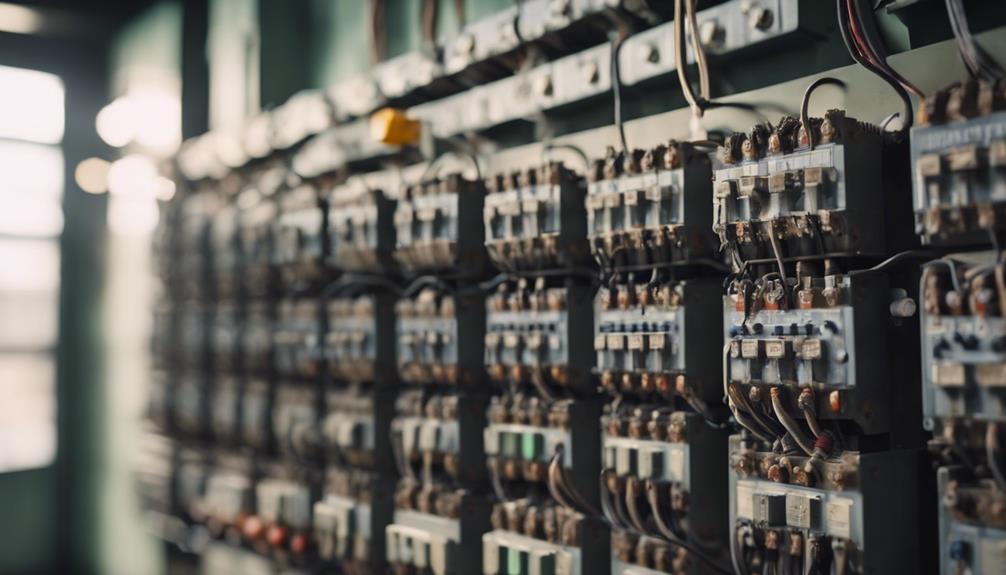
A voltage transformer is a device that steps down high-voltage electrical signals to safer, lower voltages for measurement or control. When dealing with high-voltage systems, it’s vital to have accurate and secure ways to measure and manage those voltages. That’s where voltage transformers come in.
They operate on the electromagnetic or capacitive coupling principle, allowing you to step down voltage levels accurately. This makes them indispensable for providing scaled-down voltage outputs safe for instruments and protective relays.
You might think of a voltage transformer as a converter that handles high-voltage scenarios. While some devices can step up voltage, voltage transformers primarily focus on the step-down voltage process. This ensures that electrical equipment and personnel are protected from the potentially harmful effects of high voltage.
They come in various ratios and designs for different applications and voltage levels. Whether you’re working in a power system setting or another high-voltage environment, having a reliable voltage transformer is essential for accurate voltage measurement and the protection of your electrical gear.
How Voltage Transformers Work
Voltage transformers are vital in stepping down high voltage levels through electromagnetic induction, making them essential for safe and accurate electrical measurements. These transformers convert high voltage levels to lower, manageable levels when dealing with electrical systems. This conversion allows you to measure voltage safely without damaging your equipment.
Voltage transformers work pretty straightforwardly. They rely on electromagnetic induction, where an alternating current (AC) passing through the primary coil creates a magnetic field. This magnetic field then induces a voltage in the secondary coil. Adjusting the number of turns in the primary and secondary coils, a step-up/down voltage transformer can either increase or decrease the voltage levels as needed.
For instance, you might use a step-down transformer to reduce a high input voltage to a safer level that your measuring devices can handle. The transformer produces an output voltage proportional to the input voltage, ensuring accurate readings. This precision is essential for various applications, from monitoring power systems to calibrating instruments.
In essence, voltage transformers allow the safe and accurate application of voltage to different measuring devices by stepping down high voltage levels through electromagnetic induction.
Key Features to Consider
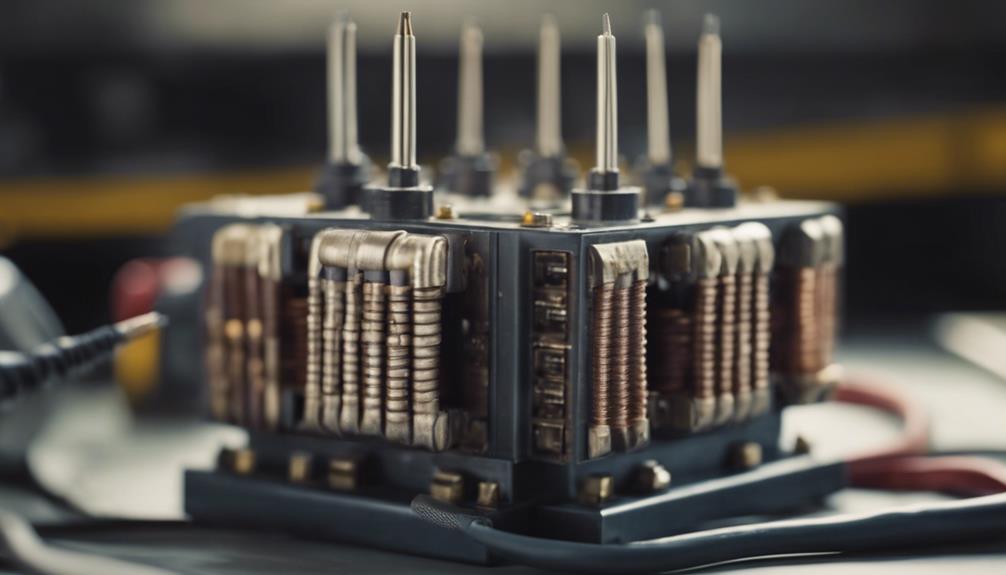
When selecting a voltage transformer, you’ll want to consider key features like the voltage ratio, secondary voltage ratings, burden, and accuracy. The voltage ratio indicates how the transformer steps up or down the voltage; for example, a 600:120 ratio converts 600V to 120V. Understanding the secondary voltage ratings, commonly 120V and 70V, is important for ensuring compatibility with your measuring instruments.
Burden and accuracy are essential, especially when using metering-style transformers with smaller cores and VA capacities for improved precision. Knowing these specs helps avoid measurement errors and ensures the device operates efficiently.
Here’s a quick reference table for these key features:
| Feature | Description |
|---|---|
| Voltage Ratio | Primary to secondary voltage conversion |
| Secondary Voltage | Standard ratings (120V, 70V) |
| Burden | Load capacity affecting accuracy |
| Accuracy | Measurement precision |
| Step Up/Down Transformer | Converts voltage up or down as needed |
When dealing with voltage transformers, always check the primary winding labels (H, X, Y, Z) to ensure proper connections, especially for isolated applications. Don’t hesitate to contact customer service if you have any questions—they can help you choose the right transformer for your specific needs.
Types of Voltage Transformers
You’ll encounter three primary types of voltage transformers: electromagnetic, capacitor, and optical. Electromagnetic transformers are the most traditional. They use magnetic fields to convert voltage, making them reliable for various applications. You’ll often see these referred to as potential transformers when used to step through voltage signals for metering and protection in electrical systems.
Capacitor voltage transformers (CVTs) are another critical type, especially for high-voltage applications. These transformers leverage capacitors to divide the voltage signal before using an inductive element to complete the conversion process. Because of their design, CVTs are more economical and efficient for high-voltage systems, making them a popular choice when dealing with substantial voltage levels.
Optical transformers, the third type, utilize the Faraday effect for voltage transformation. They convert electrical signals into optical signals and then back into electrical signals. This method allows for high accuracy and immunity to electromagnetic interference, making optical transformers suitable for environments where precise and reliable voltage conversion is critical.
Each type of voltage transformer serves a specific purpose and offers unique advantages. Understanding these differences helps you choose the right converter for your needs, ensuring efficient and effective voltage management in your electrical systems.
Choosing the Right Transformer

Selecting the right transformer requires a clear understanding of your system’s voltage ratio, burden, and accuracy needs. To start, determine your system’s primary and secondary voltage ratio. This step guarantees the transformer matches the system’s voltage requirements. Different transformers have different capabilities, so consider whether an electromagnetic, capacitor, or optical transformer best suits your application.
Next, assess the burden, which refers to the load the transformer must handle. Matching the transformer’s burden rating with your system is essential to avoid overloading. Accuracy is another vital factor. High-accuracy transformers are necessary for precise voltage measurement, especially in sensitive applications.
When examining potential transformers, look for specific markings that indicate the primary winding and ensure that the secondary side has proper safety grounding. This helps ensure both installation and operational safety.
Don’t hesitate to seek expert guidance if you’re unsure which transformer to choose. Their experience can help you select the right transformer that meets your system’s voltage requirements. Making an informed choice will ensure your system operates efficiently and safely.
Safety Tips and Maintenance
To guarantee safe operation, regularly inspect your voltage transformers for wear, damage, or overheating signs. By taking proactive steps, you can prevent potential hazards and extend the life of your equipment.
Follow these key safety tips and maintenance practices:
- Adhere to Manufacturer Guidelines: Always follow the manufacturer’s instructions for installation and usage. This guarantees you’re using your voltage transformer correctly and safeguarding against electrical hazards.
- Avoid Overloading: Don’t exceed your transformer’s rated capacity. Overloading can lead to damage and increase the risk of electrical fires. Pay attention to the Watts Voltage rating to ensure you’re within safe limits.
- Clean Regularly: Keep your transformers clean and free of dust or debris. A clean transformer operates more efficiently and is less likely to overheat, reducing the risk of malfunction.
- Monitor for Abnormalities: If you notice any abnormalities, such as unusual noises or performance issues, disconnect the transformer immediately. Full-range fuse Protection and Full-Range Overcurrent features can help identify and mitigate problems, but professional inspection is often necessary.
Conclusion
You’ve learned that voltage transformers are crucial for safely and accurately stepping down high-voltage signals. By understanding how they work, the key features to consider, and the various types available, you’re better equipped to choose the right transformer for your needs.
Always prioritize safety and regular maintenance to guarantee your transformer’s efficient operation. With this knowledge, you can confidently handle voltage conversion in various applications.