Types of Insulation: Maximize Energy Efficiency at Home
When considering insulation for your home, you might wonder which type best suits your needs. Each option, from blanket and batt to spray foam, offers distinct advantages tailored to various spaces and requirements. Perhaps you’re dealing with an attic that needs efficient coverage or a basement requiring moisture resistance. Understanding how each insulation type functions within your specific environment is important. But how do you decide which aligns with your energy goals and budget? Let’s explore these insulation types’ unique benefits and applications to help you make an informed decision.
Key Takeaways
- Blanket and batt insulation, made from fiberglass or natural fibers and available in rolls or batts, fits between studs and rafters.
- Foam board insulation consists of rigid panels with high R-values, suitable for floors, foundations, and ceilings.
- Loose-fill and blown-in insulation is cost-effective for hard-to-reach spots, using materials like cellulose and fiberglass.
- Spray foam insulation offers high R-values and air sealing, expanding to fit contours and obstructions.
- Radiant barrier solutions use reflective materials to manage heat gain, which is beneficial in warmer climates.
Blanket and Batt Insulation
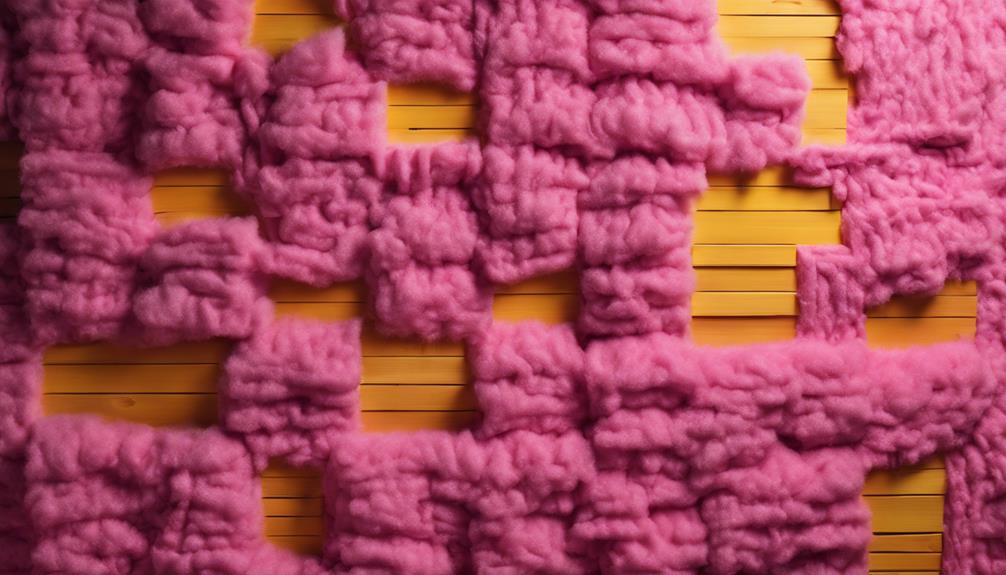
Blanket and batt insulation are excellent options for improving your home’s energy efficiency. These flexible, pre-cut insulation materials are commonly made from fiberglass, mineral wool, or natural fibers. They are tailored to fit snugly between framing studs, joists, and rafters. This design simplifies installation and enhances your home’s thermal resistance by effectively reducing heat transfer.
Blanket insulation typically comes in rolls or batts, making it ideal for attics, walls, and floors. Its ease of installation allows you to address various areas of your home without hassle.
Batt insulation, available in different thicknesses and R-values, enables you to meet specific insulation needs in distinct parts of your building. Higher R-values indicate better-insulating properties, which translates to improved energy efficiency.
Foam Board Options
Foam board insulation offers an effective solution for enhancing your home’s energy performance. These rigid panels boast high R-values and include options like polystyrene, polyisocyanurate, polyurethane, and phenolic. They’re perfect for insulating floors, foundation walls, and low-sloped ceilings. Foam board insulation is versatile, fitting various construction applications to boost energy efficiency. You can significantly reduce heating and cooling costs thanks to its excellent thermal performance.
Foam boards are not only durable but also lightweight and easy to install. This makes them a favored choice for many construction projects. Whether you’re working on new builds or renovations, foam board insulation delivers long-lasting results while maintaining structural integrity. Here’s a quick comparison of different types:
| Type | Key Features | Common Uses |
|---|---|---|
| Polystyrene | High R-values | Floors, walls |
| Polyisocyanurate | Thermal performance | Roofs, ceilings |
| Polyurethane | Lightweight, durable | Foundations, walls |
| Phenolic | Fire resistance | Commercial applications |
| Other types | Custom needs | Specialized construction |
Loose-Fill and Blown-In
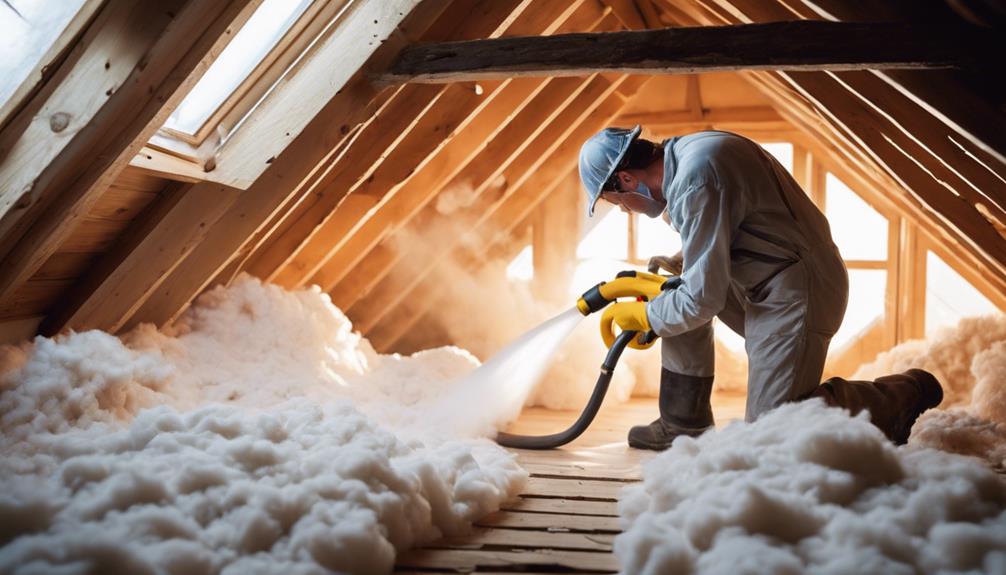
Are you looking to fill those tricky nooks and crannies in your home’s insulation? Loose-fill and blown-in insulation might be just what you need. These types of insulation are excellent for reaching tard-to-access spots like wall cavities and attics, guaranteeing your home stays snug and energy-efficient. You can achieve superior thermal performance by utilizing materials such as fiberglass, cellulose, and mineral wool, keeping your home comfortable year-round.
Loose-fill insulation is applied using specialized equipment that blows the insulation material into the target areas. This method is particularly effective for fully and partially enclosed spaces, covering every corner. Given the complexity of the process, professional installation is recommended. This guarantees that the insulation is evenly distributed, maximizing its effectiveness.
Choosing loose-fill and blown-in insulation is a cost-effective way to improve your home’s energy efficiency. You can enjoy lower energy bills and a more sustainable living environment by reducing heat loss.
Spray Foam Techniques
While loose-fill and blown-in insulation are excellent for filling hard-to-reach areas, spray foam methods offer an all-inclusive solution for sealing and insulating your home. With spray foam insulation, you can cover enclosed walls, open cavities, and areas around obstructions to achieve maximum coverage. This approach uses a small spray container or a high-pressure spray foam applicator, guaranteeing proper surface expansion and adhesion.
The materials, typically polyisocyanurate or polyurethane, expand and harden after application. This characteristic allows easy trimming, ensuring a perfect fit in any space.
One of the standout benefits of spray foam insulation is its high R-values, which contribute to exceptional thermal resistance and air-sealing properties. This indicates that your home will be better protected against temperature variations, leading to significant energy savings.
Because spray foam requires specialized equipment and methods, it’s usually best to have professionals handle the installation. They guarantee the foam expands properly and adheres to all surfaces, providing a thorough insulation solution.
Radiant Barrier Solutions

When managing heat gain in hot climates, radiant barrier solutions effectively reflect heat away from your home. These systems use reflective foil-faced materials designed for the best heat reflection, perfect for tackling summer heat gain. Radiant barriers are thin, easy to install, and versatile, allowing you to use them on ceilings, floors, and walls. This makes them a cost-effective solution for thermal energy management.
Although radiant barriers are less effective than traditional insulation, they can boost a building’s overall thermal performance with insulation. They’re especially useful in light-duty insulation applications, like attics and crawl spaces, which help keep heat from penetrating living spaces.
By reflecting radiant heat, these barriers greatly enhance your home’s energy efficiency and reduce cooling costs, which is particularly beneficial in warmer climates.
Incorporating radiant barriers can significantly improve your home’s comfort and energy bills. So, to enhance your home’s thermal efficiency, consider adding these reflective materials alongside your existing insulation. The combination will be efficient and a smart investment in your home’s energy management strategy.
Conclusion
When choosing insulation, consider your home’s specific needs and climate. Blanket and batt insulation are great for accessible areas like attics and walls, while foam board is perfect for floors and foundations. Loose-fill and blown-in options are cost-effective for hard-to-reach spaces. Spray foam offers a thorough seal for enclosed areas, and radiant barriers excel in warm climates by reflecting heat. Selecting the right type will enhance energy efficiency and comfort in your home.
FAQs
1. What Are Five Types of Insulation?
You have several insulation options. Consider fiberglass batts, cellulose insulation, mineral wool, and reflective foil. Spray foam, especially closed-cell and rigid board, is also a solid choice. For versatile applications, consider blown-in and loose fill.
2. Which Insulation Is the Best?
You decide on the best insulation by comparing cost-effectiveness, environmental impact, and heat retention. It would help if you also considered energy efficiency, fire safety, moisture resistance, and soundproofing. Longevity varies, and DIY might save money, but professional installation guarantees quality.
3. What Is the Most Common Insulation in Homes?
You’re wondering about the most common insulation in homes. Fiberglass batts top the list, but alternatives like spray foam, cellulose insulation, and mineral wool also exist. Other options include radiant barriers, foam board, reflective, or blown-in insulation.
4. Which Is the Best Insulation for Walls?
For peak efficiency, consider reflective foil or spray foam. Fiberglass batts and cellulose offer cost-effective solutions. Mineral wool and rigid foam excel in soundproofing. Blown-in insulation with vapor barriers guarantees peak performance.