

A Comprehensive Guide to Squirrel Cage Induction Motor
In the vast realm of electric motors, the squirrel cage induction motor stands as a cornerstone of modern industrial and residential applications. Its simplicity, reliability, and efficiency make it a preferred choice across various sectors. In this comprehensive exploration, we will delve into the intricate workings of the squirrel cage induction motor, covering its working principle, operation, classification, disadvantages, and differentiating it from the slip ring induction motor.
What is a Squirrel Cage Induction Motor?
At its core, a squirrel cage induction motor is an electromechanical device that converts electrical energy into mechanical energy. Named for its rotor’s resemblance to a squirrel’s exercise wheel, this motor operates on the principle of electromagnetic induction. It’s a type of asynchronous motor, meaning the rotor always turns at a slightly slower speed than the magnetic field generated by the stator.
Squirrel Cage Induction Motor Working Principle
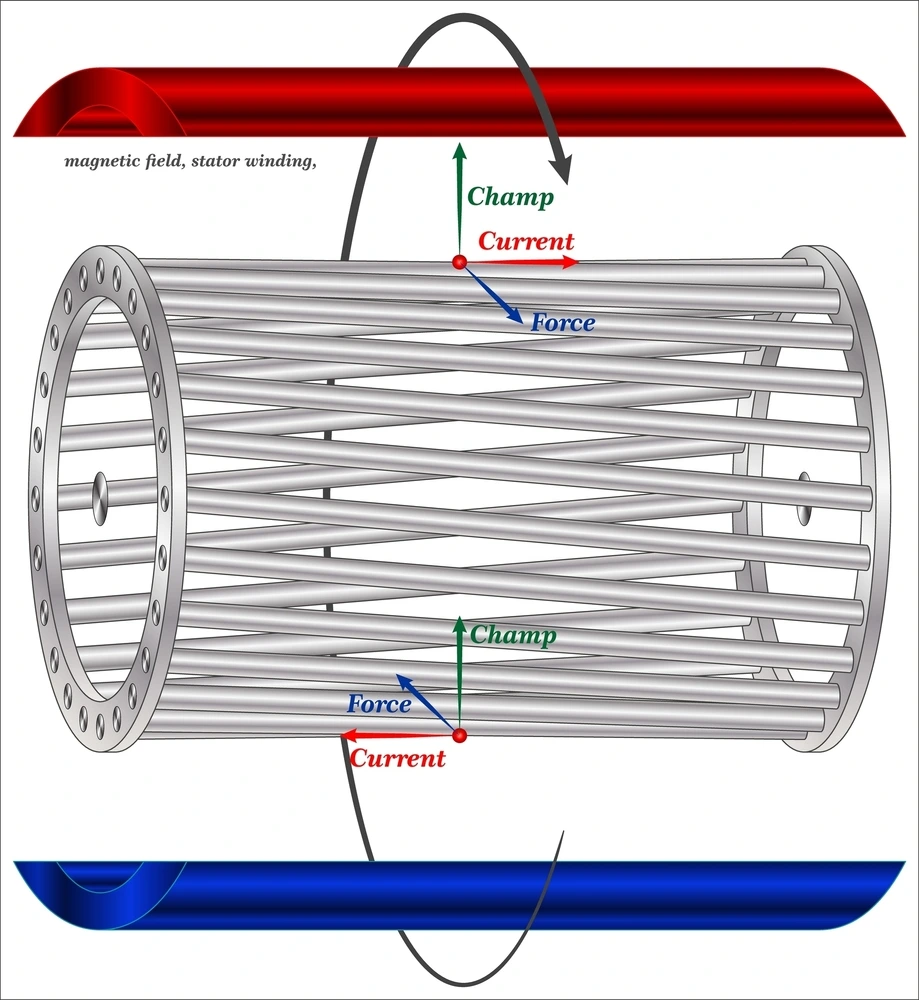
At its core, the squirrel cage induction motor operates on the principle of electromagnetic induction. When an alternating current flows through the stator winding, it creates a rotating magnetic field. This field induces a current in the rotor bars, generating a secondary magnetic field that interacts with the stator’s field, resulting in the rotation of the rotor.
Squirrel Cage Induction Motor Construction
The construction of a squirrel cage induction motor is a testament to simplicity and effectiveness.
Stator
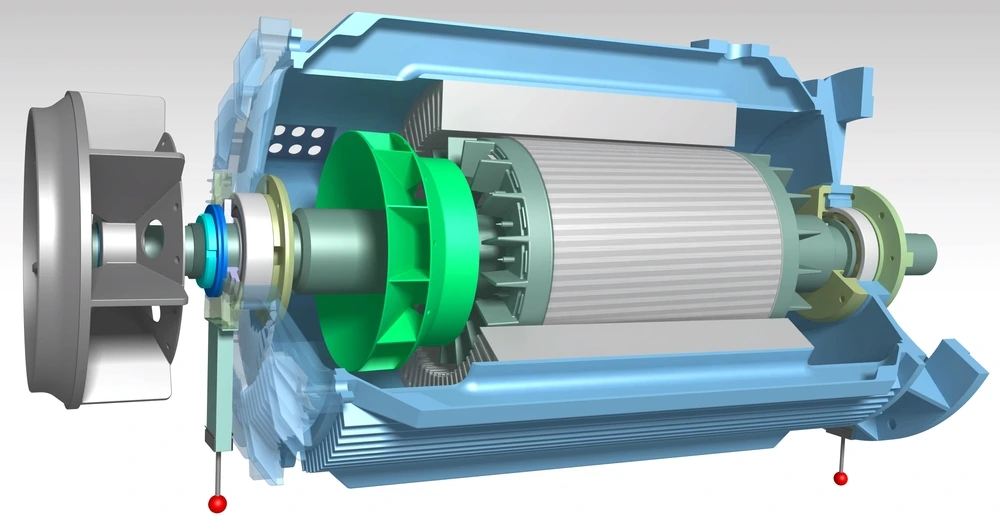
The stator is the stationary component of the motor, housing the winding connected to the power supply. When an alternating current flows through the stator winding, it creates a rotating magnetic field.
Rotor
The rotor consists of a cylindrical iron core with conductive bars arranged in a circular fashion. As the stator’s magnetic field rotates, it induces a current in the rotor bars, generating a secondary magnetic field that interacts with the stator’s field, causing the rotor to turn.
End Rings
The rotor bars are shorted at both ends by conducting rings, forming a closed-loop circuit. This configuration resembles a squirrel cage, hence the name. The short-circuited bars ensure a continuous flow of current, creating the necessary magnetic field for rotation.
Bearings
To enable smooth rotation, squirrel cage induction motors are equipped with bearings. These bearings support the rotor shaft and reduce friction, enhancing the motor’s overall efficiency.
Operation of Squirrel Cage Induction Motor
Squirrel cage induction motors typically start by applying a voltage to the stator winding, creating a rotating magnetic field. This induces a current in the rotor, initiating rotation. The motor runs at a slightly slower speed than the rotating magnetic field, a characteristic of asynchronous motors.
Applications of Squirrel Cage Induction Motors
Squirrel cage induction motors find applications in a myriad of industries due to their robustness and versatility. Some common applications include:
- Industrial Machinery: Used in conveyor systems, pumps, compressors, and other machinery.
- HVAC Systems: Powering fans, blowers, and air conditioning units.
- Home Appliances: Found in washing machines, refrigerators, and other household devices.
- Transportation: Electric trains and trolleys often utilize squirrel cage induction motors.
Advantages of Squirrel Cage Induction Motors
- Robust Construction: The simple and sturdy design of squirrel cage induction motors makes them resistant to wear and tear, contributing to their longevity.
- Low Maintenance: With fewer moving parts and no brushes or slip rings, these motors require minimal maintenance, reducing downtime and operational costs.
- High Efficiency: Squirrel cage induction motors boast high efficiency levels, translating electrical input into mechanical output with minimal energy loss.
Disadvantages of Squirrel Cage Induction Motor
While squirrel cage induction motors offer numerous advantages, it’s essential to consider potential drawbacks, including:
- Limited Speed Control: Inherent limitations in speed control compared to other motor types.
- Starting Torque: May exhibit lower starting torque, impacting performance in certain applications.
- Sensitive to Voltage Fluctuations: Operation can be affected by variations in the power supply voltage.
Classification of Squirrel Cage Induction Motor
Understanding the various classifications of squirrel cage induction motors provides insights into their design and intended applications. The classifications are as follows:
- Class A Design
- Class B Design
- Class C Design
- Class D Design
- Class E Design
- Class F Design
These classifications are based on the insulation system used in the motor, with each class indicating a specific temperature rise tolerance. The designations help in selecting motors suitable for different operating conditions and environments.
Difference Between Squirrel Cage and Slip Ring Induction Motor
Understanding the disparities between squirrel cage and slip ring induction motors is crucial for selecting the appropriate motor for a given application. While both operate on the principle of electromagnetic induction, their rotor constructions differ significantly. The table below summarizes the key distinctions between these two types:
| Feature | Squirrel Cage Induction Motor | Slip Ring Induction Motor |
|---|---|---|
| Rotor Construction | Short-circuited bars | External resistance elements connected to rotor windings |
| Starting Torque | Relatively lower | Higher, adjustable with external resistance |
| Maintenance | Low | Higher due to the presence of slip rings and brushes |
| Cost | Economical | Generally more expensive due to additional components |
| Applications | Common in various industries | Suitable for applications requiring high starting torque and adjustable speed control |
Conclusion
The squirrel cage induction motor, with its elegant design and reliable performance, continues to be a cornerstone in the world of electric motors. From its working principle to construction, operation, advantages, applications, disadvantages, and classifications, understanding its intricate details unveils the engineering marvel that has stood the test of time. Despite some limitations, its widespread applications showcase its adaptability and efficiency in diverse settings.
FAQs
1. What are the key advantages of squirrel cage induction motors?
Squirrel cage induction motors offer several advantages, making them widely used in various applications. Their robust construction ensures resistance to wear and tear, contributing to longevity. With fewer moving parts and no brushes or slip rings, these motors demand minimal maintenance, reducing operational costs. Moreover, their high efficiency levels effectively translate electrical input into mechanical output with minimal energy loss. These combined features make squirrel cage induction motors a reliable and cost-effective choice for diverse industrial and residential applications.
2. How do squirrel cage induction motors compare to slip ring induction motors?
The primary distinction lies in the rotor construction. Squirrel cage induction motors feature short-circuited bars, ensuring simplicity and durability, while slip ring induction motors incorporate external resistance elements connected to rotor windings. Squirrel cage motors are economical, commonly found in various industries, whereas slip ring motors, though more expensive, offer higher starting torque and adjustable speed control, making them suitable for specialized applications.
3. Are there alternatives to overcome the limited speed control of squirrel cage induction motors?
Yes, variable frequency drives (VFDs) provide an effective solution for controlling the speed of squirrel cage induction motors. By varying the frequency of the input power, VFDs enable precise speed control, making these motors versatile for applications with changing operational requirements. This technology enhances flexibility, energy efficiency, and overall performance, addressing the inherent limitation of constant speed associated with squirrel cage induction motors.
