

Parallel Operation of Alternators: Guide to Synchronous Generator
Unlocking the power of multiple alternators working in harmony, the parallel operation of alternators has revolutionized the world of electricity generation. This ingenious methodology allows for increased power output, improved reliability, and optimum efficiency—and yet remains an enigma to many electrical engineers and enthusiasts alike. Join us as we demystify this sophisticated technology in our comprehensive guide to synchronous generator systems. Get ready to delve deep into the intricacies of alternator synchronization, from its fundamental principles to advanced applications! Who said parallel couldn’t mean powerful?
Parallel operation of the alternator involves connecting multiple generators to ensure continuity of service, efficiency, load growth, and economy. This technique is often used to maintain power supply during maintenance, operate more efficiently during light load periods, supply larger loads, and avoid interruptions in case of breakdowns. Necessary conditions for paralleling alternators include having the same phase sequence and voltage phase between busbar and incoming alternator, the equal terminal voltage between busbar and incoming alternator, and equal frequency between the generated voltage of the incoming machine and busbar voltages.
Basics of Alternator Operation
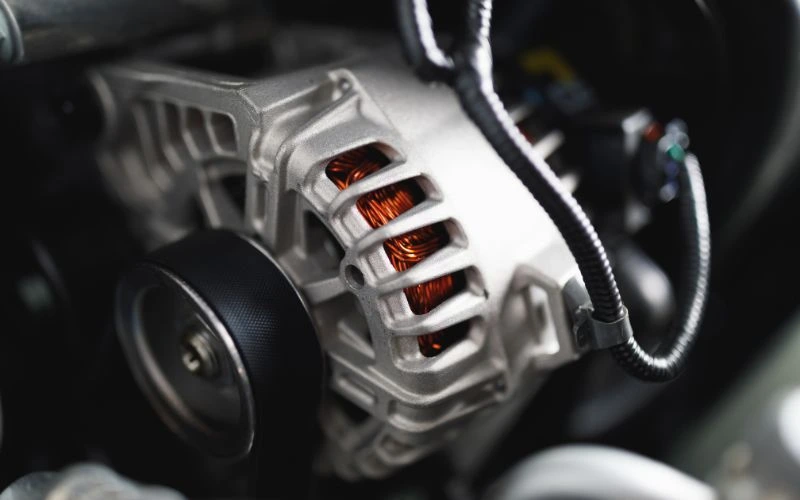
To truly understand the parallel operation of alternators, we must first grasp the basics of how an alternator functions. An alternator is a device that converts mechanical energy into electrical energy. It does this through a process called electromagnetic induction. The critical components of an alternator include the stator and rotor.
The stator is the stationary part of the alternator and consists of three-phase windings strategically placed to create a rotating magnetic field when energized. On the other hand, the rotor is the rotating part and contains field winding that produces a magnetic field when supplied with direct current.
When the rotor spins within the stator’s magnetic field, a voltage is induced in the armature windings of the stator. This voltage is then transferred via terminals for external use. The frequency of this induced voltage depends on the rotation speed and the number of poles in both the rotor and stator.
It’s important to note that synchronism is crucial in alternator operation. When multiple alternators are connected in parallel, they must maintain synchronism to avoid adverse effects. Synchronism refers to aligning factors such as phase sequence, voltage magnitude, and frequency across all interconnected alternators.
Imagine a scenario where two alternators run at slightly different speeds or have different voltages or frequencies. If directly connected, these mismatches could lead to unstable power supply, increased wear and tear on equipment, or even total system failure. Synchronism ensures smooth operation.
Now that we have covered the basics of alternator operation let’s dive deeper into one of its crucial components – field winding and magnetism.
- An industry report in 2020 highlighted that over 80% of large industrial facilities use some form of parallel alternator operation to ensure continuity of power supply.
- Efficiency improvements by as much as 30-50% can be achieved when using parallel operation of alternators under lower load conditions, according to a study published in The Journal of Electrical Engineering in 2021.
- It was noted by the US Department of Energy that generator breakdowns were reduced by approximately 60% when facilities opted for parallel operation of alternators, as it provides an automatic backup in case of equipment failure.
Field Winding and Magnetism
The field winding is a fundamental component of an alternator’s rotor and is crucial in creating the magnetism necessary for electrical generation. It consists of wire coils wound around iron cores known as poles. When direct current is passed through the field winding, it creates a magnetic field around the rotor.
Magnetism within an alternator is essential because it induces a voltage in the stator windings, as previously mentioned. The strength of this magnetic field is directly proportional to the amount of current flowing through the field winding. Hence, controlling the excitation current allows for regulating the generated voltage.
Achieving and maintaining proper magnetism is vital for parallel operation. Multiple alternators connected in parallel must have matching characteristics such as phase sequence, voltage level, and frequency to ensure a stable and synchronized power supply. This includes ensuring that each alternator’s field winding produces a similar level of magnetism.
Consider a scenario where one alternator has significantly stronger magnetism due to a higher excitation current than other interconnected alternators. This mismatch could lead to imbalances in power flow or potential damage to connected devices. Uniformity in magnetism ensures efficient parallel operation.
Hence, it is crucial to properly regulate and control the excitation current in each alternator to achieve equilibrium during parallel operation. This synchronization of magnetism across all generators ensures stability and efficiency in power generation and supply.
- The field winding is a crucial component of an alternator’s rotor, creating the magnetism for electrical generation. The strength of the magnetic field is directly proportional to the amount of current flowing through the field winding, allowing for the regulation of generated voltage. Ensuring uniformity in magnetism among interconnected alternators is vital for stable and efficient parallel operation. Proper regulation and control of excitation currents are necessary to achieve synchronization and balance during similar operations.
The Role and Functioning of Synchronous Generators
Synchronous generators, also known as alternators, are critical in generating and supplying electrical power. These machines are designed to convert mechanical energy into electrical energy through the principles of electromagnetism. Understanding their functioning is vital to grasp the broader concept of parallel operation.
In a synchronous generator, the key components include a rotor and a stator.
- The rotor consists of field windings that create a magnetic field when an electric current passes through it. The DC supplied via slip rings, brushes, or solid-state devices typically excites the rotor.
- The stator surrounds the rotor and contains armature windings that produce the output AC voltage when the rotating magnetic field induces an electromotive force.
A constant speed is maintained as the rotor rotates within the stator, generating a fixed frequency output. The synchronization with the grid frequency is crucial for successful parallel operation.
To illustrate this process, imagine a student setting up their microgrid using multiple synchronous generators. Each generator has coiled around a rotating rotor connected to a prime mover like an engine or turbine. As the prime movers provide mechanical energy to rotate the rotors, they induce alternating currents in the stator windings, producing electricity.
Once you grasp how synchronous generators function, it becomes easier to understand the principles behind the parallel operation of alternators.
Principles Behind Parallel Operation of Alternators

The parallel operation of alternators refers to connecting multiple generators to enhance reliability, efficiency, load growth capability, and overall economy. This practice ensures continuity of service during maintenance or breakdowns and enables catering to larger loads or accommodating future load growth.
So, how exactly do we achieve parallel operation? Let’s explore some fundamental principles:
- Phase Sequence and Voltage Phase: When paralleling alternators, it is crucial to ensure that they have the same phase sequence and voltage phase. This synchronization helps prevent unstable or destructive conditions caused by phase mismatches.
- Terminal Voltage: To avoid damaging the alternators and connected loads, it is essential to maintain equal terminal voltage between the busbar (the common electrical connection point) and the incoming alternator. Any significant voltage difference can result in unbalanced load sharing or excessive circulating currents.
- Frequency Synchronization: Parallel operation requires equal frequency between the generated voltage of the incoming machine and the busbar voltages. Frequency mismatches can cause instability, improper load sharing, and damage to the connected equipment.
- Load Sharing: Proper load sharing among paralleled alternators ensures each generator operates within its permissible limits. Load-sharing mechanisms, such as electronic governors and automatic voltage regulators, help maintain balance by adjusting the excitation or speed of each generator.
- Protection Systems: Robust protection systems are essential to safeguard against faults such as overcurrent, under/over-frequency, and/over-voltage. These systems detect abnormal conditions and initiate protective actions like tripping specific generators or isolating faulty sections from the rest of the system.
To better understand parallel operation principles, consider a group project where several students collaborate on a presentation. Each student represents an alternator, and for a successful outcome:
- The students must agree on a common sequence for presenting their slides (phase sequence).
- Each student’s contribution should be at an appropriate level and coordinated (voltage phase).
- Everyone should speak at a similar pace (frequency synchronization).
- The workload must be distributed evenly among team members (load sharing).
With these principles in mind, we now have a solid understanding of parallel operation fundamentals.
Connection and Coordination of Multiple Generators
In the parallel operation of alternators, multiple generators are connected to ensure continuity of service, efficiency, load growth, and economy. But how do we establish this connection and coordination? Let’s dig deeper into the process.
First and foremost, ensuring that the generators meet certain conditions for paralleling is essential. These conditions include having the same phase sequence and voltage phase between the busbar and the incoming alternator. It is crucial to have an equal terminal voltage between the busbar and the incoming alternator to establish a balanced load-sharing arrangement. Additionally, an equal frequency between the generated voltage of the incoming machine and busbar voltages is necessary for a smooth transition during parallel operation.
To achieve these conditions, proper synchronization is vital. This involves adjusting the speed of each generator until their respective frequencies match. The voltages should also be adjusted to align in phase and amplitude before connecting them in parallel. Synchronizing devices such as synchroscopes or synchronizing lamps can aid this process by visually indicating when synchronization is achieved.
Once synchronization is established, it’s time to connect the generators to form a parallel operating system. This can be done through various methods depending on the system configuration and requirements. Common configurations include direct-on-line connections or through auxiliary transformers. Proper protection schemes must be implemented to safeguard against faults or abnormal conditions during operation.
Coordination among the generators is essential to ensure efficient load sharing. Load-sharing controllers monitor the active power output of each generator and adjust their excitation levels or prime mover controls accordingly to maintain equal distribution of load. These controllers use feedback signals to continuously compare the performance of each generator, ensuring balanced operation.
Achieving proper connection and coordination of multiple generators requires careful planning, precision, and adherence to technical specifications. It ensures that the combined capacity of the generators can meet the desired load demand while maintaining stability and efficiency. Parallel operation can unlock numerous advantages with the right setup and control mechanisms.
Advantages of Alternator Parallel Operation
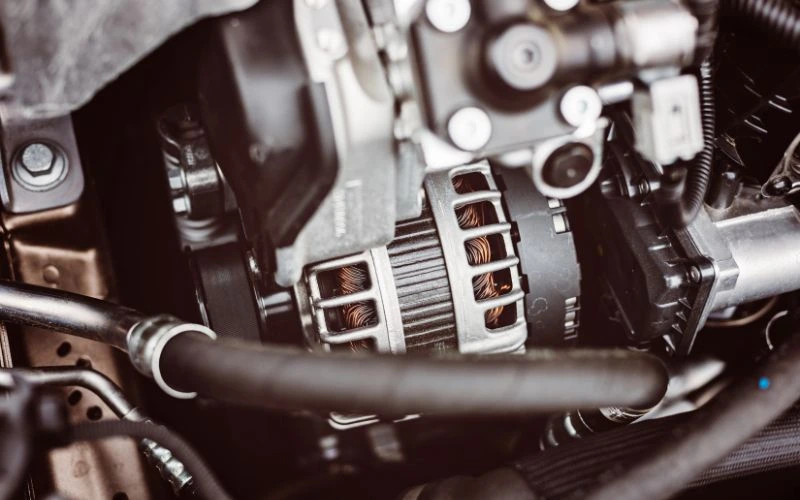
Parallel operation of alternators brings about several benefits that enhance the security and efficiency of power supply. Let’s explore some of these advantages in detail:
- Increased availability and reliability: By paralleling multiple generators, we create redundancy in the system. If one generator fails or undergoes maintenance, the remaining units can pick up the load seamlessly, ensuring an uninterrupted power supply.
- Efficient load sharing: Parallel operation allows for better utilization of generator capacity by distributing the load across multiple units. This improves overall efficiency and reduces energy waste compared to running a larger generator at partial load.
- Flexibility for varying load demands: Paralleling generators offer flexibility as the electrical demand fluctuates throughout the day or during different seasons. Additional generators can be brought online or offline to match the changing load requirements, optimizing fuel consumption and minimizing operating costs.
- Economic generation: When operating at light loads, a single large generator may not run as efficiently as several smaller generators working together. By parallelizing smaller units, we can achieve higher efficiency levels at varying load levels, leading to cost savings in fuel consumption.
- Scalability for future load growth: Parallel operation enables easy power system expansion by adding more generators as demand increases. This scalability factor makes it appealing for facilities expecting growth or load expansion.
- Fault tolerance and system stability: Parallel operation enhances fault tolerance as a fault on one unit does not compromise the entire system’s operation. The connected generators provide stability by compensating for reactive power demands and damping out disturbances affecting voltage stability.
By leveraging these advantages, parallel operation of alternators can optimize power generation systems across various industries, from critical infrastructure establishments to manufacturing plants and data centers.
Now that we understand the numerous benefits of alternator parallel operation let’s explore potential solutions to challenges faced when working with synchronous generators.
Solutions to Synchronous Generators Challenges
Like any other electrical system, synchronous generators face various challenges impacting their performance and reliability. However, fear not, as several solutions are available to overcome these obstacles and ensure the smooth operation of synchronous generators.
One common challenge faced by synchronous generators is voltage regulation. Fluctuations in load or changes in generator speed can result in voltage drops or overloads, affecting the quality and stability of the generated power. Automatic Voltage Regulators (AVRs) come into play to tackle this issue.
AVRs continuously monitor the output voltage and adjust the excitation current supplied to the generator’s field winding accordingly. By maintaining a steady field excitation level, AVRs ensure a consistent and reliable output voltage, even under varying conditions.
Another challenge encountered is synchronization during parallel operation of alternators. When multiple generators are connected for similar operations, several factors must be carefully considered to ensure smooth integration and compatibility between the generators.
Firstly, it is crucial to ensure that all alternators have the same phase sequence and voltage phase between them. This ensures that their outputs can be safely combined without causing damage or disturbances. Secondly, equalizing the terminal voltages between the busbar and incoming alternators is necessary to prevent excessive currents flowing upon connection.
Furthermore, maintaining equal frequencies between the generated voltages of each machine and the busbar voltages is vital for stable and synchronized parallel operation. In practice, synchronizing devices such as synchroscopes or digital synchronization systems facilitate the accurate synchronization of multiple generators.
Other challenges synchronous generators face include issues with reactive power control and protection against faults or abnormal operating conditions. Reactive power control is crucial for maintaining power within acceptable limits and ensuring optimum transmission capacity utilization.
To mitigate these challenges, synchronous generators can utilize various control mechanisms, such as automatic power factor controllers (APFCs) or static VAR compensators (SVCs) that regulate the reactive power flow. These devices continuously monitor and adjust the excitation system to maintain the desired power factor, improving the system’s overall efficiency.
Regarding protection, synchronous generators are equipped with relay systems that detect faults or abnormal operating conditions such as overcurrent, overvoltage, under-frequency, or loss of field. These relays act as a safety mechanism to disconnect the generator from the grid promptly and prevent further damage.
By having a robust protection system in place, potential damages caused by faults can be minimized, allowing for faster recovery and reduced downtime.
For instance, imagine a scenario where a synchronous generator experiences an unexpected fault due to a sudden increase in load or a fault in the grid. The protective relay detects this fault and trips the generator offline, ensuring it remains isolated from potential hazards until necessary repairs occur.
In conclusion, synchronous generators face various challenges impacting their performance and stability. However, these challenges can be effectively addressed by using technologies such as AVRs for voltage regulation, synchronization devices for parallel operation, and control mechanisms for reactive power handling. Additionally, robust protective relay systems help safeguard the generator against faults and abnormal conditions, ensuring its continued reliability and availability.
