Discovering the Essentials of Transformer Rating in kVA
Transformers are vital components in electrical power systems, enabling efficient transmission and distribution of electricity. Understanding the rating of a transformer in kilovolt-amperes (kVA) is essential for properly selecting, installing, and operating these devices. In this article, we discover the essentials of transformer rating in kVA, unraveling the factors that influence it and exploring the calculation methods involved. By delving into this topic, we can better understand how to resolve the appropriate transformer rating to meet specific power requirements.
In this tutorial, we will find the Transformer Rating in KVA.
We know that Transformers are always rated in kVA.
Below are the two simple formulas to find the rating of Single phase and Three phase Transformers.
Rating of Single Phase Transformer
The rating of a single-phase transformer can be determined using the power formula P = V x I, where P represents the apparent Power in volt-amperes (V.A.), V means the voltage in volts (V), and I represents the Current in amperes (A). However, it’s important to note that this formula provides the apparent power rating, which is the product of voltage and Current without considering the power factor.
P=V x I
Rating of a single-phase transformer in kVA
To calculate the apparent power rating in kVA (kilovolt-amperes), the formula can be modified as follows:
kVA = (V x I) / 1000
Here’s a step-by-step process to calculate the apparent power rating of a single-phase transformer:
Determine the voltage
Measure or determine the voltage level (V) at which the Transformer will be operated. This can be the primary or secondary voltage, depending on the application.
Determine the Current
Measure or determine the Current (I) flowing through the Transformer. This can be the primary or secondary Current, depending on the application.
Calculate the apparent Power.
Multiply the voltage (V) by the Current (I) and divide the result by 1000 to obtain the apparent power rating in kilovolt-amperes (kVA).
kVA = (V x I) / 1000
It’s important to note that the apparent power rating obtained from this formula represents the maximum capacity of the Transformer in terms of handling voltage and Current without considering the power factor. The power factor accounts for the phase difference between the voltage and current waveforms and determines the actual Power (kW) the Transformer delivers.
The power factor should be considered to determine the Transformer’s power (kW) rating. The relationship between apparent power (kVA), actual power (kW), and power factor (P.F.) is given by:
kW = kVA x PF
P.F. represents the power factor (typically between 0 and 1).
In summary, the rating of a single-phase transformer can be determined using the power formula P = V x I, where P represents the apparent Power in V.A. To obtain the evident power rating in kVA, divide the result by 1000. However, the power factor must be considered to determine the power rating (kW).
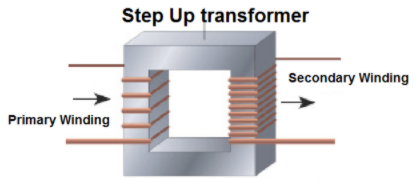
Rating of a Three-Phase Transformer
The rating of a three-phase transformer can be determined using the power formula P = √3 × V × I, where P represents the apparent Power in volt-amperes (V.A.), V means the line-to-line voltage in volts (V), and I represents the line current in amperes (A).
P = √3 V x I
Rating of a Three-phase transformer in kVA
KVA = (√3 V x I) /1000
Here’s a step-by-step process to calculate the apparent power rating of a three-phase transformer:
Determine the line-to-line voltage.
Measure or determine the line-to-line voltage (V) at which the Transformer will be operated. This is the voltage between any two phases of the three-phase system.
Determine the line’s Current.
Measure or determine the line current (I) flowing through the Transformer. This is the Current in one of the lines of the three-phase system.
Calculate the apparent Power.
Multiply the line-to-line voltage (V) by the line current (I), and then multiply the result by the square root of 3 (√3). This gives the apparent power rating of the three-phase Transformer in volt-amperes (V.A.).
Apparent Power (VA) = √3 × V × I
It’s important to note that the apparent power rating obtained from this formula represents the maximum capacity of the three-phase Transformer in terms of handling voltage and Current without considering the power factor.
To determine the actual power (kW) rating of the three-phase Transformer, the power factor (P.F.) should be considered. The relationship between apparent power (V.A.), actual power (kW), and power factor is given by
Actual Power (kW) = Apparent Power (V.A.) × Power Factor (P.F.).P.F. represents the power factor (typically a value between 0 and 1).
In summary, the rating of a three-phase transformer can be determined using the power formula P = √3 × V × I, where P represents the apparent Power in V.A. The evident power rating obtained from this formula means the maximum capacity of the Transformer. To determine the actual power rating (kW), the power factor must be considered

For example, the above fig. shows the rating of the Transformer is 100Transformery Voltages, or High Voltages (H.V.) is 11000 V = 11kV.
The direct Current on the High Voltage side is 5.25 Amperes
And
Secondary voltages or Low Voltages (L.V.) is 415 Volts
The Secondary Current (Current on the Low voltage side) is 139.1 Amperse
Calculation Methods for Transformer Rating
The calculation of transformer rating involves careful consideration of various parameters. One common method is based on the expected load requirements, considering factors such as load type (continuous or intermittent) and load diversity. Load diversity thinks the probability that not all connected loads will be operating at maximum capacity simultaneously. Other calculation methods consider specific industry standards and guidelines, considering the intended application, power quality requirements, and safety margins.
Now let us see how to calculate the rating of a transformer according to
P=V x I (Primary voltage x primary Current)
P = 11000V x 5.25A = 57,750 VA = 57.75kVA
Or P = V x I (Secondary voltages x Secondary Current)
P= 415V x 139.1A = 57,726 VA = 57.72kVA
We noticed that the rating of the Transformer (on Transformer) is 100kVA, but according to the calculation…it comes to about 57 kVA
The difference comes from ignorance that we used a single-phase formula instead of a three-phase recipe.
Now we will use this formula
P = √3 x V x I
P=√3 Vx I (Primary voltage x primary current)
P =√3 x 11000V x 5.25A = 1.732 x 11000V x 5.25A = 100,025VA (or)
P=100KVA
Or
P = √3 x V x I (Secondary voltages x Secondary Current)
P= √3 x 415V x 139.1A = 1.732 x 415V x 139.1A= 99,985 VA (or)
P= 99.98kVA
Consider the (next) following example.
Voltage (Line to line) = 208 V.
Current (Line Current) = 139 A
Now rating of the three-phase Transformer
P = √3Transformer= √3 x 208 x 139A = 1.732 x 208 x 139
P = 50077 VA = 50kVA
Conclusion
In conclusion, understanding the essentials of transformer rating in kVA is crucial for selecting and operating transformers in electrical power systems. By considering factors such as load requirements, voltage levels, power factor, and anticipated future growth, engineers can determine an appropriate rating that ensures optimal performance, reliability, and safety. Accurately calculating transformer rating plays a pivotal role in achieving efficient power transmission and distribution while avoiding issues such as equipment malfunction, voltage drops, and system failures. As the power industry continues to evolve, staying abreast of emerging trends and advancements will enable engineers to adapt calculation methods and make informed decisions regarding transformer rating to meet the changing needs of electrical infrastructure.