Energetic Horizons: Mapping the Electron Energy Bands in Solids
In condensed matter physics, the concept of energy bands in solids is nothing short of a symphony of quantum mechanics, where electrons, the maestros of charge, perform their intricate melodies. These energy bands represent the collective quantum states available to electrons within a solid, and their exploration unveils a rich tapestry of electronic behavior. From the cozy confines of insulators to the bustling corridors of conductors, the arrangement of electrons in energy bands dictates materials’ electrical, optical, and thermal properties. In this article, we embark on a journey into the mesmerizing landscape of energy bands in solids, unraveling their secrets and their profound implications for our understanding of matter and the technologies that shape our modern world. Join us as we delve into this symphonic realm, where the harmony of electrons orchestrates the very essence of solid-state physics.
First Shell Electrons: Proximity and Reactivity

The Innermost Orbit
Imagine an atom as a miniature solar system, with the nucleus at its center and electrons orbiting around it. The first shell is the innermost orbit, closest to the core. Electrons occupying this shell are akin to sentinels stationed at the very heart of the atom.
Proximity to Power
First-shell electrons are firmly bound to the nucleus by the strong electrostatic force of attraction between opposite charges. This binding results in these electrons having the lowest energy levels within the atom. They are like loyal sentries, steadfastly guarding their territory.
Low Energy, Low Reactivity
The low energy levels of first-shell electrons profoundly affect their reactivity. These electrons are less likely to participate in chemical reactions due to their proximity to the nucleus. Their low energy makes them less prone to engage with other atoms, limiting their involvement in chemical bonding.
The Valence Shell
In contrast to first-shell electrons, those in the outermost shell, often called the valence shell, possess significantly more energy. Within the valence shell, the chemical reactivity of an atom primarily resides. Due to their higher energy levels and increased distance from the nucleus, valence electrons readily interact with other particles, forming bonds and driving chemical reactions.
The Role of First-Shell Electrons
Although first-shell electrons may not be the primary actors in chemical reactions, their presence is essential. They establish the atom’s foundational characteristics, influencing properties such as atomic size and ionization energy. These attributes, in turn, affect how a particle interacts with other particles to form molecules and compounds.
Basic Structure of an Atom
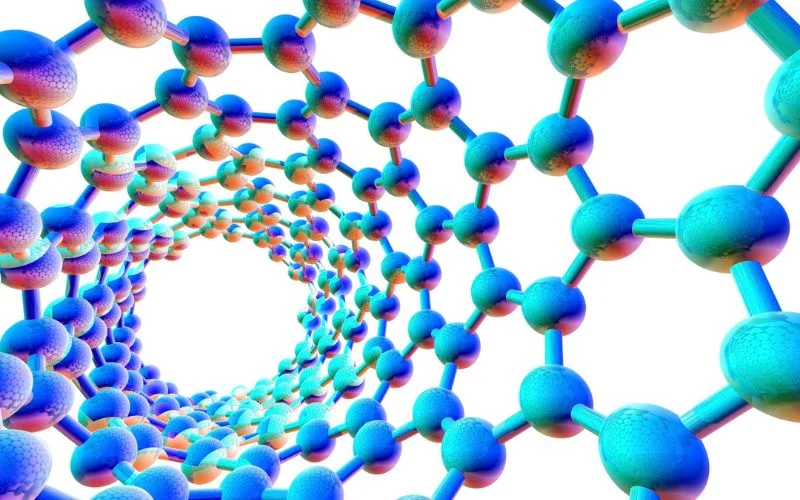
In a solid, atoms are taken close together. In such an event, more than one atom shares the outer shell electron. So, these electrons come lower than the influence of force from another bit. The valence electrons are shared by creating a bond through the valence electrons of nearby atoms. Such bonds are termed covalent bonds. Hence, the valence electrons are not free under usual conditions, as the nearby atoms unite them.
Now, the valence electrons hold maximum energy levels. While such electrons form covalent bonds, the energy levels linked with the valence electrons combine due to the coupling of the valence electrons. This inclusion creates an energy band.
In the same way, the different energy levels of numerous electrons in the 1st orbit, 2nd orbit, etc., also combine to form several energy bands.
So, as an alternative to the presence of generally separated energy levels as that of the isolated atoms, the closely spread energy levels exist in a solid, called energy bands.
Out of all the energy bands, the important energy bands in the solids are
- Valance band
- Conduction band
- Forbidden energy gap
Valance band
The electrons occupying an atom’s outermost orbit or shell are called valance electrons. In a normal fraction, a valance bond has the highest energy electrons. This band may be completely or partially filled.
Resistance in AC Circuit

Resistance in an AC circuit refers to the opposition offered by a component or a material to the flow of alternating current. The resistance in an AC circuit causes a drop in voltage across the element and dissipates electrical energy in the form of heat. When an AC voltage is applied to a circuit containing resistive components, such as resistors or conductors, a current oscillates back and forth, constantly changing direction.