Demystifying Electric Braking of DC Motors
Electric braking is crucial to controlling and stopping DC motors efficiently, especially when rapid deceleration is required. While your existing article provides some valuable insights into the basics of electric braking, this updated version will delve deeper into the topic, exploring advanced concepts, benefits, and applications. To enhance clarity, we will also provide a structured overview using headings, subheadings, bullet points, and FAQs.
Understanding Electric Braking

Electric braking is a modern and efficient alternative to traditional mechanical braking methods. While both approaches aim to bring DC motors to a halt, electric braking offers distinct advantages, such as reduced wear and tear on mechanical components and quicker stopping times. By converting kinetic energy into electrical energy, electric braking systems provide precise control over deceleration, making them invaluable in applications where safety, efficiency, and maintenance savings are paramount.
Electric Braking vs. Mechanical Braking
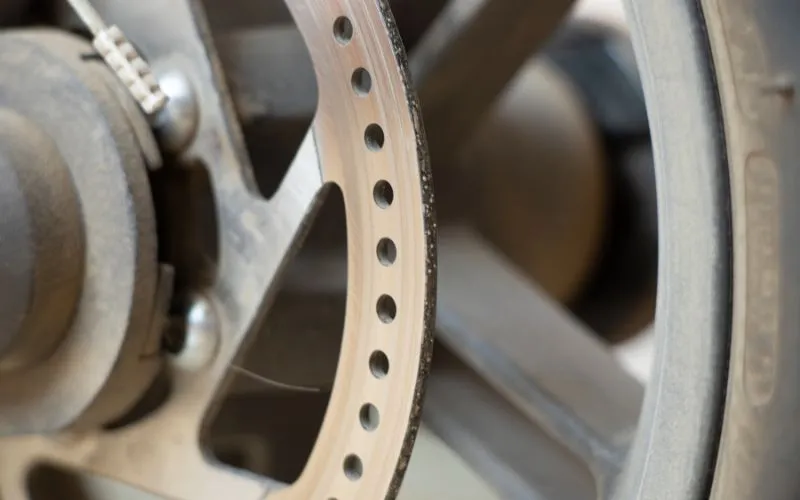
Electric braking is an alternative to mechanical braking, which relies on friction between movable parts and brake shoes. While both methods achieve the same goal of stopping a DC motor, electric braking offers distinct advantages:
- Reduced Wear and Tear: Electric braking minimizes wear and tear on mechanical brakes, leading to longer-lasting components and reduced maintenance costs.
- Shorter Stopping Time: Electric braking provides high braking retardation, resulting in quicker stopping times, which can be critical in emergencies.
Methods of Electric Braking
Electric braking for DC motors encompasses several methods, each suited to specific applications. The following three methods are commonly employed for both DC shunt motors and DC series motors:
Dynamic Braking or Rheostat Braking
- Principle: Dynamic braking involves disconnecting the armature of the running motor from the power source and connecting it across an adjustable resistance. The field winding remains connected to the power source. As the armature slows down, it rotates within a strong magnetic field, acting as a generator that sends a high current through the resistance. This rapid dissipation of energy in the form of heat brings the motor to an immediate standstill.
- Controlling Braking Torque: The braking torque can be controlled by varying the adjustable resistance (R). Decreasing the resistance value reduces motor speed and allows for precise braking torque control. Lower motor speed leads to lower braking torque, eventually stopping the motor due to friction.
- Applications: Dynamic braking finds widespread use in controlling hoists, elevators, and scenarios where motors must be stopped, started, and reversed repeatedly.
Plugging
- Principle: Plugging is a braking method that reverses the armature’s direction by changing the polarity of the supply voltage while the motor is still running. This abrupt reversal of motion generates a counter-torque that rapidly decelerates the motor.
- Controlling Braking Torque: The intensity of plugging can be controlled by adjusting the voltage applied during the reversal. This method is particularly effective for applications where a motor must be stopped quickly.
- Applications: Plugging is commonly used in conveyor systems, where precise control of material transport is essential, and in industrial machinery that requires rapid stopping.
Regenerative Braking
- Principle: Regenerative braking is a sophisticated method that converts the motor’s kinetic energy back into electrical energy, which can either be dissipated as heat in a resistor or returned to the power source. This process helps recover some of the energy and reduces power consumption.
- Controlling Braking Torque: Regenerative braking allows for more precise braking torque control by adjusting the energy dissipation or regeneration rate. It is often used in energy-efficient applications.
- Applications: Regenerative braking is commonly found in electric vehicles, where it helps extend battery life by recycling energy during braking, and in renewable energy systems, where excess energy can be stored or returned to the grid.
Relationship Between Braking Torque and Motor Speed
Let’s delve into the mathematical relationship between braking torque (TB) and motor speed (N) for a shunt motor:
Armature Current Ia = Eb / (R+Ra)
= (K1.NΦ) / (R+Ra) (∵ Eb∝N)
Braking Torque TB = K2IaΦ
= K2Φ (K1.NΦ / R+Ra)
= K3NΦ2Where,
(where K2 and K3 are constants, and Φ is constant for a shunt motor)
Therefore, Braking torque TB∝N
This equation reveals that braking torque (TB) is directly proportional to motor speed (N), meaning that as the motor speed decreases, so does the braking torque. This relationship is essential for understanding how to control the stopping of a DC motor effectively.
Benefits of Electric Braking
- Energy Efficiency: Electric braking methods like regenerative braking can recover and reuse energy, making systems more energy-efficient and reducing operational costs.
- Reduced Maintenance: Electric braking reduces the wear and tear on mechanical brakes, resulting in longer-lasting components and fewer maintenance requirements.
- Improved Safety: Quick stopping times provided by electric braking systems enhance safety in critical applications and emergencies.
Applications of Electric Braking
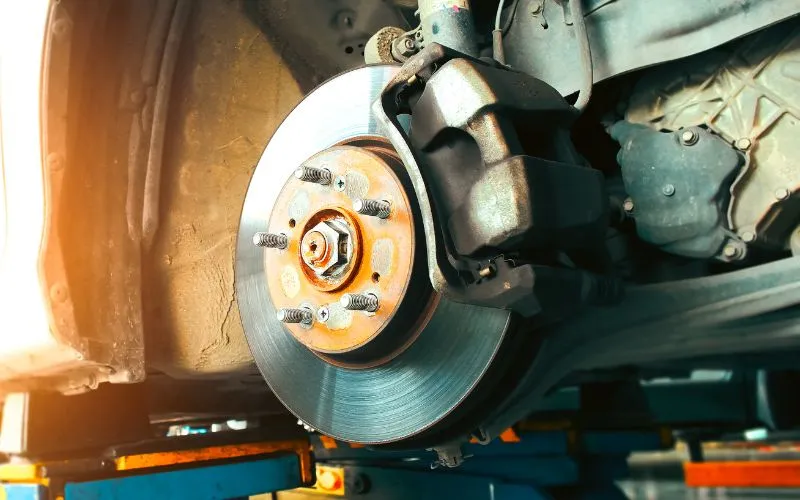
Electric braking plays a vital role in various industries and applications:
- Automotive: Regenerative braking is widely used in electric and hybrid vehicles to improve fuel efficiency and extend battery life.
- Manufacturing: Electric braking is employed in conveyor systems, industrial machinery, and robotics for precise control and safety.
- Transportation: Trains, trams, and elevators use electric braking for safe and efficient stops.
- Renewable Energy: Wind turbines and hydroelectric generators utilize regenerative braking to manage energy production and grid stability.
FAQs
1. How does electric braking differ from mechanical braking?
Electric braking transforms kinetic energy into electrical energy for dissipation, reducing wear on mechanical components and providing quicker stopping times.
2. What are the main methods of electric braking for DC motors?
The main methods include dynamic braking (rheostat braking), plugging, and regenerative braking.
3. What is regenerative braking, and where is it commonly used?
Regenerative braking involves converting kinetic energy into electrical energy, often used in electric vehicles, renewable energy systems, and industrial applications.
4. How can I control the braking torque of a DC motor using electric braking methods?
The braking torque can be controlled by adjusting parameters such as resistance, voltage, or energy dissipation rate, depending on the specific method.
5. Are there any drawbacks to electric braking?
While electric braking offers numerous advantages, it may require additional components and electronics, which can increase initial costs. Careful system design is essential to maximize its benefits.
Conclusion
Electric braking is a versatile and efficient way to control and stop DC motors across various applications. Understanding the principles and methods of electric braking can enhance safety and energy efficiency and reduce maintenance costs. Whether in automotive, manufacturing, transportation, or renewable energy, electric braking is critical in modern technology, making it an essential topic for engineers and enthusiasts.